Qiang Zhai – författare
Visar alla böcker från författaren Qiang Zhai. Handla med fri frakt och snabb leverans.
7 produkter
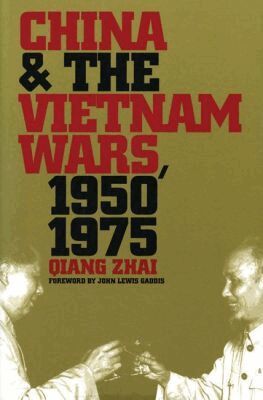
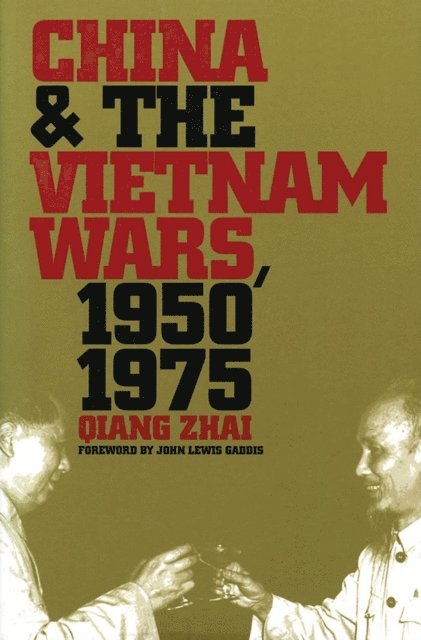
China and the Vietnam Wars, 1950-1975
Av Qiang Zhai
Häftad, 2000
516 kr
Lägg i varukorg
In the quarter century after the founding of the People's Republic of China in 1949, Beijing assisted Vietnam in its struggle against France and the USA. Drawing on newly released Chinese archival sources, memoirs and diaries, and documentary collections, this book offers a comprehensive …
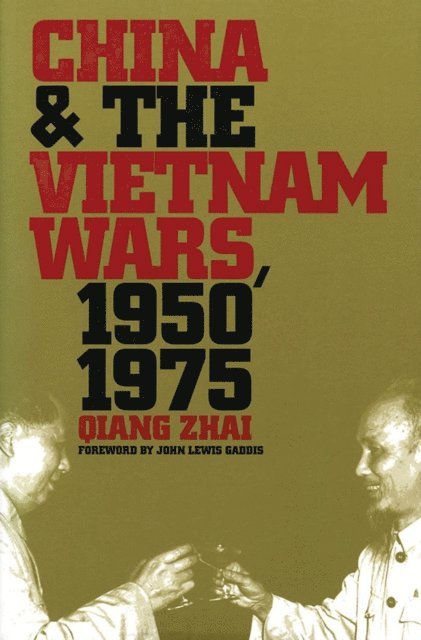
China and the Vietnam Wars, 1950-1975
Av Qiang Zhai
E-bok, 2005
390 kr
Lägg i varukorg
In the quarter century after the founding of the People’s Republic of China in 1949, Beijing assisted Vietnam in its struggle against two formidable foes, France and the United States. Indeed, the rise and fall of this alliance is one of the most crucial developments in the history of the Cold War …
Encyclopedia of the Cold War
Av Qiang Zhai, Jeremi Suri m. fl.
E-bok, 2013
768 kr
Lägg i varukorg
Between 1945 and 1991, tension between the USA, its allies, and a group of nations led by the USSR, dominated world politics. This period was called the Cold War – a conflict that stopped short to a full-blown war. Benefiting from the recent research of newly open archives, the Encyclopedia of …
Encyclopedia of the Cold War
Av Qiang Zhai, Jeremi Suri m. fl.
E-bok, 2013
768 kr
Lägg i varukorg
Between 1945 and 1991, tension between the USA, its allies, and a group of nations led by the USSR, dominated world politics. This period was called the Cold War – a conflict that stopped short to a full-blown war. Benefiting from the recent research of newly open archives, the Encyclopedia of …
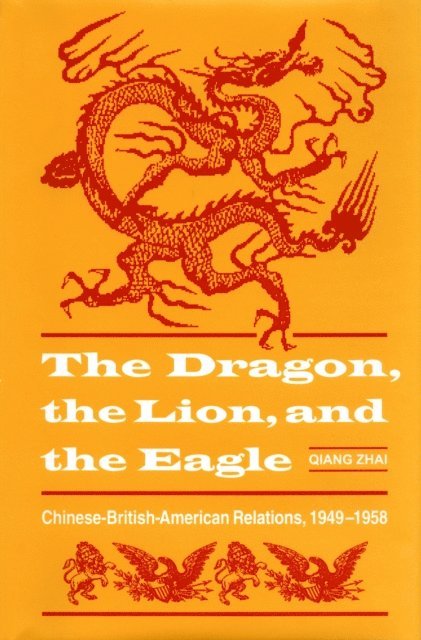
Dragon, the Lion, and the Eagle
Chinese-British-American Relations, 1949-1958
Av Qiang Zhai
E-bok, 2013
361 kr
Lägg i varukorg
The establishment of the People’s Republic of China (PRC) in 1949 and the subsequent conclusion of the Sino-Soviet Alliance Treaty destroyed the old balance of power in East Asia and introduced new forces into the international system. These developments had important implications for Great Britain …
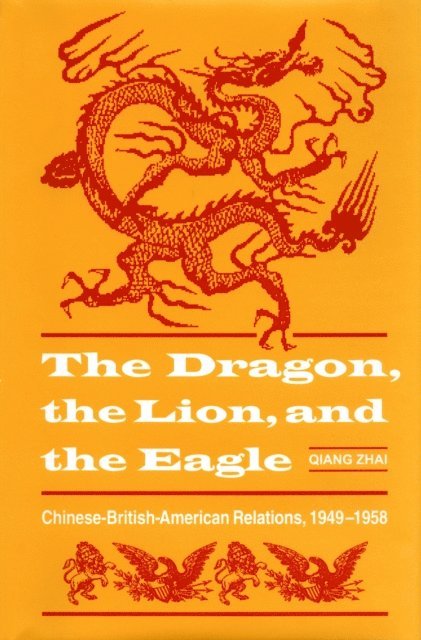
Dragon, the Lion, and the Eagle
Chinese-British-American Relations, 1949-1958
Av Qiang Zhai
E-bok, 2013
361 kr
Lägg i varukorg
The establishment of the People’s Republic of China (PRC) in 1949 and the subsequent conclusion of the Sino-Soviet Alliance Treaty destroyed the old balance of power in East Asia and introduced new forces into the international system. These developments had important implications for Great Britain …
China and the Vietnam Wars, 1950-1975
Av Qiang Zhai
E-bok, 2005
399 kr
Lägg i varukorg
In the quarter century after the founding of the People’s Republic of China in 1949, Beijing assisted Vietnam in its struggle against two formidable foes, France and the United States. Indeed, the rise and fall of this alliance is one of the most crucial developments in the history of the Cold War …