R. Bracht Branham - Böcker
Visar alla böcker från författaren R. Bracht Branham. Handla med fri frakt och snabb leverans.
2 produkter
2 produkter
1 540 kr
Skickas inom 5-8 vardagar
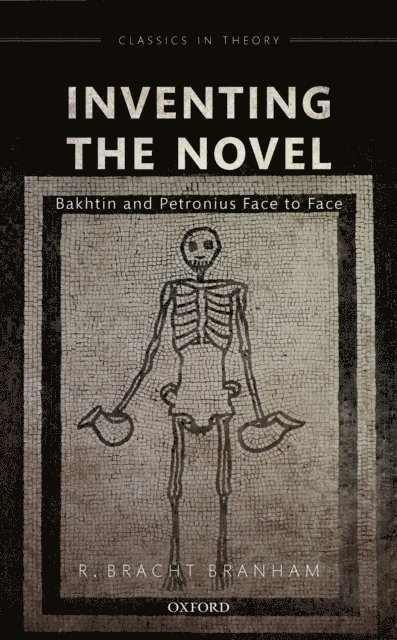
Inventing the Novel uses the work of the Russian philosopher Mikhail Bakhtin (1895-1975) to explore the ancient origins of the modern novel. The analysis focuses on one of the most elusive works of classical antiquity, the Satyrica, written by Nero's courtier, Petronius Arbiter (whose singular suicide, described by Tacitus, is as famous as his novel). Petronius was the most lauded ancient novelist of the twentieth century and the Satyrica served as the original model for F. Scott Fitzgerald's The Great Gatsby (1925), as well as providing the epigraph for T. S. Eliot's The Waste Land (1922), and the basis for Fellini Satyricon (1969). Bakhtin's work on the novel was deeply informed by his philosophical views: if, as a phenomenologist, he is a philosopher of consciousness, as a student of the novel, he is a philosopher of the history of consciousness, and it is the role of the novel in this history that held his attention. This volume seeks to lay out an argument in four parts that supports Bakhtin's sweeping assertion that the Satyrica plays an "immense" role in the history of the novel, beginning in Chapter 1 with his equally striking claim that the novel originates as a new way of representing time and proceeding to the question of polyphony in Petronius and the ancient novel.
Del 23 - Hellenistic Culture and Society
Cynics
The Cynic Movement in Antiquity and Its Legacy
Häftad, Engelska, 2000
621 kr
Skickas inom 3-6 vardagar
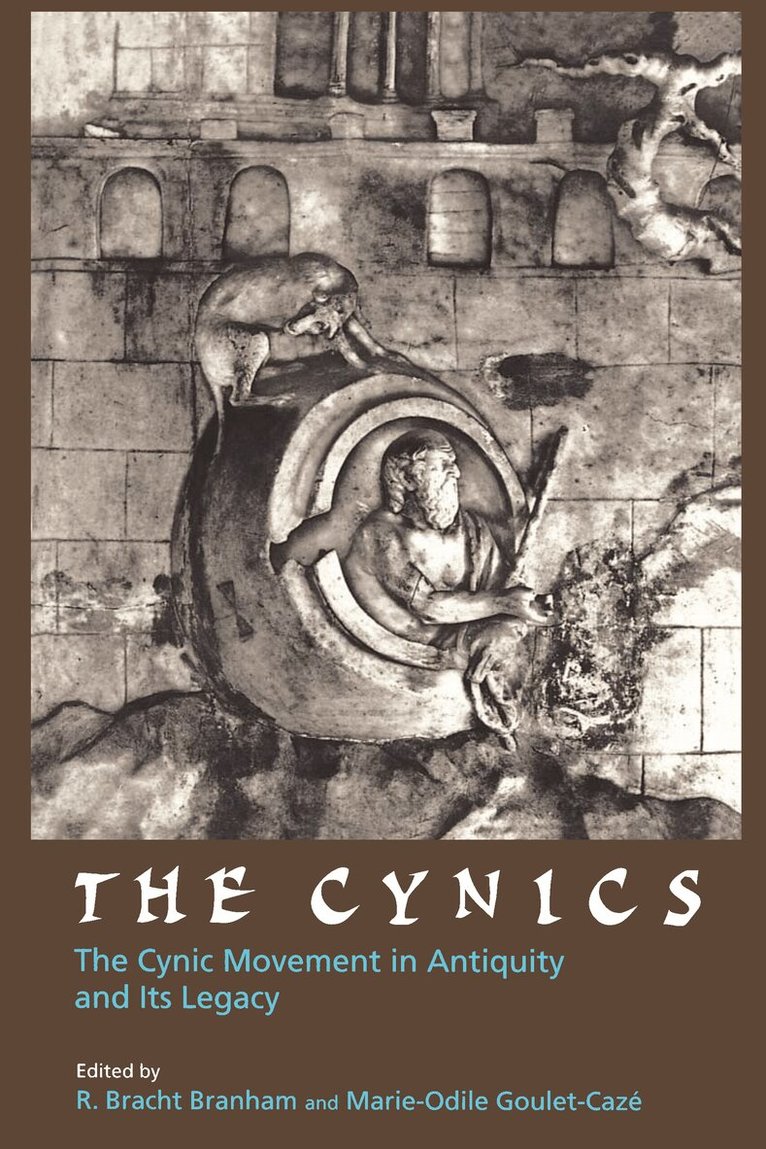
This collection of essays--the first of its kind in English--brings together the work of an international group of scholars examining the entire tradition associated with the ancient Cynics. The essays give a history of the movement as well as a state-of-the-art account of the literary, philosophical and cultural significance of Cynicism from antiquity to the present. Arguably the most original and influential branch of the Socratic tradition, Cynicism has become the focus of renewed scholarly interest in recent years, thanks to the work of Sloterdijk, Foucault, and Bakhtin, among others. The contributors to this volume--classicists, comparatists, and philosophers--draw on a variety of methodologies to explore the ethical, social and cultural practices inspired by the Cynics. The volume also includes an introduction, appendices, and an annotated bibliography, making it a valuable resource for a broad audience.