R. Ellis - Böcker
Visar alla böcker från författaren R. Ellis. Handla med fri frakt och snabb leverans.
7 produkter
7 produkter
Del 291 - Early English Text Society Original Series
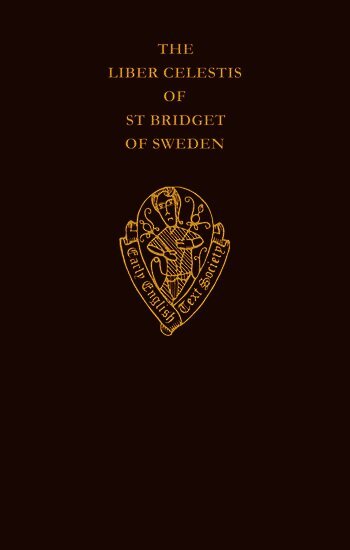
The Liber Celestis of St Bridget of Sweden
The Middle English version in British Library MS Claudius BI, together with a life of the saint from the same Manuscript. Volume I - Text
Inbunden, Engelska, 1988
860 kr
Skickas
St Bridget of Sweden (1303-73) began to experience supernatural revelations as a lady-in-waiting at the Swedish court in 1335. After her husband's death she left the court and founded a monastery for nuns and monks which became the basis of the Brigettine Order. Her visions continued after she left Sweden for Italy in 1349, and she spent the rest of her life in pilgrimage and religious activities. The visions, some of the Passion and others concerned with political and religious events of her day, were recorded in Latin by her spiritual directors, as the Liber Celestis. The mystical equivalent of a medieval manual for preachers, the work points us to what was best and worst in late medieval spirituality. It was several times translated into Middle English but the only translation hitherto available has been the partial and truncated version published in 1929. The present work is a critical edition of one of the two complete Middle English translations of the Liber, contained in British Library MS Claudius BI. This first volume consists of the text and a brief introduction to the Liber. The second volume will include a study of the manuscript and the translation; a full commentary, explanatory notes, bibliography, and glossary.
437 kr
Skickas inom 5-8 vardagar
297 kr
Skickas inom 5-8 vardagar
248 kr
Skickas inom 5-8 vardagar
444 kr
Skickas inom 5-8 vardagar
1 069 kr
Skickas inom 10-15 vardagar
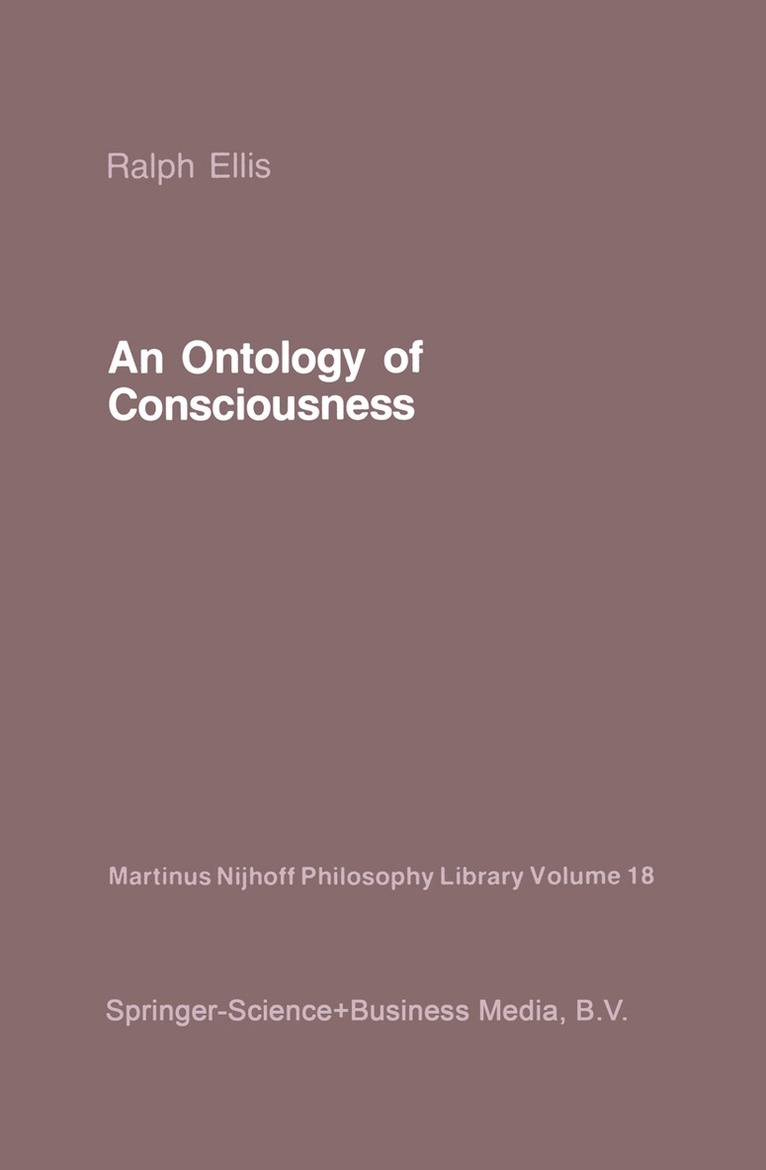
The object of this study is to find a coherent theoretical approach to three problems which appear to interrelate in complex ways: (1) What is the ontological status of consciousness? (2) How can there be 'un conscious,' 'prereflective' or 'self-alienated' consciousness? And (3) Is there a 'self' or 'ego' formed by means of the interrelation of more elementary states of consciousness? The motivation for combining such a diversity of difficult questions is that we often learn more by looking at interrelations of problems than we could by viewing them only in isola tion. The three questions posed here have emerged as especially prob lematic in the context of twentieth century philosophy. 1. The question of the ontological status of consciousness The question 'What is consciousness?' is one of the most perplexing in philosophy-so perplexing that many have been motivated to proceed as though consciousness did not exist. If William James was speaking rhetorically when he said "Consciousness does not exist," 1 many behaviorists of the recent past were not. 2 James meant only to imply that consciousness is not an independently existing soul-substance, along side physical substances. He did not mean that we do not really 'have' consciousness, and he did not provide final resolution for the problem of the causal interrelations between consciousness and the physical realm (e. g. , our bodies). Many recent philosophers and psychologists, however, try to proceed as though these problems did not exist.
1 069 kr
Skickas inom 10-15 vardagar
The object of this study is to find a coherent theoretical approach to three problems which appear to interrelate in complex ways: (1) What is the ontological status of consciousness? (2) How can there be 'un conscious,' 'prereflective' or 'self-alienated' consciousness? And (3) Is there a 'self' or 'ego' formed by means of the interrelation of more elementary states of consciousness? The motivation for combining such a diversity of difficult questions is that we often learn more by looking at interrelations of problems than we could by viewing them only in isola tion. The three questions posed here have emerged as especially prob lematic in the context of twentieth century philosophy. 1. The question of the ontological status of consciousness The question 'What is consciousness?' is one of the most perplexing in philosophy-so perplexing that many have been motivated to proceed as though consciousness did not exist. If William James was speaking rhetorically when he said "Consciousness does not exist," 1 many behaviorists of the recent past were not. 2 James meant only to imply that consciousness is not an independently existing soul-substance, along side physical substances. He did not mean that we do not really 'have' consciousness, and he did not provide final resolution for the problem of the causal interrelations between consciousness and the physical realm (e. g. , our bodies). Many recent philosophers and psychologists, however, try to proceed as though these problems did not exist.