R. J. Knecht – författare
Visar alla böcker från författaren R. J. Knecht. Handla med fri frakt och snabb leverans.
24 produkter
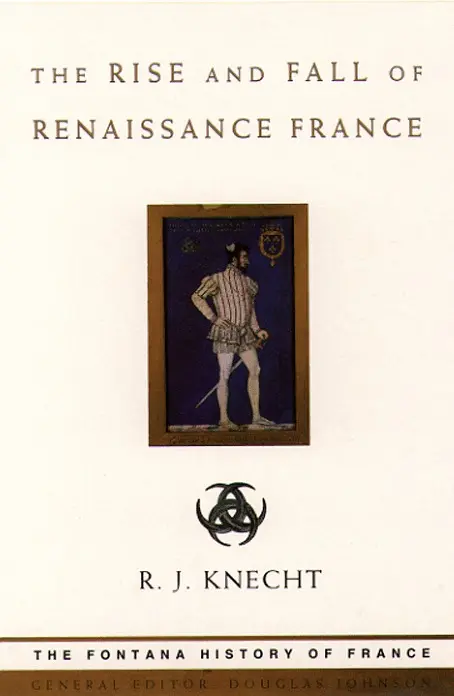
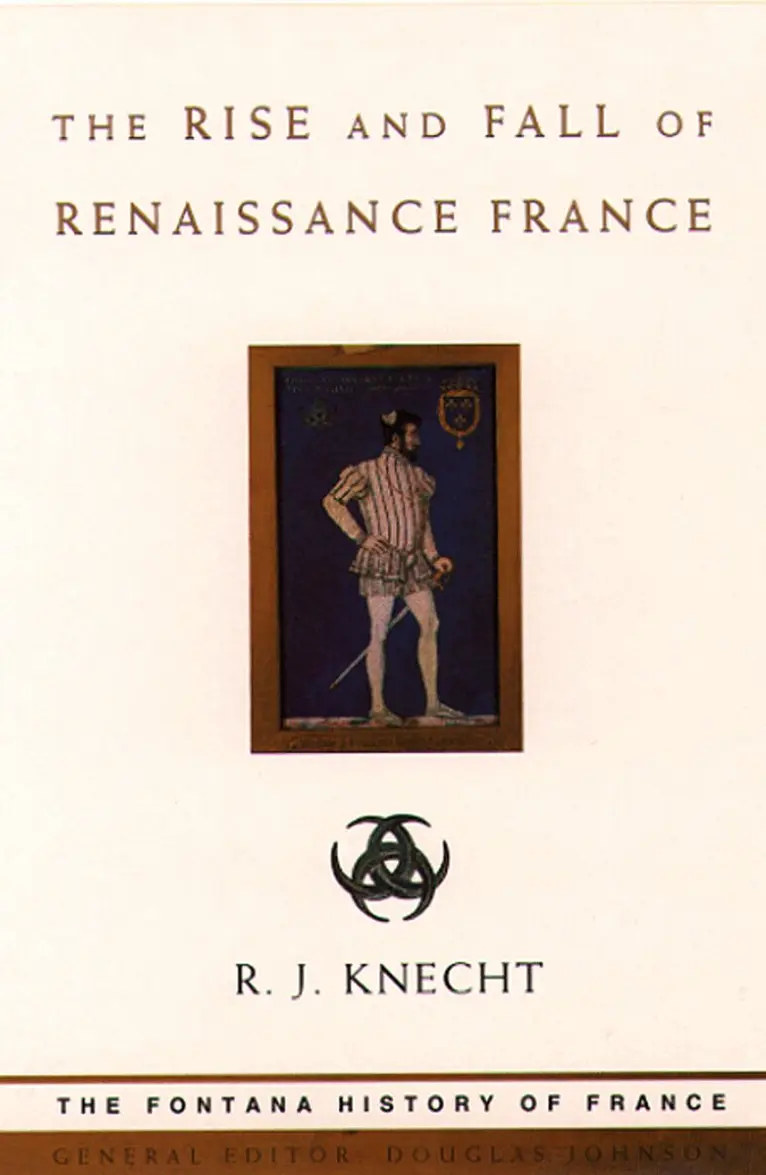
Rise and Fall of Renaissance France
Av R. J. Knecht
Häftad, 2008
254 kr
Lägg i varukorg
The history of Renaissance France is rich and varied.The Renaissance in France, as elsewhere in Europe, saw glory crowned amidst conflict and squalor. At the beginning of the sixteenth century, France seemed set to become the most powerful nation of Europe, but as the century ebbed so did her …
Rise and Fall of Renaissance France (Text Only)
Av R. J. Knecht
E-bok, 2016
155 kr
Lägg i varukorg
The history of Renaissance France is rich and varied.The Renaissance in France, as elsewhere in Europe, saw glory crowned amidst conflict and squalor. At the beginning of the sixteenth century, France seemed set to become the most powerful nation of Europe, but as the century ebbed so did her …
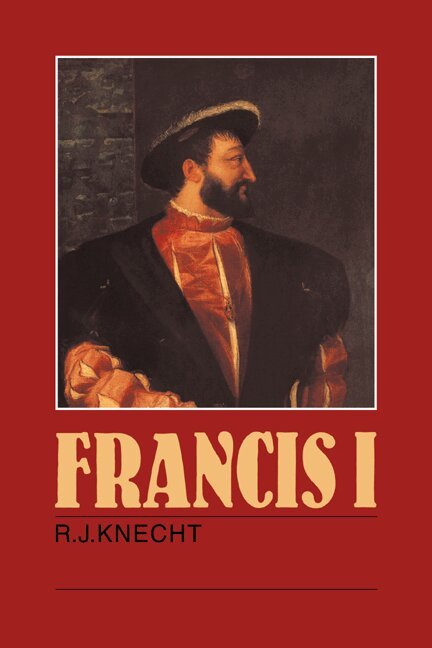
Francis I
Av R. J. Knecht
Häftad, 1984
568 kr
Lägg i varukorg
The name of Francis I and his emblem, the salamander, are familiar to the many thousands of tourists who visit the chateaux of the Loire each year. But what sort of monarch was he? Whereas in his own day he was acclaimed as 'the great king Francis', in more recent times he has generally been taken …
Renaissance Warrior and Patron
The Reign of Francis I
Av R. J. Knecht
Häftad, 1996
720 kr
Lägg i varukorg
This book offers a full and comprehensive account of one of the most colourful and formative reigns in French history, that of Francis I (1515-47). First published to coincide with the 500th anniversary of Francis's birth in 1994, this book is a completely revised version of Knecht's earlier study …
Catherine de'Medici
Av R J Knecht
Häftad, 1997
811 kr
Lägg i varukorg
Catherine de' Medici (1518-89) is one of the most controversial of all historical figures. Wife of one French King and mother of three others she was as Regent and Queen Mother, a key figure in the French Wars of Religion. Praised as a peacemaker she has also been blamed for the Massacre of St …
The French Civil Wars, 1562-1598
Av R. J. Knecht
Häftad, 2000
1957 kr
Lägg i varukorg
The French Wars of Religion tore the country apart for almost fifty years. They were also part of the wider religious conflict between Catholics and Protestants which raged across Europe during the 16th century. This new study, by a major authority on French history, explores the impact of these …
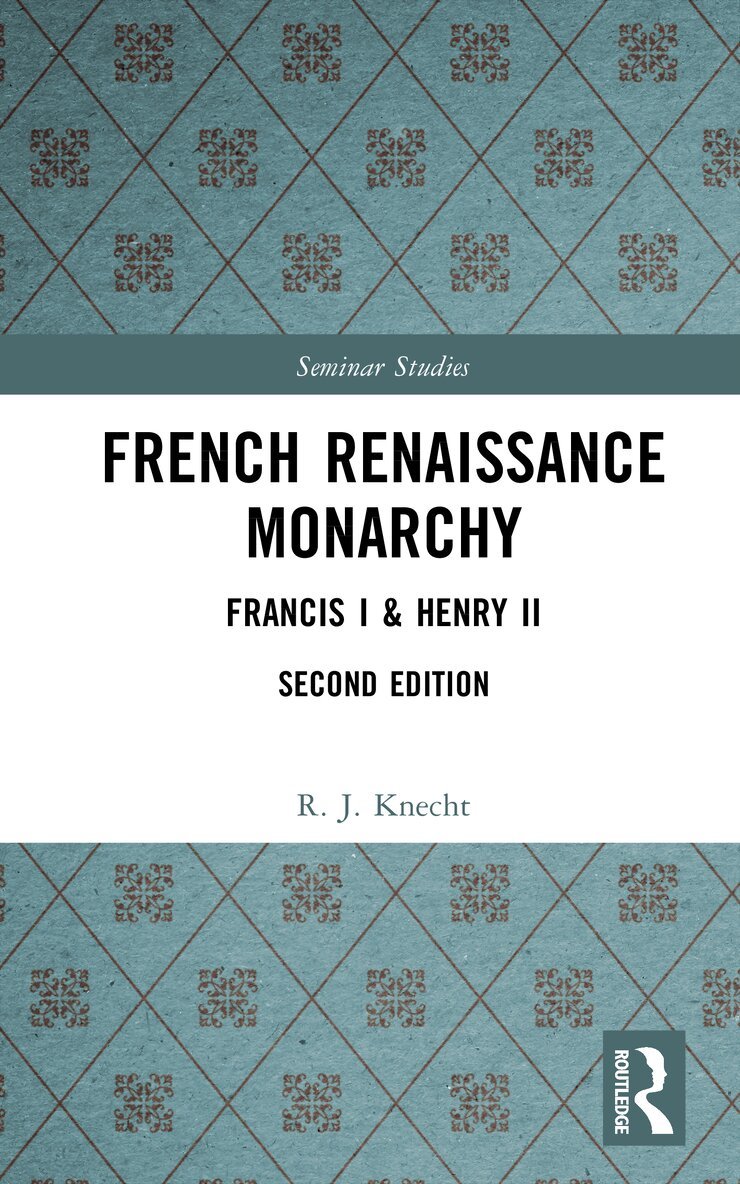
French Renaissance Monarchy
Francis I & Henry II
Av R. J. Knecht
Häftad, 1996
667 kr
Lägg i varukorg
First published in 1984, Professor Knecht's study quickly established itself as the best short account of the period. The reigns of Francis I and Henry II, spanning the first half of the sixteenth century, are one of the most colourful and formative periods of French history. In addition to …
Richelieu
Av R J Knecht
Häftad, 2000
858 kr
Lägg i varukorg
This concise and up-to-date assessment of Richelieu's career provides an enthralling introduction to the character and exercise of his power. Richelieu governed France for 18 years until his death and until the mid-20th century was viewed by Anglo-Saxon historians as cold, clever and ruthless. …
Catherine de'Medici
Av R J Knecht
Inbunden, 2017
2666 kr
Lägg i varukorg
Catherine de' Medici (1519-89) was the wife of one king of France and the mother of three more - the last, sorry representatives of the Valois, who had ruled France since 1328. She herself is of preeminent importance to French history, and one of the most controversial of all historical figures. …
French Renaissance Monarchy
Francis I & Henry II
Av R. J. Knecht
Inbunden, 2017
2586 kr
Lägg i varukorg
First published in 1984, Professor Knecht's study quickly established itself as the best short account of the period. The reigns of Francis I and Henry II, spanning the first half of the sixteenth century, are one of the most colourful and formative periods of French history. In addition to …
French Civil Wars, 1562-1598
Av R. J. Knecht
Inbunden, 2017
2586 kr
Lägg i varukorg
The French Wars of Religion tore the country apart for almost fifty years. They were also part of the wider religious conflict between Catholics and Protestants which raged across Europe during the 16th century. This new study, by a major authority on French history, explores the impact of these …
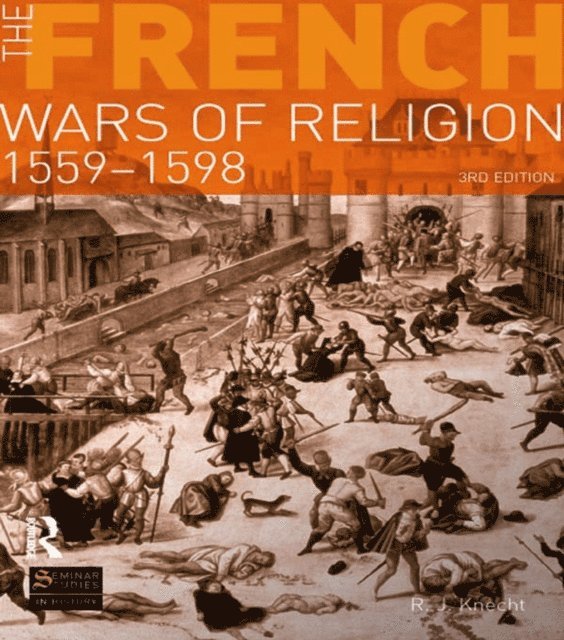
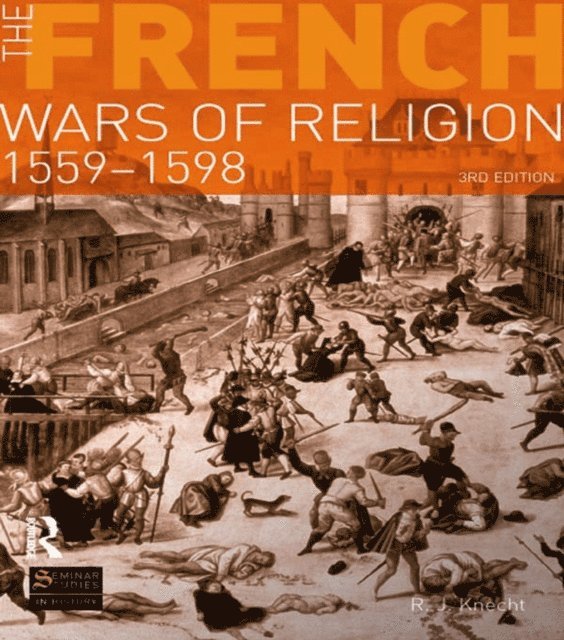
French Wars of Religion 1559-1598
Av R. J. Knecht
Inbunden, 2017
3081 kr
Lägg i varukorg
In the second half of the sixteenth century, France was racked by religious civil wars and peace was only restored when Henry of Navarre finally converted to Catholicism, deciding � in his immortal phrase � that 'Paris is worth a mass'. In this lucid introduction to a complex period in French …
Richelieu
Av R J Knecht
Inbunden, 2015
2586 kr
Lägg i varukorg
This concise and up-to-date assessment of Richelieu's career provides an enthralling introduction to the character and exercise of his power. Richelieu governed France for 18 years until his death and until the mid-20th century was viewed by Anglo-Saxon historians as cold, clever and ruthless. …
French Wars of Religion 1559-1598
Av R. J. Knecht
E-bok, 2014
731 kr
Lägg i varukorg
In the second half of the sixteenth century, France was racked by religious civil wars and peace was only restored when Henry of Navarre finally converted to Catholicism, deciding – in his immortal phrase – that ''Paris is worth a mass''. In this lucid introduction to a complex period in French …
French Wars of Religion 1559-1598
Av R. J. Knecht
E-bok, 2014
731 kr
Lägg i varukorg
In the second half of the sixteenth century, France was racked by religious civil wars and peace was only restored when Henry of Navarre finally converted to Catholicism, deciding – in his immortal phrase – that ''Paris is worth a mass''. In this lucid introduction to a complex period in French …
Richelieu
Av R J Knecht
E-bok, 2014
982 kr
Lägg i varukorg
This concise and up-to-date assessment of Richelieu''s career provides an enthralling introduction to the character and exercise of his power. Richelieu governed France for 18 years until his death and until the mid-20th century was viewed by Anglo-Saxon historians as cold, clever and ruthless. …
Richelieu
Av R J Knecht
E-bok, 2014
1011 kr
Lägg i varukorg
This concise and up-to-date assessment of Richelieu''s career provides an enthralling introduction to the character and exercise of his power. Richelieu governed France for 18 years until his death and until the mid-20th century was viewed by Anglo-Saxon historians as cold, clever and ruthless. …
French Renaissance Monarchy
Francis I & Henry II
Av R. J. Knecht
E-bok, 2014
762 kr
Lägg i varukorg
First published in 1984, Professor Knecht''s study quickly established itself as the best short account of the period. The reigns of Francis I and Henry II, spanning the first half of the sixteenth century, are one of the most colourful and formative periods of French history. In addition to …
French Renaissance Monarchy
Francis I & Henry II
Av R. J. Knecht
E-bok, 2014
768 kr
Lägg i varukorg
First published in 1984, Professor Knecht''s study quickly established itself as the best short account of the period. The reigns of Francis I and Henry II, spanning the first half of the sixteenth century, are one of the most colourful and formative periods of French history. In addition to …
French Civil Wars, 1562-1598
Av R. J. Knecht
E-bok, 2014
2318 kr
Lägg i varukorg
The French Wars of Religion tore the country apart for almost fifty years. They were also part of the wider religious conflict between Catholics and Protestants which raged across Europe during the 16th century. This new study, by a major authority on French history, explores the impact of these …
French Civil Wars, 1562-1598
Av R. J. Knecht
E-bok, 2014
2318 kr
Lägg i varukorg
The French Wars of Religion tore the country apart for almost fifty years. They were also part of the wider religious conflict between Catholics and Protestants which raged across Europe during the 16th century. This new study, by a major authority on French history, explores the impact of these …
Catherine de'Medici
Av R J Knecht
E-bok, 2014
935 kr
Lägg i varukorg
Catherine de'' Medici (1519-89) was the wife of one king of France and the mother of three more - the last, sorry representatives of the Valois, who had ruled France since 1328. She herself is of preeminent importance to French history, and one of the most controversial of all historical figures. …
Catherine de'Medici
Av R J Knecht
E-bok, 2014
907 kr
Lägg i varukorg
Catherine de'' Medici (1519-89) was the wife of one king of France and the mother of three more - the last, sorry representatives of the Valois, who had ruled France since 1328. She herself is of preeminent importance to French history, and one of the most controversial of all historical figures. …
French Wars of Religion 1559-1598
Av R. J. Knecht
Häftad, 2010
620 kr
Lägg i varukorg
In the second half of the sixteenth century, France was racked by religious civil wars and peace was only restored when Henry of Navarre finally converted to Catholicism, deciding – in his immortal phrase – that 'Paris is worth a mass'. In this lucid introduction to a complex period in French …