R. J. P. Williams - Böcker
Visar alla böcker från författaren R. J. P. Williams. Handla med fri frakt och snabb leverans.
15 produkter
15 produkter
2 292 kr
Skickas inom 7-10 vardagar
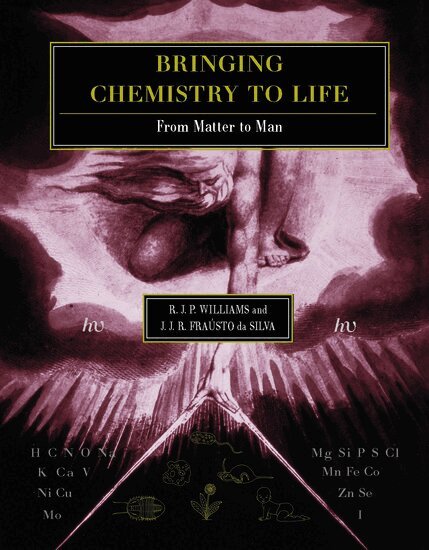
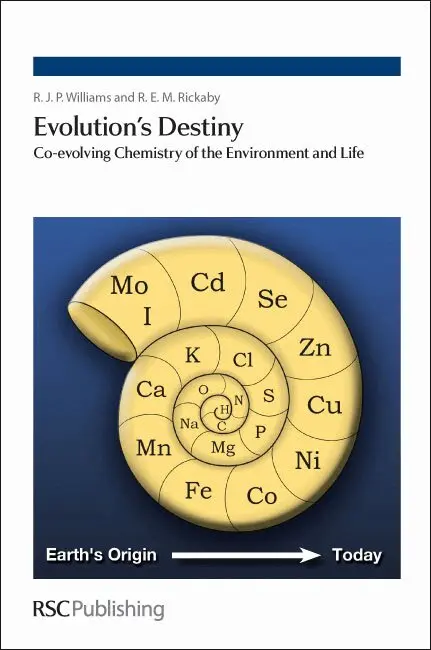
In this book the authors describe the long journey from formless inanimate matter to man, while explaining the nature and the logic of the physical-chemical processes involved, and stressing the limitations of reductionist analyses of these processes as complexity increases and novel properties emerge. In particular the authors develop the idea that it was chemical change of the environment that allowed evolution of life to occur and that this evolution required successive addition of new message systems and information codes connected, compatible, and cooperative with previous extant systems. To do this the authors analyse the relationship between chemical element content and speciation both in inanimate and living systems in terms of fundamental units and variables, or composite (derived) units and variables. Through such analyses the authors conclude that chemical speciation is very much a matter of chemical cooperativity (order versus disorder) while biological speciation requires cooperative flow of chemicals and energy (organisation versus disorder). They argue that chance mutations of DNA are far too simple to provide a basis for evolution and biological diversity, though it is a representation of such diversity. It is the survival strength of systems of molecular machinery which separate and generate living species. In the final chapter they analyse the effect of man's activities on the present global and local ecosystems and speculate on the possible nature of the emergent properties to be expected from an ever-increasing complexity of information-based modern societies.
1 304 kr
Skickas inom 5-8 vardagar
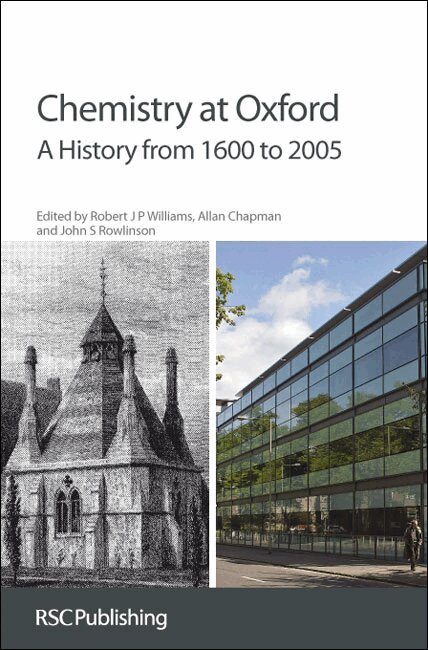
This fascinating and unique history reveals the major influence of the Oxford Chemistry School on the advancement of chemistry. It shows how the nature of the University, and individuals within it, have shaped the school and made great achievements both in teaching and research. The book will appeal to those interested in the history of science and education, the city of Oxford and chemistry in general. Chemistry has been studied in Oxford for centuries but this book focuses on the last 400 years and, in particular, the seminal work of Robert Boyle, Robert Hooke, and the proto- Royal Society of the 1650's. Arranged in chronological fashion, it includes specialist studies of particular areas of innovation. The book shows that chemistry has advanced, not just as a consequence of research but, because of the idiosynchratic nature of the collegiate system and the characters of the individuals involved. In other words, it demonstrates that science is a human endeavour and its advance in any institution is conditioned by the organization and people within it. For chemists, the main appeal will be the book's examination of the way separate branches of chemistry (organic, physical, inorganic and biological) have evolved in Oxford. It also enables comparison with the development of the subject at other universities such as Cambridge, London and Manchester. For historians and sociologists, the book reveals the motivations of both scientists and non-scientists in the management of the School. It exposes the unusual character of Oxford University and the tensions between science and administration. The desire of the college to retain its academic values in the face of external and financial pressures is emphasized.
1 221 kr
Skickas inom 5-8 vardagar
This book is written as an addition to Darwin's work and that of molecular biologists on evolution so as to include views of it from the point of view of chemistry rather than just from our knowledge of the biology and genes of organisms. By concentrating on a wide range of chemical elements, not just those in traditional organic compounds, we show that there is a close relationship between the geological or environmental chemical changes from the formation of Earth and those of organisms from the time of their origin. These are considerations which Darwin or other scientists could not have explored until very recent times since sufficient analytical data were not available. They lead us to suggest that there is a combined geo- and bio-chemical evolution, that of an ecosystem, which has had a systematic chemical development. In this development the arrival of new very similar species is shown to be by random Darwinian competitive selection processes such that a huge variety of species coexist with only minor differences in chemistry and advantages. This is in agreement with previous studies. On the large scale of evolution of very different organisms, and over greater timescales, by way of contrast, we observe that groups of species have special, different, chemical features and function. It is more difficult to understand how they evolved and therefore we examine their chemical development in detail. Overall there is a cooperative evolution of a chemical system driven by capture of energy, mainly from the sun, and its degradation in which the chemistry of both the environment and organisms are facilitating intermediates. We shall suggest that the overall drive of the whole joint system is to optimise the rate of this energy degradation. Since the environmental changes are inorganic and relatively fast they move inevitably to equilibrium. The living part of the system, the organisms, under the influence of this inevitable environmental change are forced to follow but as they are increasingly energised and their reactions are slow, they move further away from equilibrium. We are able to explore the ways in which this chemical system evolved, recognising that as complexity of the chemistry of organisms increased, they had to be formed from more and more compartments and to become part of a chemically cooperative overall activity. They could not remain as isolated species. Only in the last chapter do we attempt to make a connection between the changing chemistry of organisms with the coded molecules of each cell which have to exist to explain reproduction.
538 kr
Skickas inom 10-15 vardagar
538 kr
Skickas inom 10-15 vardagar
538 kr
Skickas inom 10-15 vardagar
856 kr
Skickas inom 10-15 vardagar
856 kr
Skickas inom 10-15 vardagar
538 kr
Skickas inom 7-10 vardagar
538 kr
Skickas inom 10-15 vardagar
538 kr
Skickas inom 7-10 vardagar
1 064 kr
Skickas inom 10-15 vardagar
1 064 kr
Skickas inom 10-15 vardagar
1 064 kr
Skickas inom 10-15 vardagar
1 064 kr
Skickas inom 10-15 vardagar