R. Rigler – författare
Visar alla böcker från författaren R. Rigler. Handla med fri frakt och snabb leverans.
8 produkter
Chinese Swords
An Ancient Tradition and Modern Training
Häftad, 2015
268 kr
Lägg i varukorg
The Chinese double-edged straight sword (jian), the “gentleman of weapons,” is the focus of this Via Media book. If you are a serious practitioner of the Chinese sword and have an interest in its history and techniques, you’ll enjoy each chapter included in this Via Media anthology. May it be a …
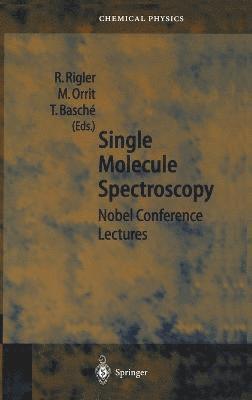
Single Molecule Spectroscopy
Nobel Conference Lectures
Inbunden, 2001
878 kr
Lägg i varukorg
This book surveys recent advances related to the application of single molecule techniques in various fields of science. The topics, each described by leading experts in the field, range from single molecule experiments in quantum optics and solid-state physics to analogous investigations in …
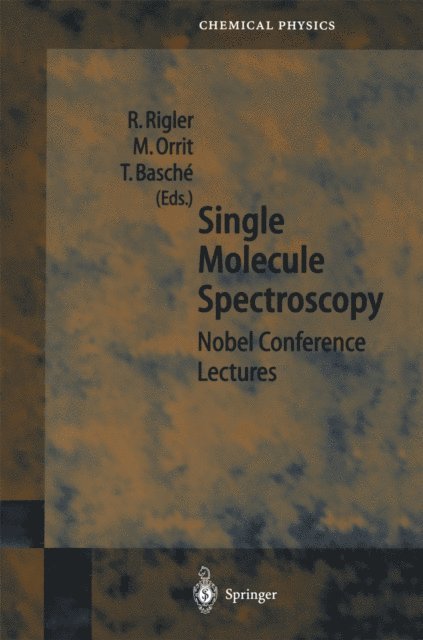
Single Molecule Spectroscopy
Nobel Conference Lectures
E-bok, 2012
734 kr
Lägg i varukorg
One often hears that nanoscience or, in other words, the knowledge and control of matter at length scales of a few nanometers, will be the scientific frontier of the 21st century. Although it has become almost commonplace, this prediction deserves some justification. The technological and …
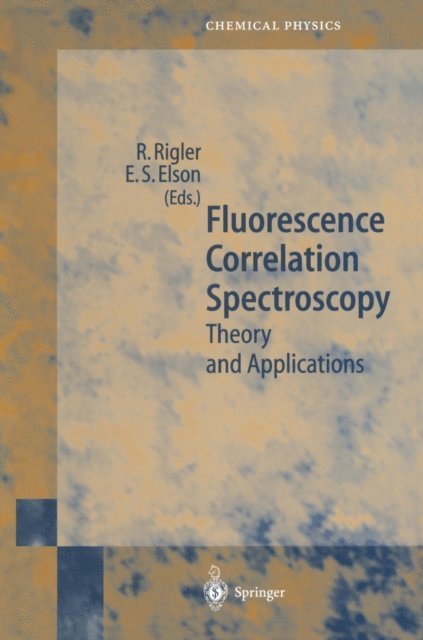
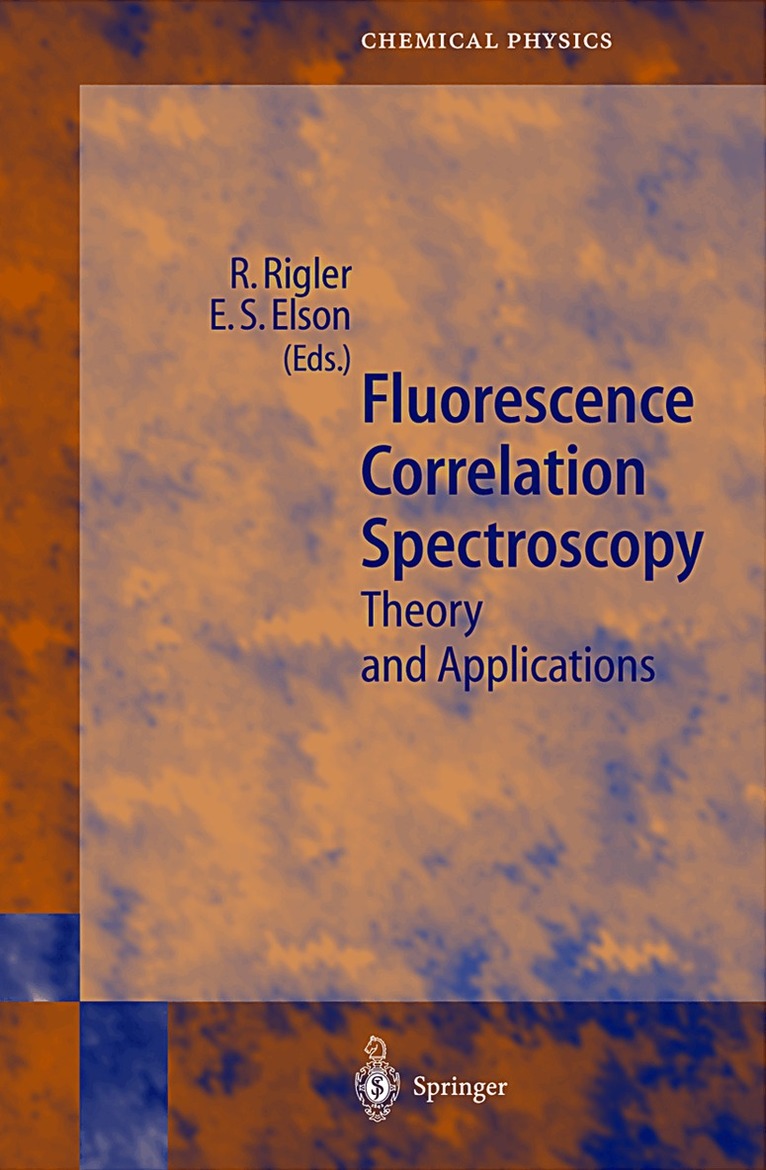
Fluorescence Correlation Spectroscopy
Theory and Applications
Av E.S. Elson, R. Rigler
E-bok, 2012
734 kr
Lägg i varukorg
Fluorescence correlation spectroscopy (FCS) was developed in order to char acterize the dynamics of molecular processes in systems in thermodynamic equilibrium. FCS determines transport and chemical reaction rates from mea surements of spontaneous microscopic thermally driven molecular concentra …
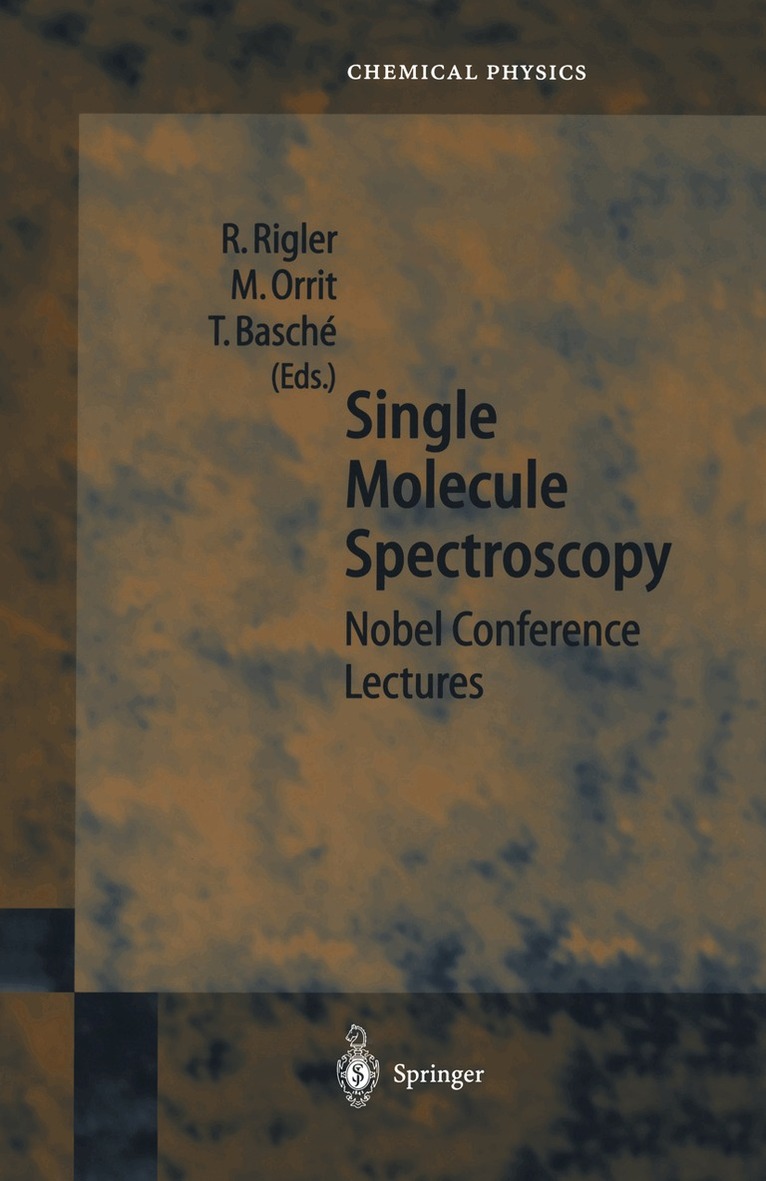
Single Molecule Spectroscopy
Nobel Conference Lectures
Häftad, 2012
552 kr
Lägg i varukorg
One often hears that nanoscience or, in other words, the knowledge and control of matter at length scales of a few nanometers, will be the scientific frontier of the 21st century. Although it has become almost commonplace, this prediction deserves some justification. The technological and …
Fluorescence Correlation Spectroscopy
Theory and Applications
Av R. Rigler, E.S. Elson
Häftad, 2011
552 kr
Lägg i varukorg
Fluorescence correlation spectroscopy (FCS) was developed in order to char acterize the dynamics of molecular processes in systems in thermodynamic equilibrium. FCS determines transport and chemical reaction rates from mea surements of spontaneous microscopic thermally driven molecular concentra …
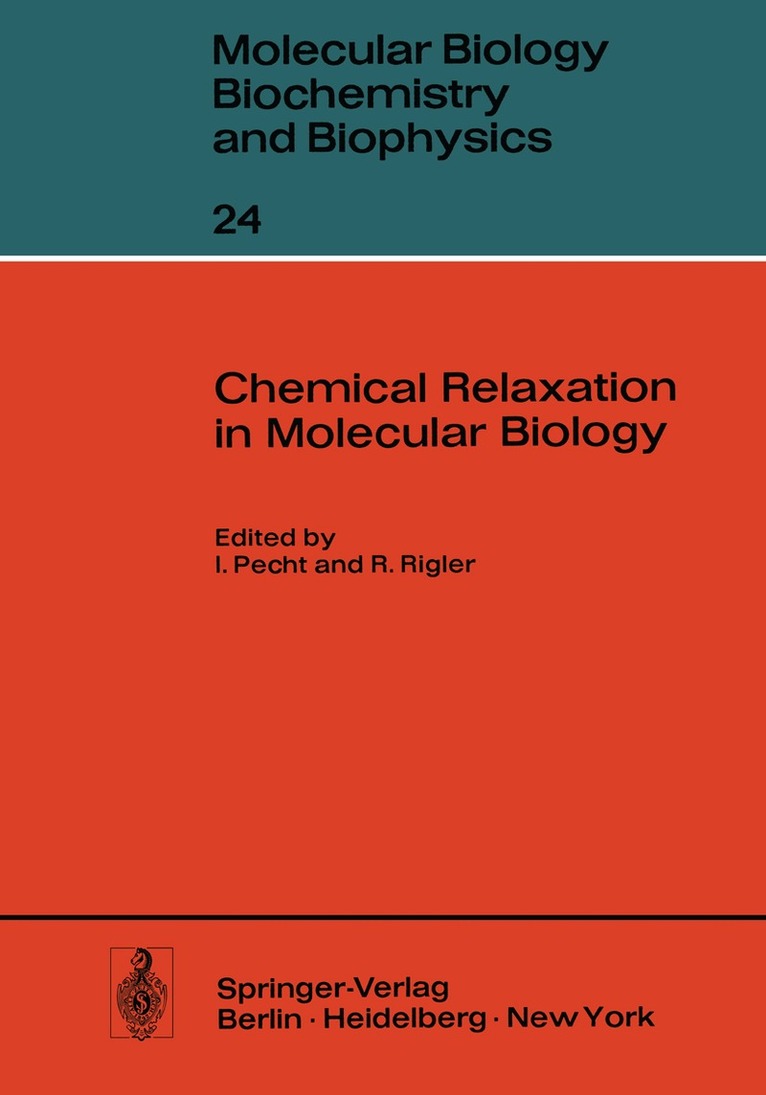
Chemical Relaxation in Molecular Biology
E-bok, 2012
1502 kr
Lägg i varukorg
The development of an area of scientific research is a dynamic process with its own kinetic equations and its own physical mech anism. The study of fast chemical interactions and transformations is such an area, and while it is tempting to draw analogies or to speculate about the simplest model …
Chemical Relaxation in Molecular Biology
Häftad, 2011
1129 kr
Lägg i varukorg
The development of an area of scientific research is a dynamic process with its own kinetic equations and its own physical mech anism. The study of fast chemical interactions and transformations is such an area, and while it is tempting to draw analogies or to speculate about the simplest model …