R.A. Duff - Böcker
Visar alla böcker från författaren R.A. Duff. Handla med fri frakt och snabb leverans.
6 produkter
6 produkter
1 553 kr
Skickas inom 5-8 vardagar
This collection of original essays, by some of the best known contemporary criminal law theorists, tackles a range of issues about the criminal law's 'special part' - the part of the criminal law that defines specific offences. One of its aims is to show the importance, for theory as well as for practice, of focusing on the special part as well as on the general part which usually receives much more theoretical attention.Some of the issues covered concern the proper scope of the criminal law, for example how far should it include offences of possession, or endangerment? If it should punish only wrongful conduct, how can it justly include so-called 'mala prohibita', which are often said to involve conduct that is not wrongful prior to its legal prohibition? Other issues concern the ways in which crimes should be classified. Can we make plausible sense, for instance, of the orthodox distinction between crimes of basic and general intent? Should domestic violence be defined as a distinct offence, distinguished from other kinds of personal violence?Also examined are the ways in which specific offences should be defined, to what extent those definitions should identify distinctive types of wrongs, and the light that such definitional questions throw on the grounds and structures of criminal liability. Such issues are discussed in relation not only to such crimes as murder, rape, theft and other property offences, but also in relation to offences such as bribery, endangerment and possession that have not traditionally been subjects for in depth theoretical analysis.
1 657 kr
Skickas inom 5-8 vardagar
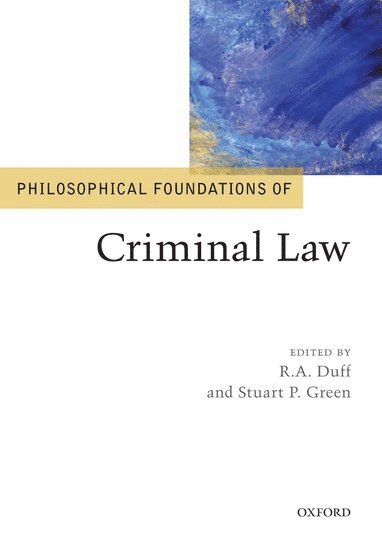
25 leading contemporary theorists of criminal law tackle a range of foundational issues about the proper aims and structure of the criminal law in a liberal democracy. The challenges facing criminal law are many. There are crises of over-criminalization and over-imprisonment; penal policy has become so politicized that it is difficult to find any clear consensus on what aims the criminal law can properly serve; governments seeking to protect their citizens in the face of a range of perceived threats have pushed the outer limits of criminal law and blurred its boundaries. To think clearly about the future of criminal law, and its role in a liberal society, foundational questions about its proper scope, structure, and operations must be re-examined. What kinds of conduct should be criminalized? What are the principles of criminal responsibility? How should offences and defences be defined? The criminal process and the criminal trial need to be studied closely, and the purposes and modes of punishment should be scrutinized. Such a re-examination must draw on the resources of various disciplines-notably law, political and moral philosophy, criminology and history; it must examine both the inner logic of criminal law and its place in a larger legal and political structure; it must attend to the growing field of international criminal law, it must consider how the criminal law can respond to the challenges of a changing world.Topics covered in this volume include the question of criminalization and the proper scope of the criminal law; the grounds of criminal responsibility; the ways in which offences and defences should be defined; the criminal process and its values; criminal punishment; the relationship between international criminal law and domestic criminal law. Together, the essays provide a picture of the exciting state of criminal law theory today, and the basis for further research and debate in the coming years.
1 977 kr
Skickas inom 5-8 vardagar
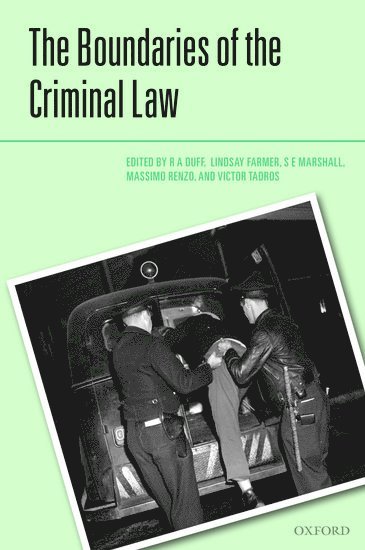
Criminalization is a new series arising from an interdisciplinary investigation into criminalization, focussing on the principles and goals that should guide decisions about what kinds of conduct are to be criminalized, and the forms that criminalization should take. Developing a normative theory of criminalization, the six volumes will tackle the key questions at the heart of issue: By reference to what principles and goals should legislations decide what to criminalize? How should criminal wrongs be classified and differentiated? And how should law enforcement officials apply the law's specification of offences?Boundaries of the Criminal Law is the first book in this series examining the scope and boundaries of the criminal law. Investigations into the scope of the criminal law have often focused on the harm principle, the principle that conduct can be justifiably criminalized only if it is harmful, or other master principles that might determine the proper scope of the criminal law. This collection of original essays by some of the leading scholars in criminal law and philosophy from the UK and the US makes significant advances in the development of a broader range of ideas that might inform criminalization decisions. A range of issues are discussed, including the significance for criminalization of ideas of moral wrongdoing and of using a person as a means, the distinction between criminal law and other forms of legal regulation, the role of new technology in our understanding of the evolving scope of the criminal law, and the role of criminal justice officials in decision-making about criminalization. The authors draw on legal and philosophical sources, but also on history, sociology and social psychology in their investigations for a truly interdisciplinary approach. This is a groundbreaking set of essays which will help to reorient legal and philosophical discussion about the proper scope of the criminal law.
1 657 kr
Skickas inom 5-8 vardagar
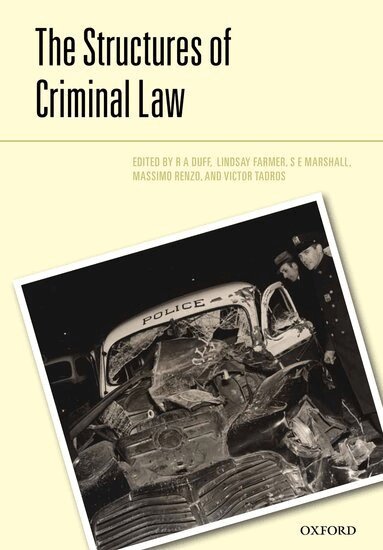
Criminalization is a new series arising from an interdisciplinary investigation into the issue of criminalization, focussing on the principles and goals that should guide decisions about what kinds of conduct are to be criminalized, and the forms that criminalization should take. Developing a normative theory of criminalization, the six volumes will tackle the key questions at the heart of issue: By reference to what principles and goals should legislations decide what to criminalize? How should criminal wrongs be classified and differentiated? And how should law enforcement officials apply the law's specification of offences?The second volume in the series concerns itself with the structures of criminal law in three different senses. The first examines the internal structure of the criminal law itself and the questions posed by familiar distinctions between which offences are typically analysed. These questions of classification include discussion of the growing range of crimes and the problems posed by this broadening of definition. Should traditional ideas and conceptions of the criminal law be reshaped in light of recent developments or should these developments be criticized and refuted?Structures of criminal law also refer to the place of the criminal law within the larger structure of the law. Here the book examines the relationships with and between the criminal law and other aspects of law, particularly private law and public law. It also looks at how the criminal law is made, and by whom.Finally the third sense of structure is outlined - the relationships between legal structures and social and political structures. What place does the criminal law have within the existing political and social landscapes? What are the influences, both political and social, upon the criminal law, and should they be allowed to influence the law in this fashion? What is its proper role?Focussing not only on the questions about the criminal law's proper scope, but also on crucial questions about how crimes should be structured, defined, and classified, this book provides a deeper understanding of criminalization.
716 kr
Skickas inom 7-10 vardagar
Twenty-five leading contemporary theorists of criminal law tackle a range of foundational issues about the proper aims and structure of the criminal law in a liberal democracy.The challenges facing criminal law are many. There are crises of over-criminalization and over-imprisonment; penal policy has become so politicized that it is difficult to find any clear consensus on what aims the criminal law can properly serve; governments seeking to protect their citizens in the face of a range of perceived threats have pushed the outer limits of criminal law and blurred its boundaries. To think clearly about the future of criminal law, and its role in a liberal society, foundational questions about its proper scope, structure, and operations must be re-examined. What kinds of conduct should be criminalized? What are the principles of criminal responsibility? How should offences and defences be defined? The criminal process and the criminal trial need to be studied closely, and the purposes and modes of punishment should be scrutinized.Such a re-examination must draw on the resources of various disciplines-notably law, political and moral philosophy, criminology and history; it must examine both the inner logic of criminal law and its place in a larger legal and political structure; it must attend to the growing field of international criminal law, it must consider how the criminal law can respond to the challenges of a changing world.Topics covered in this volume include the question of criminalization and the proper scope of the criminal law; the grounds of criminal responsibility; the ways in which offences and defences should be defined; the criminal process and its values; criminal punishment; the relationship between international criminal law and domestic criminal law. Together, the essays provide a picture of the exciting state of criminal law theory today, and the basis for further research and debate in the coming years.
2 236 kr
Skickas inom 5-8 vardagar
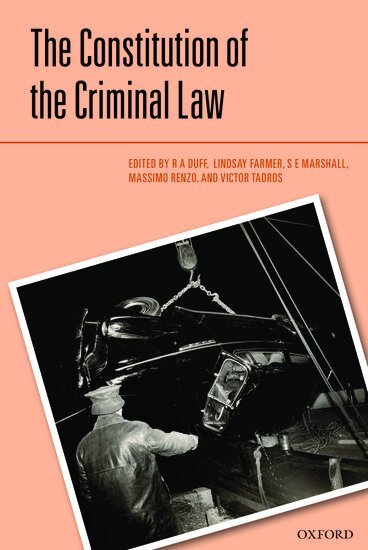
The third book in the Criminalization series examines the constitutionalization of criminal law. It considers how the criminal law is constituted through the political processes of the state; how the agents of the criminal law can be answerable to it themselves; and finally, how the criminal law can be constituted as part of the international order.Addressing the ways in which and the grounds on which types of conduct can be justifiably criminalized, the first four chapters of this volume focus on the questions that arise from a consideration of the political constitution of the criminal law. The contributors then turn their attention to the role of the state, its institutions and officials, and their role not only as creators, enactors, interpreters, and enforcers of the criminal law, but also as subjects of it. How can the agents of the criminal law also be answerable to it?Finally discussion turns to how the criminal law can be constituted as part of an international order. Examining the relationships between domestic laws of different nation-states, and between domestic criminal law and international or transnational law, the chapters also look at the authority and jurisdiction of international criminal law itself, and its relationship to other dimensions of the international order.A vital examination of one of the most important topics in modern criminal legal theory, this volume raises new questions central to the study of the criminal law and offers new suggestions for addressing them.