Rabia Gregory - Böcker
Visar alla böcker från författaren Rabia Gregory. Handla med fri frakt och snabb leverans.
3 produkter
3 produkter
439 kr
Skickas inom 7-10 vardagar
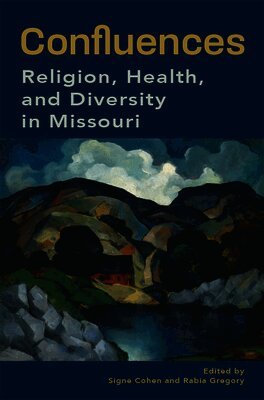
At the confluence of the Missouri and Mississippi rivers, the South and Midwest, the Ozarks and the Ouachita mountains, the plains and the prairies, America’s religions flow together and are remade. Bringing together experts in religious history, sociology, and medicine, Confluences: Religion, Health, and Diversity in Missouri shows that centuries before the first European colonists arrived at the confluence of the great rivers in what is now Missouri, the region’s indigenous inhabitants lived at the center of a transnational nexus for religious diversity and that, following the arrival of European settlers, religions have continuously shaped health and healing and informed Missouri’s regional identity. The contributors to this volume explore connections between religious affiliation, race, gender, ethnicity, epidemiology, and attitudes towards health and medicine in Missouri from the nineteenth century to the present day. They ask what role religious belief systems play in healthcare outcomes and offer important arguments for building a dialogue between faith communities and medical caregivers. Centering on Missouri as a site for religious transformation and diversity, this volume documents how religious perspectives shape contemporary America. Initial chapters outline the religious history of Missouri, relaying the history of medicine in the region before and after Missouri statehood. Subsequent essays document Missouri’s religious diversity by contemplating Native American, Asian American, and African American religious experiences in Missouri, intentionally recovering and respectfully contextualizing understudied events and forgotten individuals. The volume’s remaining essays consider religious responses to the Cholera, Influenza, and Covid-19 epidemics and show how Native American, Euro-American, and African American Missourians have transformed U.S. history and healthcare. Collectively, the essays in this book demonstrate that religious freedom, medical knowledge, and transnational encounters are woven into the historical fabric of the region. Featuring essays by experts in Religious Studies and Health Sciences, this volume will be of interest to scholars of religion, sociology, public health, and medicine, as well as readers more generally interested in the history and culture of Missouri.
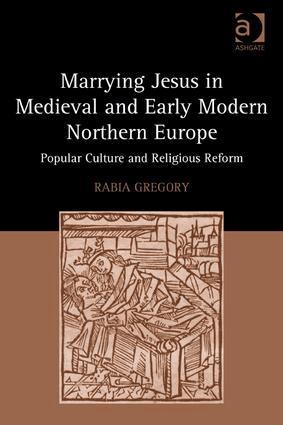
Marrying Jesus in Medieval and Early Modern Northern Europe
Popular Culture and Religious Reform
Häftad, Engelska, 2019
710 kr
Skickas inom 10-15 vardagar
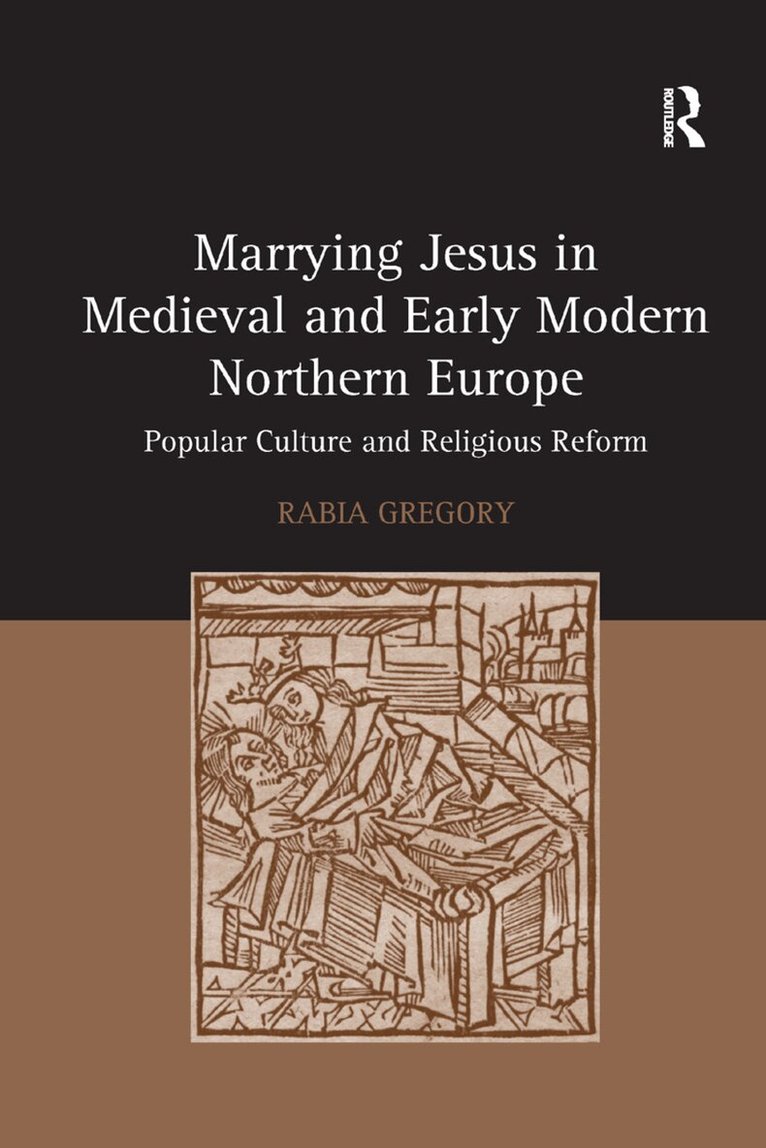
The first full-length study of the notion of marriage to Jesus in late medieval and early modern popular culture, this book treats the transmission and transformation of ideas about this concept as a case study in the formation of religious belief and popular culture. Marrying Jesus in Medieval and Early Modern Northern Europe provides a history of the dispersion of theology about the bride of Christ in the period between the twelfth and seventeenth centuries and explains how this metaphor, initially devised for a religious elite, became integral to the laity's pursuit of salvation. Unlike recent publications on the bride of Christ, which explore the gendering of sanctity or the poetics of religious eroticism, this is a study of popular religion told through devotional media and other technologies of salvation. Marrying Jesus argues against the heteronormative interpretation that brides of Christ should be female by reconstructing the cultural production of brides of Christ in late medieval Europe. A central assertion of this book is that by the fourteenth century, worldly, sexually active brides of Christ, both male and female, were no longer aberrations. Analyzing understudied vernacular sources from the late medieval period - including sermons, early printed books, spiritual diaries, letters, songs, and hagiographies - Rabia Gregory shows how marrying Jesus was central to late medieval lay piety, and how the 'chaste' bride of Christ developed out of sixteenth-century religious disputes.
Marrying Jesus in Medieval and Early Modern Northern Europe
Popular Culture and Religious Reform
Inbunden, Engelska, 2015
2 306 kr
Skickas inom 10-15 vardagar
The first full-length study of the notion of marriage to Jesus in late medieval and early modern popular culture, this book treats the transmission and transformation of ideas about this concept as a case study in the formation of religious belief and popular culture. Marrying Jesus in Medieval and Early Modern Northern Europe provides a history of the dispersion of theology about the bride of Christ in the period between the twelfth and seventeenth centuries and explains how this metaphor, initially devised for a religious elite, became integral to the laity's pursuit of salvation. Unlike recent publications on the bride of Christ, which explore the gendering of sanctity or the poetics of religious eroticism, this is a study of popular religion told through devotional media and other technologies of salvation. Marrying Jesus argues against the heteronormative interpretation that brides of Christ should be female by reconstructing the cultural production of brides of Christ in late medieval Europe. A central assertion of this book is that by the fourteenth century, worldly, sexually active brides of Christ, both male and female, were no longer aberrations. Analyzing understudied vernacular sources from the late medieval period - including sermons, early printed books, spiritual diaries, letters, songs, and hagiographies - Rabia Gregory shows how marrying Jesus was central to late medieval lay piety, and how the 'chaste' bride of Christ developed out of sixteenth-century religious disputes.