Rachel Elder – författare
Visar alla böcker från författaren Rachel Elder. Handla med fri frakt och snabb leverans.
3 produkter
Secrecy and Safety
A Cultural History of Seizures in Modern America
Av Rachel Elder
Inbunden, 2025
742 kr
Lägg i varukorg
A history of epilepsy and the work required to manage it.In the middle of the twentieth century, medical advancements like anticonvulsant drugs and electroencephalograms promised new possibilities for managing seizures. At the same time, people with epilepsy were navigating a complex medical …
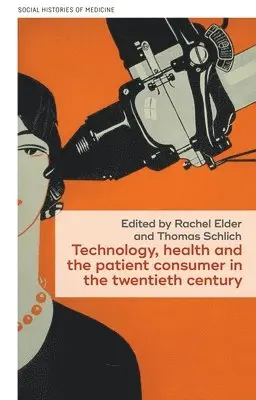
Technology, health, and the patient consumer in the twentieth century
Av Rachel Elder, Thomas Schlich
Inbunden, 2025
1308 kr
Lägg i varukorg
Technology and consumerism are two characteristic phenomena in the history medicine and healthcare, yet the connections between them are rarely explored by scholars. In this edited volume, the authors address this disconnect, noting the ways in which a variety of technologies have shaped patients’ …
Technology, health, and the patient consumer in the twentieth century
Av Rachel Elder, Thomas Schlich
Häftad, 2027
448 kr
Kommande
Technology and consumerism are two characteristic phenomena in the history medicine and healthcare, yet the connections between them are rarely explored by scholars. In this edited volume, the authors address this disconnect, noting the ways in which a variety of technologies have shaped patients’ …