Rachel N. Klein - Böcker
Visar alla böcker från författaren Rachel N. Klein. Handla med fri frakt och snabb leverans.
2 produkter
2 produkter
Unification of a Slave State
The Rise of the Planter Class in the South Carolina Backcountry, 1760-1808
Häftad, Engelska, 1992
517 kr
Skickas inom 10-15 vardagar
This book describes the turbulent transformation of South Carolina from a colony rent by sectional conflict into a state dominated by the South's most unified and politically powerful planter leadership. Rachel Klein unravels the sources of conflict and growing unity, showing how a deep commitment to slavery enabled leaders from both low- and backcountry to define the terms of political and ideological compromise. The spread of cotton into the backcountry, often invoked as the reason for South Carolina's political unification, actually concluded a complex struggle for power and legitimacy. Beginning with the Regulator Uprising of the 1760s, Klein demonstrates how backcountry leaders both gained authority among yeoman constituents and assumed a powerful role within state government. By defining slavery as the natural extension of familial inequality, backcountry ministers strengthened the planter class. At the same time, evangelical religion, like the backcountry's dominant political language, expressed yet contained the persisting tensions between planters and yeomen. Klein weaves social, political, and religious history into a formidable account of planter class formation and southern frontier development.
668 kr
Skickas inom 10-15 vardagar
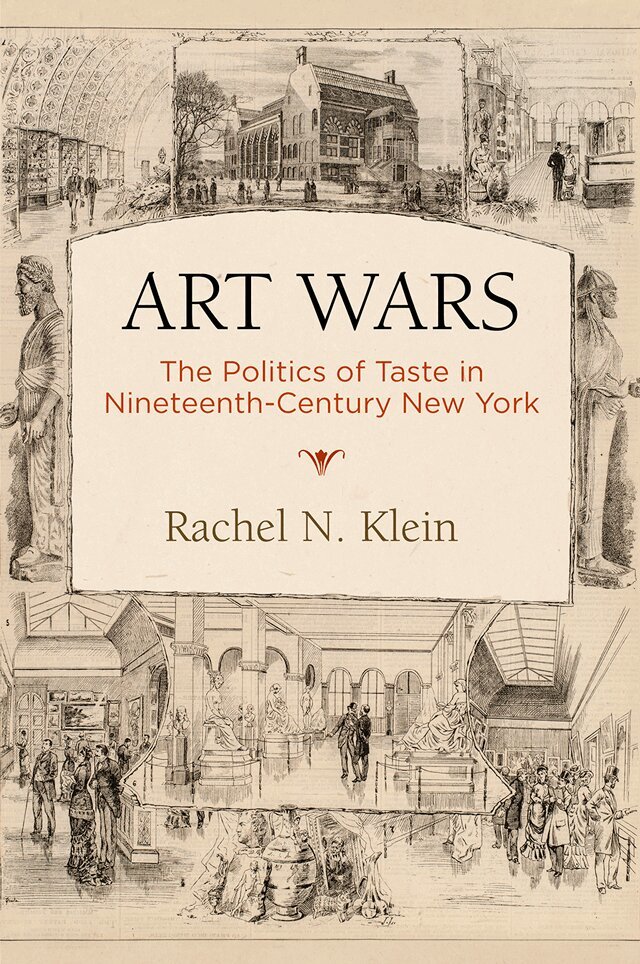
A study of three controversies that illuminate the changing cultural role of art exhibition in the nineteenth centuryFrom the antebellum era through the Gilded Age, New York City's leading art institutions were lightning rods for conflict. In the decades before the Civil War, art promoters believed that aesthetic taste could foster national unity and assuage urban conflicts; by the 1880s such hopes had faded, and the taste for art assumed more personal connotations associated with consumption and domestic decoration. Art Wars chronicles three protracted public battles that marked this transformation. The first battle began in 1849 and resulted in the downfall of the American Art-Union, the most popular and influential art institution in North America at mid-century. The second erupted in 1880 over the Metropolitan Museum's massive collection of Cypriot antiquities, which had been plundered and sold to its trustees by the man who became the museum's first paid director. The third escalated in the mid-1880s and forced the Metropolitan Museum to open its doors on Sunday-the only day when working people were able to attend.In chronicling these disputes, Rachel N. Klein considers cultural fissures that ran much deeper than the specific complaints that landed protagonists in court. New York's major nineteenth-century art institutions came under intense scrutiny not only because Americans invested them with moral and civic consequences but also because they were part and parcel of explosive processes associated with the rise of industrial capitalism. Elite New Yorkers spearheaded the creation of the Art-Union and the Metropolitan, but those institutions became enmeshed in popular struggles related to slavery, immigration, race, industrial production, and the rights of working people. Art Wars examines popular engagement with New York's art institutions and illuminates the changing cultural role of art exhibition over the course of the nineteenth century.