Rachel Rebouché - Böcker
Visar alla böcker från författaren Rachel Rebouché. Handla med fri frakt och snabb leverans.
6 produkter
6 produkter
1 207 kr
Skickas inom 10-15 vardagar
Describing and assessing feminist inroads into the stateFeminists walk the halls of power. Governance Feminism: An Introduction shows how some feminists and feminist ideas-but by no means all-have entered into state and state-like power in recent years. Being a feminist can qualify you for a job in the United Nations, the World Bank, the International Criminal Court, the local prosecutor’s office, or the child welfare bureaucracy. Feminists have built institutions and participate in governance.The authors argue that governance feminism is institutionally diverse and globally distributed. It emerges from grassroots activism as well as statutes and treaties, as crime control and as immanent bureaucracy. Conflicts among feminists-global North and South; left, center, and right-emerge as struggles over governance. This volume collects examples from the United States, Israel, India, and from transnational human rights law.Governance feminism poses new challenges for feminists: How shall we assess our successes and failures? What responsibility do we shoulder for the outcomes of our work? For the compromises and strange bedfellows we took on along the way? Can feminism foster a critique of its own successes? This volume offers a pathway to critical engagement with these pressing and significant questions.
283 kr
Skickas inom 7-10 vardagar
Describing and assessing feminist inroads into the stateFeminists walk the halls of power. Governance Feminism: An Introduction shows how some feminists and feminist ideas-but by no means all-have entered into state and state-like power in recent years. Being a feminist can qualify you for a job in the United Nations, the World Bank, the International Criminal Court, the local prosecutor’s office, or the child welfare bureaucracy. Feminists have built institutions and participate in governance.The authors argue that governance feminism is institutionally diverse and globally distributed. It emerges from grassroots activism as well as statutes and treaties, as crime control and as immanent bureaucracy. Conflicts among feminists-global North and South; left, center, and right-emerge as struggles over governance. This volume collects examples from the United States, Israel, India, and from transnational human rights law.Governance feminism poses new challenges for feminists: How shall we assess our successes and failures? What responsibility do we shoulder for the outcomes of our work? For the compromises and strange bedfellows we took on along the way? Can feminism foster a critique of its own successes? This volume offers a pathway to critical engagement with these pressing and significant questions.
1 466 kr
Skickas inom 10-15 vardagar
An interdisciplinary, multifaceted look at feminist engagements with governance across the global North and global SouthGovernance Feminism: Notes from the Field brings together nineteen chapters from leading feminist scholars and activists to critically describe and assess contemporary feminist engagements with state and state-like power. Gathering examples from North America, South America, Europe, Asia, and the Middle East, it complements and expands on the companion volume Governance Feminism: An Introduction. Its chapters argue that governance feminism (GF) is institutionally diverse and globally distributed-emerging from traditional sites of state power as well as from various forms of governance and operating at the grassroots level, in the private sector, in civil society, and in international relations. The book begins by confronting the key role that crime and punishment play in GFeminist projects. Here, contributors explore the ideological and political conditions under which this branch of GF became so robust and rethink the carceral turn. Other chapters speak to another face of GFeminism: feminists finding, in mundane and seemingly unspectacular bureaucratic tools, leverage to bring about change in policy and governance practices. Several contributions highlight the political, strategic, and ethical challenges that feminists and LGBT activists must negotiate to play on the governmental field. The book concludes with a focus on feminist interventions in postcolonial legal and political orders, looking at new policy spaces opened up by conflict, postconflict, and occupation.Providing a clear, cross-cutting, critical lens through which to map developments in feminist governance around the world, Governance Feminism: Notes from the Field makes sense of the costs and benefits of current feminist realities to reimagine feminist futures. Contributors: Libby Adler, Northeastern U; Aziza Ahmed, Northeastern U; Elizabeth Bernstein, Barnard College; Amy J. Cohen, Ohio State U; Karen Engle, U of Texas at Austin; Jacob Gersen, Harvard U; Leigh Goodmark, U of Maryland; Aeyal Gross, Tel Aviv U; Aya Gruber, U of Colorado, Boulder; Janet Halley, Harvard U; Rema Hammami, Birzeit U, Palestine; Vanja Hamzić, U of London; Isabel Cristina Jaramillo-Sierra; Prabha Kotiswaran, King’s College London; Maleiha Malik, King’s College London; Vasuki Nesiah, New York U; Dianne Otto, Melbourne Law School; Helen Reece; Darren Rosenblum, Pace U; Jeannie Suk Gersen, Harvard U; Mariana Valverde, U of Toronto.
367 kr
Skickas inom 10-15 vardagar
An interdisciplinary, multifaceted look at feminist engagements with governance across the global North and global SouthGovernance Feminism: Notes from the Field brings together nineteen chapters from leading feminist scholars and activists to critically describe and assess contemporary feminist engagements with state and state-like power. Gathering examples from North America, South America, Europe, Asia, and the Middle East, it complements and expands on the companion volume Governance Feminism: An Introduction. Its chapters argue that governance feminism (GF) is institutionally diverse and globally distributed-emerging from traditional sites of state power as well as from various forms of governance and operating at the grassroots level, in the private sector, in civil society, and in international relations. The book begins by confronting the key role that crime and punishment play in GFeminist projects. Here, contributors explore the ideological and political conditions under which this branch of GF became so robust and rethink the carceral turn. Other chapters speak to another face of GFeminism: feminists finding, in mundane and seemingly unspectacular bureaucratic tools, leverage to bring about change in policy and governance practices. Several contributions highlight the political, strategic, and ethical challenges that feminists and LGBT activists must negotiate to play on the governmental field. The book concludes with a focus on feminist interventions in postcolonial legal and political orders, looking at new policy spaces opened up by conflict, postconflict, and occupation.Providing a clear, cross-cutting, critical lens through which to map developments in feminist governance around the world, Governance Feminism: Notes from the Field makes sense of the costs and benefits of current feminist realities to reimagine feminist futures. Contributors: Libby Adler, Northeastern U; Aziza Ahmed, Northeastern U; Elizabeth Bernstein, Barnard College; Amy J. Cohen, Ohio State U; Karen Engle, U of Texas at Austin; Jacob Gersen, Harvard U; Leigh Goodmark, U of Maryland; Aeyal Gross, Tel Aviv U; Aya Gruber, U of Colorado, Boulder; Janet Halley, Harvard U; Rema Hammami, Birzeit U, Palestine; Vanja Hamzić, U of London; Isabel Cristina Jaramillo-Sierra; Prabha Kotiswaran, King’s College London; Maleiha Malik, King’s College London; Vasuki Nesiah, New York U; Dianne Otto, Melbourne Law School; Helen Reece; Darren Rosenblum, Pace U; Jeannie Suk Gersen, Harvard U; Mariana Valverde, U of Toronto.
976 kr
Skickas inom 10-15 vardagar
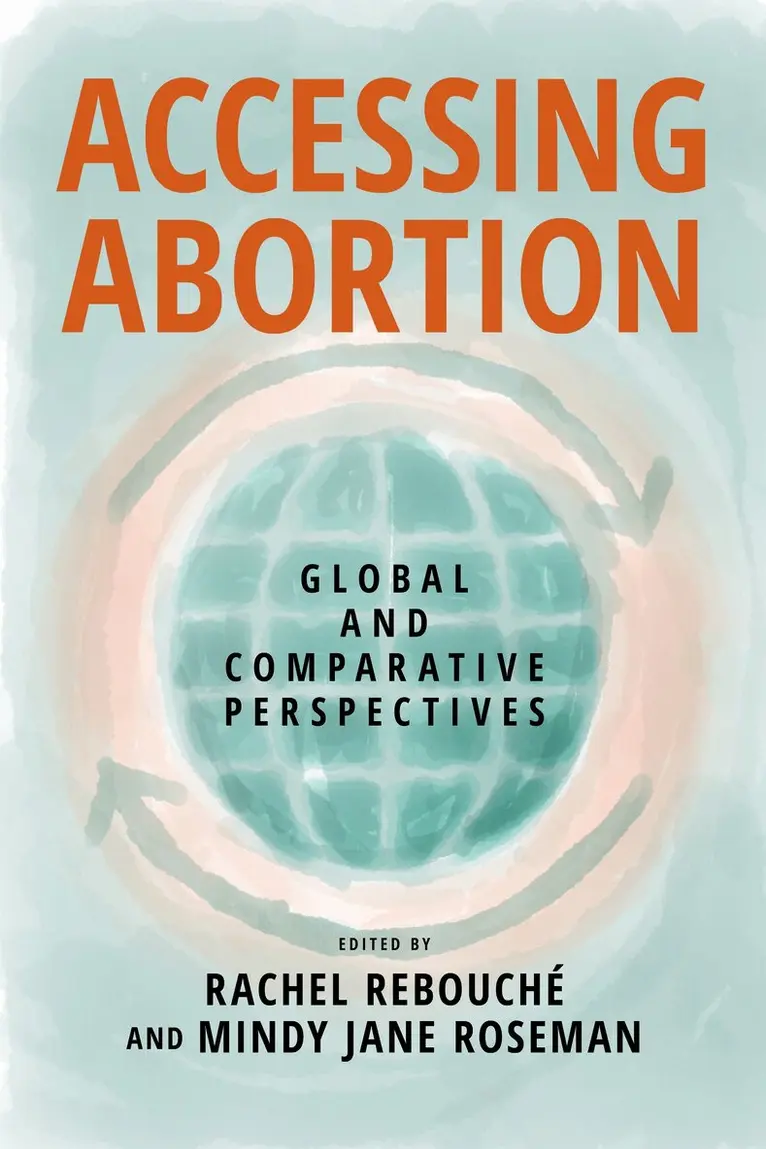
Explores the global landscape of abortion law reformIn many countries, barriers to abortion access – legal, cultural, or practical – have been dismantled in places as diverse as Mexico, Kenya, Thailand, and Ireland. Yet, in a few countries – the United States and Poland to name two – obstacles to abortion abound. Why? Why do some countries find abortion access a publicly polarizing issue and others a relatively uncontroversial health and family decision? Why has abortion access been a rallying point for progressive political organizing and, in others, the site of democratic backsliding? In Accessing Abortion, expert academics and lawyers look to countries that have passed permissive abortion laws to make visible how legislation both settled and stirred conflict in politically-divided environments. By comparing the process of enacting laws in these countries, the volume spotlights current social mobilization for and against abortion rights. At the same time, the volume assesses how these varied and comparative national developments unfolded in an international and transnational context where the floor of what countries can do is set by international human rights norms. Ultimately, this collection aims to show how law and public policy functions to facilitate both permissive and restrictive abortion law reform, and how that reform then changes the delivery of abortion services. Providing a sustained comparative analysis of the costs and benefits of legislating and/or judicializing abortion rights across the globe, Accessing Abortion assesses what is missing from contemporary conversations on reproductive justice.
333 kr
Skickas inom 7-10 vardagar
Explores the global landscape of abortion law reformIn many countries, barriers to abortion access – legal, cultural, or practical – have been dismantled in places as diverse as Mexico, Kenya, Thailand, and Ireland. Yet, in a few countries – the United States and Poland to name two – obstacles to abortion abound. Why? Why do some countries find abortion access a publicly polarizing issue and others a relatively uncontroversial health and family decision? Why has abortion access been a rallying point for progressive political organizing and, in others, the site of democratic backsliding? In Accessing Abortion, expert academics and lawyers look to countries that have passed permissive abortion laws to make visible how legislation both settled and stirred conflict in politically-divided environments. By comparing the process of enacting laws in these countries, the volume spotlights current social mobilization for and against abortion rights. At the same time, the volume assesses how these varied and comparative national developments unfolded in an international and transnational context where the floor of what countries can do is set by international human rights norms. Ultimately, this collection aims to show how law and public policy functions to facilitate both permissive and restrictive abortion law reform, and how that reform then changes the delivery of abortion services. Providing a sustained comparative analysis of the costs and benefits of legislating and/or judicializing abortion rights across the globe, Accessing Abortion assesses what is missing from contemporary conversations on reproductive justice.