Rachel Sarah O'Toole - Böcker
Visar alla böcker från författaren Rachel Sarah O'Toole. Handla med fri frakt och snabb leverans.
5 produkter
5 produkter
896 kr
Skickas
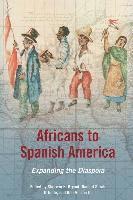
Africans to Spanish America expands the Diaspora framework that has shaped much of the recent scholarship on Africans in the Americas to include Mexico, Peru, Ecuador, and Cuba, exploring the connections and disjunctures between colonial Latin America and the African Diaspora in the Spanish empires. While a majority of the research on the colonial Diaspora focuses on the Caribbean and Brazil, analysis of the regions of Mexico and the Andes opens up new questions of community formation that incorporated Spanish legal strategies in secular and ecclesiastical institutions as well as articulations of multiple African identities. Editors Sherwin K. Bryant, Rachel Sarah O'Toole, and Ben Vinson III arrange the volume around three themes: identity construction in the Americas; the struggle by enslaved and free people to present themselves as civilized, Christian, and resistant to slavery; and issues of cultural exclusion and inclusion. Across these broad themes, contributors offer probing and detailed studies of the place and roles of people of African descent in the complex realities of colonial Spanish America. Contributors are Joan C. Bristol, Nancy E. van Deusen, Leo J. Garofalo, Herbert S. Klein, Charles Beatty-Medina, Karen Y. Morrison, Rachel Sarah O'Toole, Frank "Trey" Proctor III, and Michele Reid-Vazquez.
317 kr
Skickas inom 7-10 vardagar
Africans to Spanish America expands the Diaspora framework that has shaped much of the recent scholarship on Africans in the Americas to include Mexico, Peru, Ecuador, and Cuba, exploring the connections and disjunctures between colonial Latin America and the African Diaspora in the Spanish empires. While a majority of the research on the colonial Diaspora focuses on the Caribbean and Brazil, analysis of the regions of Mexico and the Andes opens up new questions of community formation that incorporated Spanish legal strategies in secular and ecclesiastical institutions as well as articulations of multiple African identities. Editors Sherwin K. Bryant, Rachel Sarah O'Toole, and Ben Vinson III arrange the volume around three themes: identity construction in the Americas; the struggle by enslaved and free people to present themselves as civilized, Christian, and resistant to slavery; and issues of cultural exclusion and inclusion. Across these broad themes, contributors offer probing and detailed studies of the place and roles of people of African descent in the complex realities of colonial Spanish America. Contributors are Joan C. Bristol, Nancy E. van Deusen, Leo J. Garofalo, Herbert S. Klein, Charles Beatty-Medina, Karen Y. Morrison, Rachel Sarah O'Toole, Frank "Trey" Proctor III, and Michele Reid-Vazquez.
660 kr
Skickas inom 7-10 vardagar
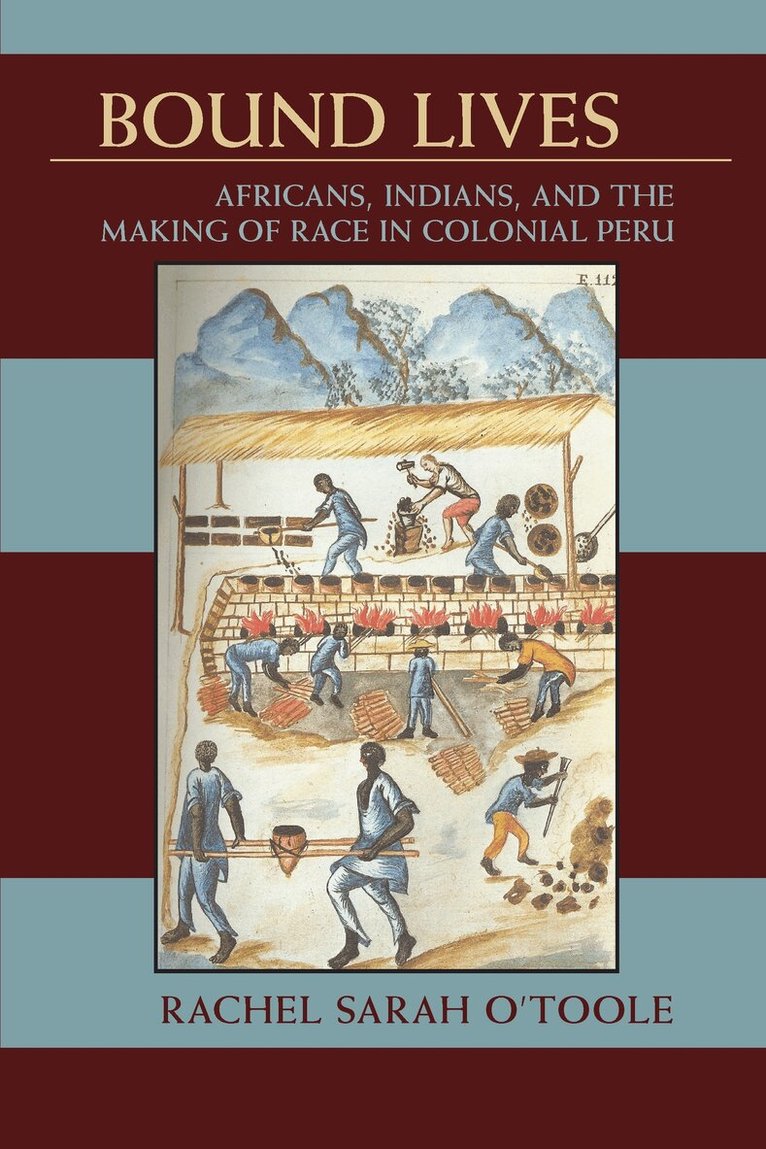
Bound Lives chronicles the lived experience of race relations in northern coastal Peru during the colonial era. Rachel Sarah OÆToole examines the construction of a casta (caste) system under the Spanish government, and how this system was negotiated and employed by Andeans and Africans.Royal and viceregal authorities defined legal identities of \u201cIndian\u201d and \u201cBlack\u201d to separate the two groups and commit each to specific trades and labor. Although they were legally divided, Andeans and Africans freely interacted and depended on each other in their daily lives. Thus, the caste system was defined at both the top and bottom of society. Within each caste, there were myriad subcategories that also determined oneÆs standing.The imperial legal system also strictly delineated civil rights. Andeans were afforded greater protections as a \u201cthreatened\u201d native population. Despite this, with the crownÆs approval during the rise of the sugar trade, Andeans were driven from their communal property and conscripted into a forced labor program. They soon rebelled, migrating away from the plantations to the highlands. Andeans worked as artisans, muleteers, and laborers for hire, and used their legal status as Indians to gain political representation.As slaves, Africans were subject to the judgments of local authorities, which nearly always sided with the slaveholder. Africans soon articulated a rhetoric of valuation, to protect themselves in disputes with their captors and in slave trading negotiations. To combat the ongoing diaspora from Africa, slaves developed strong kinship ties and offered communal support to the newly arrived.Bound Lives offers an entirely new perspective on racial identities in colonial Peru. It highlights the tenuous interactions of an imperial power, indigenous group, and enslaved population, and shows how each moved to establish its own power base and modify the existing system to its advantage, while also shaping the nature of colonialism itself.
1 020 kr
Skickas inom 5-8 vardagar
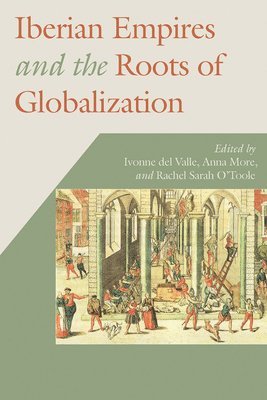
Through interdisciplinary essays covering the wide geography of Spanish and Portuguese empires, Iberian Empires and the Roots of Globalization investigates the diverse networks and multiple centers of early modern globalization that emerged in conjunction with Iberian imperialism.Iberian Empires and the Roots of Globalization argues that Iberian empires cannot be viewed apart from early modern globalization. From research sites throughout the early modern Spanish and Portuguese territories and from distinct disciplinary approaches, the essays collected in this volume investigate the economic mechanisms, administrative hierarchies, and art forms that linked the early modern Americas, Africa, Asia, and Europe.Iberian Empires and the Roots of Globalization demonstrates that early globalization was structured through diverse networks and their mutual and conflictive interactions within overarching imperial projects. To this end, the essays explore how specific products, texts, and people bridged ideas and institutions to produce multiple centers within Iberian imperial geographies. Taken as a whole, the authors also argue that despite attempts to reproduce European models, early Iberian globalization depended on indigenous agency and agency of African descent, which often undermined or changed these models.The volume thus relays a nuanced theory of early modern globalization: the essays outline the Iberian imperial models that provided templates for future global designs and simultaneously detail the negotiated and conflictive forms of local interactions that characterized that early globalization. The essays here offer essential insights into historical continuities in regions colonized by Spanish and Portuguese monarchies.
518 kr
Skickas inom 5-8 vardagar
Through interdisciplinary essays covering the wide geography of Spanish and Portuguese empires, Iberian Empires and the Roots of Globalization investigates the diverse networks and multiple centers of early modern globalization that emerged in conjunction with Iberian imperialism.Iberian Empires and the Roots of Globalization argues that Iberian empires cannot be viewed apart from early modern globalization. From research sites throughout the early modern Spanish and Portuguese territories and from distinct disciplinary approaches, the essays collected in this volume investigate the economic mechanisms, administrative hierarchies, and art forms that linked the early modern Americas, Africa, Asia, and Europe.Iberian Empires and the Roots of Globalization demonstrates that early globalization was structured through diverse networks and their mutual and conflictive interactions within overarching imperial projects. To this end, the essays explore how specific products, texts, and people bridged ideas and institutions to produce multiple centers within Iberian imperial geographies. Taken as a whole, the authors also argue that despite attempts to reproduce European models, early Iberian globalization depended on indigenous agency and agency of African descent, which often undermined or changed these models.The volume thus relays a nuanced theory of early modern globalization: the essays outline the Iberian imperial models that provided templates for future global designs and simultaneously detail the negotiated and conflictive forms of local interactions that characterized that early globalization. The essays here offer essential insights into historical continuities in regions colonized by Spanish and Portuguese monarchies.