Anna More - Böcker
Visar alla böcker från författaren Anna More. Handla med fri frakt och snabb leverans.
4 produkter
4 produkter
234 kr
Skickas inom 7-10 vardagar
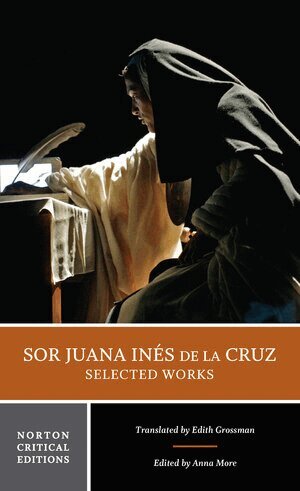
Edith Grossman’s acclaimed translations of The Tenth Muse’s best known works are offered here with introductory materials and explanatory footnotes, along with related additional works and eight critical essays.
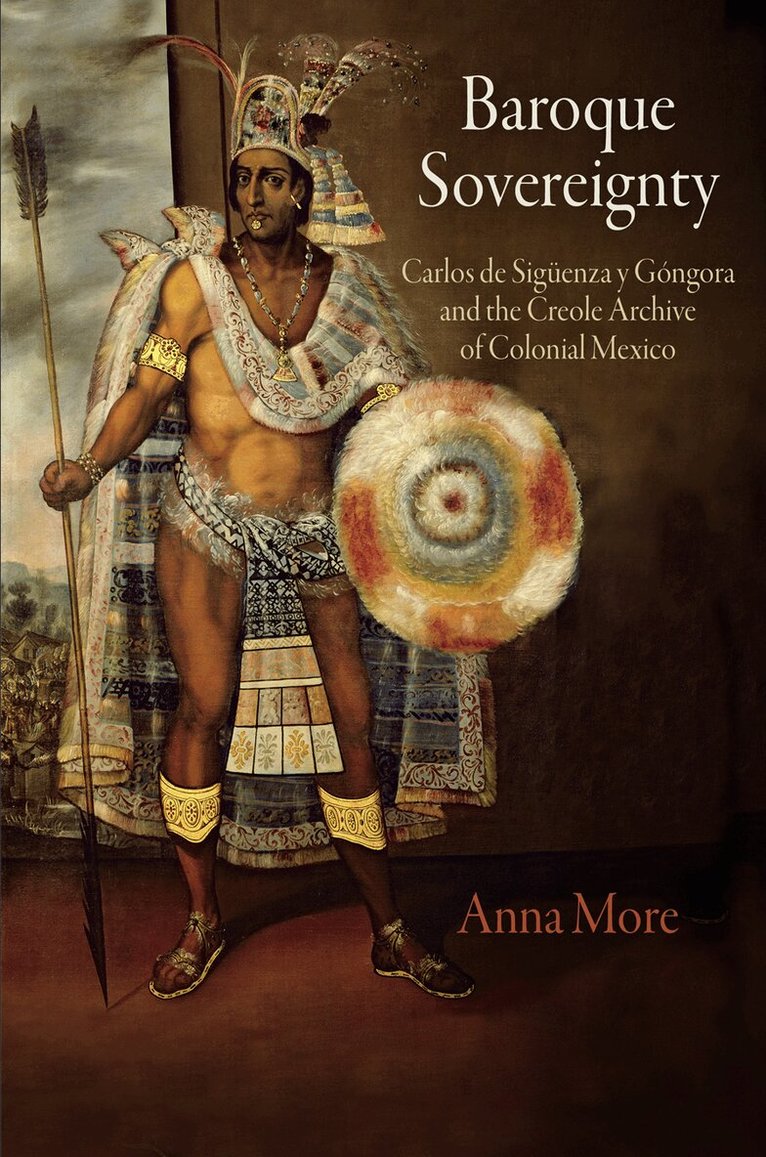
Baroque Sovereignty
Carlos De Sigüenza Y Góngora and the Creole Archive of Colonial Mexico
Inbunden, Engelska, 2013
992 kr
Skickas inom 10-15 vardagar
In the seventeenth century, even as the Spanish Habsburg monarchy entered its irreversible decline, the capital of its most important overseas territory was flourishing. Nexus of both Atlantic and Pacific trade routes and home to an ethnically diverse population, Mexico City produced a distinctive Baroque culture that combined local and European influences. In this context, the American-born descendants of European immigrants-or creoles, as they called themselves-began to envision a new society beyond the terms of Spanish imperialism, and the writings of the Mexican polymath Carlos de SigÜenza y GÓngora (1645-1700) were instrumental in this process. Mathematician, antiquarian, poet, and secular priest, SigÜenza authored works on such topics as the 1680 comet, the defense of New Spain, pre-Columbian history, and the massive 1692 Mexico City riot. He wrote all of these, in his words, "out of love for my patria."Through readings of SigÜenza y GÓngora's diverse works, Baroque Sovereignty locates the colonial Baroque at the crossroads of a conflicted Spanish imperial rule and the political imaginary of an emergent local elite. Arguing that Spanish imperialism was founded on an ideal of Christian conversion no longer applicable at the end of the seventeenth century, More discovers in SigÜenza y GÓngora's works an alternative basis for local governance. The creole archive, understood as both the collection of local artifacts and their interpretation, solved the intractable problem of Spanish imperial sovereignty by establishing a material genealogy and authority for New Spain's creole elite. In an analysis that contributes substantially to early modern colonial studies and theories of memory and knowledge, More posits the centrality of the creole archive for understanding how a local political imaginary emerged from the ruins of Spanish imperialism.
1 020 kr
Skickas inom 5-8 vardagar
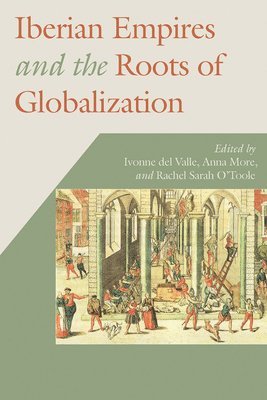
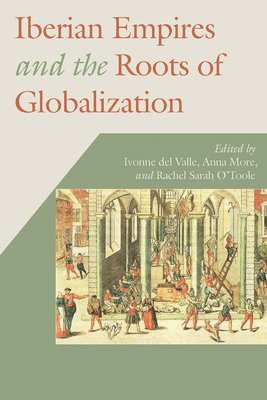
Through interdisciplinary essays covering the wide geography of Spanish and Portuguese empires, Iberian Empires and the Roots of Globalization investigates the diverse networks and multiple centers of early modern globalization that emerged in conjunction with Iberian imperialism.Iberian Empires and the Roots of Globalization argues that Iberian empires cannot be viewed apart from early modern globalization. From research sites throughout the early modern Spanish and Portuguese territories and from distinct disciplinary approaches, the essays collected in this volume investigate the economic mechanisms, administrative hierarchies, and art forms that linked the early modern Americas, Africa, Asia, and Europe.Iberian Empires and the Roots of Globalization demonstrates that early globalization was structured through diverse networks and their mutual and conflictive interactions within overarching imperial projects. To this end, the essays explore how specific products, texts, and people bridged ideas and institutions to produce multiple centers within Iberian imperial geographies. Taken as a whole, the authors also argue that despite attempts to reproduce European models, early Iberian globalization depended on indigenous agency and agency of African descent, which often undermined or changed these models.The volume thus relays a nuanced theory of early modern globalization: the essays outline the Iberian imperial models that provided templates for future global designs and simultaneously detail the negotiated and conflictive forms of local interactions that characterized that early globalization. The essays here offer essential insights into historical continuities in regions colonized by Spanish and Portuguese monarchies.
518 kr
Skickas inom 5-8 vardagar
Through interdisciplinary essays covering the wide geography of Spanish and Portuguese empires, Iberian Empires and the Roots of Globalization investigates the diverse networks and multiple centers of early modern globalization that emerged in conjunction with Iberian imperialism.Iberian Empires and the Roots of Globalization argues that Iberian empires cannot be viewed apart from early modern globalization. From research sites throughout the early modern Spanish and Portuguese territories and from distinct disciplinary approaches, the essays collected in this volume investigate the economic mechanisms, administrative hierarchies, and art forms that linked the early modern Americas, Africa, Asia, and Europe.Iberian Empires and the Roots of Globalization demonstrates that early globalization was structured through diverse networks and their mutual and conflictive interactions within overarching imperial projects. To this end, the essays explore how specific products, texts, and people bridged ideas and institutions to produce multiple centers within Iberian imperial geographies. Taken as a whole, the authors also argue that despite attempts to reproduce European models, early Iberian globalization depended on indigenous agency and agency of African descent, which often undermined or changed these models.The volume thus relays a nuanced theory of early modern globalization: the essays outline the Iberian imperial models that provided templates for future global designs and simultaneously detail the negotiated and conflictive forms of local interactions that characterized that early globalization. The essays here offer essential insights into historical continuities in regions colonized by Spanish and Portuguese monarchies.