Rachel Sloan - Böcker
Visar alla böcker från författaren Rachel Sloan. Handla med fri frakt och snabb leverans.
4 produkter
4 produkter
177 kr
Skickas inom 7-10 vardagar
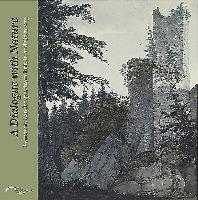
“The artist should not only paint what he sees before him,” claimed Caspar David Friedrich, “but also what he sees in himself”. He should have “a dialogue with Nature”. Friedrich’s words encapsulate two central elements of the Romantic conception of landscape: close observation of the natural world and the importance of the imagination. Exploring aspects of Romantic landscape drawing in Britain and Germany from its origins in the 1760s to its final flowering in the 1840s, this exhibition catalogue considers 26 major drawings, watercolors and oil sketches from The Courtauld Gallery, London, and the Morgan Library and Museum, New York, by artists such as J.M.W. Turner, Samuel Palmer, Caspar David Friedrich and Karl Friedrich Lessing. It draws upon the complementary strengths of both collections: the Morgan’s exceptional group of German drawings and The Courtauld’s wide-ranging holdings of British works. A Dialogue with Nature offers the opportunity to consider points of commonality as well as divergence between two distinctive schools. The legacy of Claude Lorrain’s idealizing vision is visible in Jakob Hackert’s magisterial view of ruins at Tivoli, near Rome, as well as in a more intimate but purely imaginary rural scene by Thomas Gainsborough, while cloud and tree studies by John Constable and Johann Georg von Dillis demonstrate the importance of drawing from life and the observation of natural phenomena. The important visionary strand of Romanticism is brought to the fore in a group of works centered on Friedrich’s evocative Moonlit Landscape and Samuel Palmer’s Oak Tree and Beech, Lullingstone Park. Both are exemplary of their creators’ intensely spiritual vision of nature as well as their strikingly different techniques, Friedrich’s painstakingly fine detail contrasting with the dynamic freedom of Palmer’s penwork. The most expansive and painterly works include Turner’s St Goarshausen and Katz Castle, the luminous simplicity of Francis Towne’s watercolor view of a wooded valley in Wales, and Friedrich’s subtle wash drawing of a coastal meadow on the remote Baltic island of Rügen. Three small-scale drawings reveal a more introspective and intimate facet of the Romantic approach to landscape: Theodor Rehbenitz’s fantastical medievalising scene, Palmer’s meditative Haunted Stream, and lastly, Turner’s Cologne, made as an illustration for The Life and Works of Lord Byron (1833).
206 kr
Skickas inom 7-10 vardagar
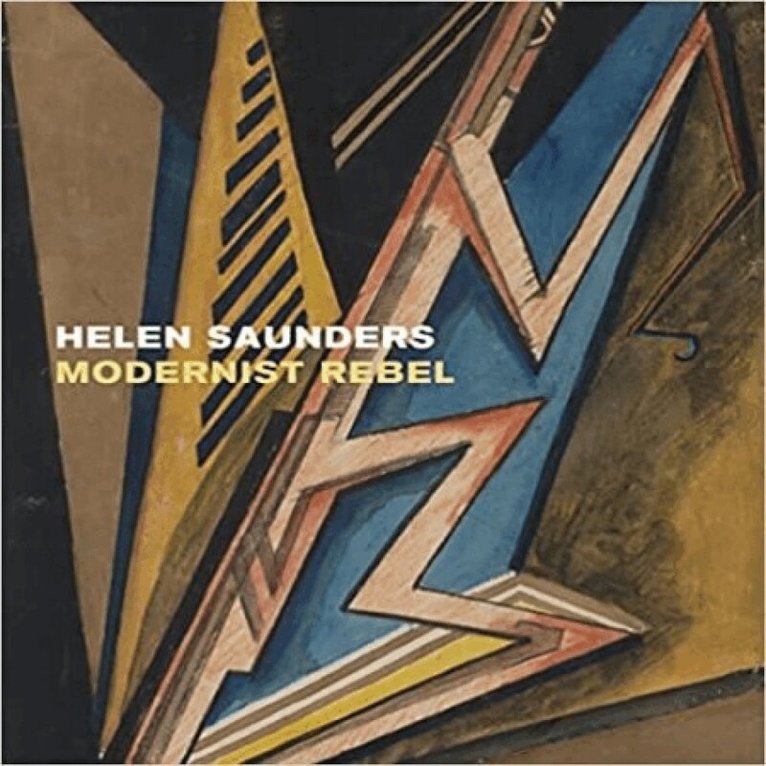
This welcome catalogue accompanies The Courtauld's display of the work of Helen Saunders (1885–1963), the first monographic exhibition devoted to the artist in over 25 years. After years of obscurity, Helen Saunders: Modernist Rebel reconsiders her work as an important part of the story of British modernism.One of the first British artists to pursue abstraction, Saunders was one of only two women to join the Vorticists, the radical but short-lived art movement that emerged in London on the eve of the First World War. Her extraordinary drawings capture both the dynamism of modern urban life and the horrors of mechanised warfare. Following the war, she turned her back on Vorticism and pursued her own path, working in a more figurative style. Due in part to the loss of a significant portion of her oeuvre, including all of her Vorticist oil paintings, this remarkable artist fell into obscurity. Only in recent years has her work begun to be rediscovered and celebrated as an important piece of the story of British modernism.A group of 20 drawings gifted in 2016 by her relative, the artist and writer, Brigid Peppin, has transformed The Courtauld into the largest public collection of Saunders's work in the world. These drawings trace Saunders's artistic development in the orbit of Roger Fry and the Bloomsbury Group, keenly attuned to contemporary art in France, to the ground-breaking abstraction of Vorticism. Following the disruption of the First World War and the disbanding of the Vorticists, Saunders turned again to figuration, developing her own approach to landscape, portraiture and still life which she would pursue alone for the rest of her career, exhibiting sporadically and never again joining a group of artists. This interest is revealed here in a group of landscapes created in L'Estaque in the south of France in the 1920s, which show the artist responding both to her surroundings as well as to predecessors such as Paul Cézanne and Georges Braque who had previously worked in the area. Featuring essays by Brigid Peppin and Jo Cottrell on Saunders's artistic education and career and on her relationship to the places of Vorticism in London, and catalogue entries by Rachel Sloan, this volume sheds light on an artist who steadily pursued her own path and whose contribution to the story of modern art is being newly appreciated.
206 kr
Skickas inom 7-10 vardagar
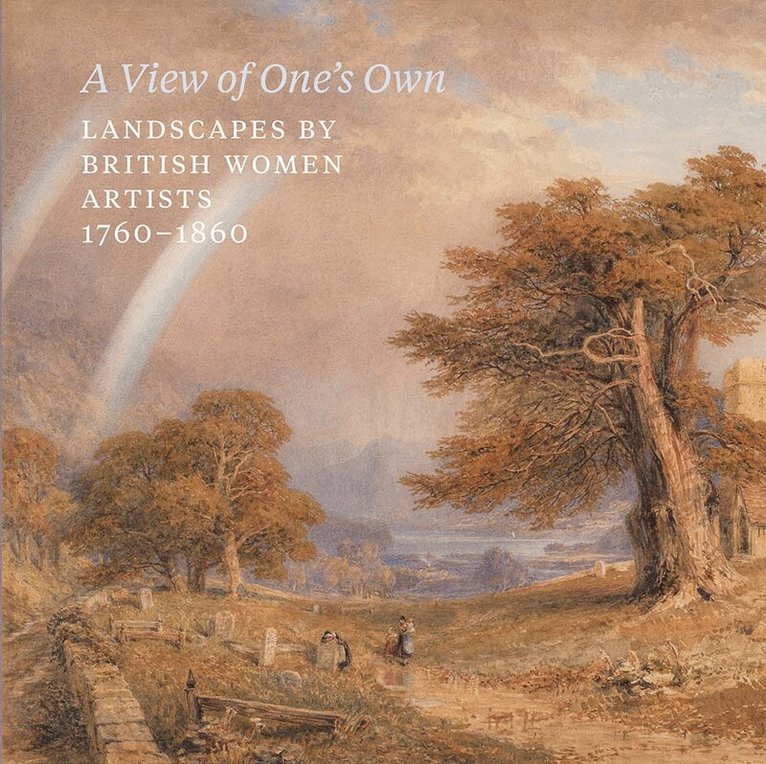
A View of One’s Own showcases ten trailblazing British female artists working between 1760 and 1860. Despite fighting to achieve recognition during their lifetimes, their art has remained mostly unknown and their works largely unpublished.This gem of a catalogue works to set that right, presenting a splendid group of landscapes in various media. The catalogue is published to accompany an exhibition at The Courtauld Gallery in London.When the Royal Academy was founded in 1768, its members included two women, Angelica Kauffmann and Mary Moser. There would not be another female academician until Dame Laura Knight was elected in 1936. Despite this institutional ostracism, women artists in Britain still continued to train, practice and exhibit during this period, particularly in the field of landscape. A View of One’s Own accompanies an exhibition of landscape drawings and watercolours by a group of inspiring British women artists working both in Britain and abroad between 1760 and 1860. Featured artists include Harriet Lister and Lady Mary Lowther, who were among the first to depict the Lake District, and Amelia Long, Lady Farnborough, one of the first British artists to travel to France following the Napoleonic Wars. It sheds new light on artists who achieved recognition during their lifetimes and whose work is ripe for rediscovery.Artists included: Harriet Lister; Mary Lowther; Mary Mitford; Susan Percy; MarySmirke; Eliza Gore; Fanny Blake; Amelia Long; Elizabeth Batty; Richenda GurneyExhibition ScheduleThe Courtauld Gallery, London28 January-14 June 2026Published by Paul Holberton Publishing/Distributed by Yale University Press
456 kr
Kommande
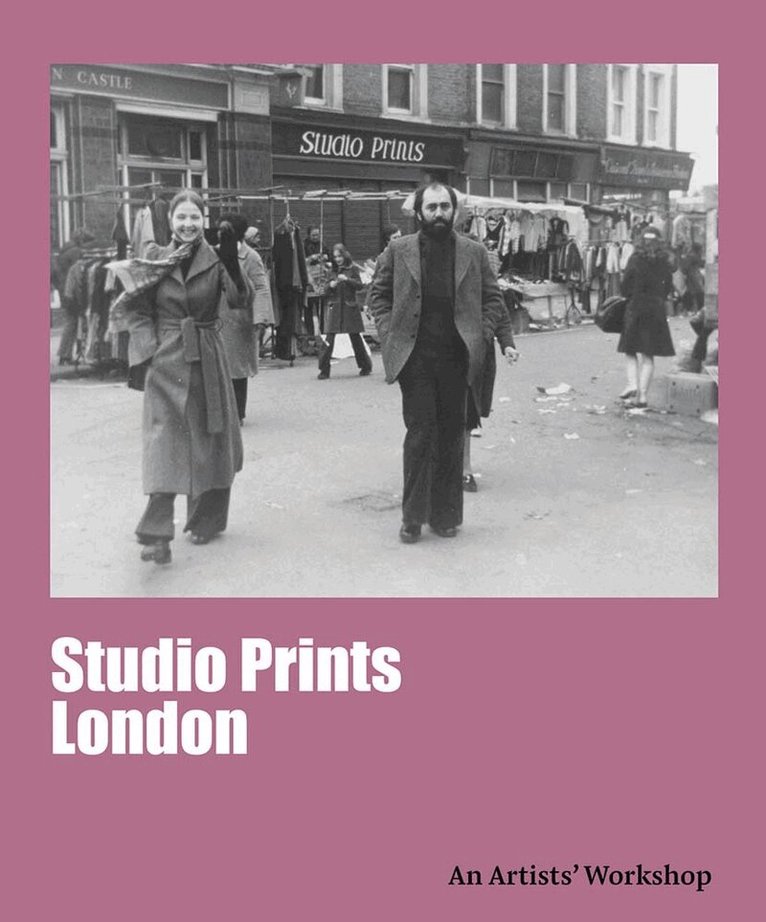
Explores the pivotal role of Studio Prints, London, in the resurgence of printmaking during the 1970s and 1980sDorothea Wight (1944–2013) founded Studio Prints in Kentish Town, London, in 1968. Marc Balakjian (1940–2017), an artist and printmaker of Armenian origins, joined it in 1974. They married in 1977 and, for over forty years, pursued their own artistic careers while also pulling prints for other artists. Thanks to their exceptional skills as master printmakers and to the sensibility with which they interpreted other artists’ ideas and intentions, Dorothea and Marc emerged as leading printers for prominent artists like Lucian Freud, Frank Auerbach, Leon Kossoff, Paula Rego, Celia Paul, Kitaj, Stephen Conroy, Ken Kiff and many others, establishing close friendships and mutual relationships of trust and esteem. Using previously unpublished archival records and a substantial corpus of works by the above-mentioned artists, a group of distinguished contributors to the book provide insights into a thriving and pioneering season of artistic production in London and reveal a relatively unrecognised but hugely influential hub of artistic production.Exhibition Schedule The Courtauld Gallery, London 6 June–13 September 2026 Published by Paul Holberton Publishing/Distributed by Yale University Press