Radhika Desai - Böcker
Visar alla böcker från författaren Radhika Desai. Handla med fri frakt och snabb leverans.
18 produkter
18 produkter
666 kr
Skickas inom 10-15 vardagar
This book is a unique contribution to scholarship on the sources of the conflict in Ukraine. The volume brings together writers from Russia, Ukraine, Canada, the United States, Europe and Australia, many of whom attended a gathering of scholars and activists from all over Ukraine, held in Yalta, Crimea, just after the conflict in Eastern Ukraine erupted. Challenging both the demonization of Russia, which has become standard for Western writing on the topic, and the simplistic discourse of official Russian sources, this book scrutinises the events of the conflict and the motives of the agents, bringing to the fore the underlying causes of the most critical flashpoints of the post-Soviet world order. This volume offers a refreshing, profound perspective on the Ukraine conflict, and will be an indispensable source for any student or researcher.This book was originally published as a special issue of the journal International Critical Thought.
2 165 kr
Skickas inom 10-15 vardagar
Premature announcements of the eclipse of nation states under 'globalization' and 'empire' stand exposed as the 21st century's first economic crisis underlines their continuing importance. A predominantly cultural study of nationalism was unable to resist the 'globalization' thesis. Focusing on selected Asian cases, this book argues that nationalisms have always contained political economies as well as cultural politics. Placing nation-states centrally in our understanding of modern capitalism, it challenges the 'globalization' thesis. Rather than eclipse, nations and nationalisms have undergone changes under the impact of neoliberalism since the 1970s. Classical 20th century developmental nationalisms emphasised citizenship, economy and future orientations. Later cultural nationalisms - 'Asian values', 'Hindutva', 'Confucianism' or 'Nihonjiron' - stressed identity, culture and past orientations. Amid neoliberalism's flagrantly unequal political economy, not primarily concerned with material production or productivity, they glorified static conceptions of 'original' cultures and identities - whether religious, ethnic or other - and justified inequality as cultural difference. In contrast to the popular mobilizations which powered developmental nationalisms, cultural nationalisms throve on neoliberalism's disengagement and disenfranchisement, albeit partially compensated by the political baptism of newly enriched groups. Extremist wings of cultural nationalism in some countries were a function of this lack of popular support.This book was published as a special issue of Third World Quarterly.
308 kr
Skickas inom 7-10 vardagar
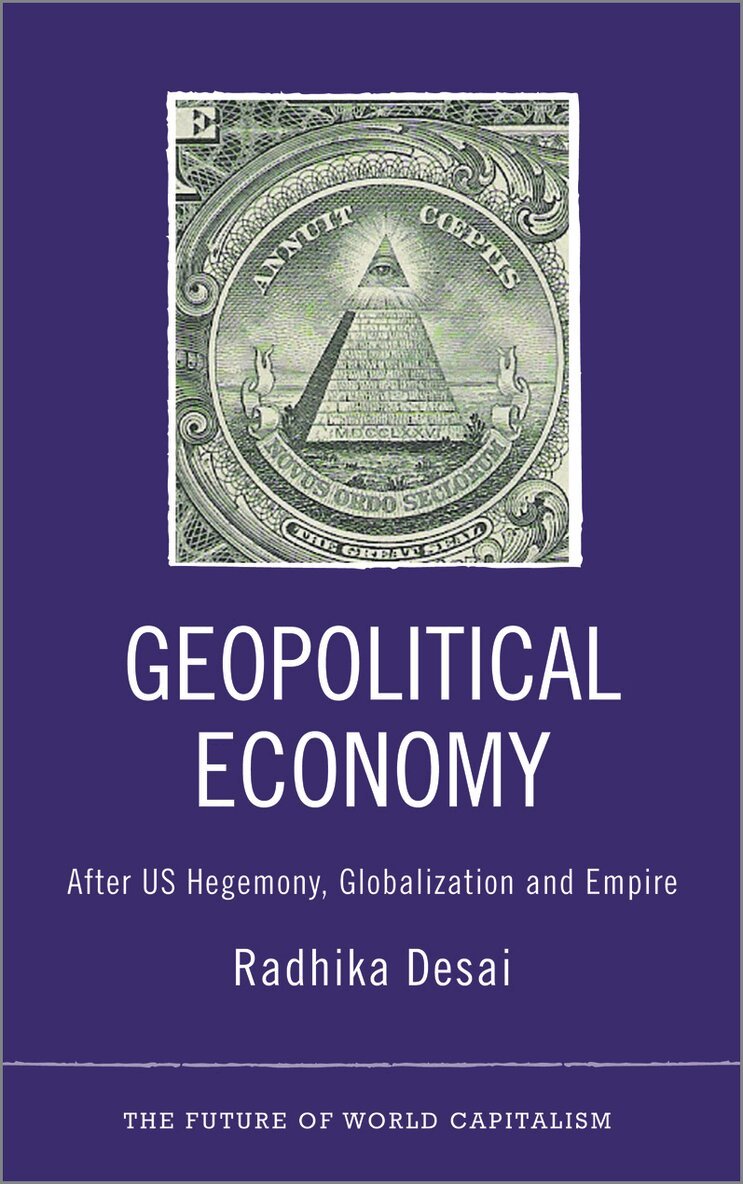
Geopolitical Economy radically reinterprets the historical evolution of the world order, as a multi-polar world emerges from the dust of the financial and economic crisis.Radhika Desai offers a radical critique of the theories of US hegemony, globalisation and empire which dominate academic international political economy and international relations, revealing their ideological origins in successive failed US attempts at world dominance through the dollar.Desai revitalizes revolutionary intellectual traditions which combine class and national perspectives on 'the relations of producing nations'. At a time of global upheavals and profound shifts in the distribution of world power, Geopolitical Economy forges a vivid and compelling account of the historical processes which are shaping the contemporary international order.
2 160 kr
Skickas inom 10-15 vardagar
As the centres of world capitalism struggle to overcome long-term stagnation and existential crisis, this book aims to recover the legacy of revolutions against capitalism and imperialism.The capitalist world today faces pervasive crises of unprecendented depth. To economic and social crises that were already deepening as the neoliberal decades wore on, it added the ecological emergency and then a pandemic of historic proportions, both made worse by political and ideological paralysis. These crises also raise the threat of imperialist war.The possibility of revolutionary change is increasingly in the air and this volume captures this extraordinary moment. Anticipating this situation, we at the Geopolitical Economy Research Group organized an international conference on Revolutions at the University of Manitoba, Canada, in 2017, to mark the centenary of the Russian Revolution, and this book stems from it. The editors’ introduction interrogates the intimate relation of capitalism to revolutions, and scans the political horizon of the present conjuncture. The chapters that follow fill in this retrospect and prospect. The five keynote addresses provide the historical spine and they are supplemented by others from the conference and beyond. These chapters consider revolution from a variety of perspectives, including the revolutions in Russia, China and Venezuela but also the French and Haitian Revolutions; Marx’s critical political economy and revolution; the long history of counter-revolution; revolution and indigenous peoples; the media and revolution and the importance of revolution at the grassroots.The chapters in this book were originally published as a special issue of Third World Quarterly.
638 kr
Skickas inom 10-15 vardagar
As the centres of world capitalism struggle to overcome long-term stagnation and existential crisis, this book aims to recover the legacy of revolutions against capitalism and imperialism.The capitalist world today faces pervasive crises of unprecendented depth. To economic and social crises that were already deepening as the neoliberal decades wore on, it added the ecological emergency and then a pandemic of historic proportions, both made worse by political and ideological paralysis. These crises also raise the threat of imperialist war.The possibility of revolutionary change is increasingly in the air and this volume captures this extraordinary moment. Anticipating this situation, we at the Geopolitical Economy Research Group organized an international conference on Revolutions at the University of Manitoba, Canada, in 2017, to mark the centenary of the Russian Revolution, and this book stems from it. The editors’ introduction interrogates the intimate relation of capitalism to revolutions, and scans the political horizon of the present conjuncture. The chapters that follow fill in this retrospect and prospect. The five keynote addresses provide the historical spine and they are supplemented by others from the conference and beyond. These chapters consider revolution from a variety of perspectives, including the revolutions in Russia, China and Venezuela but also the French and Haitian Revolutions; Marx’s critical political economy and revolution; the long history of counter-revolution; revolution and indigenous peoples; the media and revolution and the importance of revolution at the grassroots.The chapters in this book were originally published as a special issue of Third World Quarterly.
552 kr
Skickas inom 10-15 vardagar
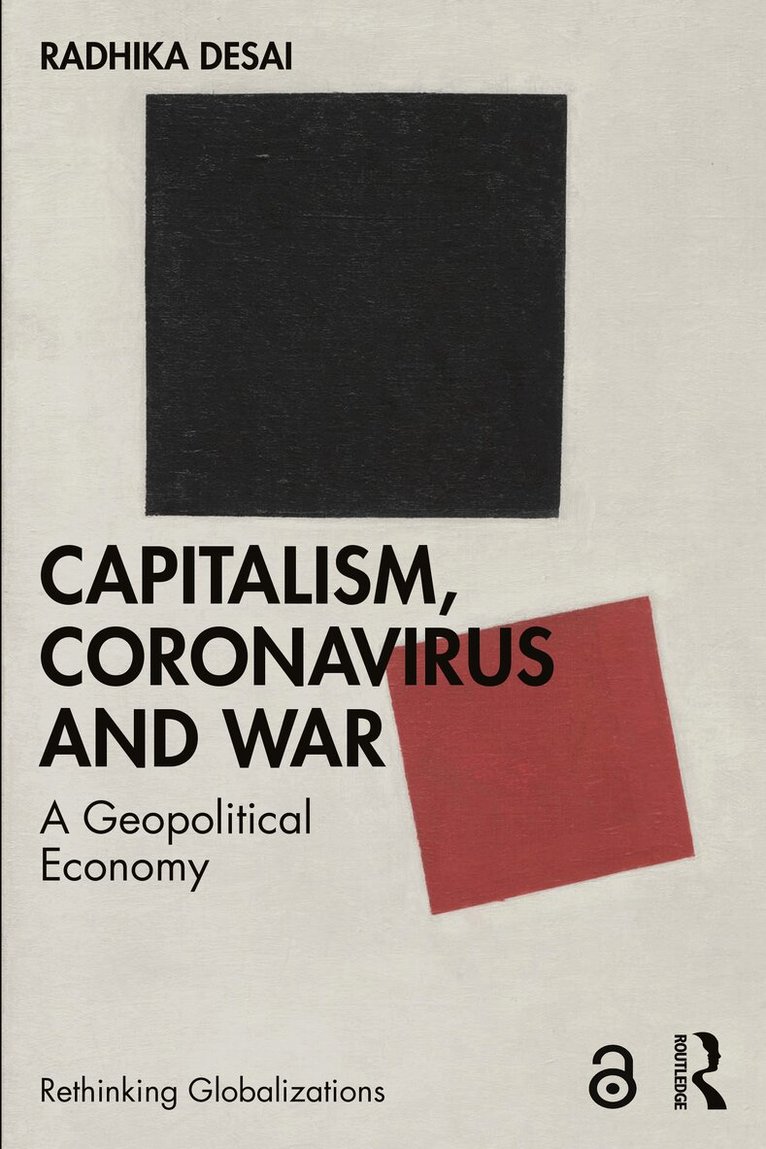
Capitalism, Coronavirus and War investigates the decay of neoliberal financialised capitalism as revealed in the crisis the novel coronavirus triggered but did not cause, a crisis that has been deepened by the conflict over Ukraine and its repercussions across the globe.Leading domestically to economic and political breakdown, the pandemic accelerated the decline of the US-led capitalist world’s imperial power, intensifying the tendency to lash out with aggression and militarism, as seen in the US-led West’s New Cold War against China and the proxy war against Russia over Ukraine. The geopolitical economy of the decay and crisis of this form of capitalism suggests that the struggle with socialism that has long shaped the fate of capitalism has reached a tipping point. The author argues that mainstream and even many progressive forces take capitalism’s longevity for granted, misunderstand its historical dynamics and deny its formative bond with imperialism. Only a theoretically and historically accurate account of capitalism’s dynamics and historical trajectory, which this book provides, can explain its current failures and predicament. It also reveals why, though the pandemic—by revealing capitalism’s obscene inequality and shocking debility—prompted the most serious critiques of capitalism to emerge in decades, hopes of ‘building back better’ were so quickly dashed. This book sheds searching light on the dominant narratives that have normalised the neoliberal financialised capitalism and the dollar creditocracy dominating the world economy, with even critics unable to link capitalism’s neoliberal turn to its financialisations, historical decay, productive debility and international decline. It contends that only by appreciating the seriousness of the crisis and rectifying our understanding of capitalism can progressive forces thwart a future of chaos and/or authoritarianism and begin the long task of building socialism.This book will be of great interest to students, scholars and researchers of international relations, international political economy, comparative politics and global political sociology.The Open Access version of this book, available at www.taylorfrancis.com, has been made available under a Creative Commons Attribution-Non Commercial-No Derivatives 4.0 license. Thanks to the support of libraries working with Knowledge Unlatched www.knowledgeunlatched.org
1 895 kr
Skickas inom 10-15 vardagar
Capitalism, Coronavirus and War investigates the decay of neoliberal financialised capitalism as revealed in the crisis the novel coronavirus triggered but did not cause, a crisis that has been deepened by the conflict over Ukraine and its repercussions across the globe.Leading domestically to economic and political breakdown, the pandemic accelerated the decline of the US-led capitalist world’s imperial power, intensifying the tendency to lash out with aggression and militarism, as seen in the US-led West’s New Cold War against China and the proxy war against Russia over Ukraine. The geopolitical economy of the decay and crisis of this form of capitalism suggests that the struggle with socialism that has long shaped the fate of capitalism has reached a tipping point. The author argues that mainstream and even many progressive forces take capitalism’s longevity for granted, misunderstand its historical dynamics and deny its formative bond with imperialism. Only a theoretically and historically accurate account of capitalism’s dynamics and historical trajectory, which this book provides, can explain its current failures and predicament. It also reveals why, though the pandemic—by revealing capitalism’s obscene inequality and shocking debility—prompted the most serious critiques of capitalism to emerge in decades, hopes of ‘building back better’ were so quickly dashed. This book sheds searching light on the dominant narratives that have normalised the neoliberal financialised capitalism and the dollar creditocracy dominating the world economy, with even critics unable to link capitalism’s neoliberal turn to its financialisations, historical decay, productive debility and international decline. It contends that only by appreciating the seriousness of the crisis and rectifying our understanding of capitalism can progressive forces thwart a future of chaos and/or authoritarianism and begin the long task of building socialism.This book will be of great interest to students, scholars and researchers of international relations, international political economy, comparative politics and global political sociology.The Open Access version of this book, available at www.taylorfrancis.com, has been made available under a Creative Commons Attribution-Non Commercial-No Derivatives 4.0 license. Thanks to the support of libraries working with Knowledge Unlatched www.knowledgeunlatched.org
2 098 kr
Skickas inom 10-15 vardagar
This book covers key aspects of the governance of the world economy, from the structures of capitalism to regional economic integration through the trading and production systems.International economic governance was already in crisis well before the pandemic, and talk of the crisis of multilateralism and of the postwar Bretton Woods arrangements had become commonplace. The pandemic, with its economic, political, and international reverberations, has only widened and deepened that crisis, which has now taken the form of a new cold war on China, and made the search for solutions more urgent. In this context, the chapters in this volume contribute to a deeper understanding of how international economic governance and the world economy have been changing over the long run, and provide insights into the new forms they are taking at the macro and micro levels. The book covers the crisis of capitalism revealed by the pandemic, particularly when contrasted with socialist countries, initiatives of regional economic integration that challenge, rather than being subordinated by, western powers, including the US, the evolution of the trade regime in ways that make contemporary trade wars intelligible, and the shakeup of the international production system. The chapters in this book were originally published as a special issue of The Japanese Political Economy.
620 kr
Skickas inom 10-15 vardagar
This book covers key aspects of the governance of the world economy, from the structures of capitalism to regional economic integration through the trading and production systems.International economic governance was already in crisis well before the pandemic, and talk of the crisis of multilateralism and of the postwar Bretton Woods arrangements had become commonplace. The pandemic, with its economic, political, and international reverberations, has only widened and deepened that crisis, which has now taken the form of a new cold war on China, and made the search for solutions more urgent. In this context, the chapters in this volume contribute to a deeper understanding of how international economic governance and the world economy have been changing over the long run, and provide insights into the new forms they are taking at the macro and micro levels. The book covers the crisis of capitalism revealed by the pandemic, particularly when contrasted with socialist countries, initiatives of regional economic integration that challenge, rather than being subordinated by, western powers, including the US, the evolution of the trade regime in ways that make contemporary trade wars intelligible, and the shakeup of the international production system. The chapters in this book were originally published as a special issue of The Japanese Political Economy.
1 963 kr
Skickas inom 10-15 vardagar
This book re-visits the phenomenon of Japanese secular stagnation in light of the fate of the North Atlantic and developing economies and places it in a longer historical political and geopolitical economy of capitalism from a variety of political and disciplinary perspectives.Japanese capitalism, which was once an admired model of miraculous growth with a relatively egalitarian distribution of income, fell into secular stagnation in the early 1990s. The phenomenon has since fascinated observers, provoked debates, provided policy advocates with grist for the mills of a range of policy proposals, some of them mutually contradictory, and, most importantly, burdened an entire population, and particularly its young. Japan’s secular stagnation has raised new questions about policy difficulties on a range of fronts – dramatically lowered growth rate despite comparatively high investment, deteriorating labor conditions, rising class and gender inequality, a profound and many-faceted crisis of social reproduction and a deepening fiscal crisis of the state – all of which have important international ramifications. Moreover, interest in and the importance of Japan’s secular stagnation grew rapidly after 2008 as many have sought to understand the economic malaise of the North Atlantic by analogy and comparison with all or parts of the Japanese condition. The introduction and chapters in this book attempt to understand the causes, character and consequence of that original affliction. They also reflect on the meaning of Japan’s secular stagnation at this stage of development capitalism. The result contains the key to understanding the more widespread economic malaise of our time.This book will be a beneficial read for researchers and scholars of Economics and Politics interested in Japanese Studies as well as the Japanese political economy. Most of the chapters in this book were originally published as a special issue of The Japanese Political Economy. The last chapter was originally published in the Journal of Contemporary Asia.
579 kr
Skickas inom 10-15 vardagar
This book re-visits the phenomenon of Japanese secular stagnation in light of the fate of the North Atlantic and developing economies and places it in a longer historical political and geopolitical economy of capitalism from a variety of political and disciplinary perspectives.Japanese capitalism, which was once an admired model of miraculous growth with a relatively egalitarian distribution of income, fell into secular stagnation in the early 1990s. The phenomenon has since fascinated observers, provoked debates, provided policy advocates with grist for the mills of a range of policy proposals, some of them mutually contradictory, and, most importantly, burdened an entire population, and particularly its young. Japan’s secular stagnation has raised new questions about policy difficulties on a range of fronts – dramatically lowered growth rate despite comparatively high investment, deteriorating labor conditions, rising class and gender inequality, a profound and many-faceted crisis of social reproduction and a deepening fiscal crisis of the state – all of which have important international ramifications. Moreover, interest in and the importance of Japan’s secular stagnation grew rapidly after 2008 as many have sought to understand the economic malaise of the North Atlantic by analogy and comparison with all or parts of the Japanese condition. The introduction and chapters in this book attempt to understand the causes, character and consequence of that original affliction. They also reflect on the meaning of Japan’s secular stagnation at this stage of development capitalism. The result contains the key to understanding the more widespread economic malaise of our time.This book will be a beneficial read for researchers and scholars of Economics and Politics interested in Japanese Studies as well as the Japanese political economy. Most of the chapters in this book were originally published as a special issue of The Japanese Political Economy. The last chapter was originally published in the Journal of Contemporary Asia.
2 160 kr
Skickas inom 10-15 vardagar
This book is a unique contribution to scholarship on the sources of the conflict in Ukraine. The volume brings together writers from Russia, Ukraine, Canada, the United States, Europe and Australia, many of whom attended a gathering of scholars and activists from all over Ukraine, held in Yalta, Crimea, just after the conflict in Eastern Ukraine erupted. Challenging both the demonization of Russia, which has become standard for Western writing on the topic, and the simplistic discourse of official Russian sources, this book scrutinises the events of the conflict and the motives of the agents, bringing to the fore the underlying causes of the most critical flashpoints of the post-Soviet world order. This volume offers a refreshing, profound perspective on the Ukraine conflict, and will be an indispensable source for any student or researcher.This book was originally published as a special issue of the journal International Critical Thought.
674 kr
Skickas inom 10-15 vardagar
Premature announcements of the eclipse of nation states under 'globalization' and 'empire' stand exposed as the 21st century's first economic crisis underlines their continuing importance. A predominantly cultural study of nationalism was unable to resist the 'globalization' thesis. Focusing on selected Asian cases, this book argues that nationalisms have always contained political economies as well as cultural politics. Placing nation-states centrally in our understanding of modern capitalism, it challenges the 'globalization' thesis. Rather than eclipse, nations and nationalisms have undergone changes under the impact of neoliberalism since the 1970s. Classical 20th century developmental nationalisms emphasised citizenship, economy and future orientations. Later cultural nationalisms - 'Asian values', 'Hindutva', 'Confucianism' or 'Nihonjiron' - stressed identity, culture and past orientations. Amid neoliberalism's flagrantly unequal political economy, not primarily concerned with material production or productivity, they glorified static conceptions of 'original' cultures and identities - whether religious, ethnic or other - and justified inequality as cultural difference. In contrast to the popular mobilizations which powered developmental nationalisms, cultural nationalisms throve on neoliberalism's disengagement and disenfranchisement, albeit partially compensated by the political baptism of newly enriched groups. Extremist wings of cultural nationalism in some countries were a function of this lack of popular support.This book was published as a special issue of Third World Quarterly.
1 167 kr
Skickas inom 5-8 vardagar
As far right movements, social disintegration and international conflict emerge from the decay of the neoliberal order, Karl Polanyi’s warnings against the unbridled domination of markets, is ever more relevant. The essays in Karl Polanyi for the 21st Century extend the boundaries of our understanding of Polanyi's life and work. They will interest Polanyi scholars and all interested in socialism and our future after neoliberalism. One asks whether, following Keynes and Hayek, Polanyi’s ideas will shape the twenty-first century. Some clarify, for the meaning of money as a fictitious commodity. Others resolve difficulties in understanding the building blocks of Polanyi's thought: fictitious commodities, the double movement, the United States' exceptional development, the reality of society, and socialism as freedom in a complex society. And yet others explore how Polanyi sheds light on income inequality, world systems theory, comparative political economy.
346 kr
Skickas
As far right movements, social disintegration and international conflict emerge from the decay of the neoliberal order, Karl Polanyi’s warnings against the unbridled domination of markets, is ever more relevant. The essays in Karl Polanyi for the 21st Century extend the boundaries of our understanding of Polanyi's life and work. They will interest Polanyi scholars and all interested in socialism and our future after neoliberalism. One asks whether, following Keynes and Hayek, Polanyi’s ideas will shape the twenty-first century. Some clarify, for the meaning of money as a fictitious commodity. Others resolve difficulties in understanding the building blocks of Polanyi's thought: fictitious commodities, the double movement, the United States' exceptional development, the reality of society, and socialism as freedom in a complex society. And yet others explore how Polanyi sheds light on income inequality, world systems theory, comparative political economy.
Del 27 - Research in Political Economy
Revitalizing Marxist Theory for Today's Capitalism
Inbunden, Engelska, 2011
1 288 kr
Skickas inom 7-10 vardagar
As a few alert mainstream and corporate economists rediscover the certain elements of Marx's analysis of capitalism, the essays in the first part of this volume demonstrate that they have far to go. To their discredit, mainstream understandings whether of capitalism's growth or of Western capitalism's interrelated long-term stagnation and financialization are derailed precisely by political aversion to, or ignorance of, Marxist categories and analyses. The chapters in the second part extend Marxist insights into assessing the value of the so-called information, or knowledge-based, commodities, and offer a Marxist critique of Lenin, the only world leader who earlier had deeply studied his own country's economy. The part also presents two important works in translation. The first, read in Russian by Marx himself, raises serious questions about the relevance of Hegel in the understanding of Capital and offers its own insightful analysis. The other, by a Marxist collective in the 1970s demonstrates the centrality of politics and the class struggle in the simplistically conceived economic devalorization of constant capital. The final part contains a debate on the merits of positivist Marxism sparked by an article in Volume 26 of this research series.
1 434 kr
Skickas inom 7-10 vardagar
This work advances geopolitical economy as a new approach to understanding the evolution of the capitalist world order and its 21st century form of multipolarity. Neither can be explained by recently dominant approaches such as 'U.S. hegemony' or 'globalization': they treat the world economy as a seamless whole in which either no state matters or only one does. Today's 'BRICs' and 'emerging economies' are only the latest instances of state-led or combined development. Such development has a long history of repeatedly challenging the unevenness of capitalism and the international division of labour it created. It is this dialectic of uneven and combined development, not markets or imperialism, which has spread productive capacity around the world. It also ensured that the 'hegemony' of the UK would end and attempts to create that of the US would peter out into multipolarity. This two part volume paves the way, advancing Geopolitical Economy as a new approach to the study of international relations and international political economy. They expose the theoretical limitations of the latter in Part I and the analytical limitations in Part II.
1 395 kr
Skickas inom 7-10 vardagar
This work advances geopolitical economy as a new approach to understanding the evolution of the capitalist world order and its 21st century form of multipolarity. Neither can be explained by recently dominant approaches such as U.S. hegemony or globalization: they treat the world economy as a seamless whole in which either no state matters or only one does. Today's BRICs and emerging economies are only the latest instances of state-led or combined development. Such development has a long history of repeatedly challenging the unevenness of capitalism and the international division of labour it created. It is this dialectic of uneven and combined development, not markets or imperialism, which has spread productive capacity around the world. It also ensured that the hegemony of the UK would end and attempts to create that of the US would peter out into multipolarity. Part two of this book paves the way, advancing Geopolitical Economy as a new approach to the study of international relations and international political economy. Following on from the theoretical limitations exposed in Part I, in this volume the analytical limitations are explored.