Radwa Ashour - Böcker
Visar alla böcker från författaren Radwa Ashour. Handla med fri frakt och snabb leverans.
7 produkter
7 produkter
190 kr
Skickas inom 7-10 vardagar
Set in the late nineteenth century on a mythical island off the coast of Yemen, Radwa Ashour's Siraaj: An Arab Tale tells the poignant story of a mother and son as they are drawn inextricably into a revolt against their island's despotic sultan. Amina, a baker in the sultan's palace, anxiously awaits her son's return from a long voyage at sea, fearful that the sea has claimed SaÏd just as it did his father and grandfather. SaÏd, left behind in Alexandria by his ship as the British navy begins an attack on the city, slowly begins to make his way home, witnessing British colonial oppression along the way. SaÏd's return brings Amina only a short-lived peace. The lessons he learned from the Egyptians' struggle against the British have radicalized him. When SaÏd learns the island's slave population is planning a revolt against the sultan's tyrannical rule, both he and Amina are soon drawn in. Beautifully rendered from Arabic into English by Barbara Romaine, Radwa Ashour's novella speaks of the unity that develops among varied peoples as they struggle against a common oppressor and illuminates the rich cultures of both the Arab and African inhabitants of the island. Sub-Saharan African culture is a subject addressed by few Arabic novelists, and Radwa Ashour's novella does much to fill that void.
316 kr
Skickas inom 10-15 vardagar
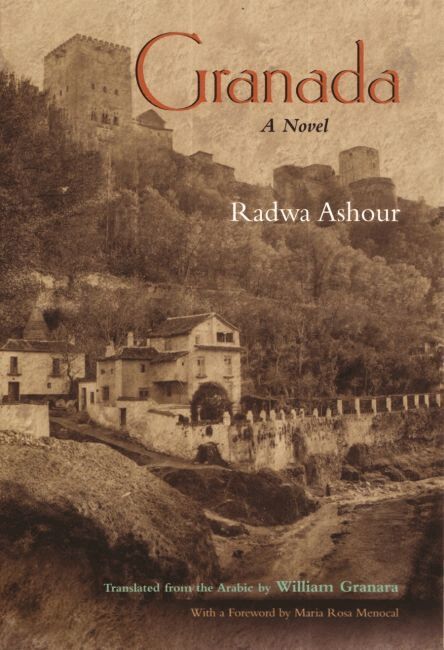
Radwa Ashour skillfully weaves a history of Granadan rule and an Arabic world into a novel that evokes cultural loss and the disappearance of a vanquished population. The novel follows the family of Abu Jaafar, the bookbinderdashhis wife, widowed daughter-in-law, her two children, and his two apprenticesdashas they witness Christopher Columbus and his entourage in a triumphant parade featuring exotic plants and animals and human captives from the New World. Embedded in the narrative is the preparation for the marriage of Saad, one of the apprentices, and Saleema, Abu Jaafar's granddaughterdasha scenario that is elegantly revealed in a number of parallel scenes.As the new rulers of Granada confiscate books and officials burn the collected volumes, Abu Jaafur quietly moves his rich library out of town. Persecuted Muslims fight to form an independent government, but increasing economic and cultural pressures on the Arabs of Spain and Christian rulers culminate in Christian conversions and Muslim uprisings.A tale that is both vigorous and heartbreaking, this novel will appeal to general readers of Spanish and Arabic literature as well as anyone interested in Christian-Muslim relations.
239 kr
Skickas inom 3-6 vardagar
225 kr
Skickas
A TOP 100 LITERARY WORK OF THE TWENTIETH CENTURY (THE ARAB WRITERS UNION)RUNNER-UP TO THE WINNER OF THE 2025 SAIF GHOBASH BANIPAL PRIZE FOR ARABIC LITERARY TRANSLATIONA BOOK RIOT BEST BOOK OF 2024“A magnum opus of prose fiction”—Marina Warner, author of Once Upon a TimeA multigenerational epic set at the collapse of Muslim rule in Medieval Spain, available now for the first time in a new, complete translationIt is 1492, and the keys to Granada, the last Muslim state in the Spanish Peninsula, have been handed over to the Christian king and queen: the final vestiges of this Arab kingdom in Europe are swept away.As the triumphant new masters of Granada burn books, Abu Jaafar, a bookseller by trade, quietly moves his rich library out of town, while preparing for the marriage of his granddaughter Saleema to his apprentice Saad. The tangled lives of Abu Jaafar’s family, his descendants, and his community bear witness to the vanquishing of Muslim life: confiscations, forced conversions, and expulsions.Radwa Ashour’s sweeping trilogy, set over one hundred years against the backdrop of the great historical events of sixteenth-century Europe, tells the story of those who remained in Andalusia, of the individuals who struggled to maintain faith and hope in a possible future. It narrates a community’s effort to comprehend what has happened to them, of their valiant but ultimately unsuccessful efforts to resist the destruction of their identity.Named a top literary work of the twentieth century by the Arab Writers’ Union, Granada is now available in English in its entirety for the first time. All three novels—Granada, Maryama and The Departure—are brilliantly retranslated in this outstanding new paperback edition.
676 kr
Skickas
"An immense, indispensable resource."—CHOICE, Named an Outstanding Academic Title Selection"As a women's studies librarian, I treasure this guide as a reference tool."—Feminist CollectionsAn invaluable reference source and critical review of Arab women writers from the last quarter of the nineteenth century to the end of the twentieth century, new in paperbackArab women’s writing in the modern age began with ‘A’isha al-Taymuriya, Warda al-Yaziji, Zaynab Fawwaz, and other nineteenth-century pioneers in Egypt and the Levant. This unique study—first published in Arabic in 2004—looks at the work of those pioneers and then traces the development of Arab women’s literature through the end of the twentieth century, and also includes a meticulously researched, comprehensive bibliography of writing by Arab women.In the first section, in nine essays that cover the Arab Middle East from Morocco to Iraq and Syria to Yemen, critics and writers from the Arab world examine the origin and evolution of women’s writing in each country in the region, addressing fiction, poetry, drama, and autobiographical writing.The second part of the volume contains bibliographical entries for over 1,200 Arab women writers from the last third of the nineteenth century through 1999. Each entry contains a short biography and a bibliography of each author’s published works. This section also includes Arab women’s writing in French and English, as well as a bibliography of works translated into English.With its broad scope and extensive research, this book is an indispensable resource for anyone interested in Arabic literature, women’s studies, or comparative literature.Contributors:Emad Abu Ghazi, Cairo University, Cairo, EgyptRadwa Ashour (1946–2014), Ain Shams University, Cairo, EgyptMohammed Berrada, novelist and critic, Beirut, LebanonHoda Elsadda, Women and Memory Forum, Cairo, Egypt, Ferial J. Ghazoul, The American University in Cairo, Cairo, EgyptSubhi Hadidi, critic, researcher, and translator, Paris, FranceHaidar Ibrahim, sociologist and critic, Cairo, EgyptYumna al-‘Id, critic, Beirut, LebanonSu‘ad al-Mana, King Saud University, Riyadh, Saudi ArabiaIman al-Qadi, critic, UAEAmina Rachid (1938–2021), Cairo University, Cairo, EgyptHasna Reda-Mekdashi, publisher, Beirut, LebanonHatem M. al-Sager, critic, Nashville, Tennessee, USA
644 kr
Skickas inom 11-20 vardagar
Arab women’s writing in the modern age began with ‘A’isha al-Taymuriya, Warda al-Yaziji, Zaynab Fawwaz, and other nineteenth-century pioneers in Egypt and the Levant. This unique study—first published in Arabic in 2004—looks at the work of those pioneers and then traces the development of Arab women’s literature through the end of the twentieth century, and also includes a meticulously researched, comprehensive bibliography of writing by Arab women. In the first section, in nine essays that cover the Arab Middle East from Morocco to Iraq and Syria to Yemen, critics and writers from the Arab world examine the origin and evolution of women’s writing in each country in the region, addressing fiction, poetry, drama, and autobiographical writing.The second part of the volume contains bibliographical entries for over 1,200 Arab women writers from the last third of the nineteenth century through 1999. Each entry contains a short biography and a bibliography of each author’s published works. This section also includes Arab women’s writing in French and English, as well as a bibliography of works translated into English.With its broad scope and extensive research, this book is an indispensable resource for anyone interested in Arabic literature, women’s studies, or comparative literature.Contributors: Emad Abu Ghazi, Radwa Ashour, Mohammed Berrada, Ferial J. Ghazoul, Subhi Hadidi, Haydar Ibrahim, Yumna al-‘Id, Su‘ad al-Mani‘, Iman al-Qadi, Amina Rachid, Huda al-Sadda, Hatim al-Sakr.
262 kr
Skickas
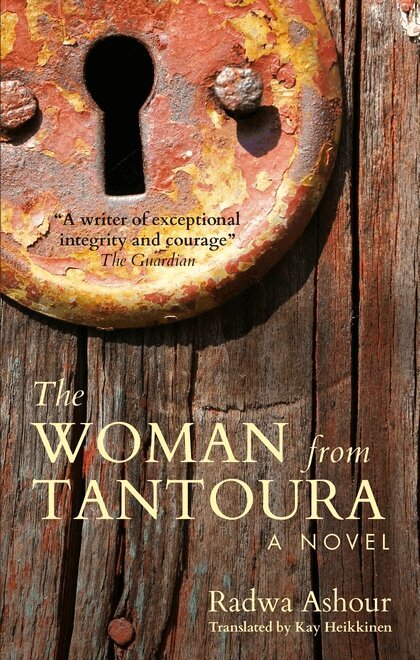
Ruqayya was only thirteen when the Nakba came to her village in Palestine in 1948. The massacre in Tantoura drove her from her home and from everything she had ever known. She had not left her village before, but she would never return. Now an old woman, Ruqayya looks back on a long life in exile, one that has taken her to Syria, Lebanon, the Gulf, and given her children and grandchildren. Through her depth of experience and her indomitable spirit, we live her love of her land, her family, and her people, and we feel the repeated pain of loss and of diaspora.