Raf De Bont - Böcker
Visar alla böcker från författaren Raf De Bont. Handla med fri frakt och snabb leverans.
6 produkter
6 produkter
355 kr
Skickas inom 7-10 vardagar
When we think of sites of animal research that symbolize modernity, the first places that come to mind are grand research institutes in cities and near universities that house the latest in equipment and technologies, not the surroundings of the bird's nest, the octopus' garden in the sea, or the parts of inland lakes in which freshwater plankton reside. Yet during the late nineteenth and early twentieth centuries, a group of zoologists began establishing novel, indeed modern ways of studying nature, propagating what present-day ecologists describe as place-based research. Raf De Bont's Stations in the Field focuses on the early history of biological field stations and the role these played in the rise of zoological place-based research. Beginning in the 1870s, a growing number of biological field stations were founded-first in Europe and later elsewhere around the world - and thousands of zoologists received their training and performed their research at these sites.Through case studies, De Bont examines the material and social context in which field stations arose, the actual research that was produced in these places, the scientific claims that were developed there, and the rhetorical strategies that were deployed to convince others that these claims made sense. From the life of parasitic invertebrates in northern France and freshwater plankton in Schleswig-Holstein, to migratory birds in East Prussia and pest insects in Belgium, De Bont's book is a fascinating tour through the history of studying nature in nature.
845 kr
Skickas inom 10-15 vardagar
Throughout its history, the discipline of ecology has always been profoundly entangled with the history of space and place. On the one hand, ecology is a field science that has thrived on the study of concrete spatial entities, such as islands, forests or rivers. These spaces are the workplaces in which ecological phenomena are identified, observed and experimented on. They provide both epistemic opportunities and constraints that structure the agenda and the analytical sensibilities of ecological researchers. On the other hand, ecological knowledge and practices have become important resources through which spaces and places are classified, delineated, explained, experienced and managed. The impact of these activities reaches far beyond the realms of the ecological discipline. Many ecological concepts such as "biotopes," "ecosystems" and "the biosphere" have become entities that widely resonate in public life and policy making. This book explores the mutual entanglement between space and knowledge-making in the history of ecology. Its first goal is to explore to which extent a spatial perspective can shed new light on the history of ecological science. Second, it uses ecology as a critical site to gain broader insights into the history of the environment in the nineteenth and twentieth centuries. Via a series of case studies – discussing topics that range from ecological field stations in the early-twentieth century Caribbean over wisent breeding in Nazi Germany to computer modelling in North American deserts – the book offers a tour through the changing landscapes of modern ecology.
799 kr
Skickas inom 7-10 vardagar
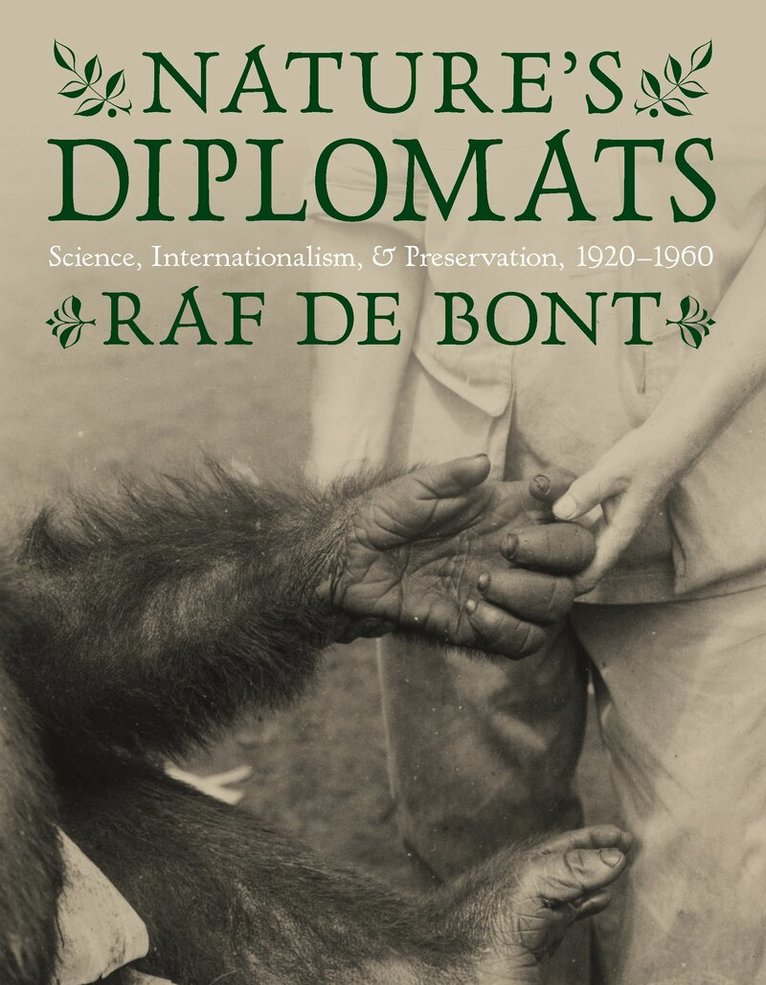
Nature’s Diplomats explores the development of science-based and internationally conceived nature protection in its foundational years before the 1960s, the decade when it launched from obscurity onto the global stage. Raf De Bont studies a movement while it was still in the making and its groups were still rather small, revealing the geographies of the early international preservationist groups, their social composition, self-perception, ethos, and predilections, their ideals and strategies, and the natures they sought to preserve. By examining international efforts to protect migratory birds, the threatened European bison, and the mountain gorilla in the interior of the Belgian Congo, Nature’s Diplomats sheds new light on the launch of major international organizations for nature protection in the aftermath of World War II. Additionally, it covers how the rise of ecological science, the advent of the Cold War, and looming decolonization forced a rethinking of approach and rhetoric; and how old ideas and practices lingered on. It provides much-needed historical context for present-day convictions about and approaches to the preservation of species and the conservation of natural resources, the involvement of local communities in conservation projects, the fate of extinct species and vanished habitats, and the management of global nature.
2 358 kr
Skickas inom 10-15 vardagar
Throughout its history, the discipline of ecology has always been profoundly entangled with the history of space and place. On the one hand, ecology is a field science that has thrived on the study of concrete spatial entities, such as islands, forests or rivers. These spaces are the workplaces in which ecological phenomena are identified, observed and experimented on. They provide both epistemic opportunities and constraints that structure the agenda and the analytical sensibilities of ecological researchers. On the other hand, ecological knowledge and practices have become important resources through which spaces and places are classified, delineated, explained, experienced and managed. The impact of these activities reaches far beyond the realms of the ecological discipline. Many ecological concepts such as "biotopes," "ecosystems" and "the biosphere" have become entities that widely resonate in public life and policy making. This book explores the mutual entanglement between space and knowledge-making in the history of ecology. Its first goal is to explore to which extent a spatial perspective can shed new light on the history of ecological science. Second, it uses ecology as a critical site to gain broader insights into the history of the environment in the nineteenth and twentieth centuries. Via a series of case studies – discussing topics that range from ecological field stations in the early-twentieth century Caribbean over wisent breeding in Nazi Germany to computer modelling in North American deserts – the book offers a tour through the changing landscapes of modern ecology.
1 152 kr
Kommande
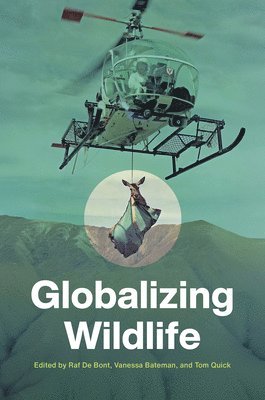
Humans have always incorporated wildlife into processes of work, capture, and exchange. During the nineteenth and twentieth centuries, globalization became the latest in a long line of forces affecting human-animal relations. Grey parrots traveled the world as pets; rats used global shipping infrastructure to spread to far-off islands and became the object of cross-border extermination campaigns; and California sea otters were relocated to accommodate global oil transportation needs. The language of globalization, however, is rarely used to understand the history of these creatures. Globalizing Wildlife shows how wild animals were not simply affected by globalization but shaped its concrete trajectories at local, national, and international scales. The editors and contributors of this collection bring the more-than-human turn to globalization studies, foregrounding not only how globalization matters for wildlife but also how wildlife matters for and constitutes globalization. The volume presents a range of geographically- and species-diverse case studies spanning from the 1870s to the present day to show that globalizing wildlife is far from a homogenous process. Ultimately, contributors reconceptualize globalization and wildlife in relation to one another and foster new connections between the longstanding study of globalization and the dynamic, rapidly consolidating field of historical animal studies. Contributors are Vincent Bijman, Christina Dunbar-Hester, Regina Horta Duarte, George Iordachescu, Nancy J. Jacobs, Ajit Menon, Gregg Mitman, Nitin D. Rai, Simone Schleper, Jules Skotnes-Brown, Monica Vasile, and James L. A. Webb Jr.
422 kr
Kommande
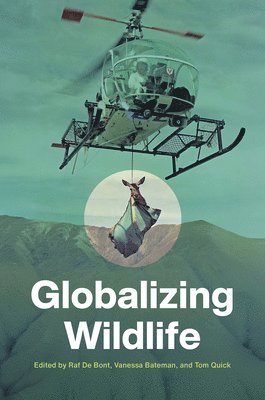
Humans have always incorporated wildlife into processes of work, capture, and exchange. During the nineteenth and twentieth centuries, globalization became the latest in a long line of forces affecting human-animal relations. Grey parrots traveled the world as pets; rats used global shipping infrastructure to spread to far-off islands and became the object of cross-border extermination campaigns; and California sea otters were relocated to accommodate global oil transportation needs. The language of globalization, however, is rarely used to understand the history of these creatures. Globalizing Wildlife shows how wild animals were not simply affected by globalization but shaped its concrete trajectories at local, national, and international scales. The editors and contributors of this collection bring the more-than-human turn to globalization studies, foregrounding not only how globalization matters for wildlife but also how wildlife matters for and constitutes globalization. The volume presents a range of geographically- and species-diverse case studies spanning from the 1870s to the present day to show that globalizing wildlife is far from a homogenous process. Ultimately, contributors reconceptualize globalization and wildlife in relation to one another and foster new connections between the longstanding study of globalization and the dynamic, rapidly consolidating field of historical animal studies. Contributors are Vincent Bijman, Christina Dunbar-Hester, Regina Horta Duarte, George Iordachescu, Nancy J. Jacobs, Ajit Menon, Gregg Mitman, Nitin D. Rai, Simone Schleper, Jules Skotnes-Brown, Monica Vasile, and James L. A. Webb Jr.