Rafael Beyar - Böcker
Visar alla böcker från författaren Rafael Beyar. Handla med fri frakt och snabb leverans.
12 produkter
12 produkter
Interactive Phenomena in the Cardiac System
Proceedings of the Eighth Henry Goldberg Workshop Held in Bethesda, Maryland, December 6-10, 1992
Inbunden, Engelska, 1994
852 kr
Skickas inom 10-15 vardagar
Molecular and Subcellular Cardiology
Effects of Structure and Function - Proceedings of the Ninth Goldberg Workshop Held in Haifa, Israel, December 4-8, 1994
Inbunden, Engelska, 1995
852 kr
Skickas inom 10-15 vardagar
2 164 kr
Skickas inom 10-15 vardagar
The cardiac system represents one of the most exciting challenges to human ingenuity. Critical to our survival, it consists of a tantalizing array of interacting phenomena, from ionic microscopic transport, membrane channels and receptors through cellular metabolism, energy production to fiber mechanics, microcirculation, electrical activation to the global, clinically observed, function, which is measured by pressure, volume, coronary flow, heart rate, shape changes and responds to imposed loads and pharmaceutical challenges. It is a complex interdisciplinary system requiring the joint efforts of the life sciences, the exact sciences, engineering and technology to understand and control the pathologies involved. The Henry Goldberg Workshops were set up to address these challenges. Briefly, our goals are: 1. To foster interdisciplinary interaction between scientists from different areas of cardiology, identify missing links, and catalyze new questions. 2. To relate micro scale cellular phenomena to the global, clinically manifested cardiac function. 3. To relate conceptual modeling and quantitative analysis to experimental and clinical data. 4. To encourage international cooperation so as to disperse medical and technological know how and lead to better understanding of the cardiac system. Today we celebrate the 7th birthday of a dream come true; a dream to bring together the diversified expertise in the various fields of science, engineering and medicine, to relate to the numerous interactive parameters and disciplines involved in the performance of the heart.
3 187 kr
Skickas inom 10-15 vardagar
Over thiry-five experts contribute to this publication about the various interactions and interrelationships of the parameters which affect the normal and ischemic heart. Mechanical aspects related to the global and regional function of the heart are discussed. Coronary perfusion of the ischemic heart is considered, with emphasis on the effects of reperfusion. Electrical activation, formation of arrhythmias, and the effects of ischemia or ionic transport in the myocardium are presented. Metabolic aspects of the ischemic heart, including calcium transport, are also explained.
536 kr
Skickas inom 10-15 vardagar
The Henry Goldberg Workshops were set up to address the following goals: (1) To foster interdisciplinary interaction between scientists and cardiologists, identify missing links, and catalyze new ideas. (2) To relate basic microscale phenomena to the global, clinically manifested cardiac function. (3) To relate conceptual modeling and quantitative analysis to experimental and clinical data. (4) To encourage international cooperation so as to disperse medical and technological knowhow and lead to better understanding of the cardiac system. The first Henry Goldberg Workshop, held in Haifa in 1984, introduced the concept of interaction between cardiac mechanics, electrical activation, perfusion, and metabolism, emphasizing imaging in the clinical environment. The second Workshop, in 1985, discussed the same parameters with a slant towards the control aspects. The third Goldberg Workshop, held in the USA at Rutgers University in 1986, highlighted the transformation of the microscale activation phenomena to macroscale activity and performance, relating electrophysiology, energy metabolism, and cardiac mechanics. The fourth Goldberg Workshop, in 1987, continued the effort to elucidate the interactions among the various parameters affecting cardiac performance, with emphasis on the ischemic heart. The fifth Workshop, held in Cambridge, UK, in 1988, dwelt on the effects of inhomogeneity of the cardiac muscle on its performance in health and disease. The sixth Workshop highlighted the role of new modem imaging techniques, that allow us to gain more insight into local and global cardiac performance in cardiac research and clinical practice.
2 164 kr
Skickas inom 10-15 vardagar
The cardiac system represents one of the most exciting challenges to human ingenuity. Critical to our survival, it consists of a tantalizing array of interacting phenomena, from ionic microscopic transport, membrane channels and receptors through cellular metabolism, energy production to fiber mechanics, microcirculation, electrical activation to the global, clinically observed, function, which is measured by pressure, volume, coronary flow, heart rate, shape changes and responds to imposed loads and pharmaceutical challenges. It is a complex interdisciplinary system requiring the joint efforts of the life sciences, the exact sciences, engineering and technology to understand and control the pathologies involved. The Henry Goldberg Workshops were set up to address these challenges. Briefly, our goals are: 1. To foster interdisciplinary interaction between scientists from different areas of cardiology, identify missing links, and catalyze new questions. 2. To relate micro scale cellular phenomena to the global, clinically manifested cardiac function. 3. To relate conceptual modeling and quantitative analysis to experimental and clinical data. 4. To encourage international cooperation so as to disperse medical and technological know how and lead to better understanding of the cardiac system. Today we celebrate the 7th birthday of a dream come true; a dream to bring together the diversified expertise in the various fields of science, engineering and medicine, to relate to the numerous interactive parameters and disciplines involved in the performance of the heart.
536 kr
Skickas inom 10-15 vardagar
The tenth Henry Goldberg Workshop is an excellent occasion to recall our goals and celebrate some of our humble achievements. Vision and love of our fellow man are combined here to: 1) Foster interdisciplinary interaction between leading world scientists and clinical cardiologists so as to identify missing knowledge and catalyze new research ideas; 2) relate basic microscale, molecular and subcellular phenomena to the global clinically manifested cardiac performance; 3) apply conceptual modelling and quantitative analysis to better explore, describe, and understand cardiac physiology; 4) interpret available clinical data and design new revealing experiments; and 5) enhance international cooperation in the endless search for the secrets of life and their implication on cardiac pathophysiology. The first Goldberg Workshop, held in Haifa, in 1984, explored the interaction of mechanics, electrical activation, perfusion and metabolism, emphasizing imaging in the clinical environment. The second Workshop, in 1985, discussed the same parameters with a slant towards the control aspects. The third Goldberg Workshop, held in the USA at Rutgers University, in 1986, highlighted the transformation of the microscale activation phenomena to macro scale activity and performance, relating electrophysiology, energy metabolism and cardiac mechanics. The fourth Goldberg Workshop continued the effort to elucidate the various parameters affecting cardiac performance, with emphasis on the ischemic heart. The fifth Workshop concentrated on the effect of the inhomogeneity of the cardiac muscle on its performance. The sixth Workshop highlighted new imaging techniques which allow insight into the local and global cardiac performance.
1 462 kr
Skickas inom 7-10 vardagar
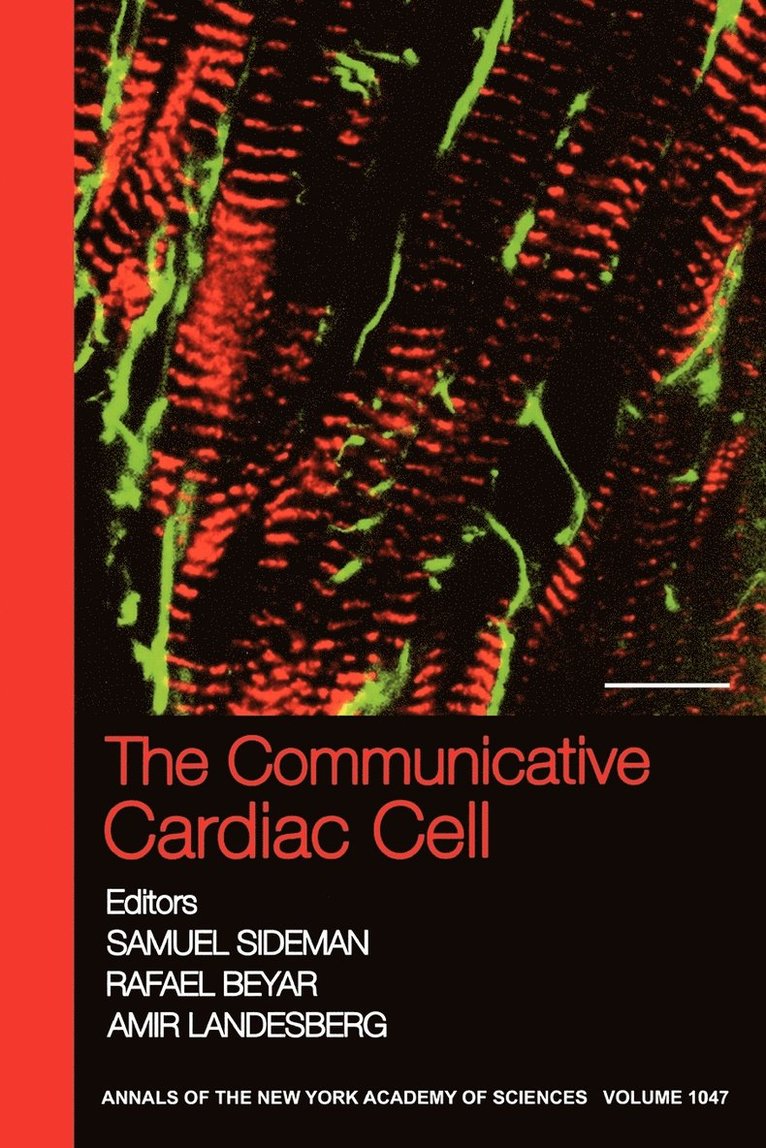
The basic phenomena of intra- and intercellular communication and the transport signals within and between the cells controlling cardiac function are described and discussed in this volume. The amazing synchronization of millions of cells and billions of nanoscale molecular motors, ion gates, and ion pumps assure normal cardiac function; whereas disharmony and local transport and signal disruptions are the forecasters, and eventual causes, of pathologic conditions and heart failure. Although this volume concentrates on basic phenomena, strong emphasis is given to the related clinical and pharmaceutical manifestations, and chapters have been contributed by molecular biologists, pharmaceutical experts, and cardiac scientists. This volume will promote better understanding and, consequently, better clinical and pharmaceutical handling of the various aspects of cardiac pathophysiologies associated with electrical, mechanical, and metabolic and circulatory disorders in the cardiovascular system. NOTE: Annals volumes are available for sale as individual books or as a journal. For information on institutional journal subscriptions, please visit www.blackwellpublishing.com/nyas. ACADEMY MEMBERS: Please contact the New York Academy of Sciences directly to place your order (www.nyas.org). Members of the New York Academy of Science receive full-text access to the Annals online and discounts on print volumes. Please visit http://www.nyas.org/MemberCenter/Join.aspx for more information about becoming a member.
1 209 kr
Tillfälligt slut
The characteristics of the basic elements and the cardiac functions will be highlighted in this volume. In their contributions, the authors concentrate on the analysis and integration of the interactions of the micro-scale cellular elements, as well as of the macro-scale phenomena and their effects on the function of the cardiovascular system. The general goals of the cardiac workshop of which this volume is the proceedings were to (1) foster interdisciplinary interaction between leading world scientists and clinical cardiologists so as to identify "black holes" and catalyze new research ideas; (2) relate basic micro-scale, molecular, and subcellular phenomena to the clinically manifested cardiac performance; (3) apply conceptual modeling and quantitative analysis to better explore, describe, and understand cardiac physiology; (4) interpret available clinical data and design new revealing experiments; and (5) enhance international cooperation in the search for the secrets of life and their implications in cardiac pathophysiology. NOTE: Annals volumes are available for sale as individual books or as a journal. For information on institutional journal subscriptions, please visit www.blackwellpublishing.com/nyas.ACADEMY MEMBERS: Please contact the New York Academy of Sciences directly to place your order (www.nyas.org). Members of the New York Academy of Science receive full-text access to the Annals online and discounts on print volumes. Please visit http://www.nyas.org/MemberCenter/Join.aspx for more information about becoming a member
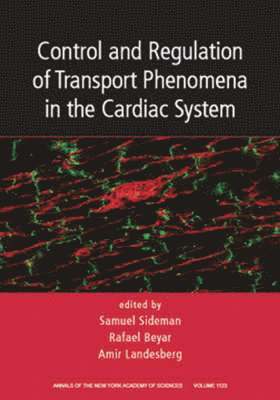
Control and Regulation of Transport Phenomena in the Cardiac System, Volume 1123
Häftad, Engelska, 2008
1 174 kr
Tillfälligt slut
Leading researchers in the life sciences and engineers involved in research of transport phenomena in biological systems have contributed chapters that identify, analyze, and modify the control and regulation mechanisms of transport phenomena in biological systems, with particular emphasis on the cardiac system. Included in the contributions to this volume are the following topics: signaling mechanisms and transport phenomena; blood-tissue exchange and inter-tissue transport; cellular membrane transport and endocytosis of ions and metabolites; intracellular transport, energetics, and molecular motors; system biology, uni- and multi-scale transport models, and hierarchical analysis; and clinical considerations -- cardiac protection, metabolic and pharmaceutical augmentation, and interferences. NOTE: Annals volumes are available for sale as individual books or as a journal. For information on institutional journal subscriptions, please visit www.blackwellpublishing.com/nyas.ACADEMY MEMBERS: Please contact the New York Academy of Sciences directly to place your order (www.nyas.org). Members of the New York Academy of Science receive full-text access to the Annals online and discounts on print volumes. Please visit http://www.nyas.org/MemberCenter/Join.aspx for more information about becoming a member
Activation, Metabolism and Perfusion of the Heart
Simulation and experimental models
Häftad, Engelska, 2011
552 kr
Skickas inom 10-15 vardagar
The basic mechanism underlying directional differences in excitability, con- duction velocity, andsafetyfactor thatleadtocircusmovementreentry incardiac muscle is generally attributed to a spatial difference in the refractory period as originally described by Mines [1] or to a depressed segment as described by Schmitt and Erlanger [2]. A departure from this depolarization in cardiac muscle involve quantities, such as Vmax' that are not directly descriptive of the underlying mechanisms of propagation.
Del 43 - Developments in Cardiovascular Medicine
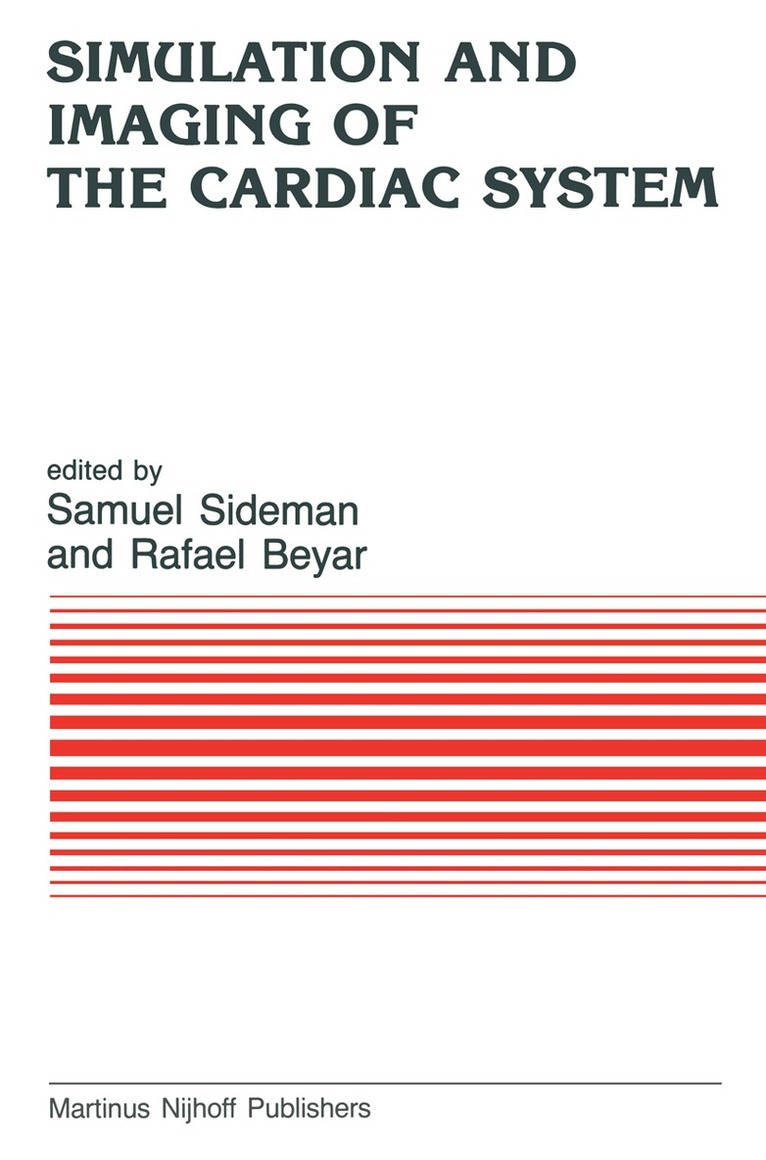
Simulation and Imaging of the Cardiac System
State of the Heart
Häftad, Engelska, 2011
552 kr
Skickas inom 10-15 vardagar
The ultrasound velocity tomography allows measurement of cardiac geometries for various phases in the cardiac cycle. The present tomograph makes reconstruc tions at intervals of 20 ms. Because of a lack of clear (intramural) landmarks (except the roots of the papillairy muscle), it is difficult to pinpoint spatial trajectories of particular points in the heart. Therefore, a second method was developed of injecting radiopaque markers in the heart and following their motion patterns during the cardiac cycle with help of a biplane X-ray equipment. The data obtained with both methods can be implemented in our finite element model of the heart to compute intramural stresses and strains. The results obtained sofar with the extended Darcy equation to account for the interaction of blood rheology and tissue mechanics look promising. Further testing with more sophisticated subjects than mentioned in Figure 9 is required before it will be implemented in our finite element model of the heart. We conclude that analysis of regional cardiac function, including regional myocardial blood flow, requires still a major research effort but the results obtained sofar justify, to our opinion, a continuation in this direction. Acknowledgement The authors acknowledge Dr. C. Borst and coworkers for doing the animal experiments and prof. Van Campen and dr. Grootenboer for their participation is some aspects of this work.