Raffaele Rodogno - Böcker
Visar alla böcker från författaren Raffaele Rodogno. Handla med fri frakt och snabb leverans.
3 produkter
3 produkter
1 078 kr
Skickas inom 5-8 vardagar
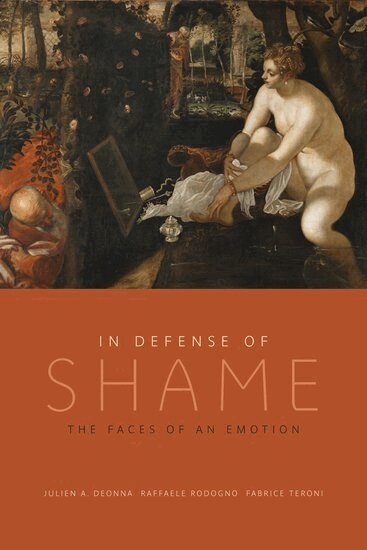
Is shame social? Is it superficial? Is it a morally problematic emotion? Researchers in disciplines as different as psychology, philosophy, and anthropology have thought so. But what is the nature of shame and why are claims regarding its social nature and moral standing interesting and important? Do they tell us anything worthwhile about the value of shame and its potential legal and political applications? In this book, Julien Deonna, Raffaele Rodogno, and Fabrice Teroni propose an original philosophical account of shame aimed at answering these questions. The book begins with a detailed examination of the evidence and arguments that are taken to support what they call the two dogmas about shame: its alleged social nature and its morally dubious character. Their analysis is conducted against the backdrop of a novel account of shame and ultimately leads to the rejection of these two dogmas. On this account, shame involves a specific form of negative evaluation that the subject takes towards herself: a verdict of incapacity with regard to values to which she is attached. One central virtue of the account resides in the subtle manner it clarifies the ways in which the subject's identity is at stake in shame, thus shedding light on many aspects of this complex emotion and allowing for a sophisticated understanding of its moral significance. This philosophical account of shame engages with all the current debates on shame as they are conducted within disciplines as varied as ethics, moral, experimental, developmental and evolutionary psychology, anthropology, legal studies, feminist studies, politics and public policy.
1 209 kr
Skickas inom 10-15 vardagar
Few emotions have divided opinion as deeply as shame. Some scholars have argued that shame is essentially a maladaptive emotion used to oppress minorities and reinforce stigmas and traumas, an emotion that leaves the self at the mercy of powerful others. Other scholars, however, have argued that the absence of a sense of shame in a subject—their shamelessness—is tantamount to a vicious moral insensitivity. As the eleven original chapters in this collection attest, however, shame scholars are entering a new phase, one in which scholarship no longer attempts to defend one side of shame against the other, but rather accepts both faces as faithful to the phenomenon to be explained. At the core of our understanding of shame there are profound disagreements about the importance of the Other in shaping our moral identity. As this collection shows by its study of shame, the difficulty of the connection between Self, Other, and morality spans over millennia and cultures and currently animates important debates at the core of feminism and disability studies. Contributors: Mark Alfano, Alessandra Fussi, Lorenzo Greco, JeeLoo Liu, Katrine Krause-Jensen, Heidi L. Maibom, Tjeert Olthof, Imke von Maur, Alba Montes Sánchez, Raffaele Rodogno, Alessandro Salice, Krista K. Thomason, Íngrid Vendrell Ferran
1 381 kr
Skickas inom 10-15 vardagar
Moral philosophy has traditionally strived towards abstraction and universalization, its claims tending to leave behind the specificity of bodies, individuals’ lives, situations, culture, and history. Yet there are ways of thinking and doing moral philosophy that do not leave context behind but make it their. This makes it a point , never to lose sight of context, to place it at the centre of ethical investigations. To present and defend the richness and validity of this approach to ethics his is , at any rate, the claim and the ambition of this volume.Placed in the new field of contextual ethics, the anthology presents articles that focus on issues ranging from the theoretical and the methodological – Does taking context into account imply relativism? Can the normative and the descriptive in ethics be separated? How does moral change occur in the thick of everyday life? – to applied issues in biomedical, animal, and environmental ethics. The volume opens with a programmatic chapter on contextual ethics that traces its historical roots, its most central themes and methodological issues, and its relation to different traditions in contemporary ethics.