Ragnar Arnason - Böcker
Visar alla böcker från författaren Ragnar Arnason. Handla med fri frakt och snabb leverans.
5 produkter
5 produkter
4 279 kr
Skickas inom 10-15 vardagar
The genesis of this conference was on a quay of the port of Bergen in March 1985. Ragnar Amason suggested to Phil Neher a small, mid-Atlantic conference on recent developments in fishery management. In the event, more than twenty papers were scheduled and over one hundred and fifty conferees were registered. Logistical complications were sorted through for a summer 1988 conference in Iceland. The really innovative management programs were in the South Pacific; Aus tralia and New Zealand had introduced Individual Transferable Quotas (ITQs); and Iceland, Norway and Canada were also experimenting with quotas. It seemed to the program committee (Rognvaldur Hannesson and Geoffrey Waugh were soon on board) that these quotas had more or less characteristics of property rights. Property rights were also taking other forms in other places (time and area licenses, restrictive licensing of vessels and gear, traditional use rights). The idea of rights based fishing became the theme of the conference.
296 kr
Skickas inom 10-15 vardagar
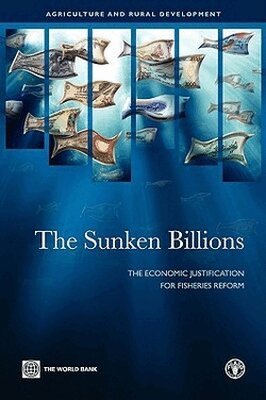
Economic losses in marine fisheries resulting from poor management, inefficiencies, and overfishing add up to US$50 billion per year. Taken over the last three decades, these losses total over US$2 trillion, a figure roughly equivalent to the GDP of Italy. The Sunken Billions: The Economic Justification for Fisheries Reform argues that well-managed marine fisheries could turn most of these losses into sustainable economic benefits for millions of fishers and coastal communities. According to this book, the bulk of losses occur in two main ways. First, depleted fish stocks mean that there are fewer fish to catch, and therefore the cost of finding and catching them is greater than it might be. Second, fleet overcapacity means that the economic benefits of fishing are dissipated due to redundant investment and operating costs. The book stresses that the figure of US$50 billion represents a conservative estimate, as it excludes losses to recreational fisheries and marine tourism as well as losses due to illegal fishing. The Sunken Billions argues that strengthened fishing rights can provide fishers and fishing communities with incentives to operate in an economically efficient and socially responsible manner. Phasing out subsidies that enhance redundant fishing capacity and harvesting effort will improve efficiency. Greater transparency in allocation of fish resources and greater public accountability for fisheries management and health of fish stocks will help eco-labeling initiatives to certify sustainable fisheries.
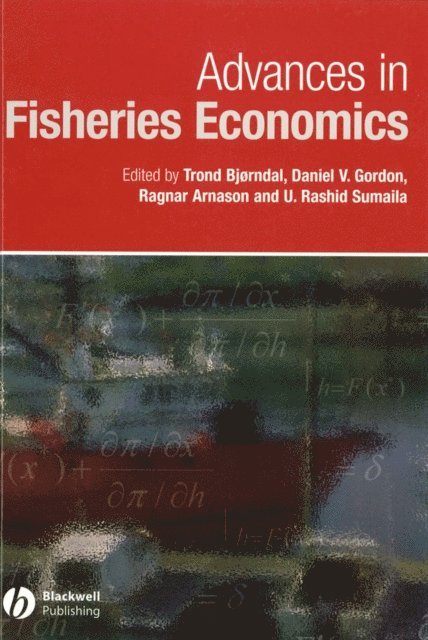
Advances in Fisheries Economics
Festschrift in Honour of Professor Gordon R. Munro
Inbunden, Engelska, 2007
2 660 kr
Skickas inom 7-10 vardagar
A true landmark publication, Advances in Fisheries Economics brings together many of the world's leading fisheries economists to authoritatively cover the many issues facing the field of fisheries economics and management today.Compiled in honour of the work and achievements of Professor Gordon Munro of the University of British Columbia, Canada, this exceptional volume of research serves as both a valuable reference tool and fitting tribute to a man whose work has shaped the discipline.Divided into four sections, the text includes coverage of: Property Rights and Fisheries ManagementCapital Theory and Natural ResourcesGame Theory and International FisheriesApplied Fisheries Economics and ManagementThe book is an important addition to the resources of all fisheries economists, managers, scientists and fish biologists. Libraries in universities and research establishments where these subjects are studied and taught should have copies on their shelves.
1 064 kr
Skickas inom 10-15 vardagar
This publication contains ten essays written by natural resource economists and mathematicians on the economics of harvesting from migratory fish stocks. Five of the essays deal with the analytical aspects of the subject. These essays are concerned with questions of optimal harvesting paths, stability and the specific problems that arise when fish migrations provide several nations with periodic exclusive access to the fish stock. The other five essays are empirical. They feature case studies of fisheries from actual migratory fish stocks. The publication provides an introduction to a subject that has been largely ignored in the fisheries economics literature. It describes the nature of the problem and derives several important results of a general nature.
3 823 kr
Skickas inom 10-15 vardagar
The genesis of this conference was on a quay of the port of Bergen in March 1985. Ragnar Amason suggested to Phil Neher a small, mid-Atlantic conference on recent developments in fishery management. In the event, more than twenty papers were scheduled and over one hundred and fifty conferees were registered. Logistical complications were sorted through for a summer 1988 conference in Iceland. The really innovative management programs were in the South Pacific; Aus tralia and New Zealand had introduced Individual Transferable Quotas (ITQs); and Iceland, Norway and Canada were also experimenting with quotas. It seemed to the program committee (Rognvaldur Hannesson and Geoffrey Waugh were soon on board) that these quotas had more or less characteristics of property rights. Property rights were also taking other forms in other places (time and area licenses, restrictive licensing of vessels and gear, traditional use rights). The idea of rights based fishing became the theme of the conference.