Rahul Dixit – författare
Visar alla böcker från författaren Rahul Dixit. Handla med fri frakt och snabb leverans.
4 produkter
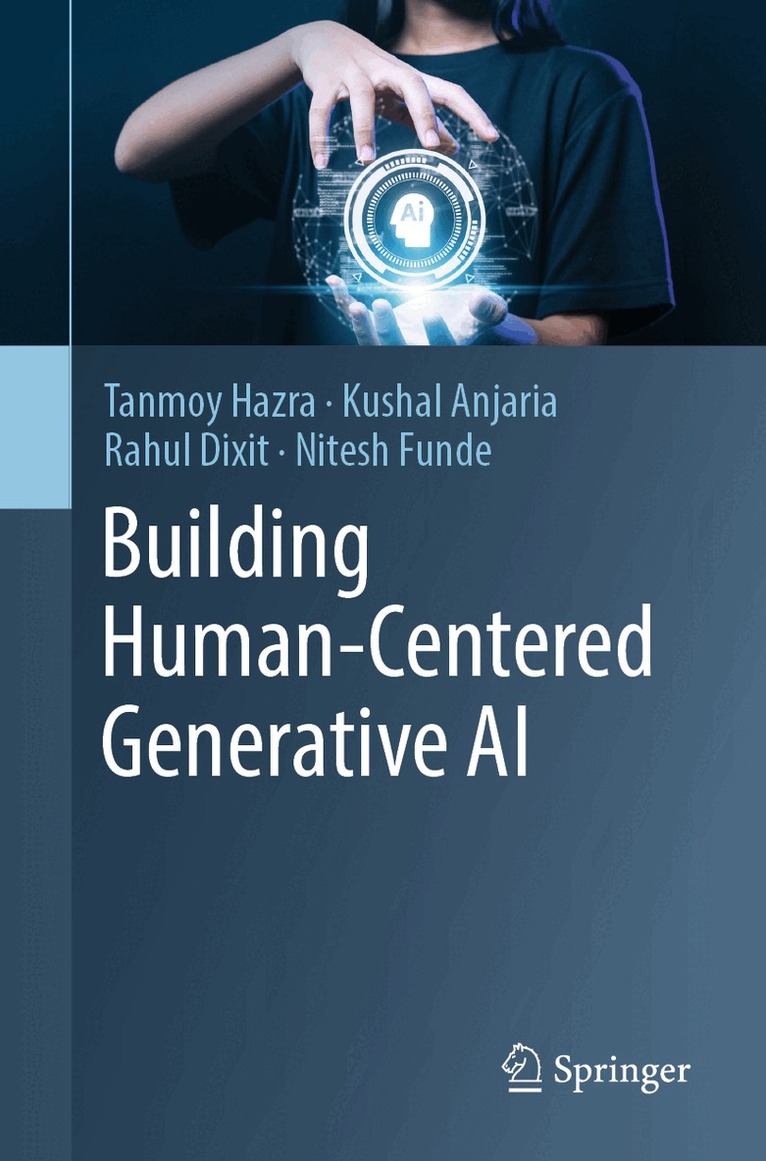
Building Human-Centered Generative AI
Av Tanmoy Hazra, Kushal Anjaria m. fl.
Häftad, 2026
552 kr
Lägg i varukorg
This book addresses critical ethical, social, and technological challenges that arise from the rapid integration of Generative AI systems into diverse aspects of human life. The shift toward human-centered GAI emerges as a response to increasing concerns about AI's embedded biases, opacity, and …
Building Human-Centered Generative AI
Av Nitesh Funde, Rahul Dixit m. fl.
E-bok, 2026
718 kr
Lägg i varukorg
This book addresses critical ethical, social, and technological challenges that arise from the rapid integration of Generative AI systems into diverse aspects of human life. The shift toward human-centered GAI emerges as a response to increasing concerns about AI's embedded biases, opacity, and …
Digital Image Forensics
Theory and Implementation
Av Aniket Roy, Rahul Dixit m. fl.
Inbunden, 2019
1209 kr
Lägg i varukorg
This book discusses blind investigation and recovery of digital evidence left behind on digital devices, primarily for the purpose of tracing cybercrime sources and criminals. It presents an overview of the challenges of digital image forensics, with a specific focus on two of the most common …
Digital Image Forensics
Theory and Implementation
Av Rajat Subhra Chakraborty, Ruchira Naskar m. fl.
E-bok, 2019
1642 kr
Lägg i varukorg
This book discusses blind investigation and recovery of digital evidence left behind on digital devices, primarily for the purpose of tracing cybercrime sources and criminals. It presents an overview of the challenges of digital image forensics, with a specific focus on two of the most common …