Kushal Anjaria - Böcker
Visar alla böcker från författaren Kushal Anjaria. Handla med fri frakt och snabb leverans.
4 produkter
4 produkter
1 874 kr
Kommande
'Relativity in Business: How Physics Shapes Management Science' unveils the intriguing overlap between physics and management, providing a novel outlook on business strategy and organisational behaviour. It leverages concepts from motion, thermodynamics, quantum mechanics, and chaos theory, among others, to forge a groundbreaking framework for addressing business complexities. Aimed at managers, strategists, and academics, the book translates intricate physics into actionable insights for business challenges, such as optimising operations and leveraging chaos for organisational benefit. Through compelling case studies, it shows how applying physics principles can spur innovation and cultivate efficient, sustainable business practices. This text is a valuable tool for anyone interested in melding scientific principles with business strategy to enhance outcomes, making it a seminal read in the fusion of science and management.
588 kr
Skickas inom 7-10 vardagar
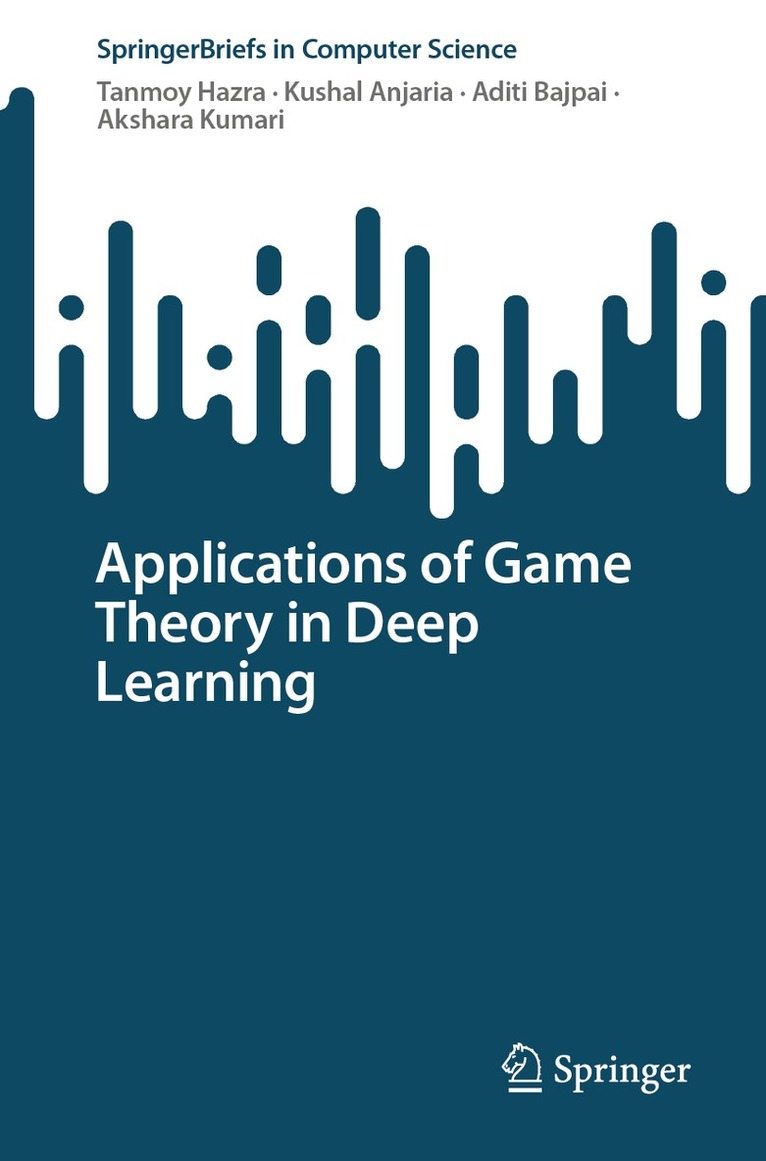
This book aims to unravel the complex tapestry that interweaves strategic decision-making models with the forefront of deep learning techniques. Applications of Game Theory in Deep Learning provides an extensive and insightful exploration of game theory in deep learning, diving deep into both the theoretical foundations and the real-world applications that showcase this intriguing intersection of fields. Starting with the essential foundations for comprehending both game theory and deep learning, delving into the individual significance of each field, the book culminates in a nuanced examination of Game Theory's pivotal role in augmenting and shaping the development of Deep Learning algorithms. By elucidating the theoretical underpinnings and practical applications of this synergistic relationship, we equip the reader with a comprehensive understanding of their combined potential. In our digital age, where algorithms and autonomous agents are becoming more common, the combination of game theory and deep learning has opened a new frontier of exploration. The combination of these two disciplines opens new and exciting avenues. We observe how artificial agents can think strategically, adapt to ever-shifting environments, and make decisions that are consistent with their goals and the dynamics of their surroundings. This book presents case studies, methodologies, and real-world applications.
804 kr
Kommande
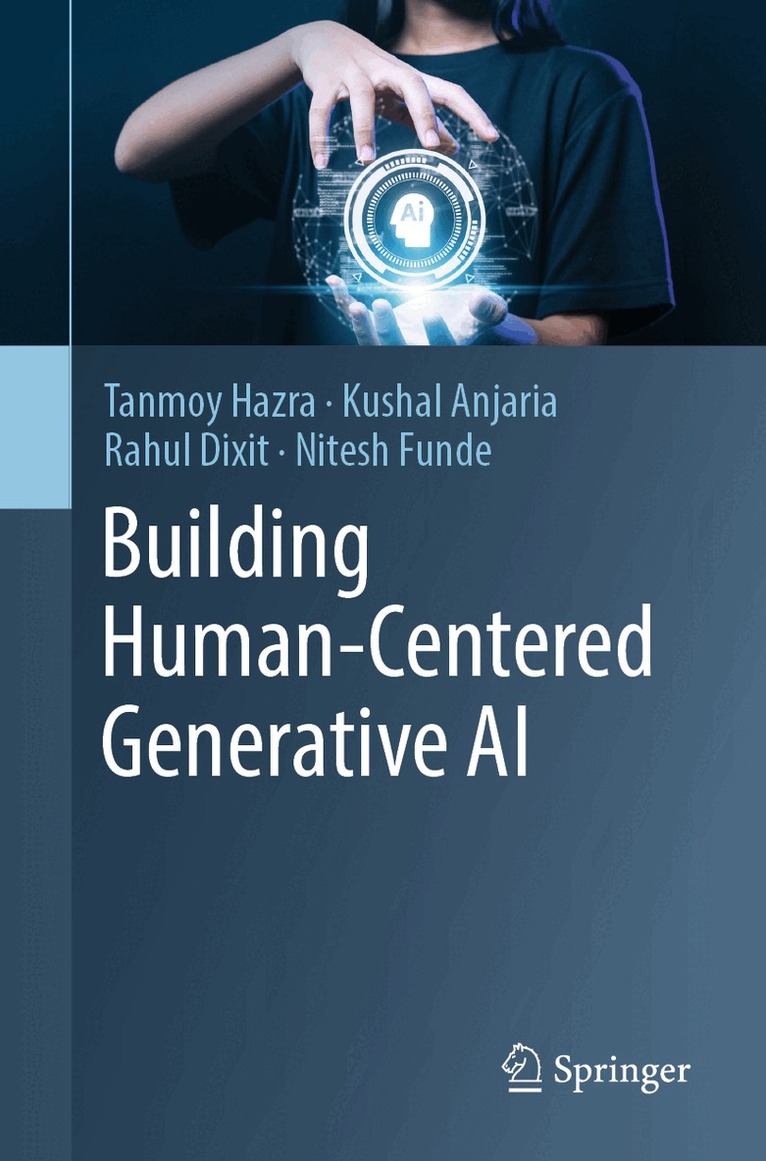
This book addresses critical ethical, social, and technological challenges that arise from the rapid integration of Generative AI systems into diverse aspects of human life. The shift toward human-centered GAI emerges as a response to increasing concerns about AI's embedded biases, opacity, and potential misalignment with human values. By centering on human experiences, agency, and ethical principles, this paradigm fosters the development of GAI that is explainable, interpretable, trustworthy, and aligned with societal needs.Building Human-Centered Generative AI offers a comprehensive roadmap for rethinking generative AI as a technology that serves people first, not metrics or scale. Bringing together principles from computer science, human-computer interaction, ethics, psychology, and design, it shows how empathy, fairness, transparency, and accountability can be systematically embedded into models, interfaces, and deployment lifecycles. Rather than treating ethics as an afterthought, the book positions human values, user needs, and social impact as core design requirements for any serious generative AI initiative.Written for graduate students, researchers, practitioners, and policymakers, this book functions both as a scholarly reference and as a practical playbook for responsible innovation. It equips teams with actionable methods for participatory and value-sensitive design, human-in-the-loop collaboration, GenAIOps governance, and multidimensional evaluation focused on trust, usability, and societal impact. For anyone tasked with designing, deploying, or regulating generative AI, Building Human-Centered Generative AI provides the conceptual grounding and hands-on guidance needed to align powerful new technologies with human dignity, equity, and long-term social good.
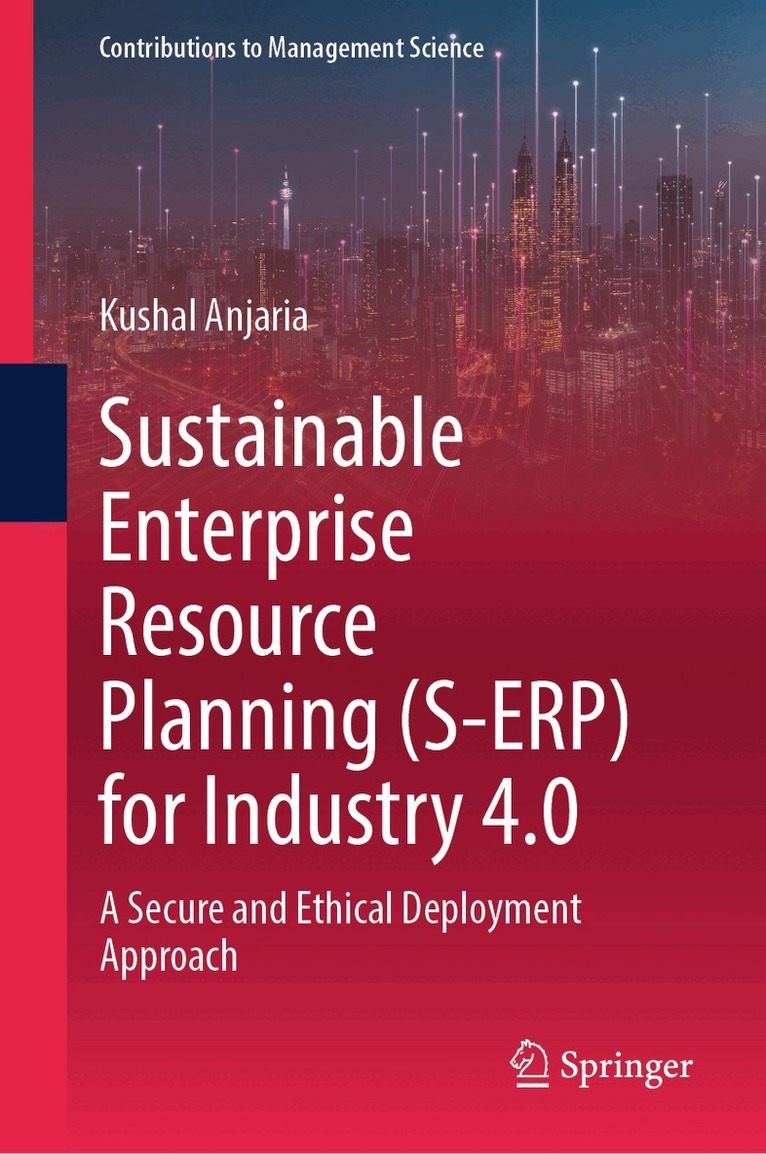
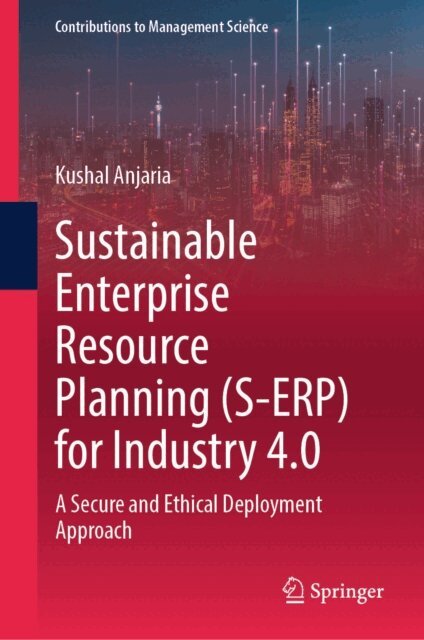
Sustainable Enterprise Resource Planning (S-ERP) for Industry 4.0
A Secure and Ethical Deployment Approach
Inbunden, Engelska, 2025
1 517 kr
Skickas inom 10-15 vardagar
This book delves into integrating sustainable practices within enterprise resource planning (S-ERP) systems framework, particularly in the context of Industry 4.0. It offers a comprehensive exploration of how S-ERP systems can be developed and implemented to enhance operational efficiency and promote environmental and social sustainability, which is achieved by incorporating cutting-edge technologies such as the internet of things (IoT), artificial intelligence (AI), and cloud computing, which are instrumental in Industry 4.0. Targeted primarily at professionals and academics in business management, information technology, and sustainability, the book will be a crucial resource for those seeking to understand and implement S-ERP solutions. It is particularly beneficial for MBA students, business strategists, ERP consultants, and IT professionals involved in planning, developing, and managing ERP systems.Key topics include the principles of sustainable business practices, the role of digital technologies in enhancing ERP systems, and the challenges and opportunities presented by Industry 4.0. The book also provides practical insights into implementing S-ERP systems, offering case studies and real-world examples to illustrate key concepts. It is thus not just an academic treatise, but a practical guide that addresses the need for a new ERP approach in the digital transformation age. It seeks to equip its readers with the knowledge and tools required to successfully navigate the complexities of modern business environments, emphasising the importance of sustainability in achieving long-term success. In summary, this book is a vital addition to the literature on ERP systems, offering a fresh perspective on how businesses can evolve to meet the demands of the 21st century while maintaining a commitment to sustainability.