Rajyashree Pandey - Böcker
Visar alla böcker från författaren Rajyashree Pandey. Handla med fri frakt och snabb leverans.
3 produkter
3 produkter
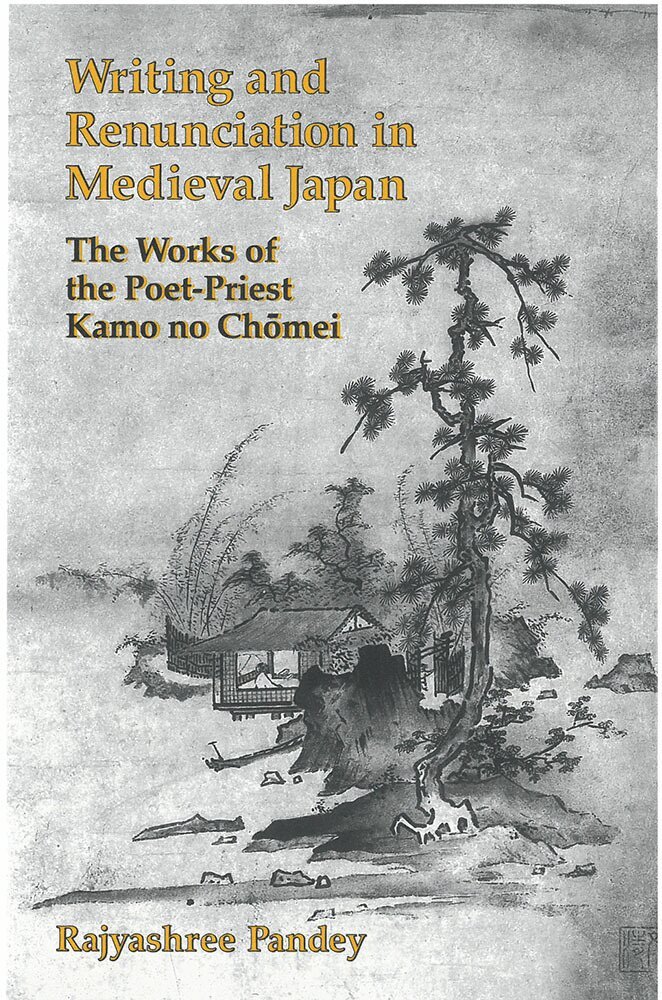
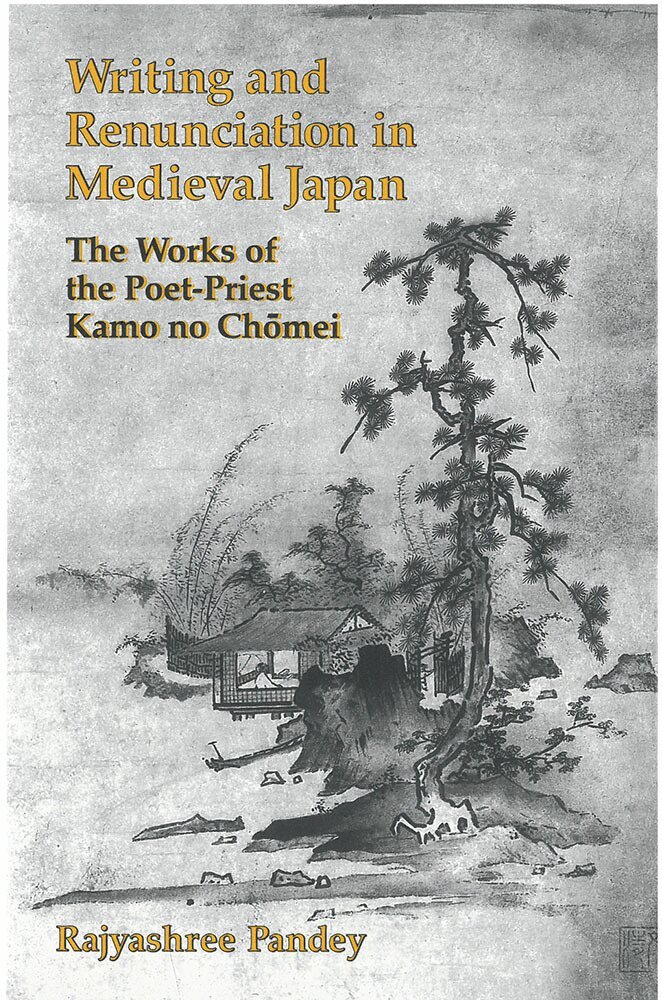
Writing and Renunciation in Medieval Japan
The Works of the Poet-Priest Kamo no Chomei
Häftad, Engelska, 2021
191 kr
Skickas inom 7-10 vardagar
This is the first monograph-length study in English of Kamo no Chōmei, one of the most important literary figures of medieval Japan. Drawing upon a wide range of writings in a variety of genres from the Heian and Kamakura periods, Pandey focuses on the terms kyōgen kigo (wild words and fancy phrases), shoji soku nehan (samsara is nirvana), hōben (expedient means), and suki (single-minded devotion to an art). She shows how these terms deployed by writers in an attempt to reconcile literary and artistic activities with a commitment to Buddhism. By locating Chōmei within this broad context, the book offers an original reading of his texts, while at the same time casting a light upon intellectual preoccupations that were central to the times. Writing and Renunciation in Medieval Japan is an important contribution to a growing body of work that challenges the rigid distinction between the religious and literary—a distinction that would have made little sense to medieval writers, many of whom were poets as well as priests—and sheds light on the particular ways in which a religio-aesthetic tradition came to be articulated in medieval Japan. Through an examination of records left by Chōmei's contemporaries, the book also traces the life of Chōmei, particularly his activities as a court poet and the circumstances that led to his taking the tonsure.
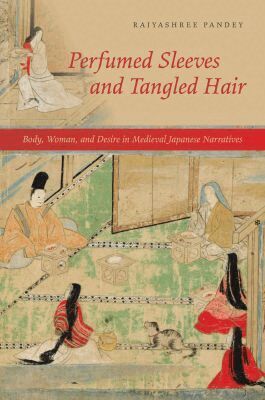
Perfumed Sleeves and Tangled Hair
Body, Woman, and Desire in Medieval Japanese Narratives
Häftad, Engelska, 2017
326 kr
Skickas inom 7-10 vardagar
Perfumed Sleeves and Tangled Hair explores the possibilities and limits of terms such as ""body,"" ""woman,"" ""gender,"" and ""agency""—categories that emerged within the context of western philosophical, religious, and feminist debates—to analyze texts that come out of altogether different temporal and cultural contexts. Through close textual readings of a wide range of classical and medieval narratives, from well-known works such as the Tale of Genji to popular Buddhist tales, Rajyashree Pandey offers new ways of understanding such terms within the context of medieval Buddhist knowledge. Pandey suggests that ""woman"" in medieval Japanese narratives does not constitute a self-evident and distinct category, and that there is little in these works to indicate that the sexed body was the single most important and overarching site of difference between men and women. She argues that the body in classical and medieval texts is not understood as something constituted through flesh, blood, and bones, or as divorced from the mind, and that in the Tale of Genji it becomes intelligible not as an anatomical entity but rather as something apprehended through robes and hair. Pandey provocatively claims that ""woman"" is a fluid and malleable category, one that often functions as a topos or figural site for staging debates not about real life women, but rather about delusion, attachment, and enlightenment, issues of the utmost importance to the Buddhist medieval world.Pandey's book challenges many of the assumptions that have become commonplace in academic writings on women and Buddhism in medieval Japan. She questions the validity of speaking of Buddhism's misogyny, women's oppression, passivity, or proto-feminism, and points to the anachronistic readings that result when fundamentally modern questions and concerns are transposed unreflexively onto medieval Japanese texts. Taking a broad, interdisciplinary approach, and engaging widely with literature, religious studies, and feminism, while paying close attention to medieval texts and genres, Pandey boldly throws down the gauntlet, challenging some of the sacred cows of contemporary scholarship on medieval Japanese women and Buddhism.
785 kr
Kommande
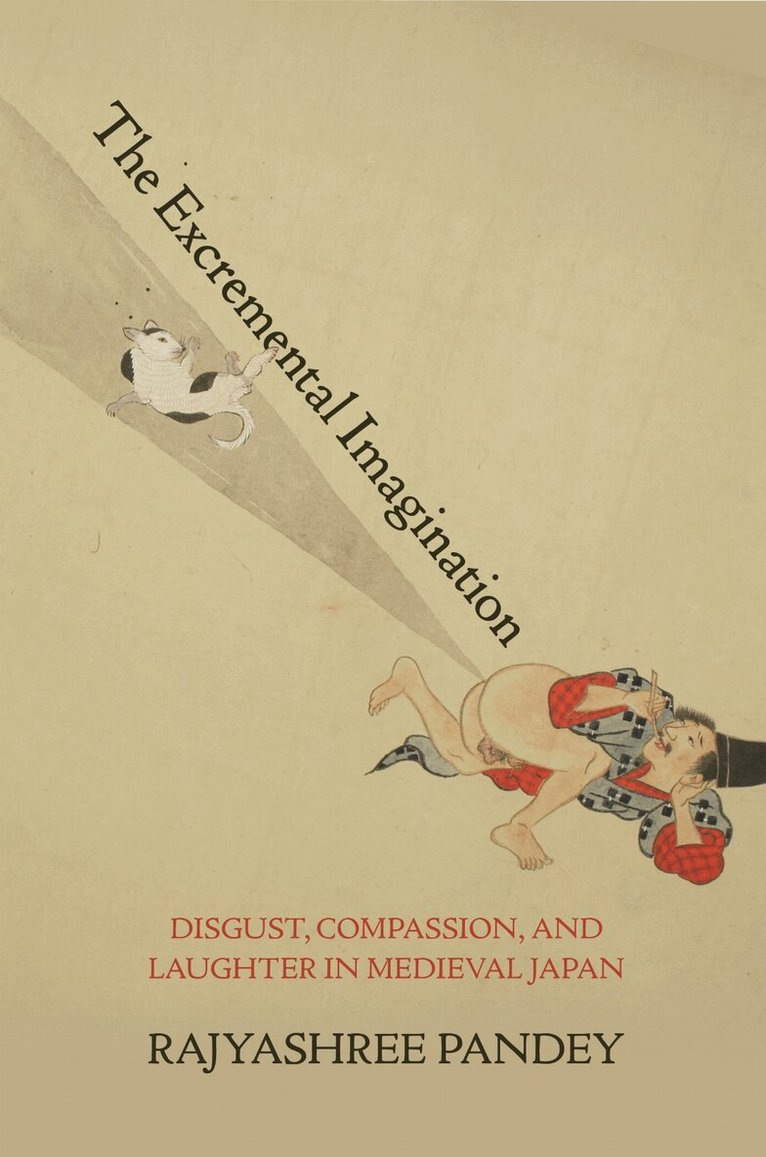
The Excremental Imagination takes the reader on a journey into uncharted territory, tracking the presence of faecal matter in the diverse narratives of medieval Japan. Providing close textual readings of Buddhist canonical writings, popular tales, romance narratives, and pictorial scrolls, it boldly addresses a subject which, for the most part, has been excised from intellectual life—something deemed too disgusting or infantile to merit serious academic attention. Here we encounter a highborn lady who farts in her lover’s presence, an eccentric monk who defecates in the imperial precincts, and a noted calligrapher who uses an imperial anthology of poetry to mop up his diarrhea. These stories form only a portion of the large corpus of tales that Rajyashree Pandey brings together for the first time in this book. Pandey argues that the meanings assigned to excrement in these texts cannot be deciphered through the straightforward application of concepts such as "the grotesque body" and "carnival." Despite their universalist claims, such terms are suffused with a Christian view of the world and thus inadequate for interpreting texts produced within the epistemic framework of Buddhism. Pandey contends that the humorous tales about shit and farts in medieval Japan constitute forms of parody, which are less about transgressing social norms and more in the nature of literary games. The body and excrement, she suggests, were neither maligned nor celebrated in medieval Japan, which was often the case in medieval Christian writings, but instead carried significations that are likely to strike us as surprising and unexpected. Excrement was used as a metaphor for the foul and evanescent nature of the body, while at the same time made to work as a positive force, as an instrument of compassion, that ensured the salvation of humans, animals, and hungry ghosts who were associated with it. The Excremental Imagination treats shit with the seriousness it deserves without losing sight of the playful nature of the material with which it engages. It urges us to cast aside our contemporary prejudices to better understand and appreciate a place and time very different from our own.