Ralf Ebinghaus – författare
Visar alla böcker från författaren Ralf Ebinghaus. Handla med fri frakt och snabb leverans.
9 produkter
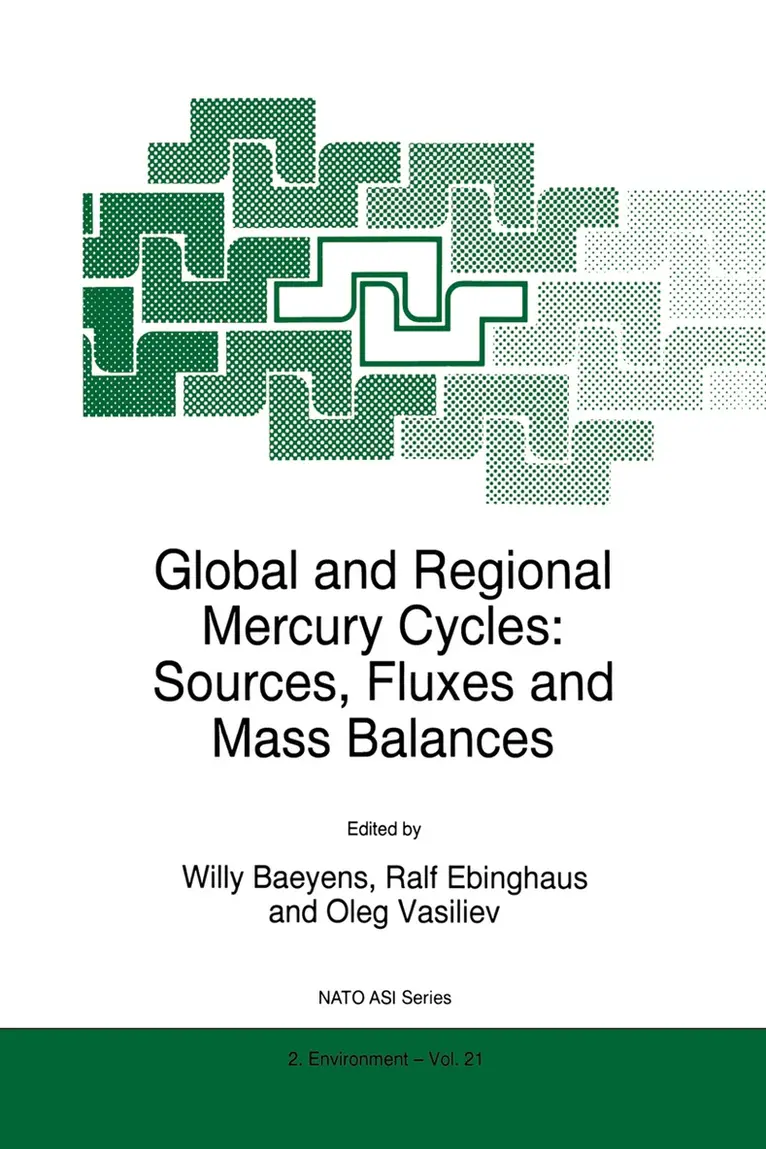
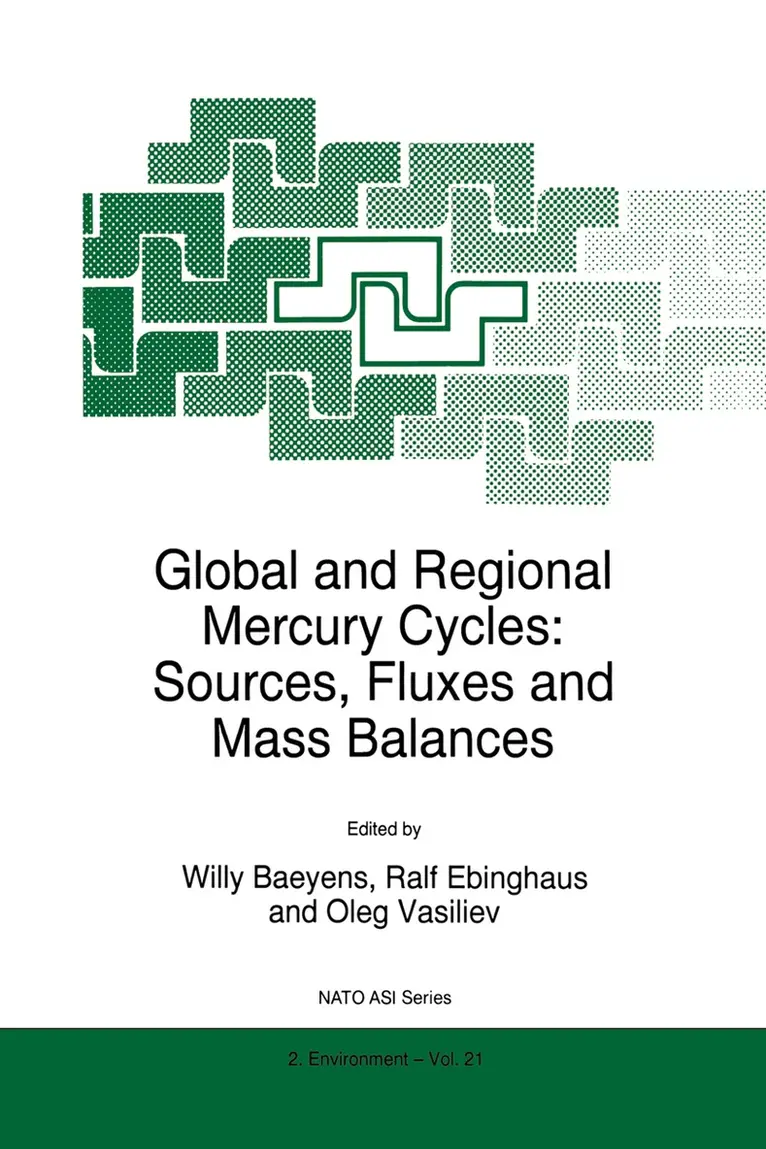
Global and Regional Mercury Cycles: Sources, Fluxes and Mass Balances
Av W. Baeyens, Ralf Ebinghaus m. fl.
Inbunden, 1996
3265 kr
Lägg i varukorg
Essential themes in the biochemical cycling of mercury are the relative importance of anthropogenic versus natural sources, transformation and migration processes at the local, regional and global scale, global emission inventories of different mercury sources (both point and diffuse) of both …
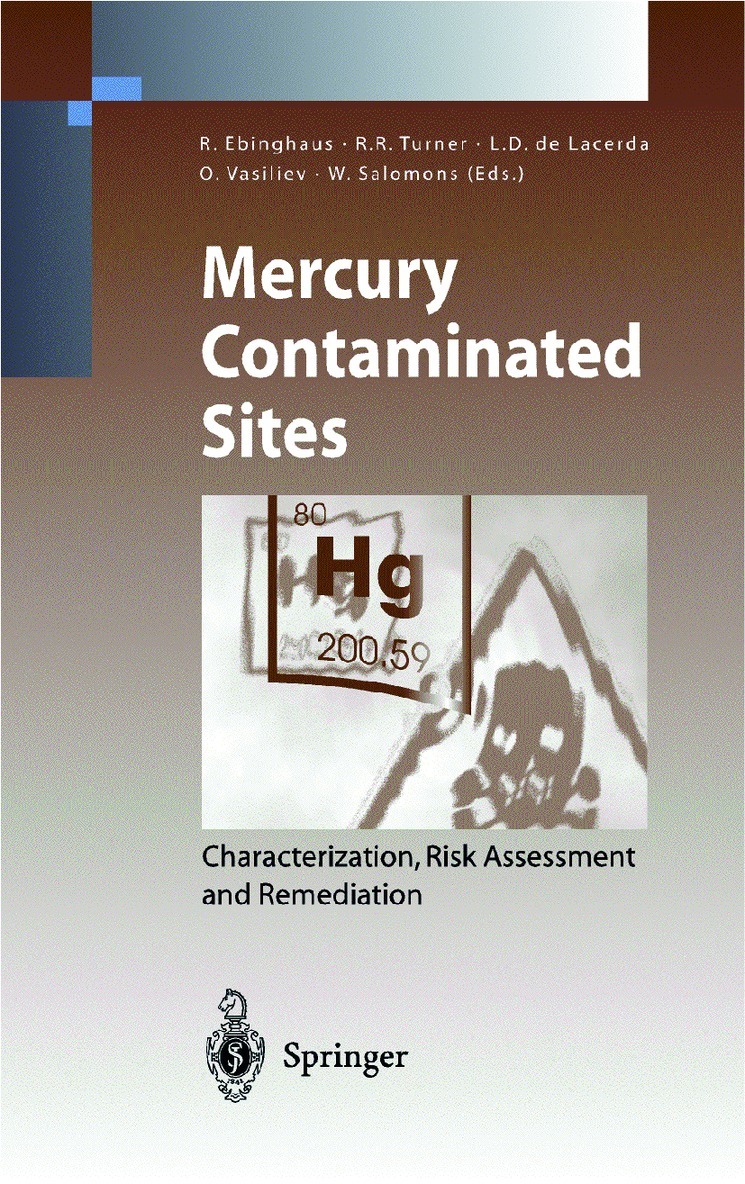
Mercury Contaminated Sites
Characterization, Risk Assessment and Remediation
Av R. Ebinghaus, R. R. Turner m. fl.
Inbunden, 1998
2179 kr
Lägg i varukorg
Mercury is outstanding among the global environmental pollutants of continuing th concern. Especially in the last decade of the 20 century, environmental scientists, legislators, politicians, and the public have become more aware of mercury pollu tion in the global environment. It has often been …
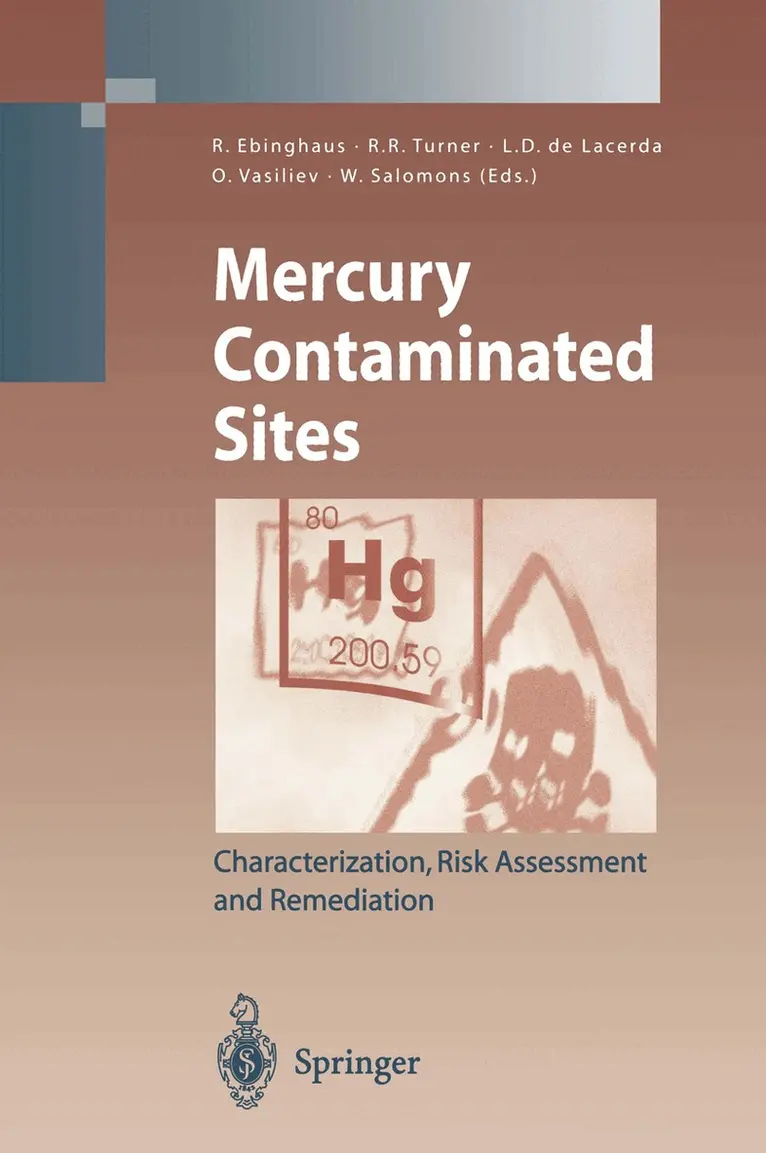
Mercury Contaminated Sites
Characterization, Risk Assessment and Remediation
Av Ralf Ebinghaus, Ralph R. Turner m. fl.
Häftad, 2011
2179 kr
Lägg i varukorg
Mercury is outstanding among the global environmental pollutants of continuing th concern. Especially in the last decade of the 20 century, environmental scientists, legislators, politicians, and the public have become more aware of mercury pollu tion in the global environment. It has often been …
Persistent Pollution - Past, Present and Future
School of Environmental Research - Organized by Helmholtz-Zentrum Geesthacht
Av Gotz Floser, Ralf Ebinghaus m. fl.
E-bok, 2011
2111 kr
Lägg i varukorg
This book evolved from the 5th School of Environmental Research entitled „Persistent Pollution – Past, Present and Future", which has set a focus on Persistent Organic Pollutants (POPs), heavy metals and aerosols. - reconstruction of past changes based on the scientific analysis of natural archives …
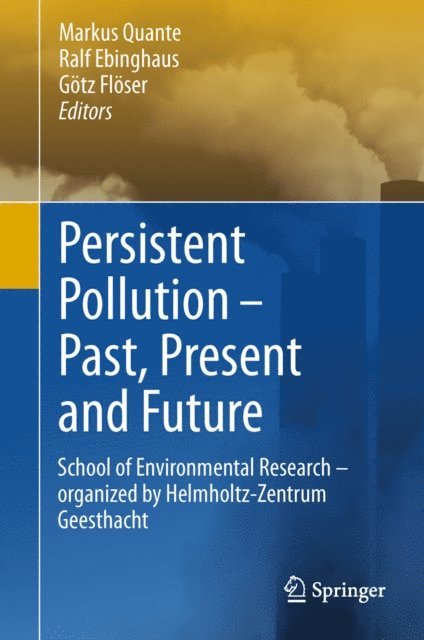
Persistent Pollution – Past, Present and Future
School of Environmental Research - Organized by Helmholtz-Zentrum Geesthacht
Av Markus Quante, Ralf Ebinghaus m. fl.
Inbunden, 2011
1636 kr
Lägg i varukorg
This book evolved from the 5th School of Environmental Research entitled „Persistent Pollution – Past, Present and Future", which has set a focus on Persistent Organic Pollutants (POPs), heavy metals and aerosols. -reconstruction of past changes based on the scientific analysis of natural archives …
Persistent Pollution – Past, Present and Future
School of Environmental Research - Organized by Helmholtz-Zentrum Geesthacht
Av Markus Quante, Ralf Ebinghaus m. fl.
Häftad, 2014
1636 kr
Lägg i varukorg
This book evolved from the 5th School of Environmental Research entitled „Persistent Pollution – Past, Present and Future", which has set a focus on Persistent Organic Pollutants (POPs), heavy metals and aerosols. -reconstruction of past changes based on the scientific analysis of natural archives …
Mercury Contaminated Sites
Characterization, Risk Assessment and Remediation
Av Wim Salomons, O. Vasiliev m. fl.
E-bok, 2013
2862 kr
Lägg i varukorg
Mercury is outstanding among the global environmental pollutants of continuing th concern. Especially in the last decade of the 20 century, environmental scientists, legislators, politicians, and the public have become more aware of mercury pollu tion in the global environment. It has often been …
Global and Regional Mercury Cycles: Sources, Fluxes and Mass Balances
Av Oleg Vasiliev, Ralf Ebinghaus m. fl.
E-bok, 2012
4066 kr
Lägg i varukorg
Essential themes in the biochemical cycling of mercury are the relative importance of anthropogenic versus natural sources, transformation and migration processes at the local, regional and global scale, global emission inventories of different mercury sources (both point and diffuse) of both …
Global and Regional Mercury Cycles: Sources, Fluxes and Mass Balances
Av W. Baeyens, Ralf Ebinghaus m. fl.
Häftad, 2011
3265 kr
Lägg i varukorg
Essential themes in the biochemical cycling of mercury are the relative importance of anthropogenic versus natural sources, transformation and migration processes at the local, regional and global scale, global emission inventories of different mercury sources (both point and diffuse) of both …