Raluca Csernatoni - Böcker
Visar alla böcker från författaren Raluca Csernatoni. Handla med fri frakt och snabb leverans.
3 produkter
3 produkter
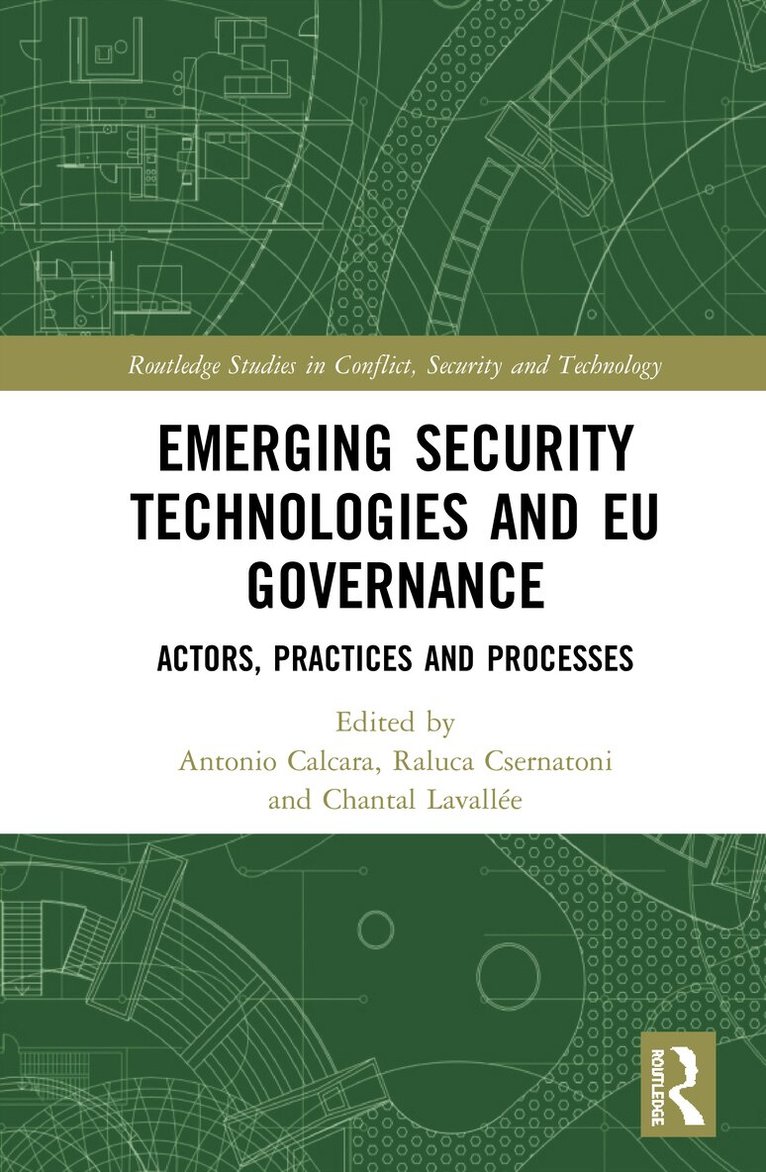
Emerging Security Technologies and EU Governance
Actors, Practices and Processes
Inbunden, Engelska, 2020
2 100 kr
Skickas inom 10-15 vardagar
This book examines the European governance of emerging security technologies.The emergence of technologies such as drones, autonomous robotics, artificial intelligence, cyber and biotechnologies has stimulated worldwide debates on their use, risks and benefits in both the civilian and the security-related fields. This volume examines the concept of ‘governance’ as an analytical framework and tool to investigate how new and emerging security technologies are governed in practice within the European Union (EU), emphasising the relational configurations among different state and non-state actors. With reference to European governance, it addresses the complex interplay of power relations, interests and framings surrounding the development of policies and strategies for the use of new security technologies. The work examines varied conceptual tools to shed light on the way diverse technologies are embedded in EU policy frameworks. Each contribution identifies actors involved in the governance of a specific technology sector, their multilevel institutional and corporate configurations, and the conflicting forces, values, ethical and legal concerns, as well as security imperatives and economic interests.This book will be of much interest to students of science and technology studies, security studies and EU policy.Chapter 11 of this book is freely available as a downloadable Open Access PDF at http://www.taylorfrancis.com under a Creative Commons Attribution-Non Commercial-No Derivatives (CC-BY-NC-ND) 4.0 license.
Emerging Security Technologies and EU Governance
Actors, Practices and Processes
Häftad, Engelska, 2022
614 kr
Skickas inom 10-15 vardagar
This book examines the European governance of emerging security technologies.The emergence of technologies such as drones, autonomous robotics, artificial intelligence, cyber and biotechnologies has stimulated worldwide debates on their use, risks and benefits in both the civilian and the security-related fields. This volume examines the concept of ‘governance’ as an analytical framework and tool to investigate how new and emerging security technologies are governed in practice within the European Union (EU), emphasising the relational configurations among different state and non-state actors. With reference to European governance, it addresses the complex interplay of power relations, interests and framings surrounding the development of policies and strategies for the use of new security technologies. The work examines varied conceptual tools to shed light on the way diverse technologies are embedded in EU policy frameworks. Each contribution identifies actors involved in the governance of a specific technology sector, their multilevel institutional and corporate configurations, and the conflicting forces, values, ethical and legal concerns, as well as security imperatives and economic interests.This book will be of much interest to students of science and technology studies, security studies and EU policy.Chapter 11 of this book is freely available as a downloadable Open Access PDF at http://www.taylorfrancis.com under a Creative Commons Attribution-Non Commercial-No Derivatives (CC-BY-NC-ND) 4.0 license.
1 923 kr
Kommande
This book examines how artificial intelligence systems and their applications in security and defence are entangled with governance and policy processes in the EU. Combining concepts and insights from (critical) security studies and science and technology studies, it argues that behind the various AI-related policy initiatives in the EU are particular narratives on security and defence based on European fears of technological innovation and strategic gaps. In this respect, the book casts light on how such beliefs have become increasingly instrumentalized in the European governance dynamics, and subsequently embedded in successive policy initiatives and security and defence research programmes. It challenges conventional understandings of AI technologies as mere security and defence-enabling instruments, by providing a conceptually driven analysis of how certain visions of AI help govern and control one of the most dynamic emergent socio-technical fields. The book will appeal to all those interested in artificial intelligence, security studies, technology and European governance.