Ramsay MacMullen - Böcker
Visar alla böcker från författaren Ramsay MacMullen. Handla med fri frakt och snabb leverans.
17 produkter
17 produkter
281 kr
Skickas inom 7-10 vardagar
Praise for Roman Social Relations, 50 B.C. to A.D. 284“In this interesting and suggestive book, Professor MacMullen views anew an important and rather neglected aspect of Roman social relations. A perceptive and sensitive interpreter, he has drawn widely upon the scattered and unorganized evidence about the poorer classes, rural and urban, in much of the Roman Empire, and presents a fresh picture of their conditions, attitudes and aims.”—T. Robert S. Broughton “Ramsay MacMullen’s work is always provocative and illuminating. This book is no exception. . . . Through good writing, clear presentation, and outstanding common-sense judgment the author has given us chapters to be read with pleasure by a large audience. . . . This fine book represents for us what we may legitimately know of ancient society.”—American Historical Review “Much of the evidence which MacMullen uses in his narrative is illuminating, much of the analysis and argument lucid and compelling. . . . Roman Social Relations is an interesting and lively book [that] should certainly be read by anyone interested in the social history of the ancient world.”—Journal of Social History
450 kr
Skickas inom 5-8 vardagar
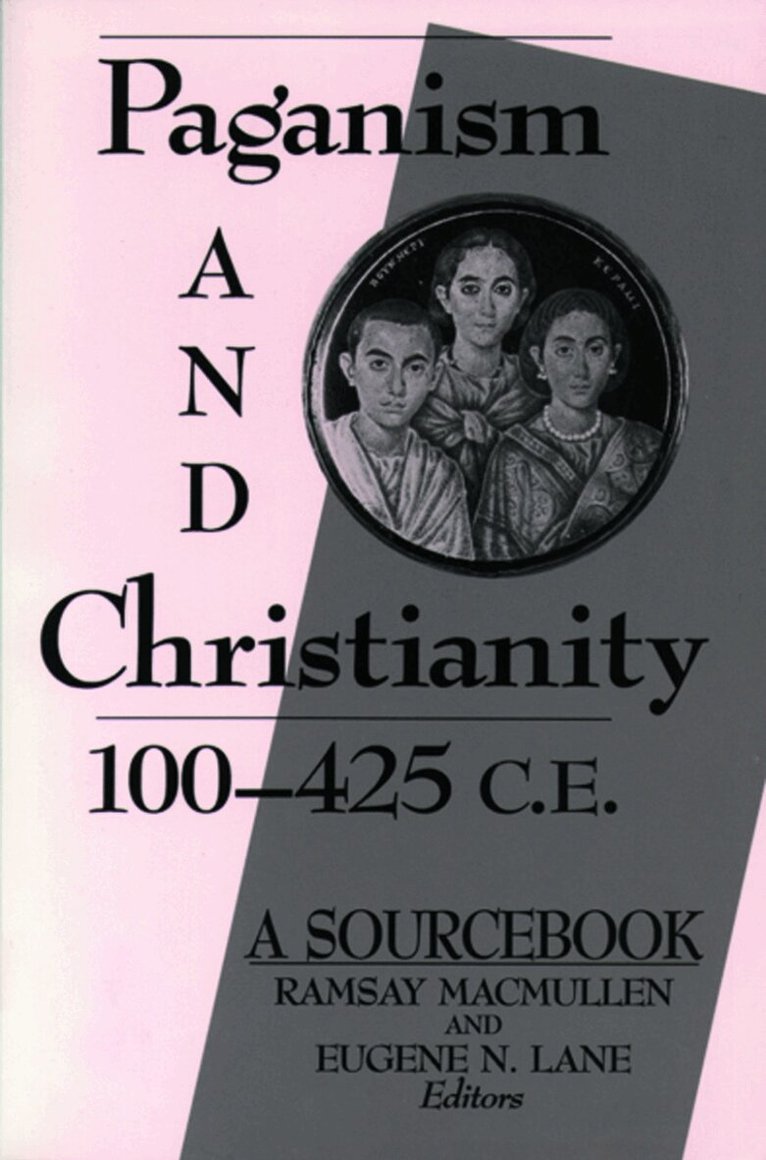
“MacMullen…has published several books in recent years which establish him, rightfully, as a leading social historian of the Roman Empire. The current volume exhibits many of the characteristics of its predecessors: the presentation of novel, revisionist points of view…; discrete set pieces of trenchant argument which do not necessarily conform to the boundaries of traditional history; and an impressive, authoritative, and up-to-date documentation, especially rich in primary sources…A stimulating and provocative discourse on Roman paganism as a phenomenon worthy of synthetic investigation in its own right and as the fundamental context for the rise of Christianity.”—Richard Brilliant, History“MacMullen’s latest work represents many features of paganism in its social context more vividly and clearly than ever before.”—Fergus Millar, American Historical Review“The major cults…are examined from a social and cultural perspective and with the aid of many recently published specialized studies…Students of the Roman Empire…should read this book.”—Robert J, Penella, Classical World“A distinguished book with much exact observation…An indispensable mine of erudition on a grand theme.” Henry Chadwick, Times Literary SupplementRamsay MacMullen is Dunham Professor of History and Classics at Yale University and the author of Roman Government’s Response to Crisis, A.D. 235-337 and Roman Social Relations, 50 B.C. to A.D. 284
312 kr
Skickas inom 11-20 vardagar
“Fresh and vigorous . . . an admirable survey of some major aspects of the history [of the early Christian church].”—Robert M. Grant, New York Times Book Review “One of the most outstanding historians of the ancient world.”—Anthony A. Barrett, The Historian How did the early Christian church manage to win its dominant place in the Roman world? In his newest book, an eminent historian of ancient Rome examines this question from a secular—rather than an ecclesiastical—viewpoint. Ramsay MacMullen’s provocative conclusion is that mass conversions to Christianity were based more on the appeal of miracle or the opportunity for worldly advantages than simply on a “rising tide of Christian piety.”
554 kr
Skickas inom 5-8 vardagar
A radical rethinking of the decline and fall of the Roman Empire, with resonance for today “It is a seductive thesis, told with brio and all the guarantees of scholarship.”—The Economist Prominent historian Ramsay MacMullen here offers a new perspective on the decline and fall of Rome. MacMullen argues that a key factor in Rome’s fall was the steady loss of focus and control over government as its aims were thwarted for private gain by high-ranking bureaucrats and military leaders. Written in an informal and lively style, his book—the culmination of years of research and thoughtful analysis—provides a fascinating, fresh line of investigation and shows convincingly that the decline of Rome was a gradual, insidious process rather than a climactic event.
468 kr
Skickas inom 5-8 vardagar
“A mine of scholarly information. . . . This is an important contribution towards understanding the nature of the conversion of the pagan world to Christianity.”—W. H. C. Freud, Theology The slaughter of animals for religious feasts, the tinkling of bells to ward off evil during holy rites, the custom of dancing in religious services—these and many other pagan practices persisted in the Christian church for hundreds of years after Constantine proclaimed Christianity the one official religion of Rome. In this book, Ramsay MacMullen investigates the transition from paganism to Christianity between the fourth and eighth centuries. He reassesses the triumph of Christianity, contending that it was neither tidy nor quick, and he shows that the two religious systems were both vital during an interactive period that lasted far longer than historians have previously believed. MacMullen explores the influences of paganism and Christianity upon each other. In a rich discussion of the different strengths of the two systems, he demonstrates that pagan beliefs were not eclipsed or displaced by Christianity but persisted or were transformed. The victory of the Christian church, he explains, was one not of obliteration but of widening embrace and assimilation. This fascinating book also includes new material on the Christian persecution of pagans over the centuries through methods that ranged from fines to crucifixion; the mixture of motives in conversion; the stubbornness of pagan resistance; the difficulty of satisfying the demands and expectations of new converts; and the degree of assimilation of Christianity to paganism.
694 kr
Skickas inom 5-8 vardagar
An eminent historian explores how early Christian doctrine was determined by majority vote in church councils during the third to sixth centuries In this study, Ramsay MacMullen steps aside from the well-worn path that previous scholars have trod to explore exactly how early Christian doctrines became official. Drawing on extensive verbatim stenographic records, he analyzes the ecumenical councils from 325 to 553, in which participants gave authority to doctrinal choices by majority vote. The author investigates the sometimes astonishing bloodshed and violence that marked the background to church council proceedings, and from there goes on to describe the planning and staging of councils, the emperors’ role, the routines of debate, the participants’ understanding of the issues, and their views on God’s intervention in their activities. He concludes with a look at the significance of the councils and their doctrinal decisions within the history of Christendom.
428 kr
Skickas inom 5-8 vardagar
How and why the ancient world eagerly adopted Roman ways During the lifetime of Augustus (from 63 BCE to AD 14), Roman civilization spread at a remarkable rate throughout the ancient world, influencing such areas as art and architecture, religion, law, local speech, city design, clothing, and leisure and family activities. In this book, Ramsay MacMullen investigates why the adoption of Roman ways was so prevalent during this period. Drawing largely on archaeological sources, MacMullen discovers that during this period more than half a million Roman veterans were resettled in colonies overseas, and an additional hundred or more urban centers in the provinces took on normal Italian-Roman town constitutions. Great sums of expendable wealth came into the hands of ambitious Roman and local notables, some of which was spent in establishing and advertising Roman ways. MacMullen argues that acculturation of the ancient world was due not to cultural imperialism on the part of the conquerors but to eagerness of imitation among the conquered, and that the Romans were able to respond with surprisingly effective techniques of mass production and standardization.
450 kr
Skickas inom 5-8 vardagar
An eminent historian explores how early Christian doctrine was determined by majority vote in church councils during the third to sixth centuries In this study, Ramsay MacMullen steps aside from the well-worn path that previous scholars have trod to explore exactly how early Christian doctrines became official. Drawing on extensive verbatim stenographic records, he analyzes the ecumenical councils from 325 to 553, in which participants gave authority to doctrinal choices by majority vote. The author investigates the sometimes astonishing bloodshed and violence that marked the background to church council proceedings, and from there goes on to describe the planning and staging of councils, the emperors’ role, the routines of debate, the participants’ understanding of the issues, and their views on God’s intervention in their activities. He concludes with a look at the significance of the councils and their doctrinal decisions within the history of Christendom.
371 kr
Skickas inom 7-10 vardagar
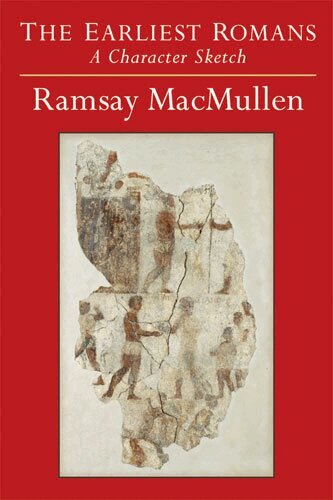
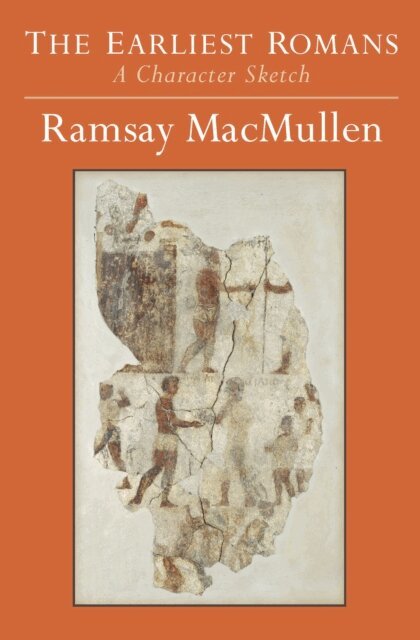
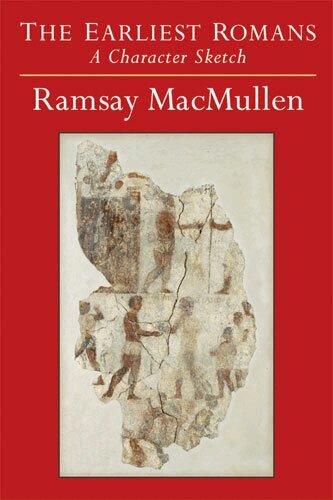
"A vibrant account that puts flesh on the bare bones of early Roman history." ---Celia Schultz, University of Michigan The ancient Romans' story down to 264 B.C. can be made credible by stripping away their later myths and inventions to show how their national character shaped their destiny.After many generations of scholarly study, consensus is clear: the account in writers like Livy is not to be trusted because their aims were different from ours in history-writing. They wanted their work to be both improving and diverting. It should grow out of the real past, yes, but if that reality couldn't be recovered, or was uncertain, their art did not forbid invention. It more than tolerated dramatic incidents, passions, heroes, heroines, and villains. If, however, all this resulting ancient fiction and adornment are pruned away, a national character can be seen in the remaining bits and pieces of credible information, to explain the familiar story at least in its outlines.To doubt the written sources has long been acceptable, but this or that detail or narrative section must always be left for salvage by special pleading. To press home the logic of doubt is new. To reach beyond the written sources for a better support in excavated evidence is no novelty; but it is a novelty, to find in archeology the principal substance of the narrative---which is the choice in this book. To use this in turn for the discovery of an ethnic personality, a Roman national character, is key and also novel.What is repeatedly illustrated and emphasized here is the distance traveled by the art or craft of understanding the past---"history" in that sense---over the course of the last couple of centuries. The art cannot be learned, because it cannot be found, through studying Livy and Company. Readers who care about either of the two disciplines contrasted, Classics and History, may find this argument of interest."Like Thucydides of the hyperactive Athenians and de Tocqueville of the nation-building Americans, MacMullen here draws a character sketch of the early Romans---the men who built Rome, conquered Italy, and created an empire. Based on profound familiarity with history, evidence, and their better-known descendants, attention to what they did and failed to do, remarkable insight, empathy, constructive imagination, and not without humor, he reconstructs the homo Romanus and thus helps us imagine what he was like, and understand why he achieved what he did. This little book is informative, full of important ideas, and delightful to read." ---Kurt Raaflaub, Brown UniversityJacket image: Marcus Fabius and Quintus Tannius. Fresco. Musei Capitolini, Rome, Italy. Courtesy of Scala / Art Resource, NY..
665 kr
Skickas inom 7-10 vardagar
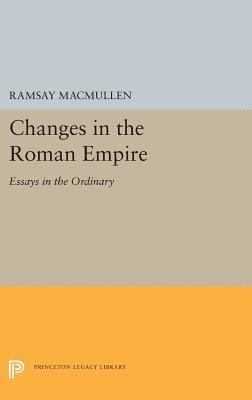
Written by one of the foremost historians of the Roman Empire, this collection of both new and previously published essays forms a colorful picture of daily life in the Mediterranean world between A.D. 50 and 450. Here, for example, the author applies statistical analysis to broad groups of people on matters ranging from justice through medicine to language. In so doing he is able to substantiate general statements about routines in ordinary people's behavior and to detect within these routines the very changes that constitute history. Such analysis also shows how this era benefits from the same historiographical approaches that have so successfully elucidated sociocultural phenomena in other periods.Drawing from statistical analysis and many other historical approaches, these essays on popular mores in the Roman Empire cover such topics as language and art, acculturation, thought and religion, sex and gender, cruelty and slavery, and aspects of class and power relations. The author introduces the collection with several essays on historical method, as it pertains to the richness of documentation and variety to be found in the region and period chosen.Ramsay MacMullen is Dunham Professor of History and Classics at Yale University. The most recent of his many books include Corruption and the Decline of Rome and Christianizing the Roman Empire: A.D. 100-400, both published by Yale.Originally published in 1990.The Princeton Legacy Library uses the latest print-on-demand technology to again make available previously out-of-print books from the distinguished backlist of Princeton University Press. These editions preserve the original texts of these important books while presenting them in durable paperback and hardcover editions. The goal of the Princeton Legacy Library is to vastly increase access to the rich scholarly heritage found in the thousands of books published by Princeton University Press since its founding in 1905.
1 671 kr
Skickas inom 7-10 vardagar
Written by one of the foremost historians of the Roman Empire, this collection of both new and previously published essays forms a colorful picture of daily life in the Mediterranean world between A.D. 50 and 450. Here, for example, the author applies statistical analysis to broad groups of people on matters ranging from justice through medicine to language. In so doing he is able to substantiate general statements about routines in ordinary people's behavior and to detect within these routines the very changes that constitute history. Such analysis also shows how this era benefits from the same historiographical approaches that have so successfully elucidated sociocultural phenomena in other periods.Drawing from statistical analysis and many other historical approaches, these essays on popular mores in the Roman Empire cover such topics as language and art, acculturation, thought and religion, sex and gender, cruelty and slavery, and aspects of class and power relations. The author introduces the collection with several essays on historical method, as it pertains to the richness of documentation and variety to be found in the region and period chosen.Ramsay MacMullen is Dunham Professor of History and Classics at Yale University. The most recent of his many books include Corruption and the Decline of Rome and Christianizing the Roman Empire: A.D. 100-400, both published by Yale.Originally published in 1990.The Princeton Legacy Library uses the latest print-on-demand technology to again make available previously out-of-print books from the distinguished backlist of Princeton University Press. These editions preserve the original texts of these important books while presenting them in durable paperback and hardcover editions. The goal of the Princeton Legacy Library is to vastly increase access to the rich scholarly heritage found in the thousands of books published by Princeton University Press since its founding in 1905.
386 kr
Skickas inom 5-8 vardagar
1 749 kr
Skickas inom 10-15 vardagar
This study, first published in 1969, presents an astute and authoritative depiction of the cultural, religious and secular developments which shook the Roman world in the late 3rd and early 4th centuries AD, much of it under the auspices of the Emperor, Constantine the Great. Constantine was at the heart of the transition from pagan antiquity to Christendom. Rejecting the collegiate imperial system of his recent predecessors, he reunited the two halves of the Empire; established Christianity as its formal religion; and shifted the capital of the Roman world definitively to the city which would survive the collapse of the West and persevere for another thousand years, Constantinople.The general reader will enjoy Constantine as a lucidly composed and accessible synthesis of ancient sources and modern contributions to the study of this towering figure.
537 kr
Skickas inom 10-15 vardagar
This study, first published in 1969, presents an astute and authoritative depiction of the cultural, religious and secular developments which shook the Roman world in the late 3rd and early 4th centuries AD, much of it under the auspices of the Emperor, Constantine the Great. Constantine was at the heart of the transition from pagan antiquity to Christendom. Rejecting the collegiate imperial system of his recent predecessors, he reunited the two halves of the Empire; established Christianity as its formal religion; and shifted the capital of the Roman world definitively to the city which would survive the collapse of the West and persevere for another thousand years, Constantinople.The general reader will enjoy Constantine as a lucidly composed and accessible synthesis of ancient sources and modern contributions to the study of this towering figure.
313 kr
Skickas inom 5-8 vardagar
Del 1 - Writings from the Greco-Roman World Suppl
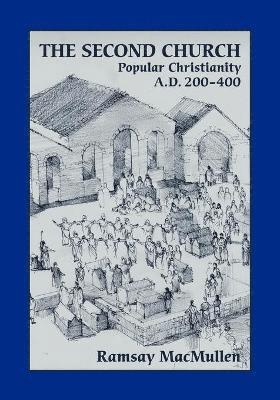
Second Church
Popular Christianity a.d. 200-400
Inbunden, Engelska, 2009
476 kr
Skickas inom 5-8 vardagar
997 kr
Skickas inom 5-8 vardagar
Why we do what we do is a matter of great interest to everyone, and everyone seems to have had their say about it – philosophers, sociologists, anthropologists, psychologists, economists, and historians perhaps the most, case by case. Occasionally the specialists have offered their ideas to a general readership, but mostly they prefer to speak to and with their fellows in their particular disciplines. To evaluate and compare their findings in a cross-disciplinary way is now for the first time attempted, by Ramsay MacMullen. Emeritus history professor from Yale University, he is the recipient of various academic awards, including a lifetime Award for Scholarly Distinction from the American Historical Association