Randal Beard - Böcker
Visar alla böcker från författaren Randal Beard. Handla med fri frakt och snabb leverans.
4 produkter
4 produkter
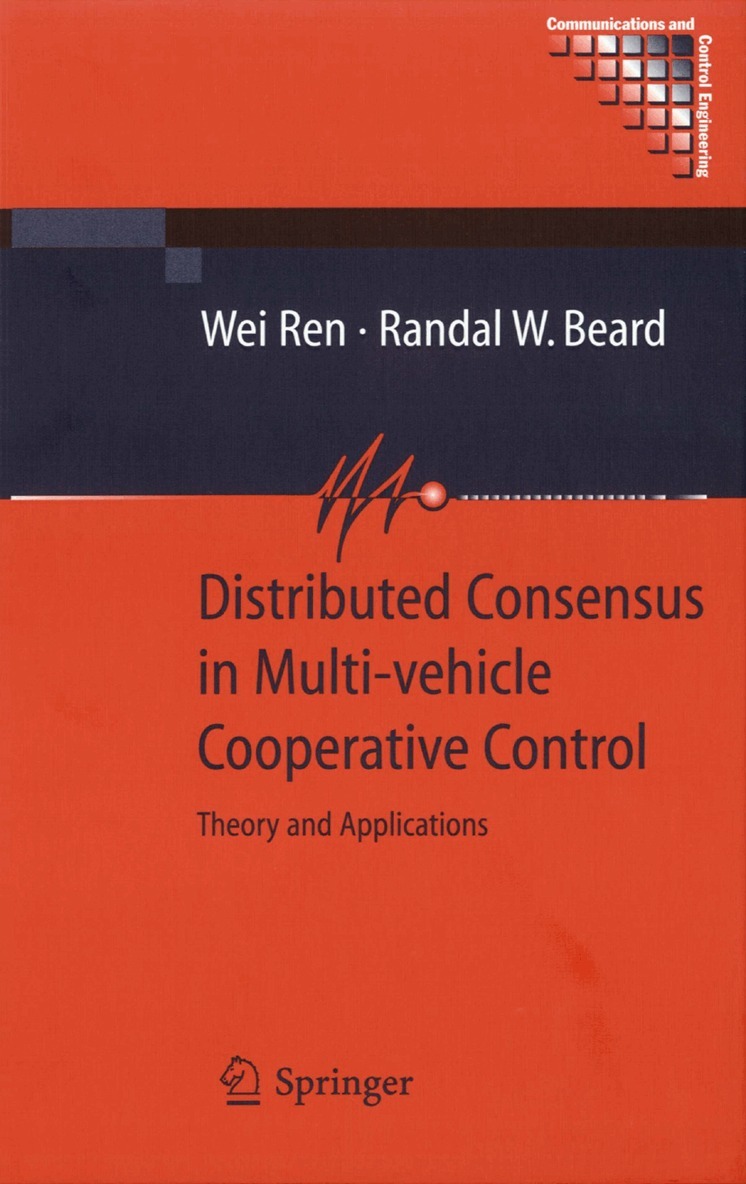
Distributed Consensus in Multi-vehicle Cooperative Control
Theory and Applications
Inbunden, Engelska, 2007
1 802 kr
Skickas inom 10-15 vardagar
Information consensus guarantees that robot vehicles sharing information over a network topology have a consistent view of information critical to the coordination task. Assuming only neighbor-neighbor interaction between vehicles, this monograph develops distributed consensus strategies designed to ensure that the information states of all vehicles in a network converge to a common value. This approach strengthens the team, minimizing power consumption and the effects of range and other restrictions.The monograph covers introductory, theoretical and experimental material, featuring - an overview of the use of consensus algorithms in cooperative control; - consensus algorithms in single- and double-integrator, and rigid-body-attitude dynamics; - rendezvous and axial alignment, formation control, deep-space formation flying, fire monitoring and surveillance.Six appendices cover material drawn from graph, matrix, linear and nonlinear systems theories.
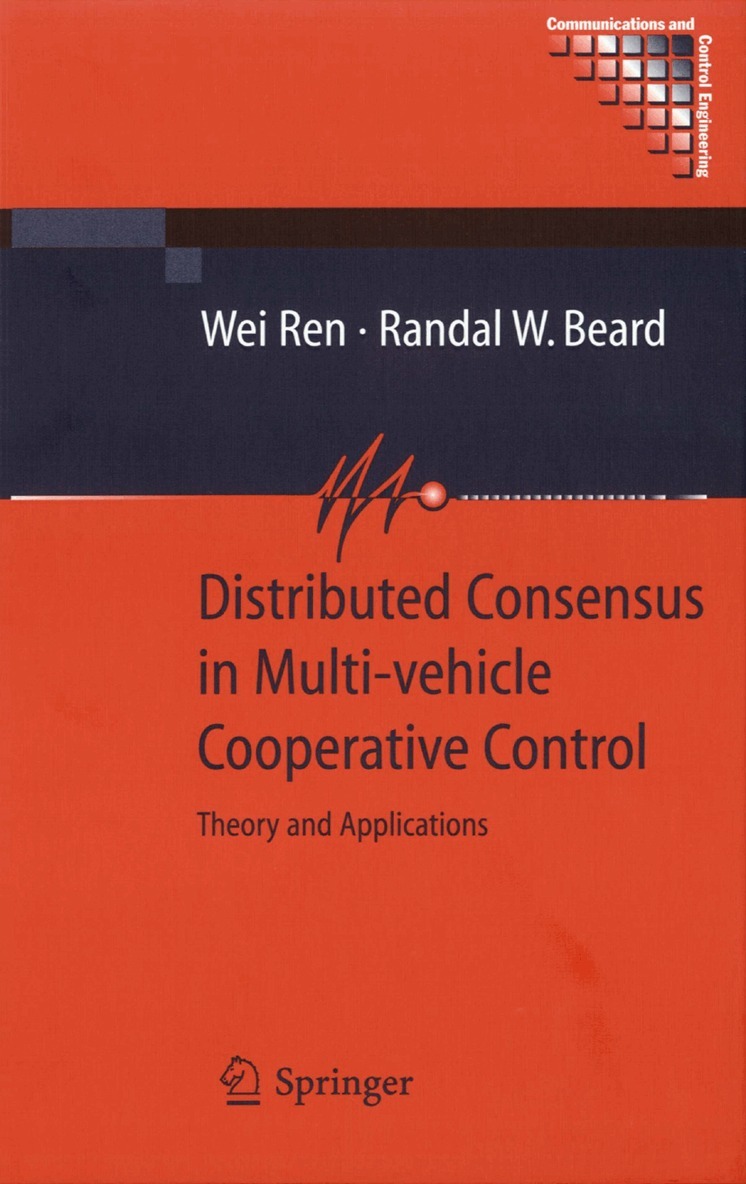
Distributed Consensus in Multi-vehicle Cooperative Control
Theory and Applications
Häftad, Engelska, 2010
1 802 kr
Skickas inom 10-15 vardagar
Information consensus guarantees that robot vehicles sharing information over a network topology have a consistent view of information critical to the coordination task. Assuming only neighbor-neighbor interaction between vehicles, this monograph develops distributed consensus strategies designed to ensure that the information states of all vehicles in a network converge to a common value. This approach strengthens the team, minimizing power consumption and the effects of range and other restrictions.The monograph covers introductory, theoretical and experimental material, featuring - an overview of the use of consensus algorithms in cooperative control; - consensus algorithms in single- and double-integrator, and rigid-body-attitude dynamics; - rendezvous and axial alignment, formation control, deep-space formation flying, fire monitoring and surveillance.Six appendices cover material drawn from graph, matrix, linear and nonlinear systems theories.
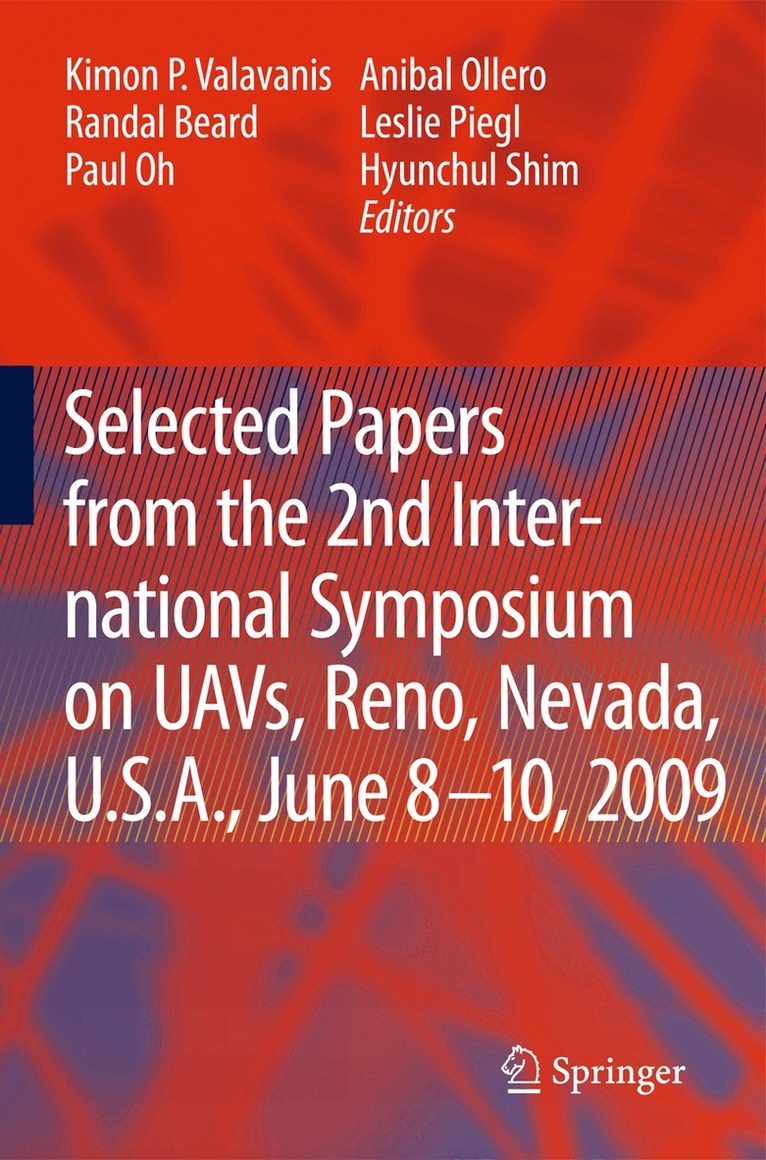
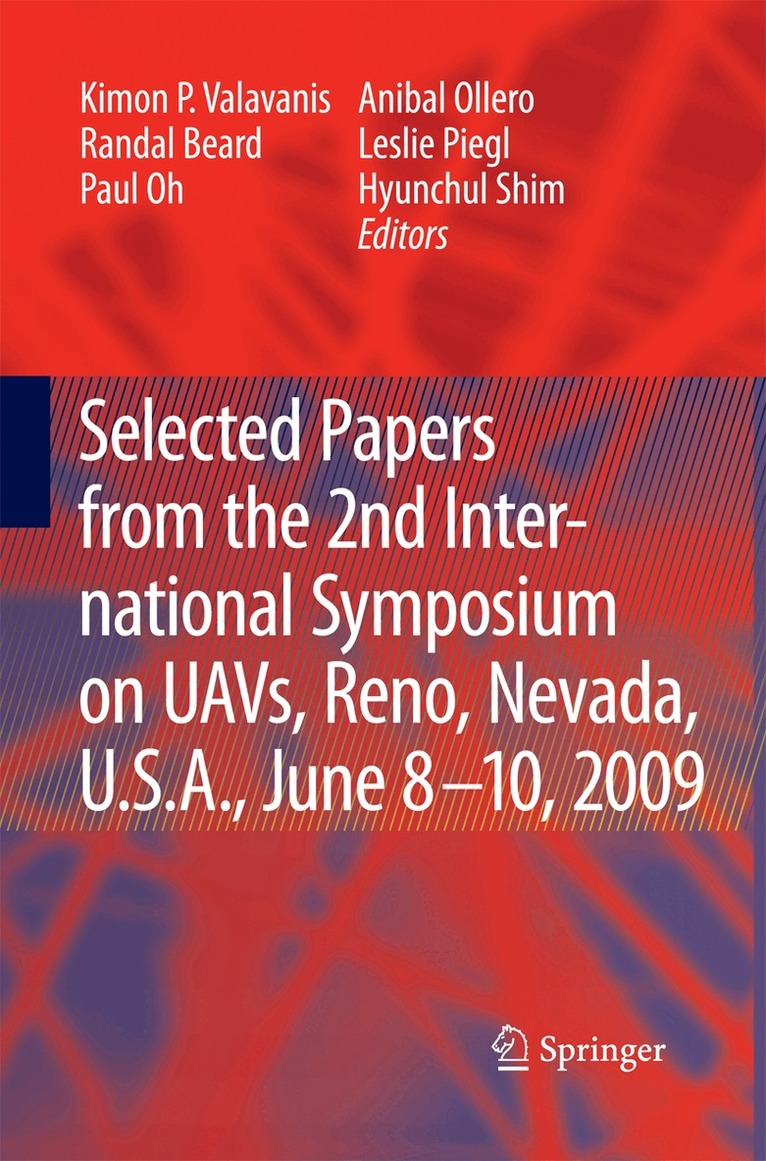
Selected papers from the 2nd International Symposium on UAVs, Reno, U.S.A. June 8-10, 2009
Inbunden, Engelska, 2010
2 118 kr
Skickas inom 10-15 vardagar
In the last decade, signi?cant changes have occurred in the ?eld of vehicle motion planning, and for UAVs in particular. UAV motion planning is especially dif?cult due to several complexities not considered by earlier planning strategies: the - creased importance of differential constraints, atmospheric turbulence which makes it impossible to follow a pre-computed plan precisely, uncertainty in the vehicle state, and limited knowledge about the environment due to limited sensor capabilities. These differences have motivated the increased use of feedback and other control engineering techniques for motion planning. The lack of exact algorithms for these problems and dif?culty inherent in characterizing approximation algorithms makes it impractical to determine algorithm time complexity, completeness, and even soundness. This gap has not yet been addressed by statistical characterization of experimental performance of algorithms and benchmarking. Because of this overall lack of knowledge, it is dif?cult to design a guidance system, let alone choose the algorithm. Throughout this paper we keep in mind some of the general characteristics and requirements pertaining to UAVs. A UAV is typically modeled as having velocity and acceleration constraints (and potentially the higher-order differential constraints associated with the equations of motion), and the objective is to guide the vehicle towards a goal through an obstacle ?eld. A UAV guidance problem is typically characterized by a three-dimensional problem space, limited information about the environment, on-board sensors with limited range, speed and acceleration constraints, and uncertainty in vehicle state and sensor data.
Selected papers from the 2nd International Symposium on UAVs, Reno, U.S.A. June 8-10, 2009
Häftad, Engelska, 2014
2 118 kr
Skickas inom 10-15 vardagar
In the last decade, signi?cant changes have occurred in the ?eld of vehicle motion planning, and for UAVs in particular. UAV motion planning is especially dif?cult due to several complexities not considered by earlier planning strategies: the - creased importance of differential constraints, atmospheric turbulence which makes it impossible to follow a pre-computed plan precisely, uncertainty in the vehicle state, and limited knowledge about the environment due to limited sensor capabilities. These differences have motivated the increased use of feedback and other control engineering techniques for motion planning. The lack of exact algorithms for these problems and dif?culty inherent in characterizing approximation algorithms makes it impractical to determine algorithm time complexity, completeness, and even soundness. This gap has not yet been addressed by statistical characterization of experimental performance of algorithms and benchmarking. Because of this overall lack of knowledge, it is dif?cult to design a guidance system, let alone choose the algorithm. Throughout this paper we keep in mind some of the general characteristics and requirements pertaining to UAVs. A UAV is typically modeled as having velocity and acceleration constraints (and potentially the higher-order differential constraints associated with the equations of motion), and the objective is to guide the vehicle towards a goal through an obstacle ?eld. A UAV guidance problem is typically characterized by a three-dimensional problem space, limited information about the environment, on-board sensors with limited range, speed and acceleration constraints, and uncertainty in vehicle state and sensor data.