Randal L. Hall – författare
Visar alla böcker från författaren Randal L. Hall. Handla med fri frakt och snabb leverans.
14 produkter
Thomas Dixon Jr. and the Birth of Modern America
Av Michele K. Gillespie, Randal L. Hall
Häftad, 2009
351 kr
Lägg i varukorg
A sweeping yet rigorous analysis of Dixon and his work. The collection approaches the southern intellectual through multiple methodologies - from literary theory and film studies to social history and religious studies. We get an exhaustive yet diverse perspective on Dixon's influence and legacy."" …
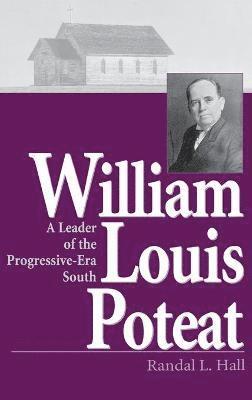
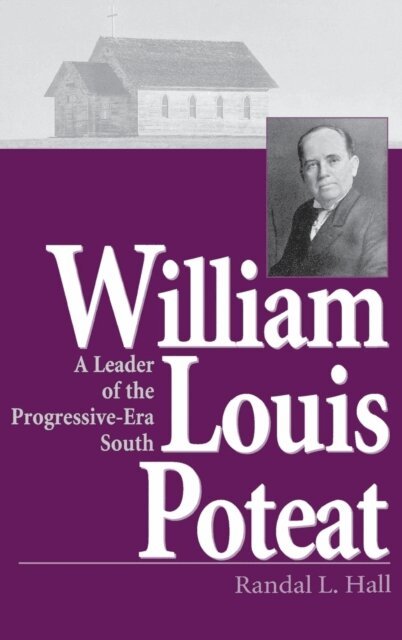
William Louis Poteat
A Leader of the Progressive-Era South
Inbunden, 2000
531 kr
Lägg i varukorg
William Louis Poteat (1856-1938), the son of a conservative Baptist slaveholder, became one of the most outspoken southern liberals during his lifetime. He was a rarity in the South for openly teaching evolution beginning in the 1880s, and during his tenure as president of Wake Forest College …
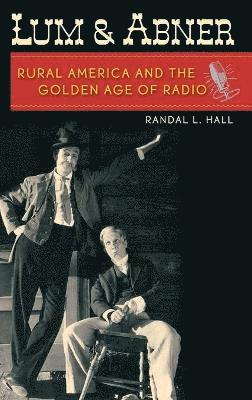
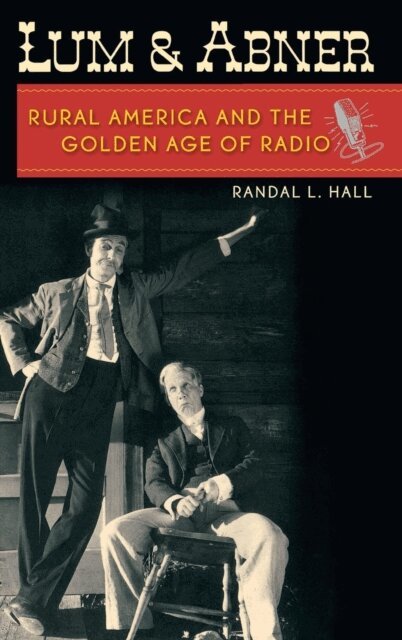
Lum and Abner
Rural America and the Golden Age of Radio
Inbunden, 2007
608 kr
Lägg i varukorg
In the 1930s radio stations filled the airwaves with programs about rural Americans struggling through the Great Depression. One of the most popular of these shows was Lum and Abner, the brainchild of two young businessmen from Arkansas. Chester "Chet" Lauck and Norris "Tuffy" Goff based Pine …
Mountains on the Market
Industry, the Environment, and the South
Inbunden, 2012
570 kr
Lägg i varukorg
Manufacturing in the Northeast and the Midwest pushed the United States to the forefront of industrialized nations during the early nineteenth century; the South, however, lacked the large cities and broad consumer demand that catalyzed changes in other parts of the country. Nonetheless, in …
Mountains on the Market
Industry, the Environment, and the South
E-bok, 2012
551 kr
Lägg i varukorg
Manufacturing in the Northeast and the Midwest pushed the United States to the forefront of industrialized nations during the early nineteenth century; the South, however, lacked the large cities and broad consumer demand that catalyzed changes in other parts of the country. Nonetheless, in …
Mountains on the Market
Industry, the Environment, and the South
E-bok, 2012
514 kr
Lägg i varukorg
"This is a landmark not only of Appalachian history but of southern economic and environmental history as well." —John C. Inscoe, author of Race, War, and Remembrance in the Appalachian SouthManufacturing in the Northeast and the Midwest pushed the United States to the forefront of industrialized …
Lum and Abner
Rural America and the Golden Age of Radio
E-bok, 2014
551 kr
Lägg i varukorg
In the 1930s radio stations filled the airwaves with programs and musical performances about rural Americansfarmers and small-town residents struggling through the Great Depression. One of the most popular of these shows was Lum and Abner, the brainchild of Chester "Chet" Lauck and Norris "Tuffy" …
William Louis Poteat
A Leader of the Progressive-Era South
E-bok, 2014
649 kr
Lägg i varukorg
William Louis Poteat (1856-1938), the son of a conservative Baptist slaveholder, became one of the most outspoken southern liberals during his lifetime. He was a rarity in the South for openly teaching evolution beginning in the 1880s, and during his tenure as president of Wake Forest College …
Rape in the Early Republic
Gender and Legal Culture in an 1806 Virginia Trial
Av Alexander Smyth, Randal L Hall
Häftad, 2017
442 kr
Lägg i varukorg
On January 14, 1806, Sidney Hanson was raped by John Deskins on a rough gravel path in the woods in Tazewell County, Virginia. In the early nineteenth century, trials for rape were rare. Scanty court records typically lacked the detail needed to reconstruct the lives of those involved and evaluate …
Rape in the Early Republic
Gender and Legal Culture in an 1806 Virginia Trial
Av Alexander Smyth, Randal L. Hall
E-bok, 2017
394 kr
Lägg i varukorg
On January 14, 1806, Sidney Hanson was raped by John Deskins on a rough gravel path in the woods in Tazewell County, Virginia. In the early nineteenth century, trials for rape were rare. Scanty court records typically lacked the detail needed to reconstruct the lives of those involved and evaluate …
Rape in the Early Republic
Gender and Legal Culture in an 1806 Virginia Trial
Av Alexander Smyth, Randal L. Hall
E-bok, 2017
394 kr
Lägg i varukorg
On January 14, 1806, Sidney Hanson was raped by John Deskins on a rough gravel path in the woods in Tazewell County, Virginia. In the early nineteenth century, trials for rape were rare. Scanty court records typically lacked the detail needed to reconstruct the lives of those involved and evaluate …
William Marsh Rice and His Institute
The Centennial Edition
Av Randal L. Hall, Sylvia Stallings Morris
Inbunden, 2012
294 kr
Lägg i varukorg
In 1891 William Marsh Rice made a generous bequest in order to found the distinguished Houston institution that bears his name. Ironically, this very bequest helped to bring about his murder, an act of treachery perpetrated by a conniving attorney and Rice’s naïve, malleable manservant. This …
William Marsh Rice and His Institute
The Centennial Edition
Av Sylvia Stallings Morris, Randal L. Hall
E-bok, 2012
237 kr
Lägg i varukorg
In 1891 William Marsh Rice made a generous bequest in order to found the distinguished Houston institution that bears his name. Ironically, this very bequest helped to bring about his murder, an act of treachery perpetrated by a conniving attorney and Rice’s naïve, malleable manservant. This …
Seeing Jefferson Anew
In His Time and Ours
Av John B. Boles, Randal L. Hall
Inbunden, 2010
539 kr
Tillfälligt slut