Randy J. Sparks - Böcker
Visar alla böcker från författaren Randy J. Sparks. Handla med fri frakt och snabb leverans.
9 produkter
9 produkter
201 kr
Skickas inom 7-10 vardagar
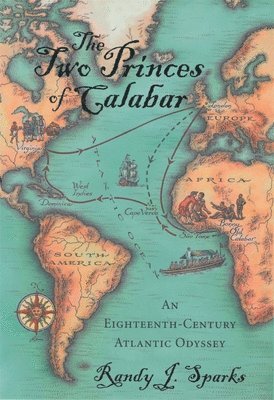
In 1767, two “princes” of a ruling family in the port of Old Calabar, on the slave coast of Africa, were ambushed and captured by English slavers. The princes, Little Ephraim Robin John and Ancona Robin Robin John, were themselves slave traders who were betrayed by African competitors—and so began their own extraordinary odyssey of enslavement. Their story, written in their own hand, survives as a rare firsthand account of the Atlantic slave experience.Randy J. Sparks made the remarkable discovery of the princes’ correspondence and has managed to reconstruct their adventures from it. They were transported from the coast of Africa to Dominica, where they were sold to a French physician. By employing their considerable language and interpersonal skills, they cleverly negotiated several escapes that took them from the Caribbean to Virginia, and to England, but always ended in their being enslaved again. Finally, in England, they sued for, and remarkably won, their freedom. Eventually, they found their way back to Old Calabar and, evidence suggests, resumed their business of slave trading.The Two Princes of Calabar offers a rare glimpse into the eighteenth-century Atlantic World and slave trade from an African perspective. It brings us into the trading communities along the coast of Africa and follows the regular movement of goods, people, and ideas across and around the Atlantic. It is an extraordinary tale of slaves’ relentless quest for freedom and their important role in the creation of the modern Atlantic World.
Africans in the Old South
Mapping Exceptional Lives across the Atlantic World
Inbunden, Engelska, 2016
418 kr
Skickas inom 10-15 vardagar
The Atlantic slave trade was the largest forced migration in history, and its toll in lives damaged or destroyed is incalculable. Most of those stories are lost to history, making the few that can be reconstructed critical to understanding the trade in all its breadth and variety. Randy J. Sparks examines the experiences of a range of West Africans who lived in the American South between 1740 and 1860. Their stories highlight the diversity of struggles that confronted every African who arrived on American shores.The subjects of Africans in the Old South include Elizabeth Cleveland Hardcastle, the mixed-race daughter of an African slave-trading family who invested in South Carolina rice plantations and slaves, passed as white, and integrated herself into the Lowcountry planter elite; Robert Johnson, kidnapped as a child and sold into slavery in Georgia, who later learned English, won his freedom, and joined the abolition movement in the North; Dimmock Charlton, who bought his freedom after being illegally enslaved in Savannah; and a group of unidentified Africans who were picked up by a British ship in the Caribbean, escaped in Mobile’s port, and were recaptured and eventually returned to their homeland.These exceptional lives challenge long-held assumptions about how the slave trade operated and who was involved. The African Atlantic was a complex world characterized by constant movement, intricate hierarchies, and shifting identities. Not all Africans who crossed the Atlantic were enslaved, nor was the voyage always one-way.
372 kr
Skickas inom 10-15 vardagar
Annamaboe was the largest slave trading port on the eighteenth-century Gold Coast, and it was home to successful, wily African merchants whose unusual partnerships with their European counterparts made the town and its people an integral part of the Atlantic’s webs of exchange. Where the Negroes Are Masters brings to life the outpost’s feverish commercial bustle and continual brutality, recovering the experiences of the entrepreneurial black and white men who thrived on the lucrative traffic in human beings.Located in present-day Ghana, the port of Annamaboe brought the town’s Fante merchants into daily contact with diverse peoples: Englishmen of the Royal African Company, Rhode Island Rum Men, European slave traders, and captured Africans from neighboring nations. Operating on their own turf, Annamaboe’s African leaders could bend negotiations with Europeans to their own advantage, as they funneled imported goods from across the Atlantic deep into the African interior and shipped vast cargoes of enslaved Africans to labor in the Americas.Far from mere pawns in the hands of the colonial powers, African men and women were major players in the complex networks of the slave trade. Randy Sparks captures their collective experience in vivid detail, uncovering how the slave trade arose, how it functioned from day to day, and how it transformed life in Annamaboe and made the port itself a hub of Atlantic commerce. From the personal, commercial, and cultural encounters that unfolded along Annamaboe’s shore emerges a dynamic new vision of the early modern Atlantic world.
309 kr
Skickas inom 7-10 vardagar
There is no such thing as a 'natural' disaster,"" writes Romain Huret in his introduction to this multidisciplinary study of the events surrounding and the legacy of Hurricane Katrina. Though nature produced Katrina's rising waters and destructive winds, a vast array of manmade factors shaped the scope of the storm's impact as well as the local and national response to it. In Hurricane Katrina in Transatlantic Perspective, American and European scholars approach this infamous storm and its aftermath through a variety of disciplines, from music to geography to anthropology, creating a nuanced understanding of how society reacts to and later remembers times of disaster.Richard Campanella and Romain Huret examine the particular geographical and political mix that set the stage for Katrina's devastation, especially among the poorest populations of New Orleans and the Gulf South. Jean Kempf, James Boyden, Andrew Diamond, and Thomas Jessen Adams address the ideological biases and racial stereotypes that infused local and national commentary in the days and weeks after the storm. Finally, Bruce Raeburn, Sara Le Menestrel, Anne M. Lovell, and Randy J. Sparks explore the impact of this powerful tropical event on the city's institutions and cultural organizations.Hurricane Katrina in Transatlantic Perspective offers a profound and innovative collection of insights on one of the most significant environmental catastrophes in U.S. history, forcing us to examine the cultural actors that transformed a natural disaster into a humanitarian crisis.
487 kr
Skickas inom 5-8 vardagar
On Jordan’s Stormy Banks is a social history of southern evangelicalism from the late eighteenth century to the end of Reconstruction. By focusing on the three largest evangelical denominations in a single state—Baptist, Methodist, and Presbyterian—Randy J. Sparks charts the rise of evangelicals on the southern frontier and their remarkable increase in numbers, wealth, and influence throughout the remainder of the period.
Money, Trade and Power
The Evolution of Colonial South Carolina's Plantation Society
Inbunden, Engelska, 2001
610 kr
Skickas inom 10-15 vardagar
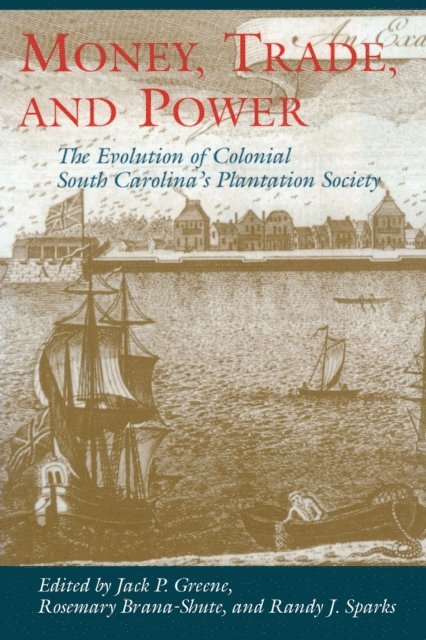
Reflecting the burgeoning interest of colonial historians in South Carolina and its role as the economic and cultural center of the Lower South, Money, Trade, and Power is a comprehensive exploration of the colony's slave system, economy, and complex social and cultural life. The first six chapters of this essay collection focus on the formative decades of South Carolina's history, from 1670 through the 1730s. Contributors Meaghan N. Duff, Bertrand Van Ruymbeke, and Gary L. Hewitt explore the colony's early settlement. R. C. Nash, Stephen G. Hardy, and Eirlys M. Barker investigate the rapidly expanding economy. Turning to the colony's reliance on slave labor, William L. Ramsay analyzes the institution and abandonment of Indian slavery; Jennifer Lyle Morgan examines the reproductive capabilities of slave women; and S. Max Edelson looks at the distinctive social position of skilled slaves. Robert Olwell considers how South Carolina public officials adapted the office of justice of the peace to the needs of a slave society, while Matthew Mulcahy shows how calamities of fires and hurricanes exacerbated the problem of slave control. Finally, Edward Pearson describes the ways in which South Carolina's emerging elite asserted their new status; G. Winston Lane and Elizabeth M. Pruden review the surprising economic independence of women; and Thomas Little examines the colony's religious life and spread of evangelicalism.
683 kr
Skickas inom 7-10 vardagar
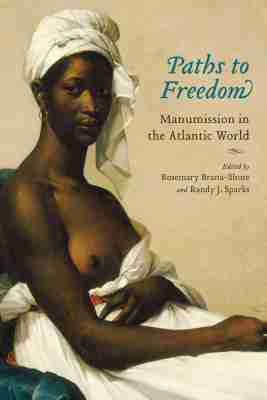
This book presents an international comparative study of a mode of emancipation that worked to reinforce the institution of slavery. Manumission - the act of freeing a slave while the institution of slavery continues - has received relatively little scholarly attention as compared to other aspects of slavery and emancipation. To address this gap, editors Rosemary Brana-Shute and Randy J. Sparks present a volume of essays that comprise the first-ever comparative study of manumission as it affected slave systems on both sides of the Atlantic. In this landmark volume, an international group of scholars consider the history and implications of manumission from the medieval period to the late nineteenth century as the phenomenon manifested itself in the Old World and the New. The contributors demonstrate that although the means of manumission varied greatly across the Atlantic world, in every instance the act served to reinforce the sovereign power structures inherent in the institution of slavery. In some societies only a master had the authority to manumit slaves, while in others the state might grant freedom or it might be purchased. Regardless of the source of manumission, the result was viewed by its society as a benevolent act intended to bind the freed slave to his or her former master through gratitude if no longer through direct ownership. The possibility of manumission worked to inspire faithful servitude among slaves while simultaneously solidifying the legitimacy of their ownership. The essayists compare the legacy of manumission in medieval Europe; the Jewish communities of Levant, Europe, and the New World; the Dutch, French, and British colonies; and the antebellum United States, while exploring wider patterns that extended beyond a single location or era. They also document the fates of manumitted slaves, some of whom were accepted into freed segments of their societies; while others were expected to vacate their former communities entirely. The contributors investigate the cultural consequences of manumission as well as the changing economic conditions that limited the practice by the eighteenth century to understand better the social implications of this multifaceted aspect of the system of slavery.
340 kr
Skickas inom 10-15 vardagar
This book offers a thoroughly international study of the Huguenot migration.Traditionally known as le Refuge, the Huguenot diaspora is one of the most important dispersions of a religious minority in early modern Europe. This migration led to the exodus of nearly two hundred thousand Protestants out of France in 1685 at the time of the Revocation of the Edict of Nantes. ""Memory and Identity"" offers a comparative perspective on this event and its repercussions by an international group of historians. This collection is the first look at the Huguenot diaspora in a broad Atlantic context rather than as a narrowly European or colonial American phenomenon and sheds new light on the Protestant experience both in and outside of France.Revealing how minority status at home affected the creation of refugee communities outside France, scholars trace the Huguenots' eventual integration into different host societies. Comparing Huguenot diasporic experiences on both sides of the Atlantic, essays focus on Britain, Germany, the Netherlands, British North America, the French Caribbean, New France, and Dutch South Africa. Finally, several essays study the long-term impact of le Refuge in examining nineteenth-century Huguenot memory in France and in the diaspora and the maintenance of a Huguenot identity.
366 kr
Skickas inom 10-15 vardagar
In the 1600s Colonial French settlers brought Christianity into the lands that are now the state of Mississippi. Throughout the period of French rule and the period of Spanish dominion that followed, Roman Catholicism remained the principal religion. By the time that statehood was achieved in 1817, Mississippi was attracting Methodists, Baptists, Presbyterians, and other Protestant evangelical faiths at a remarkable pace, and by the twentieth century, religion in Mississippi was dominantly Protestant and evangelical.In this book, Randy J. Sparks traces the roots of evangelical Christianity in the state and shows how the evangelicals became a force of cultural revolution. They embraced the poorer segments of society, welcomed high populations of both women and African Americans, and deeply influenced ritual and belief in the state's vision of Christianity. In the 1830s as the Mississippi economy boomed, so did evangelicalism. As Protestant faiths became wedded to patriarchal standards, slaveholding, and southern political tradition, seeds were sown for the war that would erupt three decades later.Until Reconstruction many Mississippi churches comprised biracial congregations and featured women in prominent roles, but as the Civil War and the racial split cooled the evangelicals' liberal fervor and drastically changed the democratic character of their religion into archconservatism, a strong but separate black church emerged. As dominance by Protestant conservatives solidified, Jews, Catholics, and Mormons struggled to retain their religious identities while conforming to standards set by white Protestant society.As Sparks explores the dissonance between the state's powerful evangelical voice and Mississippi's social and cultural mores, he reveals the striking irony of faith and society in conflict. By the time of the Civil Rights movement of the 1960s, religion, formerly a liberal force, had become one of the leading proponents of segregation, gender inequality, and ethnic animosity among whites in the Magnolia State. Among blacks, however, the churches were bastions of racial pride and resistance to the forces of oppression.