Raul Zurita - Böcker
Visar alla böcker från författaren Raul Zurita. Handla med fri frakt och snabb leverans.
6 produkter
6 produkter
630 kr
Skickas inom 3-6 vardagar
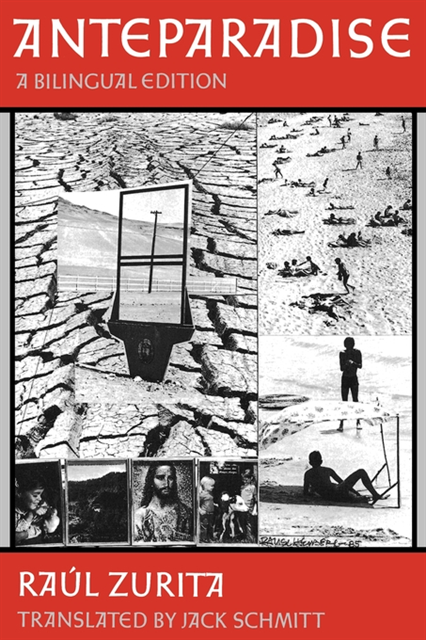
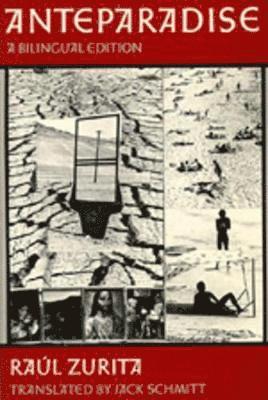
Here is a major work by a Chilean poet thought by many to be the most brilliant and important new voice in the Spanish language. In its first American edition, this poetry is presented in Spanish and Enlgish, so that readers of both languages may listed to Zurita's voice. Anteparadise can be read as a creative response, an act of resistance by a young artist to the violence and suffering during and after the 1973 coup that toppled the democratically elected Allende government. Zurita thus follows the example of several Latin American pets such as the Peruvian Cesar Vallejo and Chilean Nobel laureate Pablo Neruda, sharing their passion and urgency, but his voice is unique.
279 kr
Skickas inom 7-10 vardagar
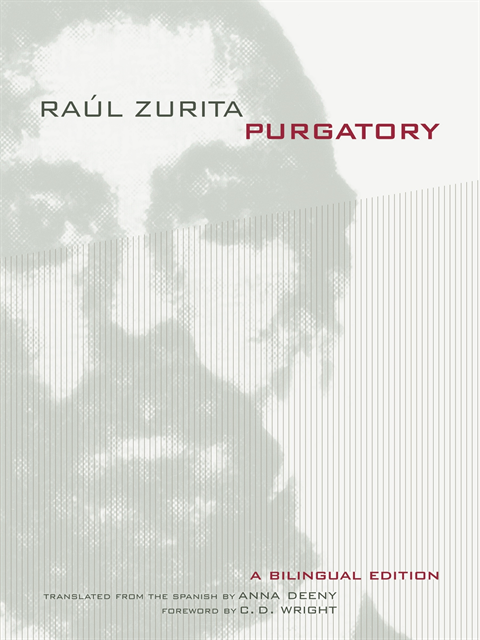
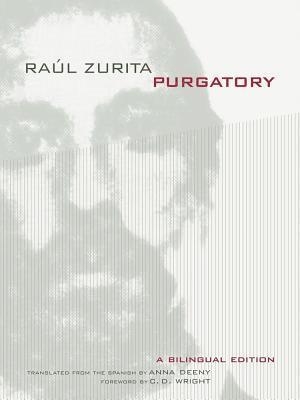
Raul Zurita's "Purgatory", a landmark in contemporary Latin American poetry, records the physical, cultural, and spiritual violence perpetrated against the Chilean people under Pinochet's military dictatorship (1973-1990) in the fiercely inventive voice of a postmodern master. This beautiful en face edition, superbly translated by Anna Deeny, brings to English-language readers an indispensable volume written by one of the most important living poets writing in Spanish today. Zurita was a 24-year-old student in Valparaiso when, on the morning of the coup, he was arrested, detained, and tortured. Conceived as the first text of a "Dantean" trilogy that includes "Anteparaiso" ("Anteparadise") and "La Vida Nueva" ("The New Life"), "Purgatory" is his anguished response to Chile's violent recent history.
268 kr
Skickas inom 10-15 vardagar
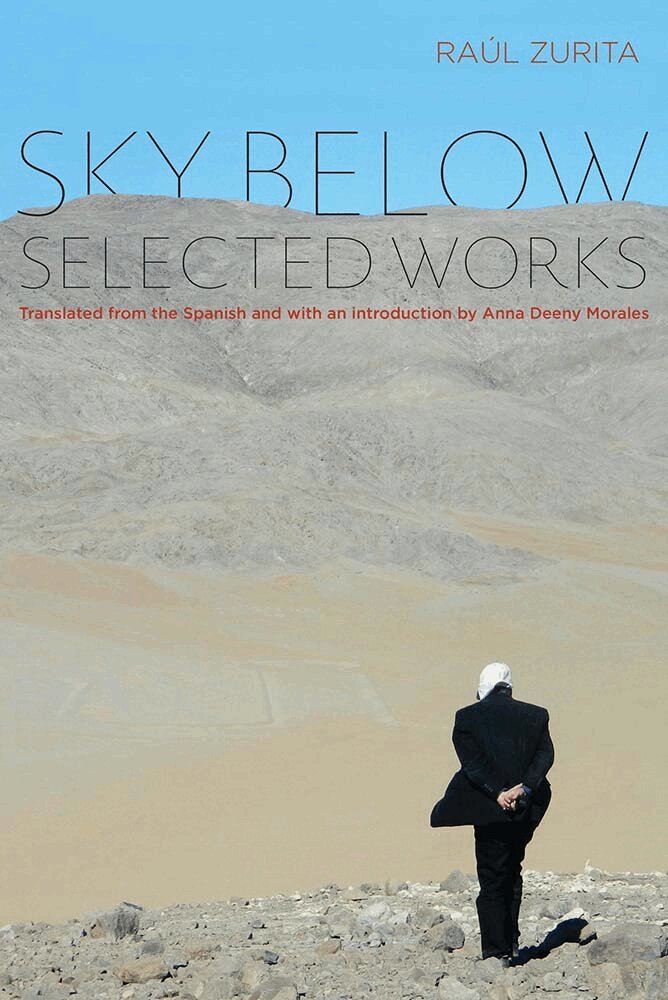
Chilean poet Raúl Zurita has long been recognized as one of themost celebrated and important voices from Latin America. Hiscompelling rhythms combine epic and lyric tones, public andmost intimate themes, grief and joy. This bilingual volume ofselected works is the first of its kind in any language, representingthe remarkable range of an extraordinary poet. Zurita’s workconfronts the cataclysm of the Pinochet coup with a powerfulurgency matched by remarkable craftsmanship and imaginativevision. In Zurita’s attempt to address the atrocities that indeliblymark Chile, he makes manifest the common history of theAmericas.
294 kr
Skickas inom 3-6 vardagar
142 kr
Skickas
344 kr
Skickas inom 3-6 vardagar
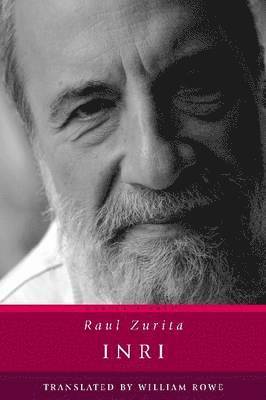
A shocking poetic account of an event that was kept secret: the throwing of the bodies of the disappeared in Chile into the mouths of volcanoes and into the sea. "INRI" responds to the need to find a language for an event that was kept hidden and excluded from official records in Chile: the fact that the bodies of the disappeared were thrown out of helicopters into the mouths of volcanoes and into the sea. In order to bring this event, which was neither seen nor heard, into language, Zurita invents a form and language capable of bringing it into the present. The one place where these unspeakable acts might be registered is in the landscape of Chile: the mountains, desert, and sea. There the event might begin to be touched, heard, and finally seen. When there are no places from which to speak, 'the stones cry out'. "INRI" is written as poetry without regular lines or metre. In the tradition of Whitman or Ginsberg's Howl, it works with long breaths and large blocks of meaning: intensities that overrun the usual measures of speech and syntax.To read it is to experience a strange force pulsing through the language, breaking apart its usual channels, and opening unseen and unheard zones. Zurita, winner of the Chilean National Poetry Prize, is one of the best known poets of Latin America. His work is part of a revolution in poetic language that began in the 1970s and sought to find new forms of expression, radically different from those of Pablo Neruda. The challenge was to confront the contemporary epoch, with its particular forms of violence, including violence done to language. "INRI" is distinctive in that it does not speak out of individual sorrow, though this is not missing from the text, but seeks, rather, a new space, out of which love might be asserted as prime human reality, a space which might give birth to a different type of society.