Ravi De Costa – författare
Visar alla böcker från författaren Ravi De Costa. Handla med fri frakt och snabb leverans.
6 produkter
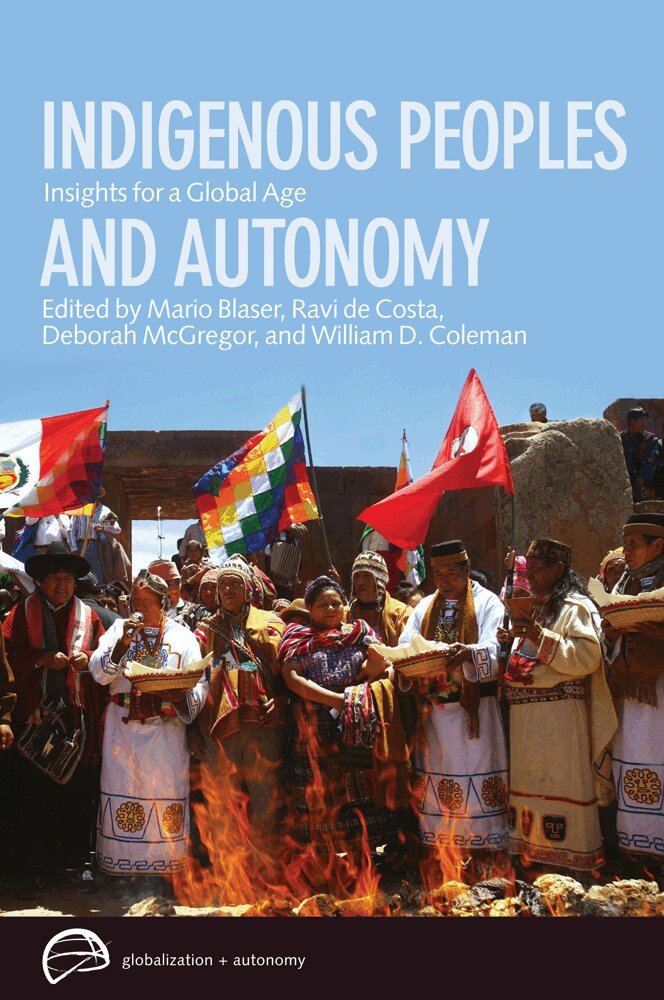
Indigenous Peoples and Autonomy
Insights for a Global Age
Av Mario Blaser, Ravi De Costa m. fl.
Inbunden, 2010
1183 kr
Lägg i varukorg
When the UN adopted the Declaration on the Rights of Indigenous Peoples in 2007, it brought the negative effect of globalization on the lives of Indigenous peoples to the centre of public debate. The contributors to this innovative collection extend the discussion by asking what can Indigenous …
Indigenous Peoples and Autonomy
Insights for a Global Age
Av Mario Blaser, Ravi De Costa m. fl.
Häftad, 2011
413 kr
Lägg i varukorg
When the UN adopted the Declaration on the Rights of Indigenous Peoples in 2007, it brought the negative effect of globalization on the lives of Indigenous peoples to the centre of public debate. The contributors to this innovative collection extend the discussion by asking what can Indigenous …
Higher Authority
Indigenous Transnationalism and Australia
Häftad, 2006
343 kr
Lägg i varukorg
This book is a transnational history of indigenous Australians. Indigenous peoples in Australia have always been engaged in transnational encounters. They regulated access to resources, conducted material and cultural exchanges, and managed conflicts and mobility with traditions of diplomacy. …
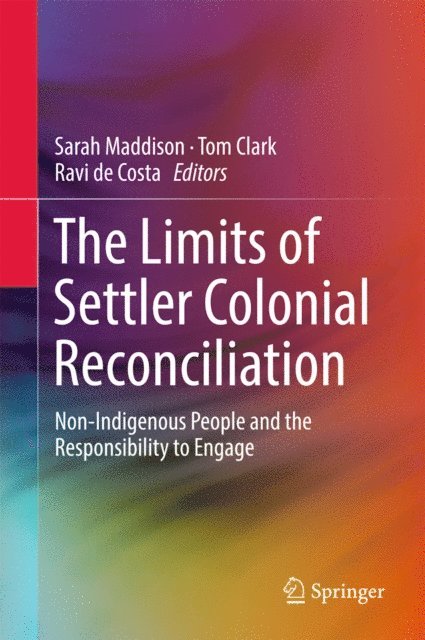
Limits of Settler Colonial Reconciliation
Non-Indigenous People and the Responsibility to Engage
Av Sarah Maddison, Tom Clark m. fl.
Inbunden, 2016
1467 kr
Lägg i varukorg
This book investigates whether and how reconciliation in Australia and other settler colonial societies might connect to the attitudes of non-Indigenous people in ways that promote a deeper engagement with Indigenous needs and aspirations. It explores concepts and practices of reconciliation, …
Limits of Settler Colonial Reconciliation
Non-Indigenous People and the Responsibility to Engage
Av Ravi de Costa, Tom Clark m. fl.
E-bok, 2016
1733 kr
Lägg i varukorg
This book investigates whether and how reconciliation in Australia and other settler colonial societies might connect to the attitudes of non-Indigenous people in ways that promote a deeper engagement with Indigenous needs and aspirations. It explores concepts and practices of reconciliation, …
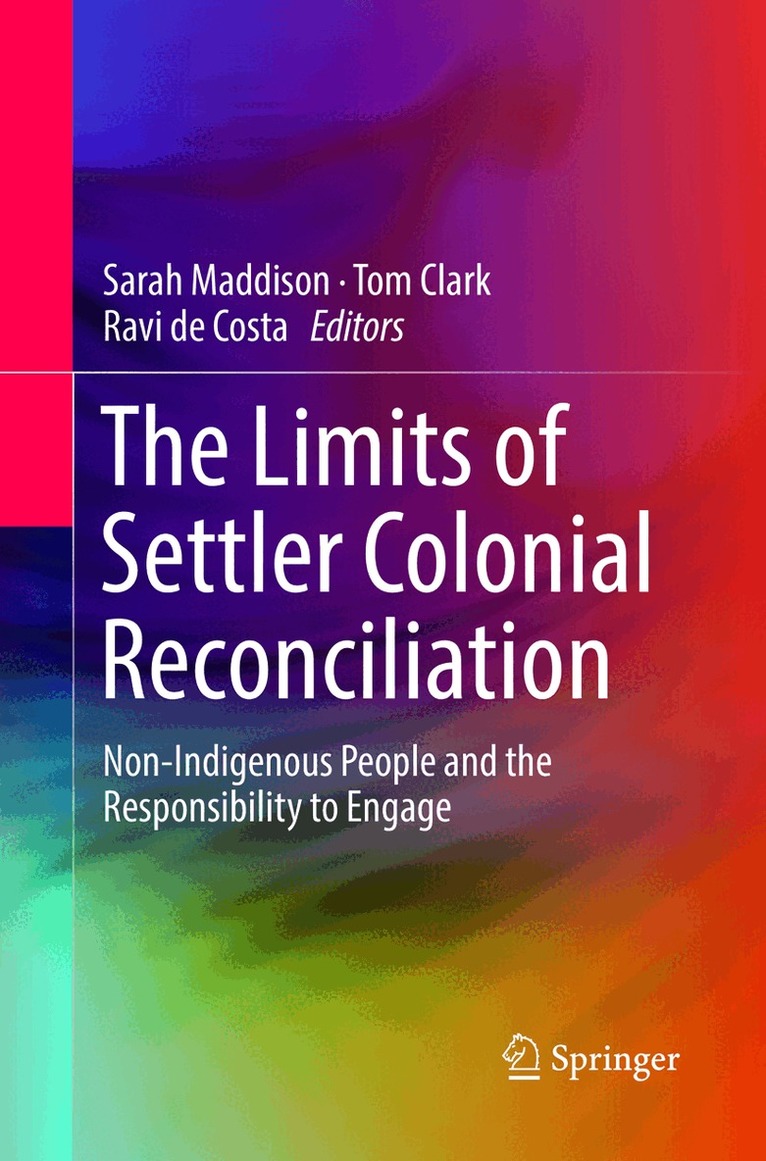
Limits of Settler Colonial Reconciliation
Non-Indigenous People and the Responsibility to Engage
Av Sarah Maddison, Tom Clark m. fl.
Häftad, 2018
1425 kr
Lägg i varukorg
This book investigates whether and how reconciliation in Australia and other settler colonial societies might connect to the attitudes of non-Indigenous people in ways that promote a deeper engagement with Indigenous needs and aspirations. It explores concepts and practices of reconciliation, …