Ray Taras - Böcker
Visar alla böcker från författaren Ray Taras. Handla med fri frakt och snabb leverans.
7 produkter
7 produkter
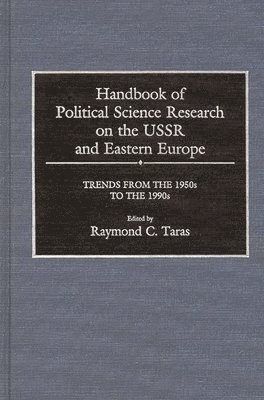
Handbook of Political Science Research on the USSR and Eastern Europe
Trends from the 1950s to 1990s
Inbunden, Engelska, 1992
875 kr
Skickas inom 10-15 vardagar
How accurately did Western political scientists portray the political, economic, and social developments in the Soviet Union and Eastern Europe over the last forty years? How did scholars' perspectives, methods, and findings differ, and what were the principal research trends during the Communist era that recently ended in Eastern Europe and the Soviet Union? This comprehensive and definitive critical history of Soviet Studies takes stock of the achievements and shortcomings in Western research on the region's politics. It serves as a who's who of Western Sovietologists, and it identifies many prominent political scientists from the former Communist states.This major reference opens with an overview of sources of research, an analysis of different approaches and perspectives to the study of the region since 1956, and an assessment of post-sovietological literature of the 1990s. The volume contains individual chapters on the former USSR and the eight East European states. Cross-national chapters include two on Soviet and East European international politics, two on Soviet and East European economic reforms, and one on comparative communist studies. An appendix points to Russian and East European research centers and programs around the world. A general index makes it easy to access the names of authors and subjects. This landmark reference should prove to be stimulating reading for the many political scientists, historians, sociologists, and economists, once engaged in Soviet studies and for the new generation of scholars who bring fresh analytical approaches to evaluating the region's politics.
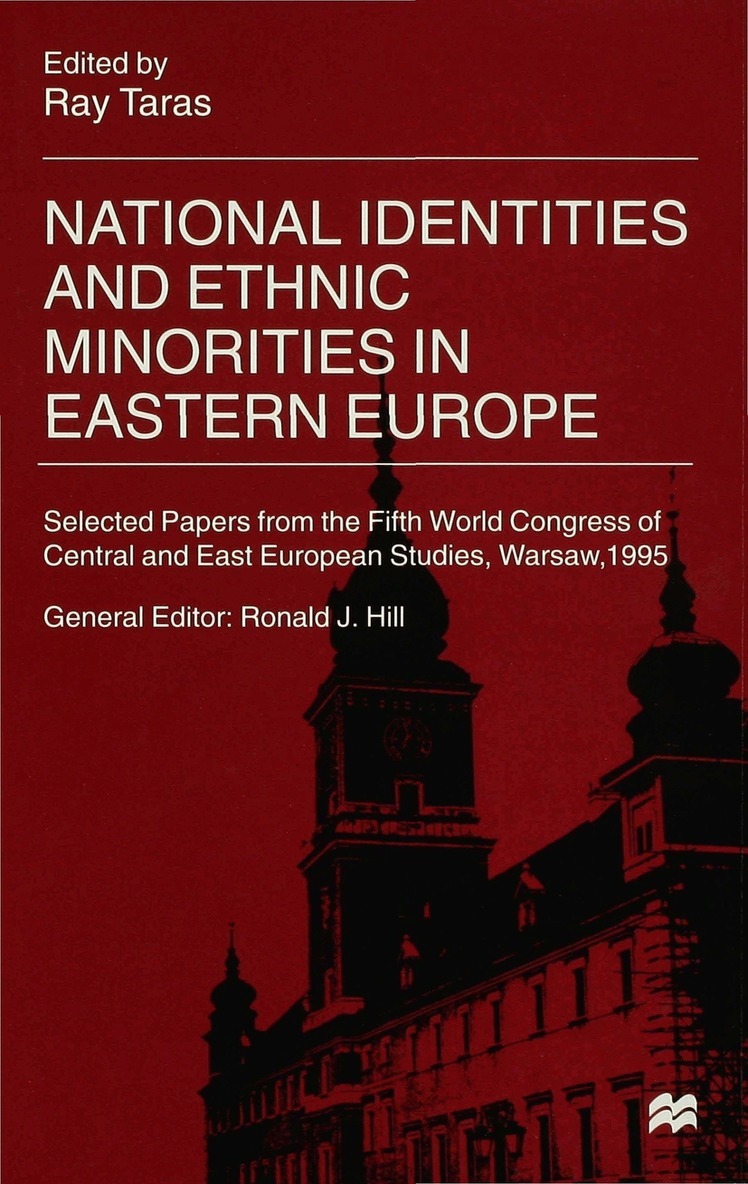
National Identities and Ethnic Minorities in Eastern Europe
Selected Papers from the Fifth World Congress of Central and East European Studies, Warsaw, 1995
Inbunden, Engelska, 1998
1 064 kr
Skickas inom 10-15 vardagar
This volume provides a cross-national analysis of the changing identities of various national and ethnic groups, their new political influence in the emergent democracies and their efforts to revive suppressed cultures.
586 kr
Skickas inom 7-10 vardagar
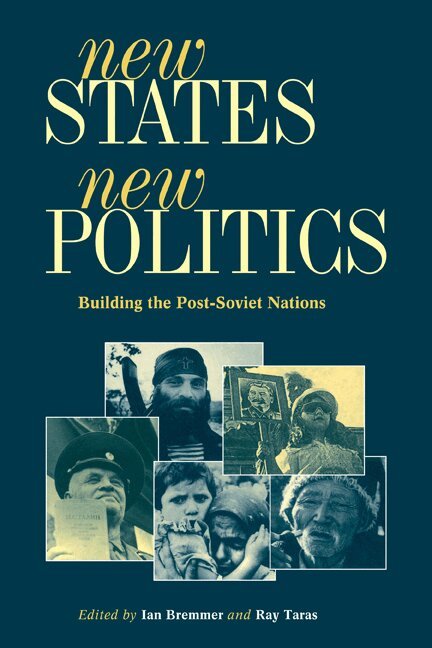
Since its publication in 1993, Nations and Politics in the Soviet Successor-States edited by Ian Bremmer and Ray Taras has established itself internationally as the genuinely comprehensive, systematic and rigorous analysis of the nation- and state-building processes of the fifteen states that grew out of the 1991 collapse of the Soviet Union. New States, New Politics: Building the Post-Soviet Nations was first published in 1997 and succeeds and replaces the editors' earlier book with a fresh collection of specially commissioned studies from the world's foremost specialists. Far from eradicating tensions among the former Soviet peoples, the disintegration of empire saw national minorities rediscovering long-suppressed identities. The contributors to New States, New Politics bring together historical and ethnic backgrounds with penetrating political analysis to offer an intriguing record of the different roads to self-assertion and independence being pursued by these young nations.
1 228 kr
Skickas inom 7-10 vardagar
The political systems that have replaced communist rule in East-Central Europe and Eurasia are closely associated with their presidents. The first democratically-elected presidents of these countries - men like Yeltsin, Havel and Waesa - have frequently been viewed as 'founding fathers' of their countries' independence. But were they successful in creating strong presidential systems in these states? Has their unquestioned personal power and charisma been institutionalized in the presidencies? Will executive power in postcommunist states remain the same when the first incumbents of the office are gone? This book, first published in 1997, offers a comparative analysis of the role of presidents in postcommunist states. Comprising studies of Russia, Ukraine, and Kazakstan among former Soviet republics, and Poland, the Czech Republic, and Hungary among Central European states, this book will be required reading for readers interested in how political leaders affect the fate of democracy in the former communist world.
1 476 kr
Skickas inom 10-15 vardagar
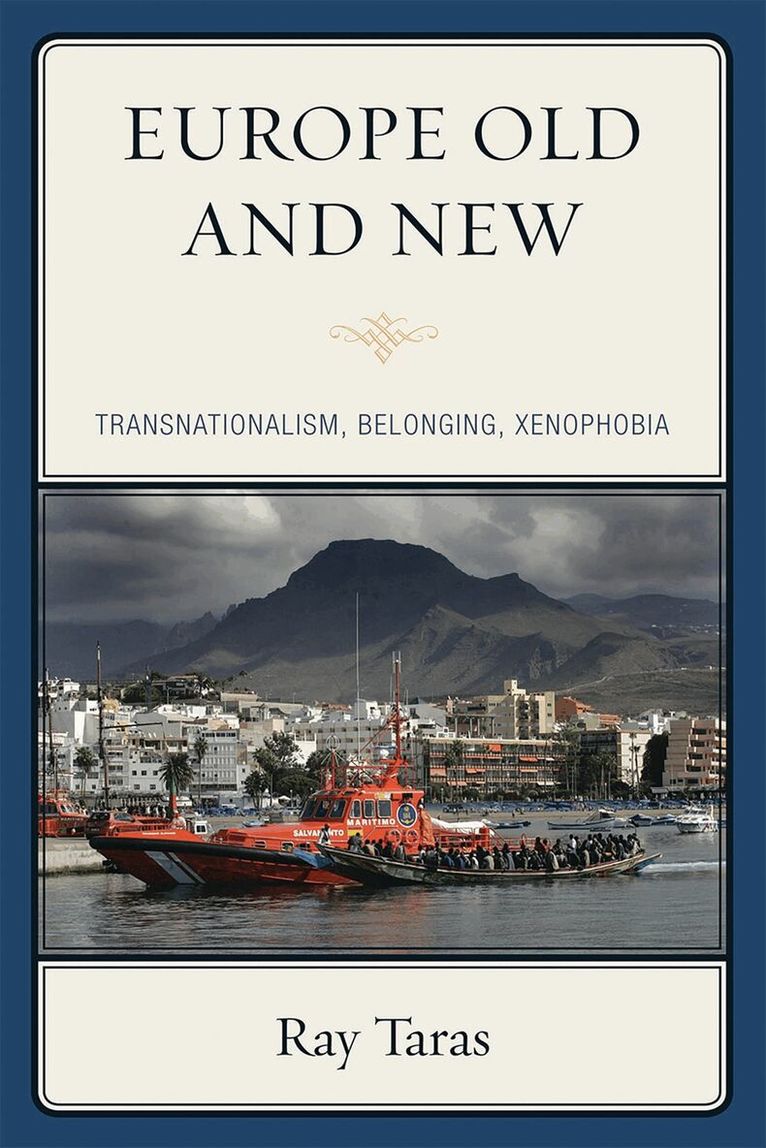
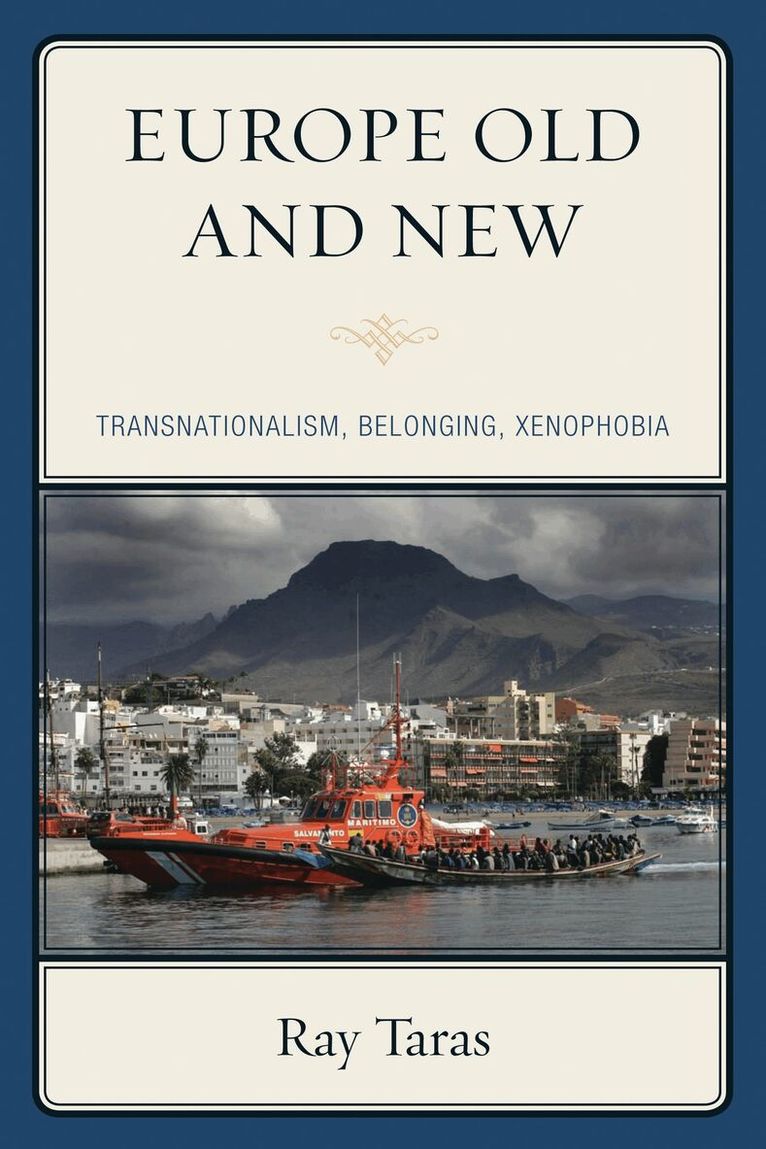
Is Europe indeed uniting or instead falling apart as a result of anti-immigrant prejudices, a massive Islamic influx, and ancient intra-European hatreds? This innovative and engaging book explores this key question by examining the national and religious phobias and prejudices, antipathies and sympathies, stereotypes and heterotypes of Europe west and east. Considering the sources of Europe's culture-based divide, Ray Taras argues that the idea of two "Europes" is grounded both in reality and myth. The accession process that brought a dozen new members into the European Union after 2004 highlighted the persisting gulf between "old" and "new" Europe. While many concrete borders between east and west were removed (commercial, legal, passport regimes), many remained (absence of a single Euro currency zone, labor market, and security community). Virtual borders too were invented or re-imagined: the postmaterialist, inclusionary, tolerant values supposedly found in old Europe versus the materialist, nationalistic, xenophobic ones of new Europe.After reviewing the two Europes' contrasting historical legacies, Taras examines the EU institutions designed to overcome the historical European divide. He considers the treaties, political rhetoric, citizen attitudes, and literary narratives of belonging and separation that both bind and fray the fabric of Europe. Throughout, this interdisciplinary work provides a comprehensive, hard-hitting, and unabashed review of how enlarged Europe embraces contrasting understandings of its political home and of who belongs and who does not.
528 kr
Skickas inom 10-15 vardagar
Is Europe indeed uniting or instead falling apart as a result of anti-immigrant prejudices, a massive Islamic influx, and ancient intra-European hatreds? This innovative and engaging book explores this key question by examining the national and religious phobias and prejudices, antipathies and sympathies, stereotypes and heterotypes of Europe west and east. Considering the sources of Europe's culture-based divide, Ray Taras argues that the idea of two "Europes" is grounded both in reality and myth. The accession process that brought a dozen new members into the European Union after 2004 highlighted the persisting gulf between "old" and "new" Europe. While many concrete borders between east and west were removed (commercial, legal, passport regimes), many remained (absence of a single Euro currency zone, labor market, and security community). Virtual borders too were invented or re-imagined: the postmaterialist, inclusionary, tolerant values supposedly found in old Europe versus the materialist, nationalistic, xenophobic ones of new Europe.After reviewing the two Europes' contrasting historical legacies, Taras examines the EU institutions designed to overcome the historical European divide. He considers the treaties, political rhetoric, citizen attitudes, and literary narratives of belonging and separation that both bind and fray the fabric of Europe. Throughout, this interdisciplinary work provides a comprehensive, hard-hitting, and unabashed review of how enlarged Europe embraces contrasting understandings of its political home and of who belongs and who does not.
National Identities and Ethnic Minorities in Eastern Europe
Selected Papers from the Fifth World Congress of Central and East European Studies, Warsaw, 1995
Häftad, Engelska, 1998
1 064 kr
Skickas inom 10-15 vardagar
This volume provides a cross-national analysis of the changing identities of various national and ethnic groups, their new political influence in the emergent democracies and their efforts to revive suppressed cultures.