Raymond F. Gesteland – författare
Visar alla böcker från författaren Raymond F. Gesteland. Handla med fri frakt och snabb leverans.
4 produkter
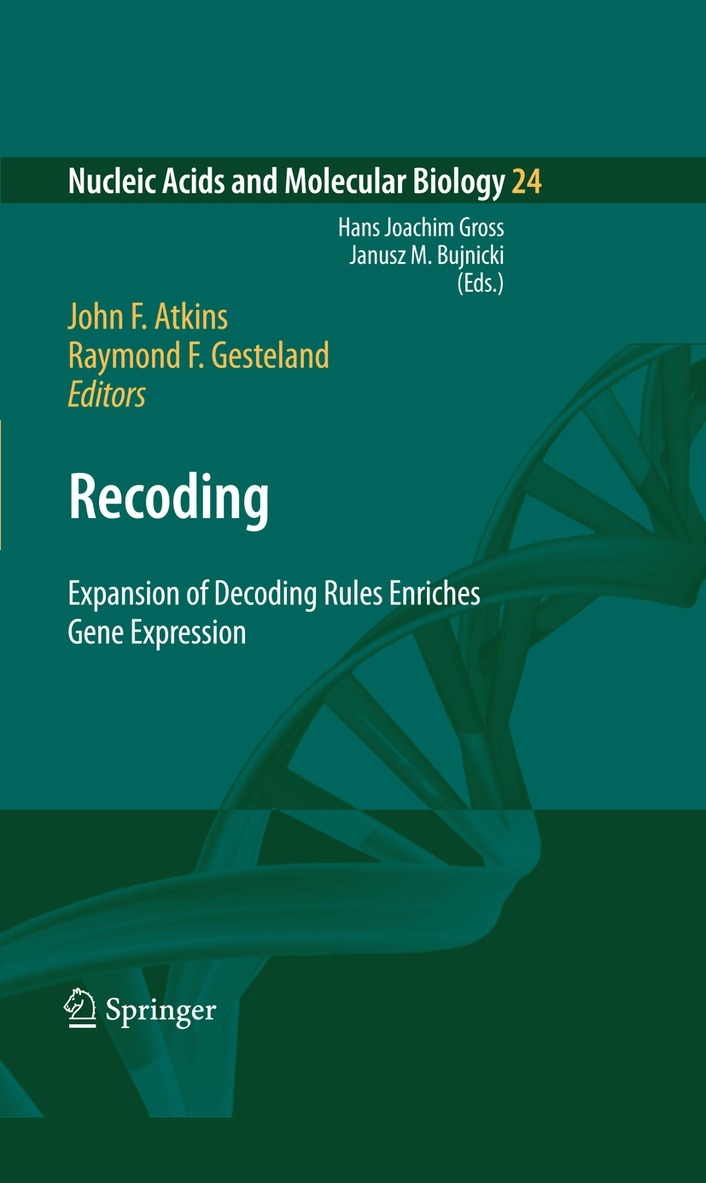
Recoding: Expansion of Decoding Rules Enriches Gene Expression
Av John F. Atkins, Raymond F. Gesteland
Inbunden, 2009
2244 kr
Lägg i varukorg
The literature on recoding is scattered, so this superb book ?lls a need by prov- ing up-to-date, comprehensive, authoritative reviews of the many kinds of recoding phenomena. Between 1961 and 1966 my colleagues and I deciphered the genetic code in Escherichia coli and showed that the genetic code …
Recoding: Expansion of Decoding Rules Enriches Gene Expression
Av Raymond F. Gesteland, John F. Atkins
E-bok, 2010
2948 kr
Lägg i varukorg
The literature on recoding is scattered, so this superb book ?lls a need by prov- ing up-to-date, comprehensive, authoritative reviews of the many kinds of recoding phenomena. Between 1961 and 1966 my colleagues and I deciphered the genetic code in Escherichia coli and showed that the genetic code …
RNA Worlds: From Life's Origins to Diversity in Gene Regulation
Av John F Atkins, Raymond F Gesteland m. fl.
Inbunden, 2010
2440 kr
Lägg i varukorg
Recoding: Expansion of Decoding Rules Enriches Gene Expression
Av John F. Atkins, Raymond F. Gesteland
Häftad, 2012
2244 kr
Lägg i varukorg
The literature on recoding is scattered, so this superb book ?lls a need by prov- ing up-to-date, comprehensive, authoritative reviews of the many kinds of recoding phenomena. Between 1961 and 1966 my colleagues and I deciphered the genetic code in Escherichia coli and showed that the genetic code …