Raymond Flood – författare
Visar alla böcker från författaren Raymond Flood. Handla med fri frakt och snabb leverans.
24 produkter
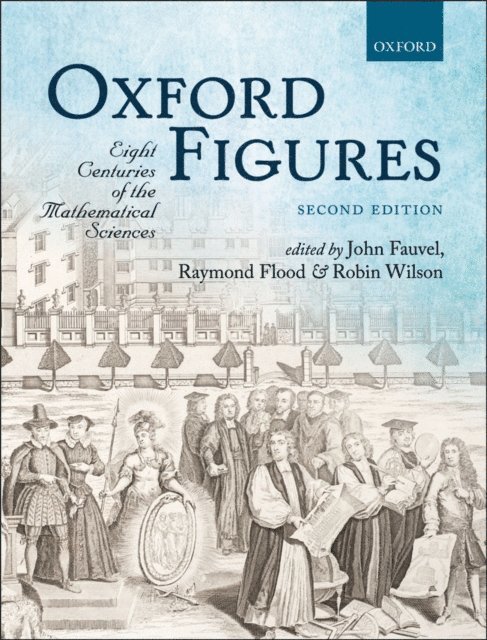
Oxford Figures
Eight Centuries of the Mathematical Sciences
Av Robin Wilson, Raymond Flood m. fl.
E-bok, 2013
1137 kr
Lägg i varukorg
This is the story of the intellectual and social life of a community, and of its interactions with the wider world. For eight centuries mathematics has been researched and studied at Oxford, and the subject and its teaching have undergone profound changes during that time. This highly readable and …
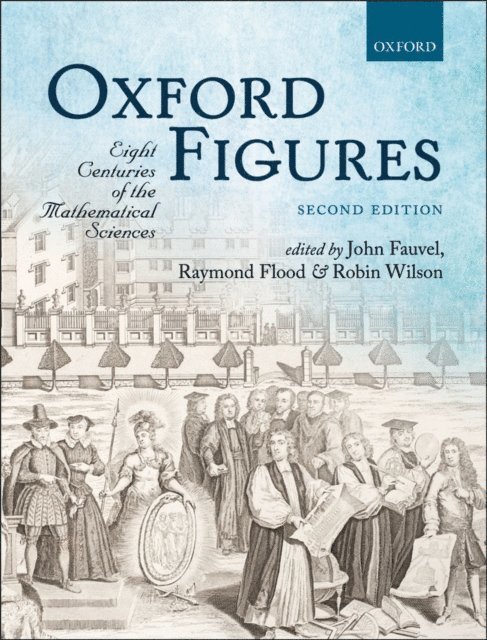
Oxford Figures
Eight Centuries of the Mathematical Sciences
Av Robin Wilson, Raymond Flood m. fl.
E-bok, 2013
1137 kr
Lägg i varukorg
This is the story of the intellectual and social life of a community, and of its interactions with the wider world. For eight centuries mathematics has been researched and studied at Oxford, and the subject and its teaching have undergone profound changes during that time. This highly readable and …
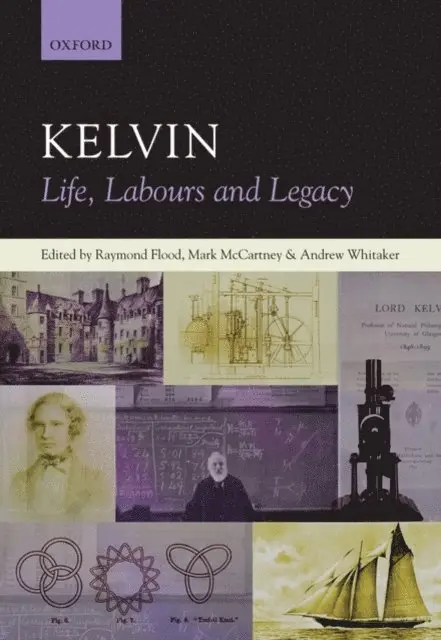
Kelvin: Life, Labours and Legacy
Av Andrew Whitaker, Mark McCartney m. fl.
E-bok, 2008
789 kr
Lägg i varukorg
Lord Kelvin was one of the greatest physicists of the Victorian era. Widely known for the development of the Kelvin scale of temperature measurement, Kelvin''s interests ranged across thermodynamics, the age of the Earth, the laying of the first transatlantic telegraph cable, not to mention …
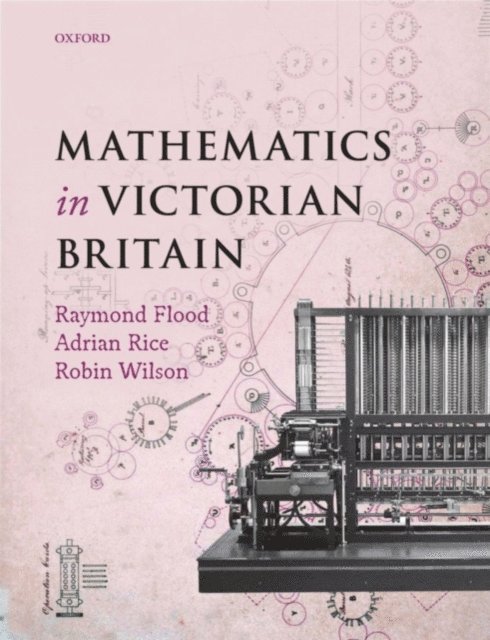
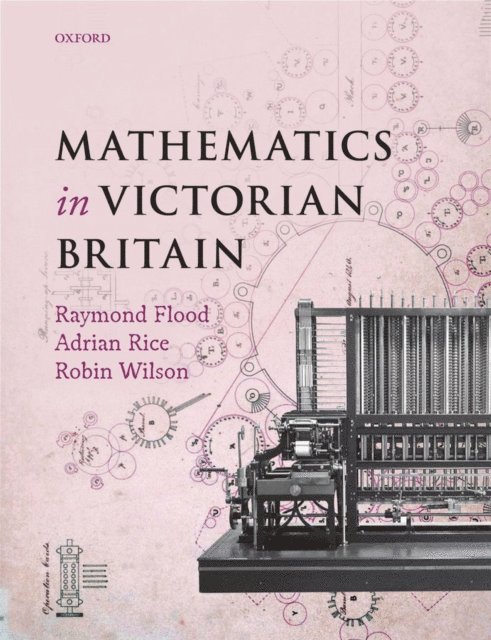
Mathematics in Victorian Britain
Av photographer and broadcaster Foreword by Dr Adam Hart-Davis, Robin Wilson m. fl.
E-bok, 2011
685 kr
Lägg i varukorg
During the Victorian era, industrial and economic growth led to a phenomenal rise in productivity and invention. That spirit of creativity and ingenuity was reflected in the massive expansion in scope and complexity of many scientific disciplines during this time, with subjects evolving rapidly and …
Mathematics in Victorian Britain
Av photographer and broadcaster Foreword by Dr Adam Hart-Davis, Robin Wilson m. fl.
E-bok, 2011
685 kr
Lägg i varukorg
During the Victorian era, industrial and economic growth led to a phenomenal rise in productivity and invention. That spirit of creativity and ingenuity was reflected in the massive expansion in scope and complexity of many scientific disciplines during this time, with subjects evolving rapidly and …
James Clerk Maxwell
Perspectives on his Life and Work
Av Andrew Whitaker, Mark McCartney m. fl.
E-bok, 2014
962 kr
Lägg i varukorg
James Clerk Maxwell (1831-1879) had a relatively brief, but remarkable life, lived in his beloved rural home of Glenlair, and variously in Edinburgh, Aberdeen, London and Cambridge. His scholarship also ranged wide - covering all the major aspects of Victorian natural philosophy. He was one of the …
James Clerk Maxwell
Perspectives on his Life and Work
Av Andrew Whitaker, Mark McCartney m. fl.
E-bok, 2014
962 kr
Lägg i varukorg
James Clerk Maxwell (1831-1879) had a relatively brief, but remarkable life, lived in his beloved rural home of Glenlair, and variously in Edinburgh, Aberdeen, London and Cambridge. His scholarship also ranged wide - covering all the major aspects of Victorian natural philosophy. He was one of the …
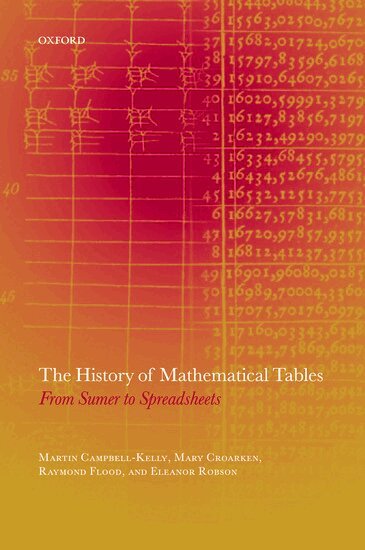
The History of Mathematical Tables
From Sumer to Spreadsheets
Av Martin Campbell-Kelly, Mary Croarken m. fl.
Inbunden, 2003
2856 kr
Lägg i varukorg
The oldest known mathematical table was found in the ancient Sumerian city of Shuruppag in southern Iraq. Since then, tables have been an important feature of mathematical activity; table making and printed tabular matter are important precursors to modern computing and information processing. This …
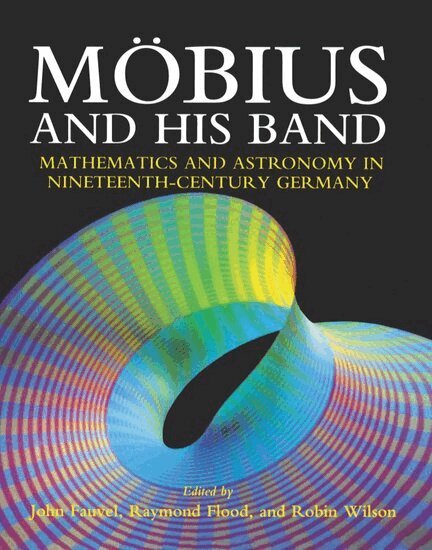
Möbius and his Band
Mathematics and Astronomy in Nineteenth-century Germany
Av John Fauvel, Raymond Flood m. fl.
Inbunden, 1993
2492 kr
Lägg i varukorg
August Möbius was one of the nineteenth century's most influential mathematicians and astronomers. Written by six distinguished contributors, this book explores the work of Möbius and his fellow-German scholars, in particular the achievements which act as a mirror for the work being undertaken by …
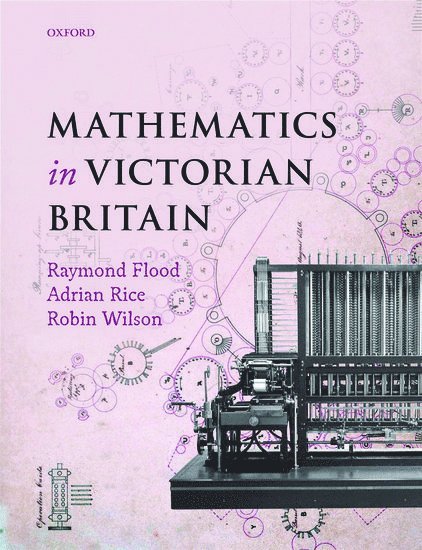
Mathematics in Victorian Britain
Av photographer and broadcaster Foreword by Dr Adam Hart-Davis, Writer, Raymond Flood m. fl.
Inbunden, 2011
928 kr
Lägg i varukorg
During the Victorian era, industrial and economic growth led to a phenomenal rise in productivity and invention. That spirit of creativity and ingenuity was reflected in the massive expansion in scope and complexity of many scientific disciplines during this time, with subjects evolving rapidly and …
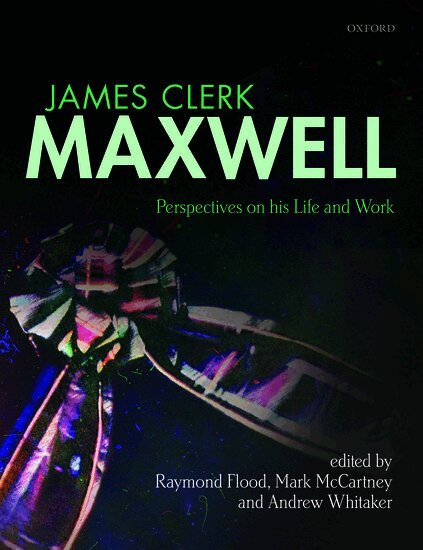
James Clerk Maxwell
Perspectives on his Life and Work
Av Raymond Flood, Mark McCartney m. fl.
Inbunden, 2014
1300 kr
Lägg i varukorg
James Clerk Maxwell (1831-1879) had a relatively brief, but remarkable life, lived in his beloved rural home of Glenlair, and variously in Edinburgh, Aberdeen, London and Cambridge. His scholarship also ranged wide - covering all the major aspects of Victorian natural philosophy. He was one of the …
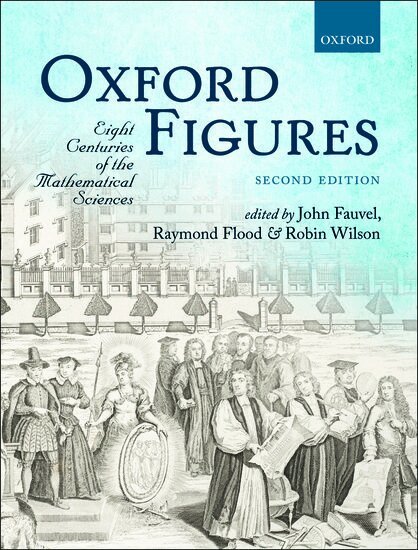
Oxford Figures
Eight Centuries of the Mathematical Sciences
Av John Fauvel, Raymond Flood m. fl.
Inbunden, 2013
1318 kr
Lägg i varukorg
This is the story of the intellectual and social life of a community, and of its interactions with the wider world. For eight centuries mathematics has been researched and studied at Oxford, and the subject and its teaching have undergone profound changes during that time. This highly readable and …
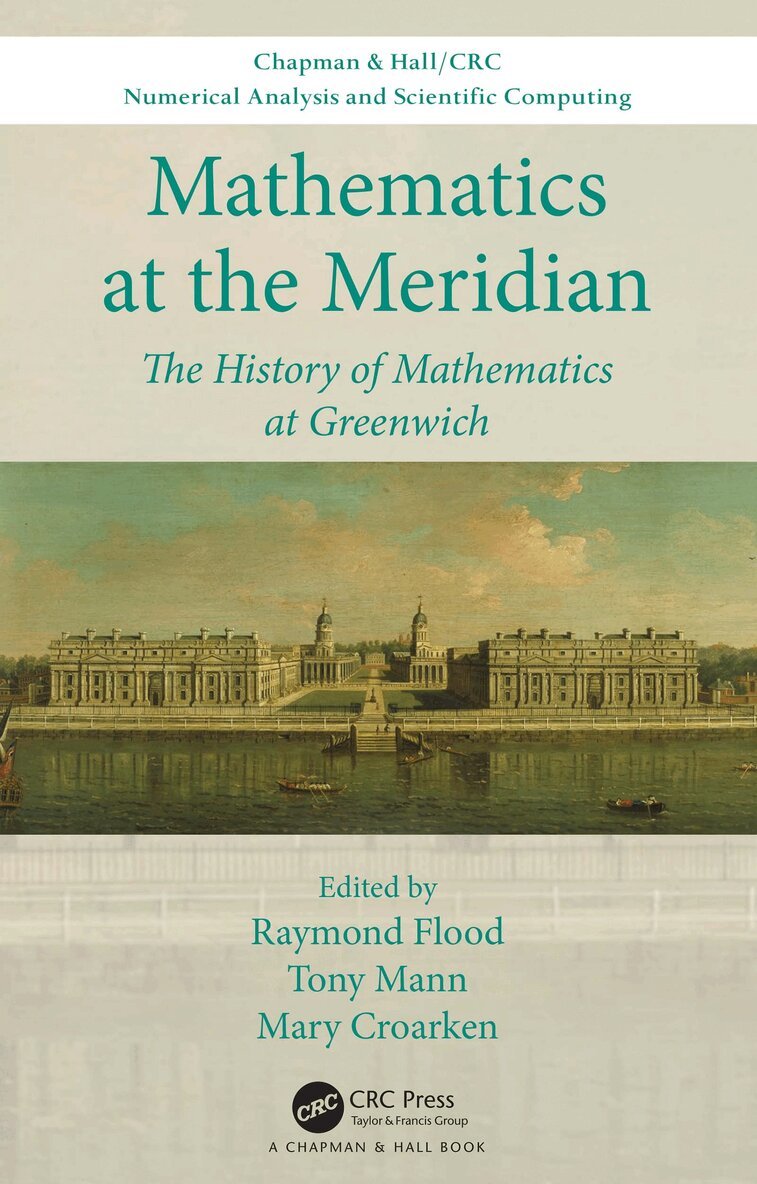
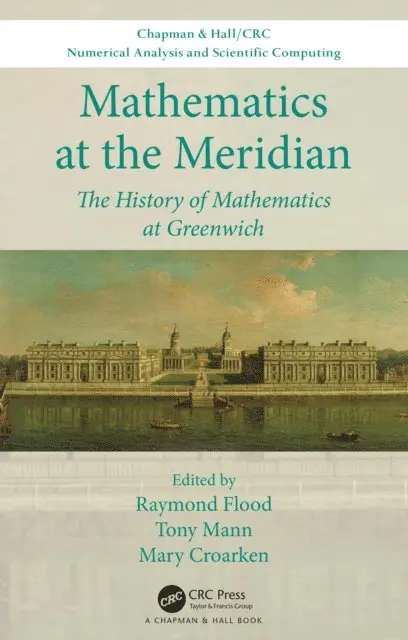
Mathematics at the Meridian
The History of Mathematics at Greenwich
Av Raymond Flood, Tony Mann m. fl.
Häftad, 2019
473 kr
Lägg i varukorg
Greenwich has been a centre for scientific computing since the foundation of the Royal Observatory in 1675. Early Astronomers Royal gathered astronomical data with the purpose of enabling navigators to compute their longitude at sea. Nevil Maskelyne in the 18th century organised the work of …
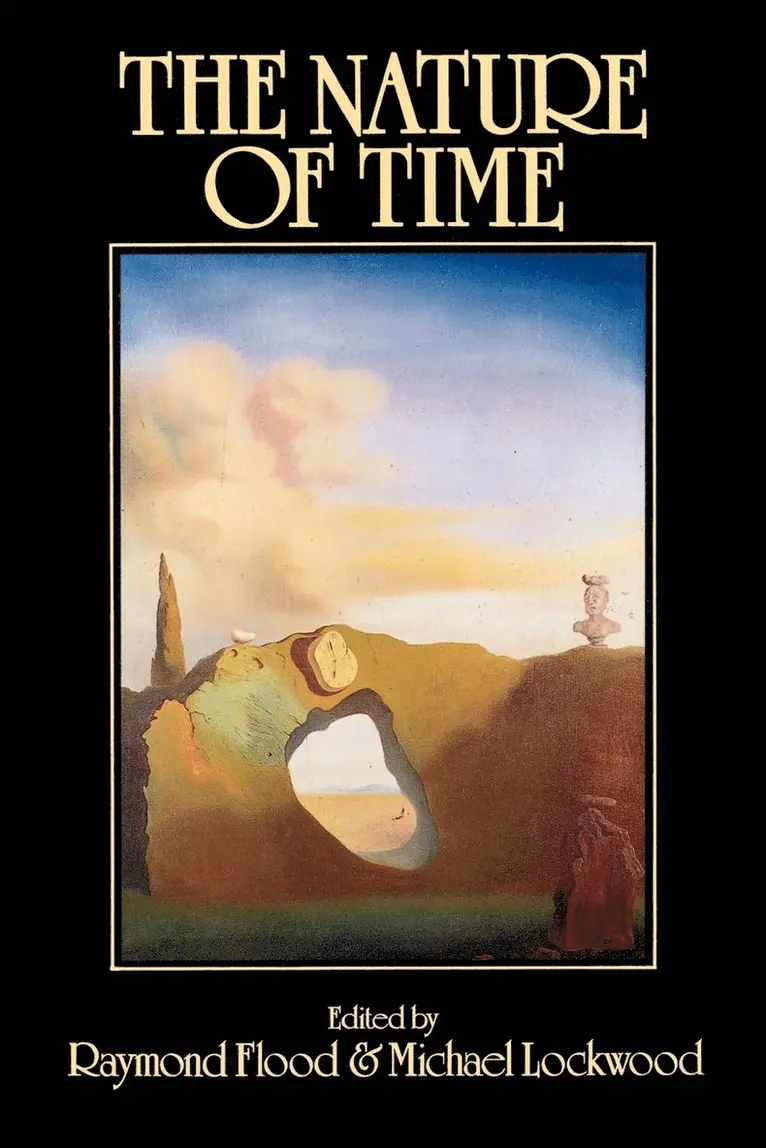
Nature of Time
Av Raymond Flood, Michael Lockwood
Häftad, 1989
553 kr
Lägg i varukorg
Why does time appear to run in only one direction? We remember the past- but why not the future? We can influence the future- but could we, even theoretically, influence the past? Generations of philosophers and theologians, physicists and mathematicians have puzzles and speculated about these and …
Mathematics at the Meridian
The History of Mathematics at Greenwich
Av Raymond Flood, Tony Mann m. fl.
Inbunden, 2019
3070 kr
Lägg i varukorg
Greenwich has been a centre for scientific computing since the foundation of the Royal Observatory in 1675. Early Astronomers Royal gathered astronomical data with the purpose of enabling navigators to compute their longitude at sea. Nevil Maskelyne in the 18th century organised the work of …
Mathematics at the Meridian
The History of Mathematics at Greenwich
Av Mary Croarken, Tony Mann m. fl.
E-bok, 2019
537 kr
Lägg i varukorg
Greenwich has been a centre for scientific computing since the foundation of the Royal Observatory in 1675. Early Astronomers Royal gathered astronomical data with the purpose of enabling navigators to compute their longitude at sea. Nevil Maskelyne in the 18th century organised the work of …
Mathematics at the Meridian
The History of Mathematics at Greenwich
Av Mary Croarken, Tony Mann m. fl.
E-bok, 2019
537 kr
Lägg i varukorg
Greenwich has been a centre for scientific computing since the foundation of the Royal Observatory in 1675. Early Astronomers Royal gathered astronomical data with the purpose of enabling navigators to compute their longitude at sea. Nevil Maskelyne in the 18th century organised the work of …
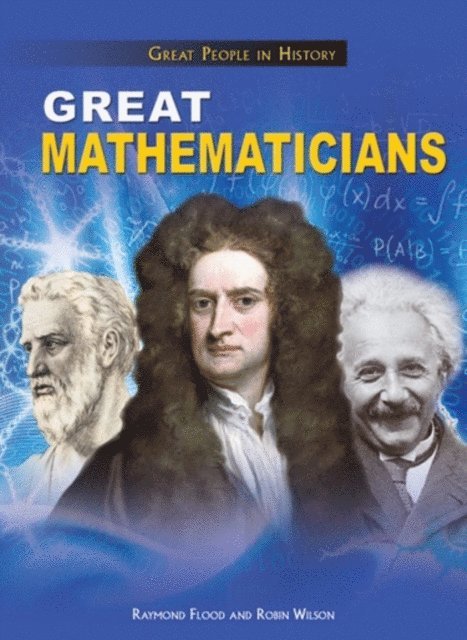
Great Mathematicians
Av Raymond Flood, Rosie Wilson
E-bok, 2012
594 kr
Lägg i varukorg
The achievements of great mathematical thinkers from ancient times to the modern age are examined through engaging, accessible text. Fascinating profiles of time-measurers like the Mayans and Huygens, arithmeticians like Pythagoras and al-Khwarizmi, logicians like Aristotle and Russell, and many …
Isaac Newton
Remarkable Lives
Av Robin Wilson, Raymond Flood
Häftad, 2020
64 kr
Lägg i varukorg
Sir Isaac Newton (1642-1727), mathematician and physicist, is one of the foremost scientific intellects of all time. This fully illustrated, accessible guide to the life and work of Isaac Newton is the perfect introduction to his groundbreaking work on gravity, motion, optics, light, colour and …
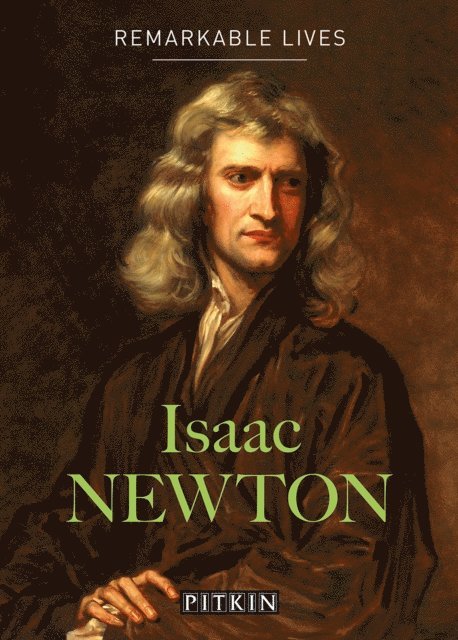
Isaac Newton
Remarkable Lives
Av Raymond Flood, Robin Wilson
E-bok, 2020
65 kr
Lägg i varukorg
Sir Isaac Newton (1642-1727), mathematician and physicist, is one of the foremost scientific intellects of all time. This fully illustrated, accessible guide to the life and work of Isaac Newton is the perfect introduction to his groundbreaking work on gravity, motion, optics, light, colour and …
Great Mathematicians
[Fully Illustrated]
Av Raymond Flood, Robin Wilson
E-bok, 2011
24 kr
Lägg i varukorg
Mathematics pervades our daily lives. It is intimately involved whenever one starts a car, switches on the television, flies on a plane, forecasts the weather, books a holiday on the internet, programmes a computer, navigates heavy traffic, analyses statistical data, or seeks a cure for a disease. …
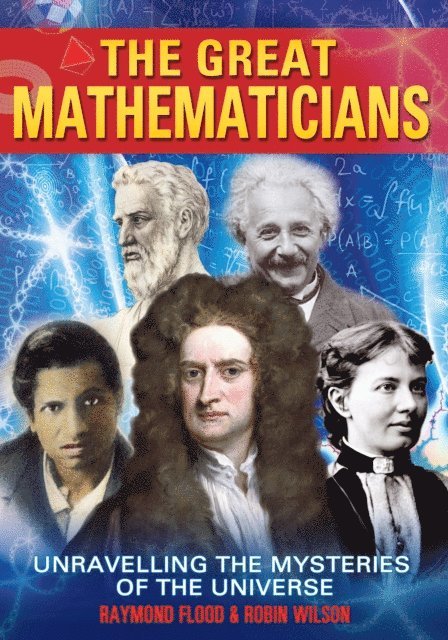
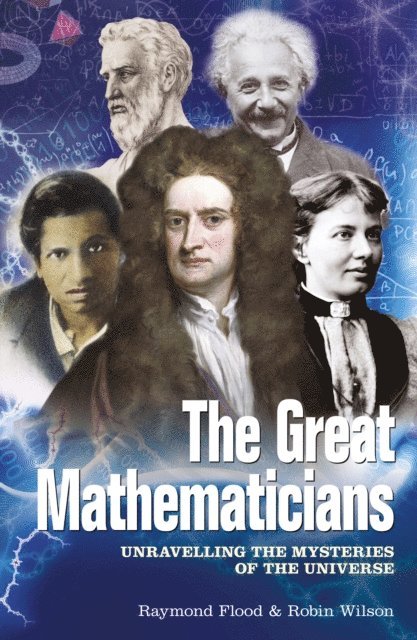
Great Mathematicians
Unravelling the Mysteries of the Universe
Av Robin Wilson, Raymond Flood
E-bok, 2012
15 kr
Lägg i varukorg
Why did Florence Nightingale introduce pie charts? How did Lewis Carroll regard Pythagoras? Who learned calculus from her nursery wallpaper? Spanning from the ancient world to the modern age, The Great Mathematicians tells fascinating and unusual tales of the men and women who transformed …
Möbius und sein Band
Der Aufstieg von Mathematik und Astronomie im Deutschland des 19. Jahrhunderts
Av Robin Wilson, Raymond Flood m. fl.
E-bok, 2013
717 kr
Lägg i varukorg
Möbius und sein Band
Der Aufstieg von Mathematik und Astronomie im Deutschland des 19. Jahrhunderts
Av John Fauvel, Raymond Flood m. fl.
Häftad, 2014
669 kr
Lägg i varukorg