Mary Croarken – författare
Visar alla böcker från författaren Mary Croarken. Handla med fri frakt och snabb leverans.
6 produkter
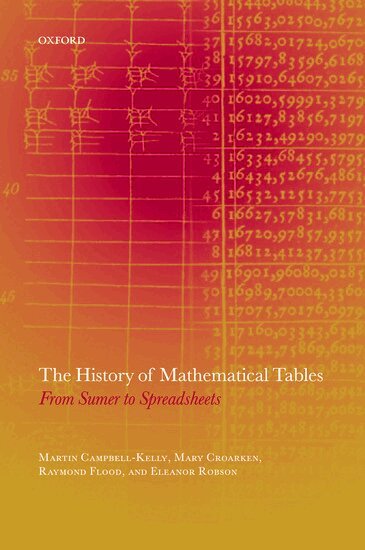
The History of Mathematical Tables
From Sumer to Spreadsheets
Av Martin Campbell-Kelly, Mary Croarken m. fl.
Inbunden, 2003
2856 kr
Lägg i varukorg
The oldest known mathematical table was found in the ancient Sumerian city of Shuruppag in southern Iraq. Since then, tables have been an important feature of mathematical activity; table making and printed tabular matter are important precursors to modern computing and information processing. This …
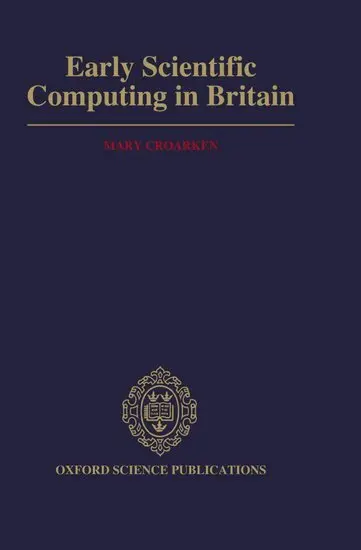
Early Scientific Computing in Britain
Inbunden, 1990
858 kr
Lägg i varukorg
This book is a study of how scientific computation developed in British universities, the scientific civil service, and the armed services during the period 1900-1950. It describes the emergence of computing laboratories in Britain, along with the machines and personalities involved.British …
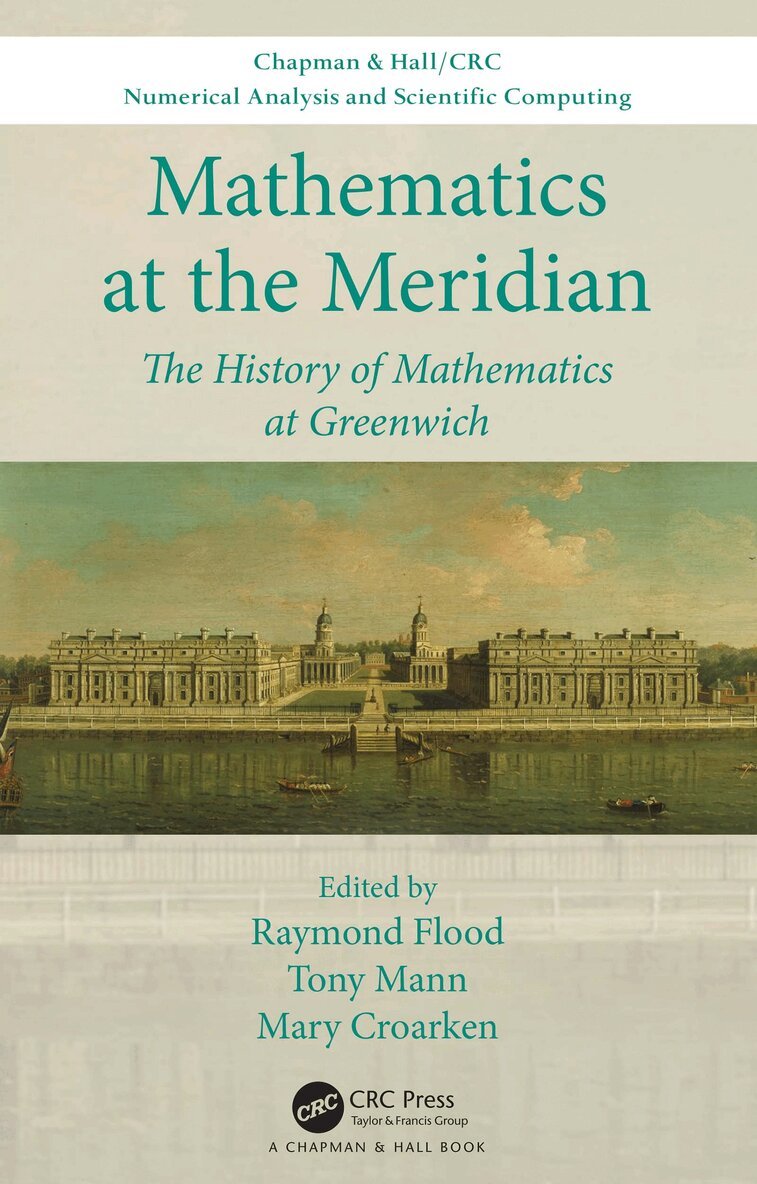
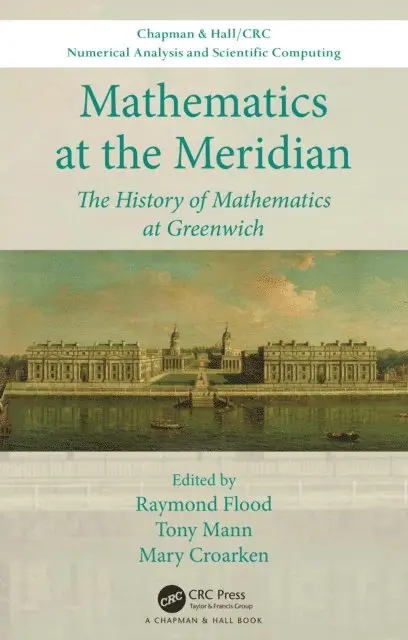
Mathematics at the Meridian
The History of Mathematics at Greenwich
Av Raymond Flood, Tony Mann m. fl.
Häftad, 2019
473 kr
Lägg i varukorg
Greenwich has been a centre for scientific computing since the foundation of the Royal Observatory in 1675. Early Astronomers Royal gathered astronomical data with the purpose of enabling navigators to compute their longitude at sea. Nevil Maskelyne in the 18th century organised the work of …
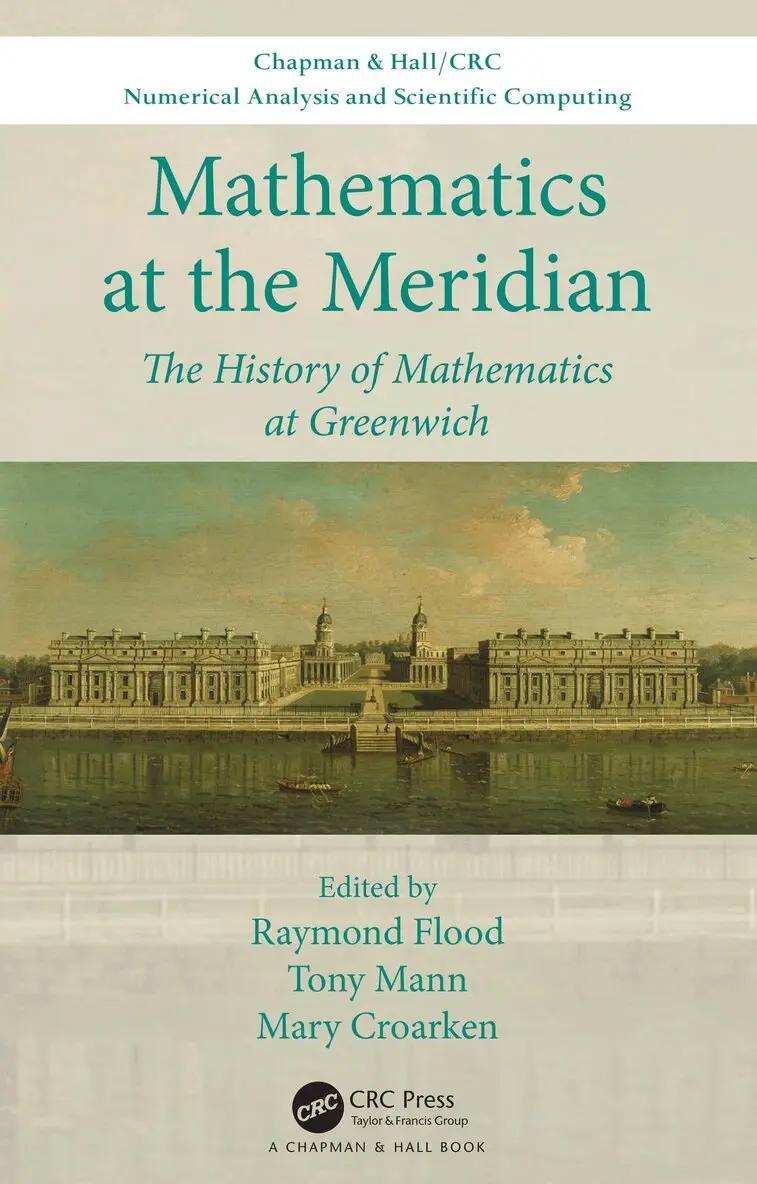
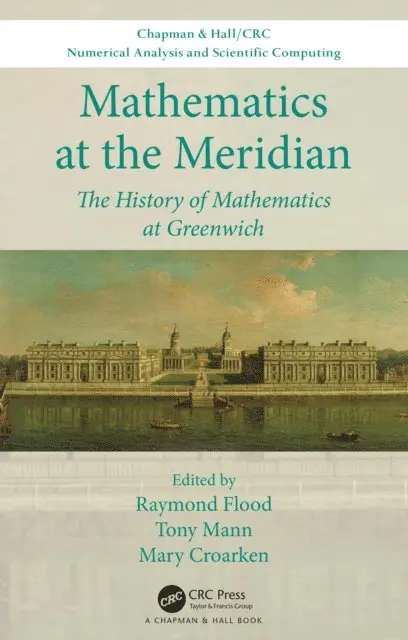
Mathematics at the Meridian
The History of Mathematics at Greenwich
Av Raymond Flood, Tony Mann m. fl.
Inbunden, 2019
3070 kr
Lägg i varukorg
Greenwich has been a centre for scientific computing since the foundation of the Royal Observatory in 1675. Early Astronomers Royal gathered astronomical data with the purpose of enabling navigators to compute their longitude at sea. Nevil Maskelyne in the 18th century organised the work of …
Mathematics at the Meridian
The History of Mathematics at Greenwich
Av Mary Croarken, Tony Mann m. fl.
E-bok, 2019
537 kr
Lägg i varukorg
Greenwich has been a centre for scientific computing since the foundation of the Royal Observatory in 1675. Early Astronomers Royal gathered astronomical data with the purpose of enabling navigators to compute their longitude at sea. Nevil Maskelyne in the 18th century organised the work of …
Mathematics at the Meridian
The History of Mathematics at Greenwich
Av Mary Croarken, Tony Mann m. fl.
E-bok, 2019
537 kr
Lägg i varukorg
Greenwich has been a centre for scientific computing since the foundation of the Royal Observatory in 1675. Early Astronomers Royal gathered astronomical data with the purpose of enabling navigators to compute their longitude at sea. Nevil Maskelyne in the 18th century organised the work of …