Raymond Kwun-Sun Lau – författare
Visar alla böcker från författaren Raymond Kwun-Sun Lau. Handla med fri frakt och snabb leverans.
8 produkter
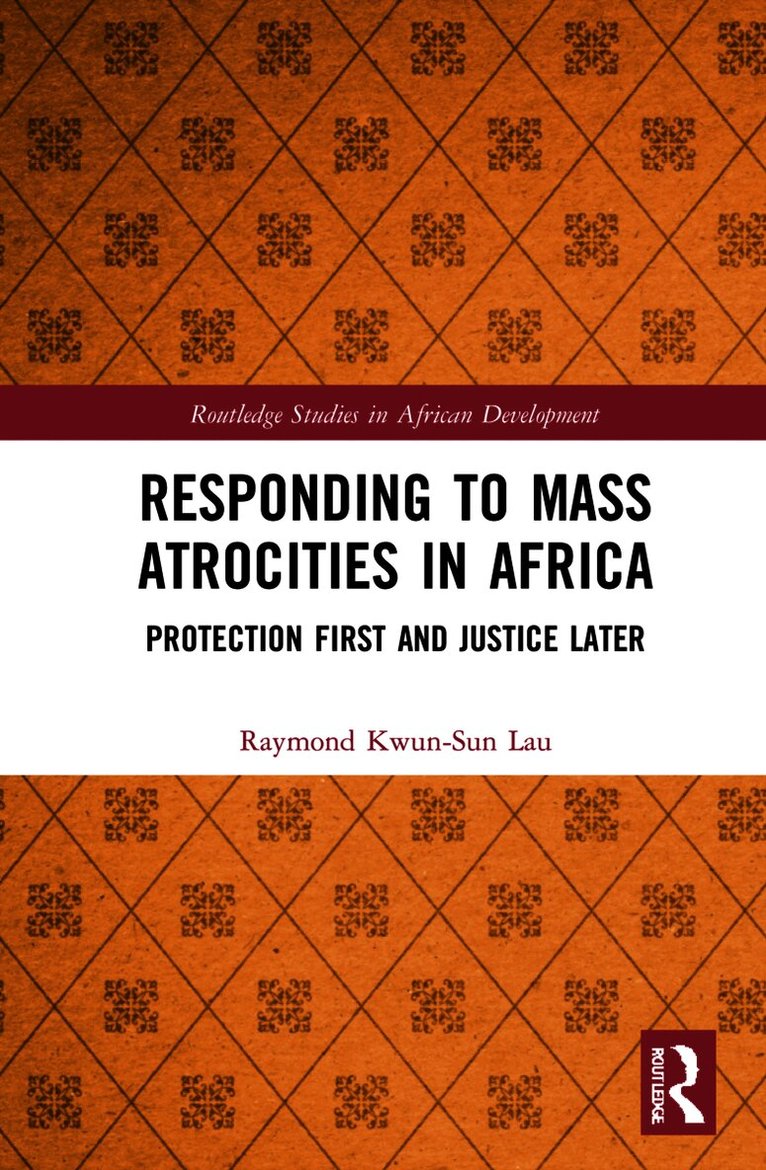
Responding to Mass Atrocities in Africa
Protection First and Justice Later
Inbunden, 2021
2578 kr
Lägg i varukorg
This book explores the relationship between the Responsibility to Protect (R2P) and the International Criminal Court (ICC), challenging the assumption that they are always mutually reinforcing or complementary, and examining instead the many tensions which arise between the immediate imperative of …
Responding to Mass Atrocities in Africa
Protection First and Justice Later
E-bok, 2021
733 kr
Lägg i varukorg
This book explores the relationship between the Responsibility to Protect (R2P) and the International Criminal Court (ICC), challenging the assumption that they are always mutually reinforcing or complementary, and examining instead the many tensions which arise between the immediate imperative of …
Responding to Mass Atrocities in Africa
Protection First and Justice Later
E-bok, 2021
733 kr
Lägg i varukorg
This book explores the relationship between the Responsibility to Protect (R2P) and the International Criminal Court (ICC), challenging the assumption that they are always mutually reinforcing or complementary, and examining instead the many tensions which arise between the immediate imperative of …
Responding to Mass Atrocities in Africa
Protection First and Justice Later
Häftad, 2023
638 kr
Lägg i varukorg
This book explores the relationship between the Responsibility to Protect (R2P) and the International Criminal Court (ICC), challenging the assumption that they are always mutually reinforcing or complementary, and examining instead the many tensions which arise between the immediate imperative of …
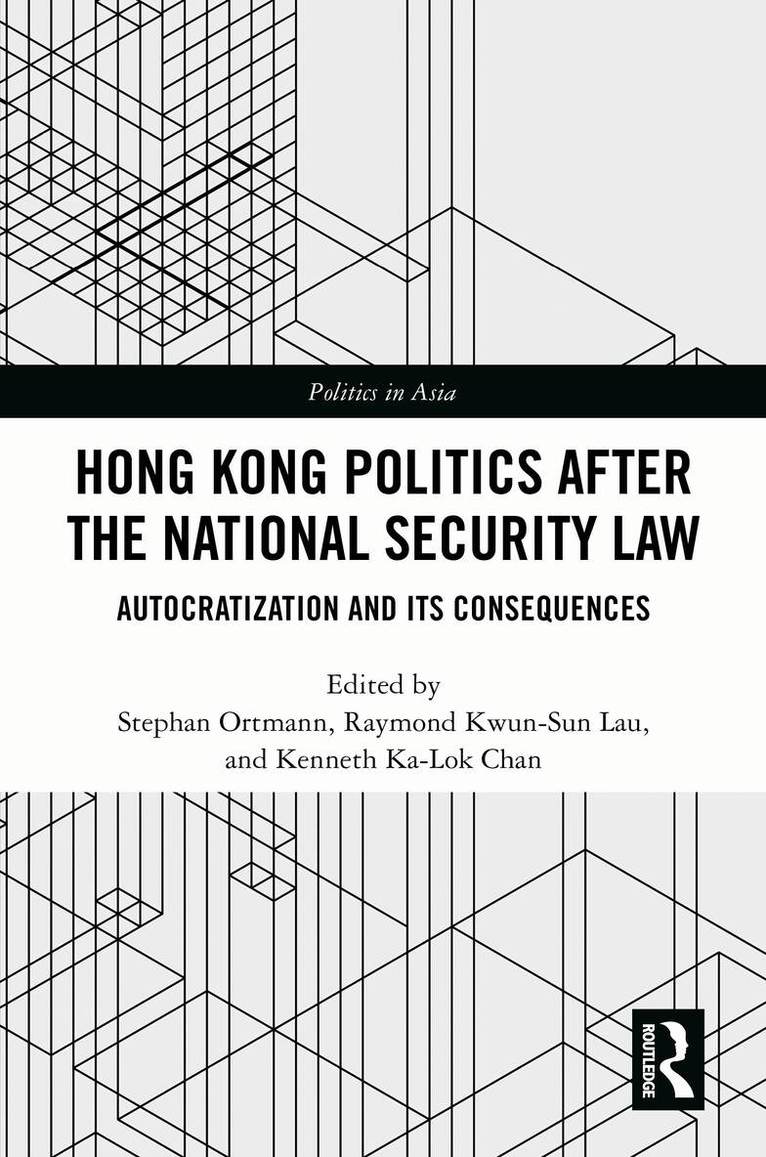
Hong Kong Politics after the National Security Law
Autocratization and Its Consequences
Av Stephan Ortmann, Raymond Kwun-Sun Lau m. fl.
Inbunden, 2025
2317 kr
Lägg i varukorg
Ortmann, Lau, and Chan together with the contributors provide an innovative assessment of the impact of the National Security Law on Hong Kong politics. The law was introduced by the Chinese government in 2020 and has since fundamentally transformed the political landscape of the former British …
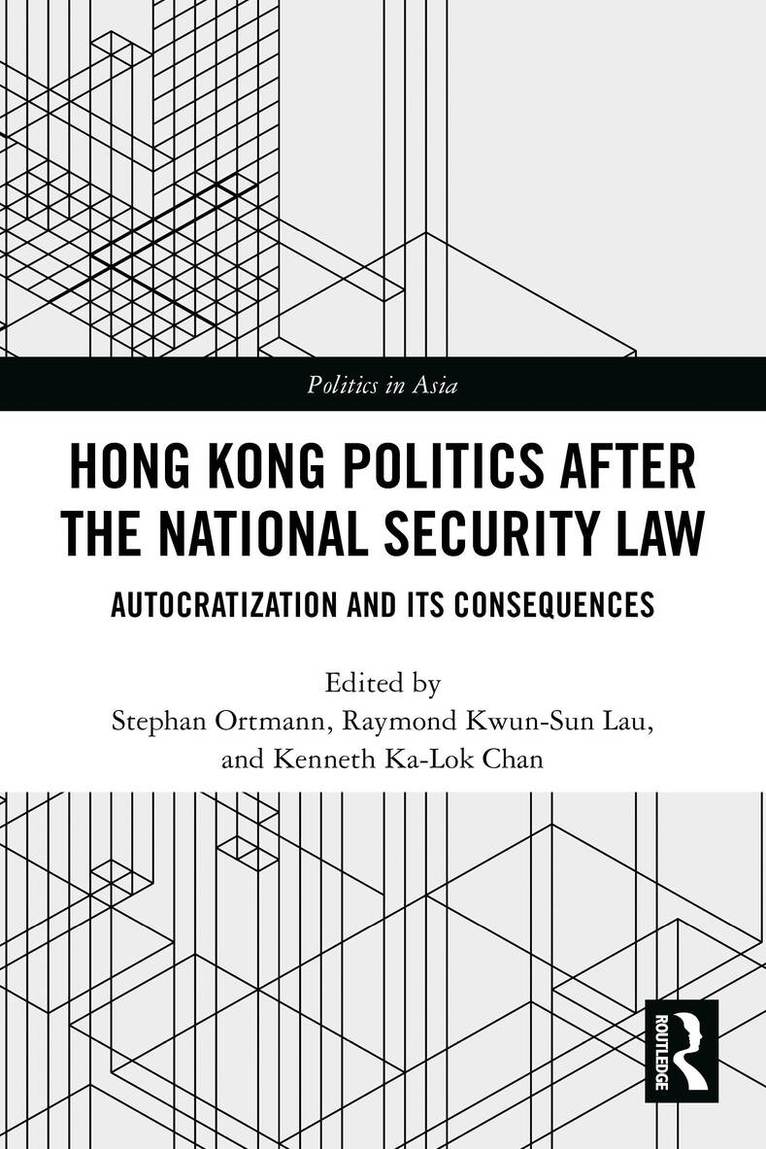
Hong Kong Politics after the National Security Law
Autocratization and Its Consequences
Av Stephan Ortmann, Raymond Kwun-Sun Lau m. fl.
Häftad, 2026
651 kr
Lägg i varukorg
Ortmann, Lau, and Chan together with the contributors provide an innovative assessment of the impact of the National Security Law on Hong Kong politics. The law was introduced by the Chinese government in 2020 and has since fundamentally transformed the political landscape of the former British …
Hong Kong Politics after the National Security Law
Autocratization and Its Consequences
Av Kenneth Ka-Lok Chan, Raymond Kwun-Sun Lau m. fl.
E-bok, 2025
745 kr
Lägg i varukorg
Ortmann, Lau, and Chan together with the contributors provide an innovative assessment of the impact of the National Security Law on Hong Kong politics. The law was introduced by the Chinese government in 2020 and has since fundamentally transformed the political landscape of the former British …
Hong Kong Politics after the National Security Law
Autocratization and Its Consequences
Av Kenneth Ka-Lok Chan, Raymond Kwun-Sun Lau m. fl.
E-bok, 2025
745 kr
Lägg i varukorg
Ortmann, Lau, and Chan together with the contributors provide an innovative assessment of the impact of the National Security Law on Hong Kong politics. The law was introduced by the Chinese government in 2020 and has since fundamentally transformed the political landscape of the former British …