R.B. McKenzie - Böcker
Visar alla böcker från författaren R.B. McKenzie. Handla med fri frakt och snabb leverans.
4 produkter
4 produkter
1 578 kr
Skickas inom 10-15 vardagar
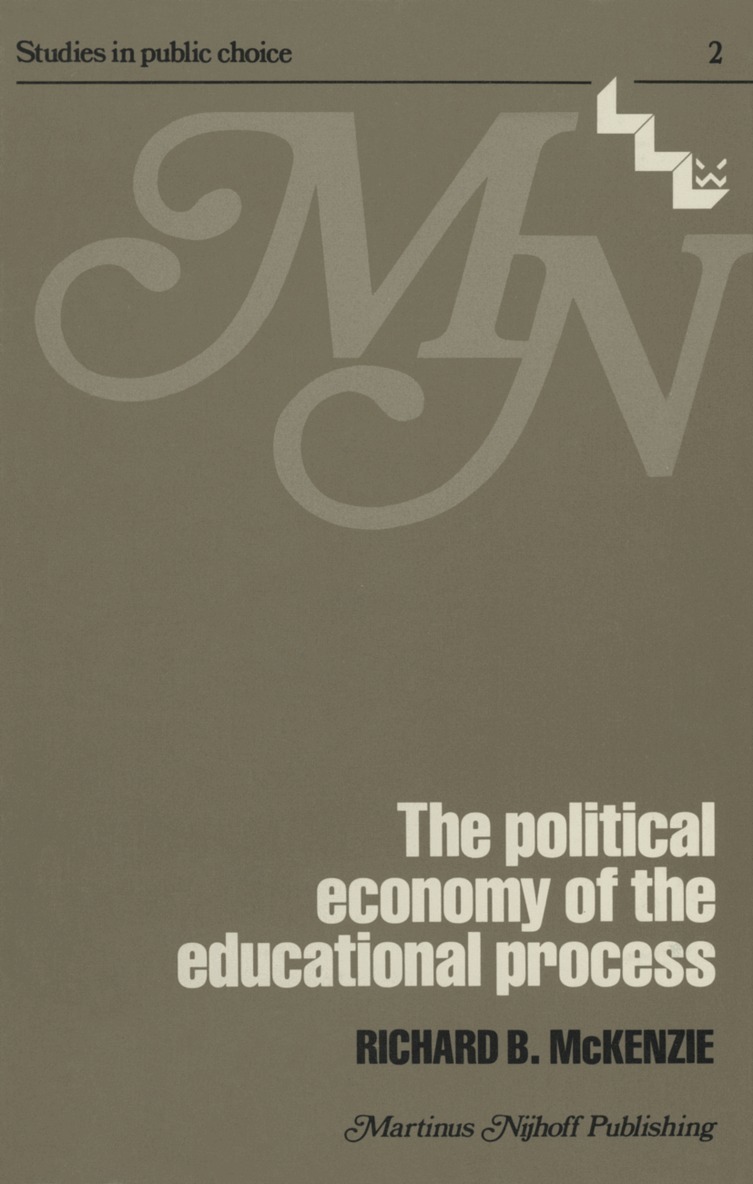
The purpose of The Political Economy of the Educational Process is to demonstrate in an elemental way what economics can contribute to our understanding of how education occurs. Although in ways similar, the book is significantly different from other studies in the economics of education. Other works are primarily concerned with the effects which education (or, to use the economist's jargon, human capital) has on production, market efficiency, and the distri bution of income. The central concern of this book is how and why the student goes about acquiring whatever human capital he wishes and how the institutional setting of the university influences the amount of human capital that the student acquires. This book deals with the learning process and, therefore, draws upon an earlier book written by Robert Staaf and myself. 1 However, the "economic theory of learning," which Staaf and I developed earlier in very pre cise mathematical terms, is extended here through a fuller treat ment of the political environment in which education occurs. A major concern of this work is to make the economic analysis easily understood by professional educators and social scientists generally. To accomplish this objective, Chapter 2 develops for the non economicists the tools of analysis which are used throughout the book. Hopefully, by shying away from esoteric theory and by try ing to make the discussion provocative and informative, the book 1. See Richard B. McKenzie and Robert J.
1 096 kr
Skickas inom 10-15 vardagar
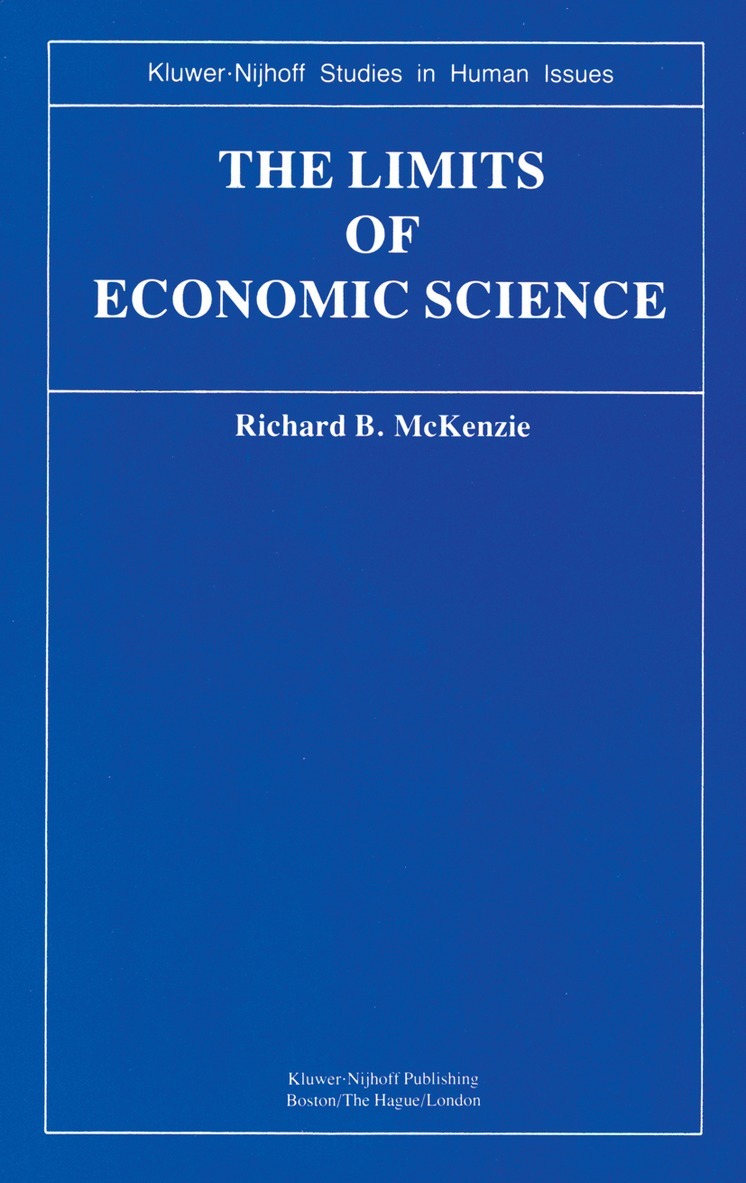
The essays in this volume were a challenge to me to write. I am an economist to the core, inclined to evaluate most observed behavior and public policies with conventional neoclassical theory. The essays represent my attempt to come to grips with the meaning and importance of what I try to do as a professional economist. They reflect my attempt to acquire a new and improved understanding of the usefulness and limitations of the writings of professional economists, especially my own. In this regard, although I hope others will find the thoughts useful, the volume represents a personal statement of how one economist views his and others' work. For that reason the discussion is often openly normative, tinged with the conviction that social discourse is more than costs and benefits and that economics cannot be fully evaluated by the methods - economic methods - that are the subject of the evaluation. These essays could not have been written without considerable encouragement and help from colleagues and friends. The following people are recognized for having read one or more chapters and for having contributed critical, substantive comments: Diana Bailey, Wilfred Beckerman, Geoffrey Brennan, William Briet, James Buchanan, Delores Martin, David Maxwell, Mary Ann McKenzie, Warren Samuels, Robert Staaf, Richard Wagner, Karen Vaughn, and Bruce Yandle. I am very much in their debt. However, they should not be held accountable for any of the positions taken and any errors that may remain.
1 096 kr
Skickas inom 10-15 vardagar
The essays in this volume were a challenge to me to write. I am an economist to the core, inclined to evaluate most observed behavior and public policies with conventional neoclassical theory. The essays represent my attempt to come to grips with the meaning and importance of what I try to do as a professional economist. They reflect my attempt to acquire a new and improved understanding of the usefulness and limitations of the writings of professional economists, especially my own. In this regard, although I hope others will find the thoughts useful, the volume represents a personal statement of how one economist views his and others' work. For that reason the discussion is often openly normative, tinged with the conviction that social discourse is more than costs and benefits and that economics cannot be fully evaluated by the methods - economic methods - that are the subject of the evaluation. These essays could not have been written without considerable encouragement and help from colleagues and friends. The following people are recognized for having read one or more chapters and for having contributed critical, substantive comments: Diana Bailey, Wilfred Beckerman, Geoffrey Brennan, William Briet, James Buchanan, Delores Martin, David Maxwell, Mary Ann McKenzie, Warren Samuels, Robert Staaf, Richard Wagner, Karen Vaughn, and Bruce Yandle. I am very much in their debt. However, they should not be held accountable for any of the positions taken and any errors that may remain.
1 578 kr
Skickas inom 10-15 vardagar
The purpose of The Political Economy of the Educational Process is to demonstrate in an elemental way what economics can contribute to our understanding of how education occurs. Although in ways similar, the book is significantly different from other studies in the economics of education. Other works are primarily concerned with the effects which education (or, to use the economist's jargon, human capital) has on production, market efficiency, and the distri bution of income. The central concern of this book is how and why the student goes about acquiring whatever human capital he wishes and how the institutional setting of the university influences the amount of human capital that the student acquires. This book deals with the learning process and, therefore, draws upon an earlier book written by Robert Staaf and myself. 1 However, the "economic theory of learning," which Staaf and I developed earlier in very pre cise mathematical terms, is extended here through a fuller treat ment of the political environment in which education occurs. A major concern of this work is to make the economic analysis easily understood by professional educators and social scientists generally. To accomplish this objective, Chapter 2 develops for the non economicists the tools of analysis which are used throughout the book. Hopefully, by shying away from esoteric theory and by try ing to make the discussion provocative and informative, the book 1. See Richard B. McKenzie and Robert J.