R.D. Gallie – författare
Visar alla böcker från författaren R.D. Gallie. Handla med fri frakt och snabb leverans.
6 produkter
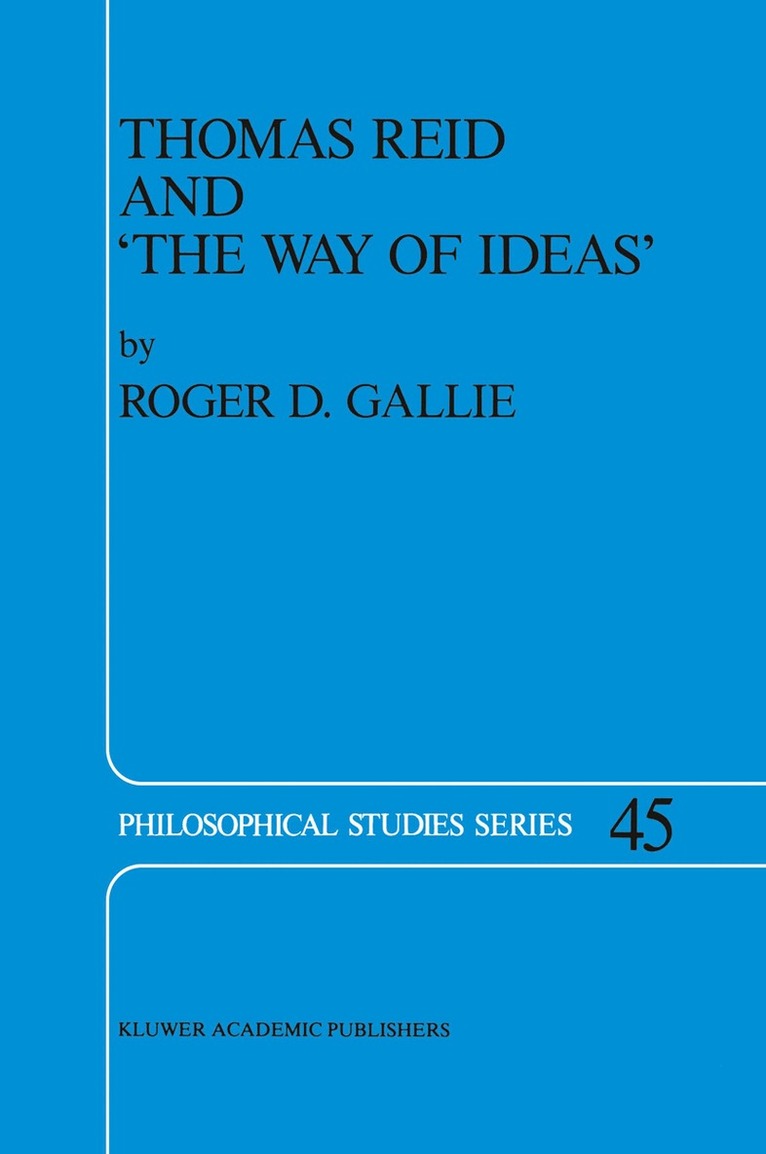
Thomas Reid and ‘The Way of Ideas’
Av R.D. Gallie
Inbunden, 1989
1641 kr
Lägg i varukorg
This book is meant to serve as an introduction to the philosophy of Thomas Reid by way of a study of certain themes central to that philosophy as we find it expounded in his extensive and influential published writings. The choice of these themes inevitably reflects philosophical interests of the …
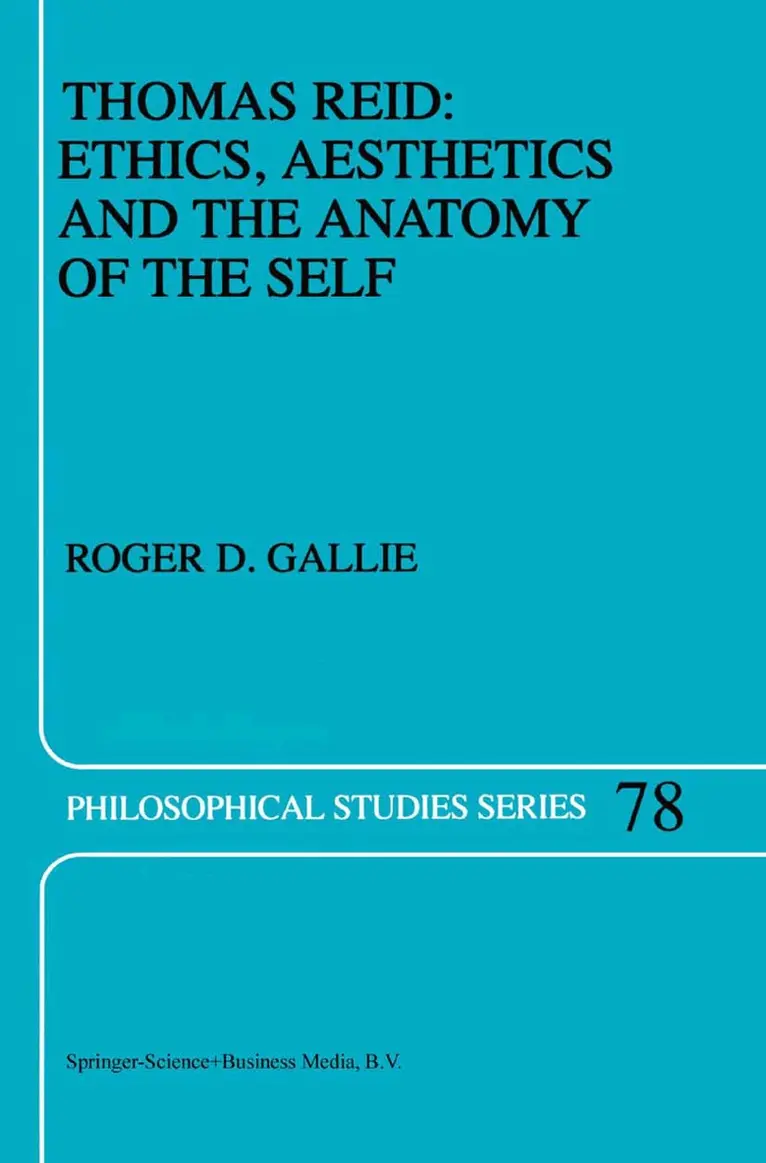
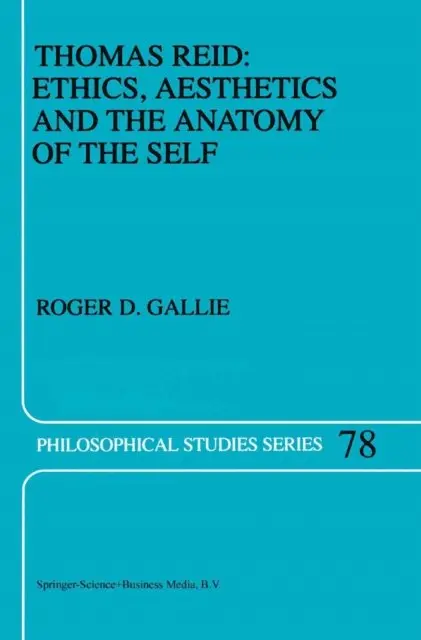
Thomas Reid: Ethics, Aesthetics and the Anatomy of the Self
Av R.D. Gallie
Inbunden, 1998
1096 kr
Lägg i varukorg
I: BIOGRAPHICAL SKETCH OF REID Thomas Reid (1710-96) was born at Strachan in Kincardineshire, Scotland, not far from Aberdeen. Reid was fortunate in his family connections. For instance his mother's brother was David Gregory, Savilian professor of Astronomy at Oxford and close friend of Sir Isaac …
Thomas Reid: Ethics, Aesthetics and the Anatomy of the Self
Av R.D. Gallie
Häftad, 2011
1093 kr
Lägg i varukorg
This book is a critical exposition of Reid's philosophical anatomy of the self, his moral philosophy and his aesthetics, and is aimed at an advanced undergraduate and graduate readership. Those familiar with Reid scholarship will be only too aware of how little attention has been paid of late to …
Thomas Reid and 'The Way of Ideas'
Av R.D. Gallie
E-bok, 2012
2044 kr
Lägg i varukorg
This book is meant to serve as an introduction to the philosophy of Thomas Reid by way of a study of certain themes central to that philosophy as we find it expounded in his extensive and influential published writings. The choice of these themes inevitably reflects philosophical interests of the …
Thomas Reid and ‘The Way of Ideas’
Av R.D. Gallie
Häftad, 2011
1636 kr
Lägg i varukorg
This book is meant to serve as an introduction to the philosophy of Thomas Reid by way of a study of certain themes central to that philosophy as we find it expounded in his extensive and influential published writings. The choice of these themes inevitably reflects philosophical interests of the …
Thomas Reid: Ethics, Aesthetics and the Anatomy of the Self
Av R.D. Gallie
E-bok, 2013
1459 kr
Lägg i varukorg
I: BIOGRAPHICAL SKETCH OF REID Thomas Reid (1710-96) was born at Strachan in Kincardineshire, Scotland, not far from Aberdeen. Reid was fortunate in his family connections. For instance his mother''s brother was David Gregory, Savilian professor of Astronomy at Oxford and close friend of Sir Isaac …