Rebecca E. Biron – Författare
Visar alla böcker från författaren Rebecca E. Biron. Handla med fri frakt och snabb leverans.
4 produkter
4 produkter
1 299 kr
Skickas inom 5-8 vardagar
Rebecca Biron breaks new ground in this study of masculinity, violence, and the strategic construction of collective political identities in twentieth-century Latin American fiction. By engaging current sociological, psychoanalytic, and feminist theories, Murder and Masculinity analyzes the cliche of proving virility through violence against women. Biron develops her argument through close readings of five works: Jorge Luis Borges's "La intrusa," Armonia Somer's "El despojo," Clarice Lispector's A Maca no Escuro, Manuel Puig's The Buenos Aires Affair, and Reinaldo Arenas's El Asalto. Although men murdering women is often interpreted as nothing more than machista misogyny, Biron argues that the five narratives addressed in this book show that healed masculinities are essential to the achievement of cultural identity and political autonomy in Latin America.The introduction to this study deftly situates Biron's work in relation to previous theoretical arguments on the social and political dimensions of Latin American writing. The five subsequent chapters offer superb analyses of the individual texts. Like their male protagonists who experiment with the psychological and legal extremes of gender division, these narratives risk nonconformity to the laws of genre in their quest for liberation from violent social and literary conventions. In combining elements of detective stories, crime narratives, psychological case studies, and magical or grotesque realism, they offer metafictional commentary on a network of discourses that confuses images of masculinity, national identity, and political autonomy in postcolonial Latin America.
658 kr
Skickas inom 5-8 vardagar
Rebecca Biron breaks new ground in this study of masculinity, violence, and the strategic construction of collective political identities in twentieth-century Latin American fiction. By engaging current sociological, psychoanalytic, and feminist theories, Murder and Masculinity analyzes the cliche of proving virility through violence against women. Biron develops her argument through close readings of five works: Jorge Luis Borges's "La intrusa," Armonia Somer's "El despojo," Clarice Lispector's " A Maca no Escuro," Manuel Puig's " The Buenos Aires Affair," and Reinaldo Arenas's "El Asalto." Although men murdering women is often interpreted as nothing more than machista misogyny, Biron argues that the five narratives addressed in this book show that healed masculinities are essential to the achievement of cultural identity and political autonomy in Latin America.The introduction to this study deftly situates Biron's work in relation to previous theoretical arguments on the social and political dimensions of Latin American writing. The five subsequent chapters offer superb analyses of the individual texts. Like their male protagonists who experiment with the psychological and legal extremes of gender division, these narratives risk nonconformity to the laws of genre in their quest for liberation from violent social and literary conventions. In combining elements of detective stories, crime narratives, psychological case studies, and magical or grotesque realism, they offer metafictional commentary on a network of discourses that confuses images of masculinity, national identity, and political autonomy in postcolonial Latin America.
1 698 kr
Skickas inom 10-15 vardagar
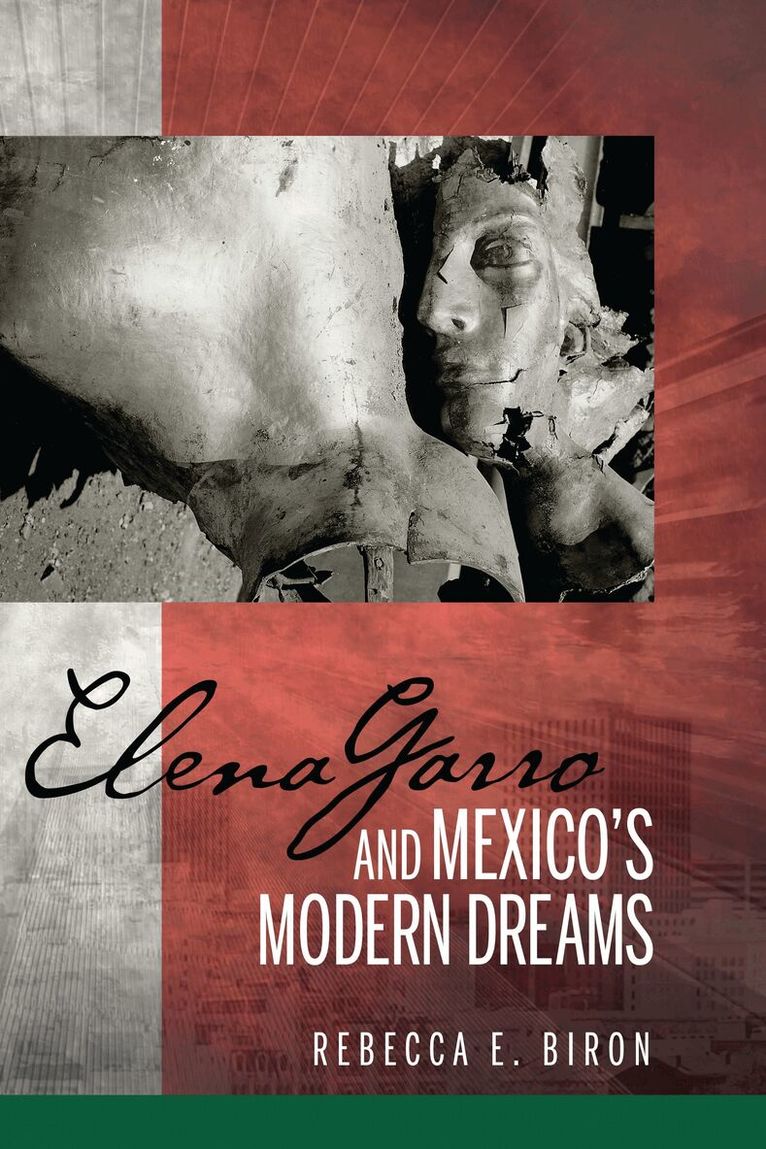
Elena Garro and Mexico's Modern Dreams uses Elena Garro’s eccentric life and work as a lens through which to examine mid-twentieth-century Mexican intellectuals' desire to reconcile mexicanidad with modernidad. The famously scandalous first wife of Nobel Prize winner poet Octavio Paz, and an award-winning author in her own right, Garro constructed a mysterious and often contradictory persona through her very public participation in Mexican political conflicts. Herself an anxious and contentious Mexican writer, Elena Garro elicited profound political and aesthetic anxiety in her Mexican readers. She confused the personal and the public in her creative fictions as well as in her vision of Mexican modernity. This violation of key distinctions rendered her largely illegible to her contemporaries. That illegibility serves as a symptom of unacknowledged desires that motivate twentieth-century views of national modernity. Taken together, Garro's public persona and critical perspective expose the anxieties regarding ethnicity, gender, economic class, and professional identity that define Mexican modernity. Blending cultural studies and detailed literary analysis with political and intellectual history, Mexico's Modern Dreams argues that, in addition to the intriguing gossip she elicited in literary and political circles, Garro produced a radical critique of Mexican modernity. Her critique applies as well to the nation's twenty-first-century crisis of globalization, state power, and pervasive violence.
853 kr
Skickas inom 10-15 vardagar
Elena Garro and Mexico's Modern Dreams uses Elena Garro’s eccentric life and work as a lens through which to examine mid-twentieth-century Mexican intellectuals' desire to reconcile mexicanidad with modernidad. The famously scandalous first wife of Nobel Prize winner poet Octavio Paz, and an award-winning author in her own right, Garro constructed a mysterious and often contradictory persona through her very public participation in Mexican political conflicts. Herself an anxious and contentious Mexican writer, Elena Garro elicited profound political and aesthetic anxiety in her Mexican readers. She confused the personal and the public in her creative fictions as well as in her vision of Mexican modernity. This violation of key distinctions rendered her largely illegible to her contemporaries. That illegibility serves as a symptom of unacknowledged desires that motivate twentieth-century views of national modernity. Taken together, Garro's public persona and critical perspective expose the anxieties regarding ethnicity, gender, economic class, and professional identity that define Mexican modernity. Blending cultural studies and detailed literary analysis with political and intellectual history, Mexico's Modern Dreams argues that, in addition to the intriguing gossip she elicited in literary and political circles, Garro produced a radical critique of Mexican modernity. Her critique applies as well to the nation's twenty-first-century crisis of globalization, state power, and pervasive violence.