Rebecca Ellis - Böcker
Visar alla böcker från författaren Rebecca Ellis. Handla med fri frakt och snabb leverans.
5 produkter
5 produkter
2 088 kr
Skickas inom 10-15 vardagar
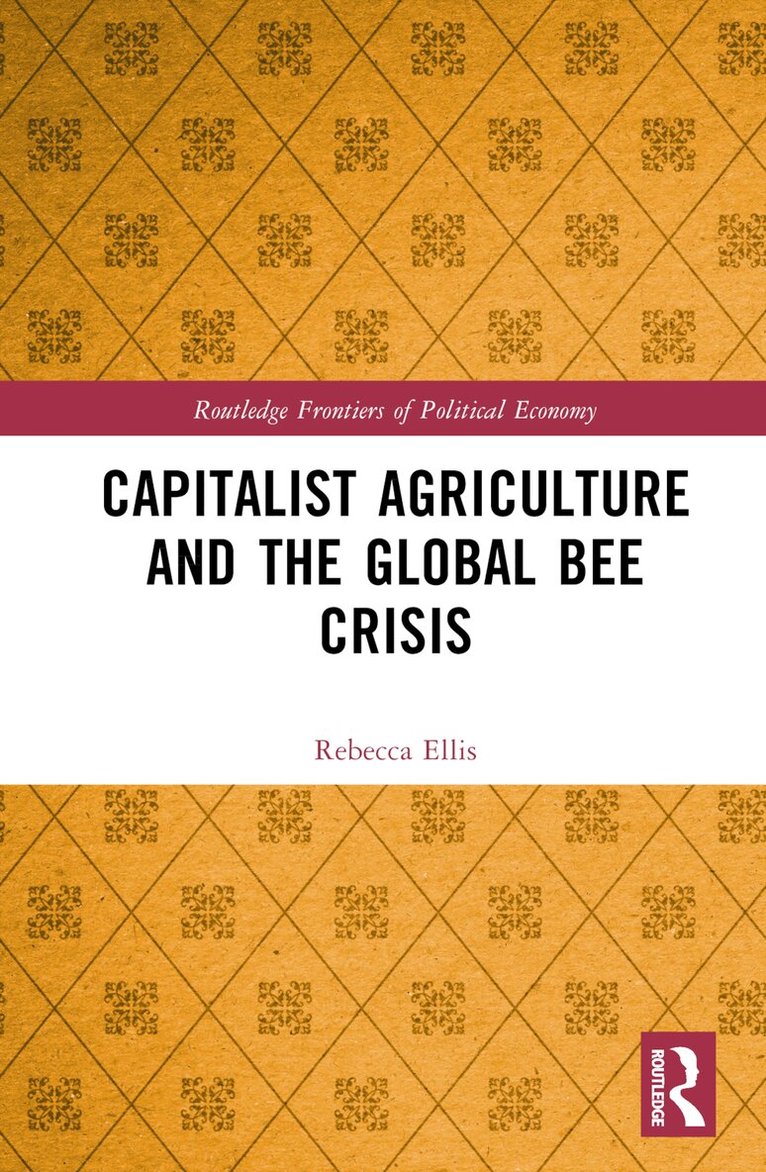
Capitalist agriculture relies heavily on the pollination work of bees, but this system harms bees in innumerable ways. Indeed, human agriculture is one of the main culprits for the declining populations of wild bees and the declining health of honeybees. This book presents a political ecology of pollination that critically examines how managed honey bees and wild bees are harmed by capitalist agriculture.The book focuses on the three most urgent problems: the standardization and simplification of landscapes through monocultures; the use of pesticides including neonicotinoids, other insecticides, herbicides, and fungicides; and the embeddedness of commercial, migratory beekeeping in the capitalist agriculture system which, among other things, has the potential to spread pests and pathogens across continents. At the heart of this crisis is the power and influence that a small group of agrochemical corporations have over national and international agricultural policy. The book argues for an interspecies alliance of small-scale farmers, bee advocates, beekeepers, environmentalists, and bees themselves, along with a vision for an agricultural system that nurtures multispecies flourishing. This book will be of significant interest to readers of political ecology, animal geography, environmental anthropology, food system studies, and critical animal studies.
576 kr
Skickas inom 10-15 vardagar
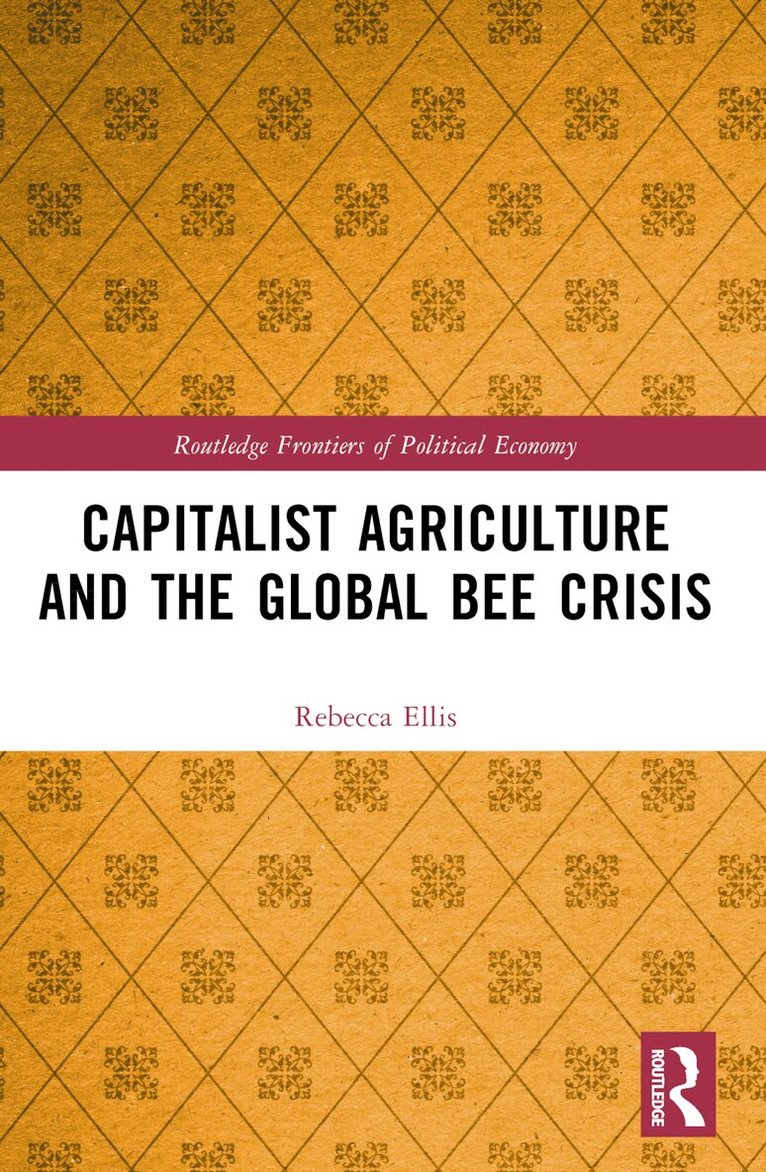
Capitalist agriculture relies heavily on the pollination work of bees, but this system harms bees in innumerable ways. Indeed, human agriculture is one of the main culprits for the declining populations of wild bees and the declining health of honeybees. This book presents a political ecology of pollination that critically examines how managed honey bees and wild bees are harmed by capitalist agriculture.The book focuses on the three most urgent problems: the standardization and simplification of landscapes through monocultures; the use of pesticides including neonicotinoids, other insecticides, herbicides, and fungicides; and the embeddedness of commercial, migratory beekeeping in the capitalist agriculture system which, among other things, has the potential to spread pests and pathogens across continents. At the heart of this crisis is the power and influence that a small group of agrochemical corporations have over national and international agricultural policy. The book argues for an interspecies alliance of small-scale farmers, bee advocates, beekeepers, environmentalists, and bees themselves, along with a vision for an agricultural system that nurtures multispecies flourishing. This book will be of significant interest to readers of political ecology, animal geography, environmental anthropology, food system studies, and critical animal studies.
Barcoding Nature
Shifting Cultures of Taxonomy in an Age of Biodiversity Loss
Inbunden, Engelska, 2013
2 289 kr
Skickas inom 10-15 vardagar
DNA Barcoding has been promoted since 2003 as a new, fast, digital genomics-based means of identifying natural species based on the idea that a small standard fragment of any organism’s genome (a so-called ‘micro-genome’) can faithfully identify and help to classify every species on the planet. The fear that species are becoming extinct before they have ever been known fuels barcoders, and the speed, scope, economy and ‘user-friendliness’ claimed for DNA barcoding, as part of the larger ferment around the ‘genomics revolution’, has also encouraged promises that it could inspire humanity to reverse its biodiversity-destructive habits.This book is based on six years of ethnographic research on changing practices in the identification and classification of natural species. Informed both by Science and Technology Studies (STS) and the anthropology of science, the authors analyse DNA barcoding in the context of a sense of crisis – concerning global biodiversity loss, but also the felt inadequacy of taxonomic science to address such loss. The authors chart the specific changes that this innovation is propelling in the collecting, organizing, analyzing, and archiving of biological specimens and biodiversity data. As they do so they highlight the many questions, ambiguities and contradictions that accompany the quest to create a genomics-based environmental technoscience dedicated to biodiversity protection. They ask what it might mean to recognise ambiguity, contradiction, and excess more publicly as a constitutive part of this and other genomic technosciences.Barcoding Nature will be of interest to students and scholars of sociology of science, science and technology studies, politics of the environment, genomics and post-genomics, philosophy and history of biology, and the anthropology of science.
563 kr
Skickas inom 10-15 vardagar
DNA Barcoding has been promoted since 2003 as a new, fast, digital genomics-based means of identifying natural species based on the idea that a small standard fragment of any organism’s genome (a so-called ‘micro-genome’) can faithfully identify and help to classify every species on the planet. The fear that species are becoming extinct before they have ever been known fuels barcoders, and the speed, scope, economy and ‘user-friendliness’ claimed for DNA barcoding, as part of the larger ferment around the ‘genomics revolution’, has also encouraged promises that it could inspire humanity to reverse its biodiversity-destructive habits.This book is based on six years of ethnographic research on changing practices in the identification and classification of natural species. Informed both by Science and Technology Studies (STS) and the anthropology of science, the authors analyse DNA barcoding in the context of a sense of crisis – concerning global biodiversity loss, but also the felt inadequacy of taxonomic science to address such loss. The authors chart the specific changes that this innovation is propelling in the collecting, organizing, analyzing, and archiving of biological specimens and biodiversity data. As they do so they highlight the many questions, ambiguities and contradictions that accompany the quest to create a genomics-based environmental technoscience dedicated to biodiversity protection. They ask what it might mean to recognise ambiguity, contradiction, and excess more publicly as a constitutive part of this and other genomic technosciences.Barcoding Nature will be of interest to students and scholars of sociology of science, science and technology studies, politics of the environment, genomics and post-genomics, philosophy and history of biology, and the anthropology of science.
561 kr
Tillfälligt slut
DNA Barcoding has been promoted since 2003 as a new, fast, digital genomics-based means of identifying natural species based on the idea that a small standard fragment of any organism’s genome (a so-called ‘micro-genome’) can faithfully identify and help to classify every species on the planet. The fear that species are becoming extinct before they have ever been known fuels barcoders, and the speed, scope, economy and ‘user-friendliness’ claimed for DNA barcoding, as part of the larger ferment around the ‘genomics revolution’, has also encouraged promises that it could inspire humanity to reverse its biodiversity-destructive habits.This book is based on six years of ethnographic research on changing practices in the identification and classification of natural species. Informed both by Science and Technology Studies (STS) and the anthropology of science, the authors analyse DNA barcoding in the context of a sense of crisis – concerning global biodiversity loss, but also the felt inadequacy of taxonomic science to address such loss. The authors chart the specific changes that this innovation is propelling in the collecting, organizing, analyzing, and archiving of biological specimens and biodiversity data. As they do so they highlight the many questions, ambiguities and contradictions that accompany the quest to create a genomics-based environmental technoscience dedicated to biodiversity protection. They ask what it might mean to recognise ambiguity, contradiction, and excess more publicly as a constitutive part of this and other genomic technosciences.Barcoding Nature will be of interest to students and scholars of sociology of science, science and technology studies, politics of the environment, genomics and post-genomics, philosophy and history of biology, and the anthropology of science.