Rebecca Kobrin – författare
Visar alla böcker från författaren Rebecca Kobrin. Handla med fri frakt och snabb leverans.
6 produkter
6 produkter
985 kr
Skickas inom 5-8 vardagar
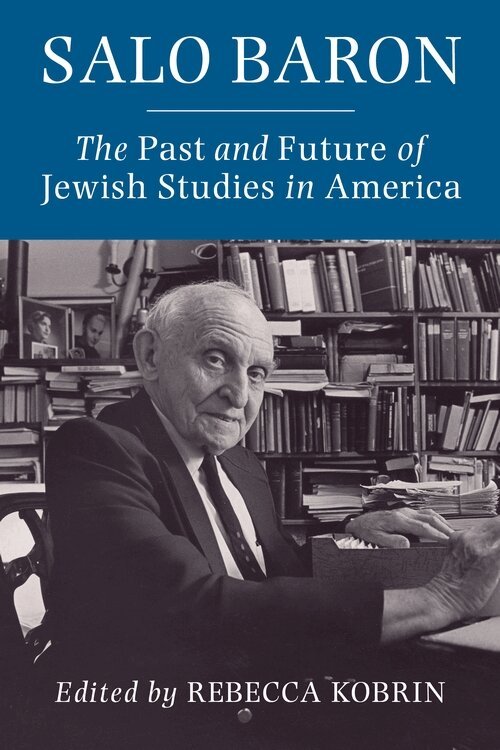
In 1930, Columbia University appointed Salo Baron to be the Nathan L. Miller Professor of Jewish History, Literature, and Institutions—marking a turning point in the history of Jewish studies in America. Baron not only became perhaps the most accomplished scholar of Jewish history in the twentieth century, the author of many books including the eighteen-volume A Social and Religious History of the Jews. He also created a program and a discipline, mentoring hundreds of scholars, establishing major institutions including the first academic center to study Israel in the United States, building Columbia’s Judaica collection, intervening as a public intellectual, and exerting an unparalleled influence on what it meant to study the Jewish past.This book brings together leading scholars to consider how Baron transformed the course of Jewish studies in the United States. From a variety of perspectives, they reflect on his contributions to the study of Jewish history, literature, and culture, as well as his scholarship, activism, and mentorship. Among many distinguished contributors, David Sorkin engages with Baron’s arguments on Jewish emancipation; Francesca Trivellato puts him in conversation with economic history; David Engel examines his use of anti-Semitism as an analytical category; Deborah Lipstadt explores his testimony at the trial of Adolf Eichmann; and Robert Chazan and Jane Gerber, both once Baron’s doctoral students, offer personal and intellectual reminiscences. Together, they testify to Baron’s singular legacy in shaping Jewish studies in America.
230 kr
Skickas
In 1930, Columbia University appointed Salo Baron to be the Nathan L. Miller Professor of Jewish History, Literature, and Institutions—marking a turning point in the history of Jewish studies in America. Baron not only became perhaps the most accomplished scholar of Jewish history in the twentieth century, the author of many books including the eighteen-volume A Social and Religious History of the Jews. He also created a program and a discipline, mentoring hundreds of scholars, establishing major institutions including the first academic center to study Israel in the United States, building Columbia’s Judaica collection, intervening as a public intellectual, and exerting an unparalleled influence on what it meant to study the Jewish past.This book brings together leading scholars to consider how Baron transformed the course of Jewish studies in the United States. From a variety of perspectives, they reflect on his contributions to the study of Jewish history, literature, and culture, as well as his scholarship, activism, and mentorship. Among many distinguished contributors, David Sorkin engages with Baron’s arguments on Jewish emancipation; Francesca Trivellato puts him in conversation with economic history; David Engel examines his use of anti-Semitism as an analytical category; Deborah Lipstadt explores his testimony at the trial of Adolf Eichmann; and Robert Chazan and Jane Gerber, both once Baron’s doctoral students, offer personal and intellectual reminiscences. Together, they testify to Baron’s singular legacy in shaping Jewish studies in America.
286 kr
Skickas inom 5-8 vardagar
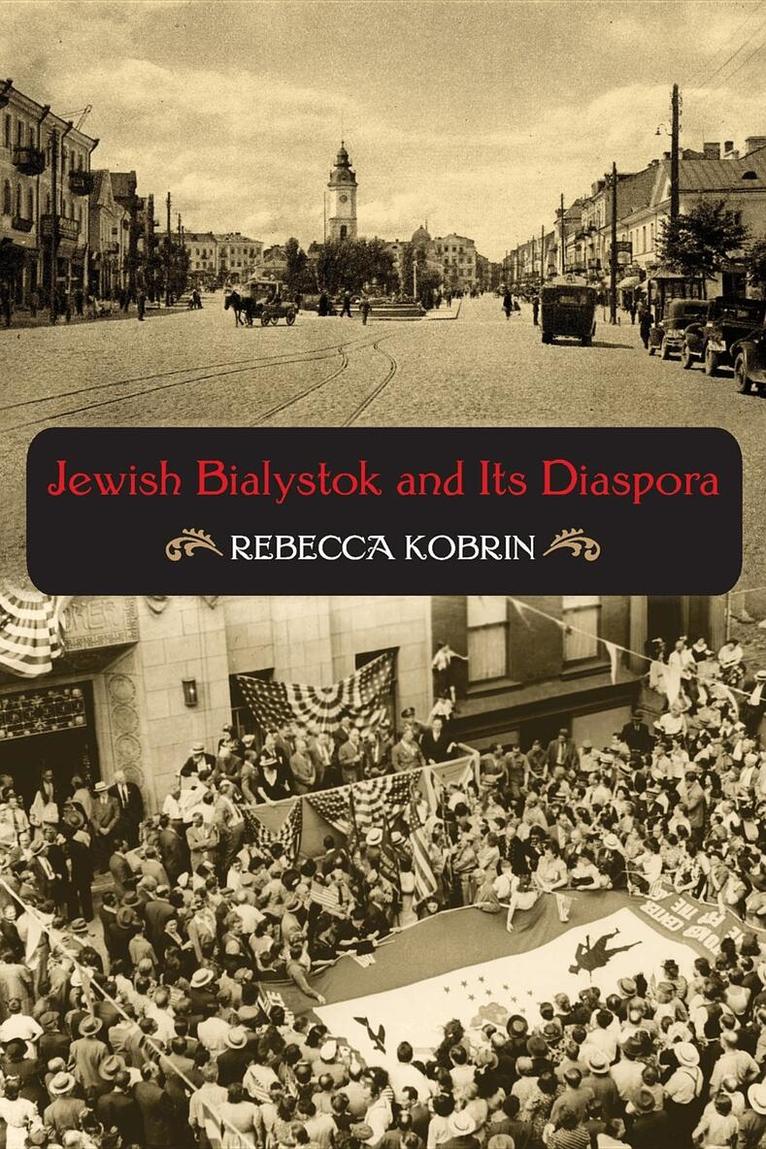
The mass migration of East European Jews and their resettlement in cities throughout Europe, the United States, Argentina, the Middle East and Australia in the late 19th and early 20th centuries not only transformed the demographic and cultural centers of world Jewry, it also reshaped Jews' understanding and performance of their diasporic identities. Rebecca Kobrin's study of the dispersal of Jews from one city in Poland—Bialystok—demonstrates how the act of migration set in motion a wide range of transformations that led the migrants to imagine themselves as exiles not only from the mythic Land of Israel but most immediately from their east European homeland. Kobrin explores the organizations, institutions, newspapers, and philanthropies that the Bialystokers created around the world and that reshaped their perceptions of exile and diaspora.
Credit to the Nation
Eastern European Jewish Immigrant Bankers and the Shaping of American Finance, 1873–1930
Inbunden, Engelska, 2026
468 kr
Skickas inom 3-6 vardagar
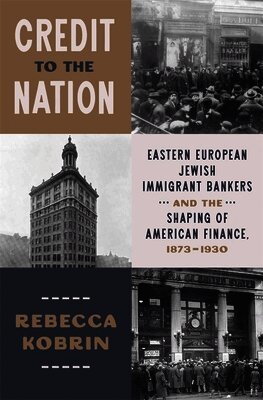
From a leading historian, the story of how entrepreneurial Jewish immigrants transformed commercial banking and enabled the economic and social advancement of Jews in America.What are immigrants to do when business opportunities abound in their new home, but banks refuse essential financial support? How could they make the journey in the first place without helping hands? In this lively history, Rebecca Kobrin chronicles the turn-of-the-twentieth-century Jewish immigrants who stepped up by doing the lending themselves. Arriving from the Russian Empire and settling primarily in New York, they made livelihoods by assisting fellow Jews so they could purchase passage to the United States and, after arriving, obtain credit that other lenders would not dare provide.Credit to the Nation traces the novel practices of bankers who not only enabled the flourishing of American Jewry but also revolutionized the US financial industry. Drawing on previously unexamined archival materials in Russian, Yiddish, German, and English, Kobrin tells a story that is also crucial to the history of New York, as immigrant bankers’ financing of real estate transformed wide swathes of the city. Lenders drove a boom in the prices of tenement buildings, but heavy speculation eventually precipitated the downfall of immigrant banking. Kobrin notes in particular the case of the Bank of United States—a private lender catering primarily to Jewish businessmen—which the Federal Reserve refused to bail out from bankruptcy in 1930.Immigrants’ grasping for credit, and the rise and fall of immigrant banks, gave way to a contemporary banking industry that, ironically, refuses credit to today’s immigrants. Kobrin reminds us that now, as before, the denial of credit pushes entrepreneurial Americans into unregulated money-lending and the trap of endless debt.
963 kr
Skickas inom 5-8 vardagar
How has the ability of Jews to amass and wield power, within both Jewish and non-Jewish society, influenced and been influenced by their economic activity? Purchasing Power answers this question by examining the nexus between money and power in modern Jewish history. It does so, in its first section, by presenting a series of case studies of the ways in which the economic choices made by Jewish businessmen could bring them wealth and influence. The second section focuses on transnational Jewish philanthropic and economic networks. The discussions there reveal how the wielding of power by Jewish organizations on the world stage could shape not only Jewish society but also the international arena.In this way, the contributors to this volume reposition economics as central to our understanding of the Jewish experience from early modern Rome to contemporary America. Its importance for the creation of the State of Israel is also examined. As the editors write: "The study of culture and identity has proved valuable and enlightening (and, in some senses, also comfortable) in understanding the complexities of Jewish history. Perhaps we should now return to the issues of the material bases for Jewish life, and the ways in which Jews have exploited them in their search for wealth and power. Our understanding of the Jewish past will be immeasurably enriched in the effort."Contributors: Cornelia Aust, Bernard Cooperman, Veerle Vanden Daelen, Jonathan Dekel-Chen, Glenn Dynner, Abigail Green, Jonathan Karp, Rebecca Kobrin, Adam D. Mendelsohn, Derek Penslar, Adam Sutcliffe, Adam Teller, Carsten L. Wilke.
366 kr
Skickas inom 5-8 vardagar
ENGThe mass migration of East European Jews and their resettlement in cities throughout Europe, the United States, Argentina, the Middle East and Australia in the late 19th and early 20th centuries not only transformed the demographic and cultural centers of world Jewry, it also reshaped Jews' understanding and performance of their diasporic identities. Rebecca Kobrin's study of the dispersal of Jews from one city in Poland—Bialystok—demonstrates how the act of migration set in motion a wide range of transformations that led the migrants to imagine themselves as exiles not only from the mythic Land of Israel but most immediately from their east European homeland. Kobrin explores the organizations, institutions, newspapers, and philanthropies that the Bialystokers created around the world and that reshaped their perceptions of exile and diaspora.RUSМассовая миграция восточноевропейских евреев и их расселение в городах Европы, Соединенных Штатов, Аргентины, Ближнего Востока и Австралии в конце XIX и начале XX века не только трансформировали демографические и культурные центры мирового еврейства, но также изменили понимание и евреями своей диаспоральной идентичности. Исследование Ребекки Кобрин, посвященное расселению евреев из одного польского города, Белостока, показывает, как переезд на новое место запускает серию различных трансформаций, в результате которых мигранты начинают видеть себя изгнанниками не только из мифологизированной земли Израиля, но и непосредственно со своей европейской родины.