Rebecca Kugel - Böcker
Visar alla böcker från författaren Rebecca Kugel. Handla med fri frakt och snabb leverans.
4 produkter
4 produkter
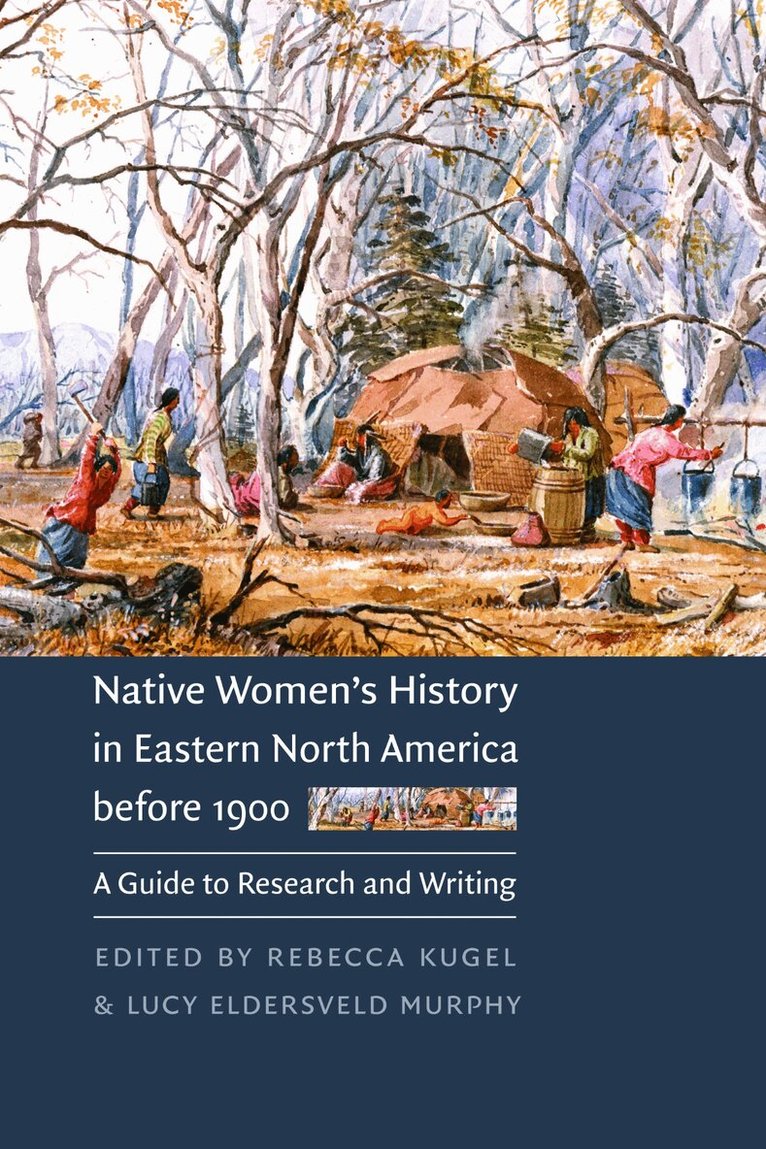
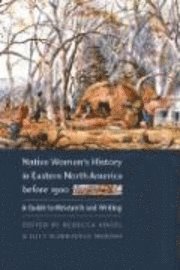
Native Women's History in Eastern North America Before 1900
A Guide to Research and Writing
Häftad, Engelska, 2007
367 kr
Skickas inom 10-15 vardagar
How can we learn more about Native women's lives in North America in earlier centuries? This question is answered by this landmark anthology, an essential guide to the significance, experiences, and histories of Native women. Sixteen classic essays—plus new commentary—many by the original authors—describe a broad range of research methods and sources offering insight into the lives of Native American women. The authors explain the use of letters and diaries, memoirs and autobiographies, newspaper accounts and ethnographies, census data and legal documents. This collection offers guidelines for extracting valuable information from such diverse sources and assessing the significance of such variables as religious affiliation, changes in women's power after colonization, connections between economics and gender, and representations (and misrepresentations) of Native women. Indispensable to anyone interested in exploring the role of gender in Native American history or in emphasizing Native women's experiences within the context of women's history, this anthology helps restore the historical reality of Native women and is essential to an understanding of North American history.
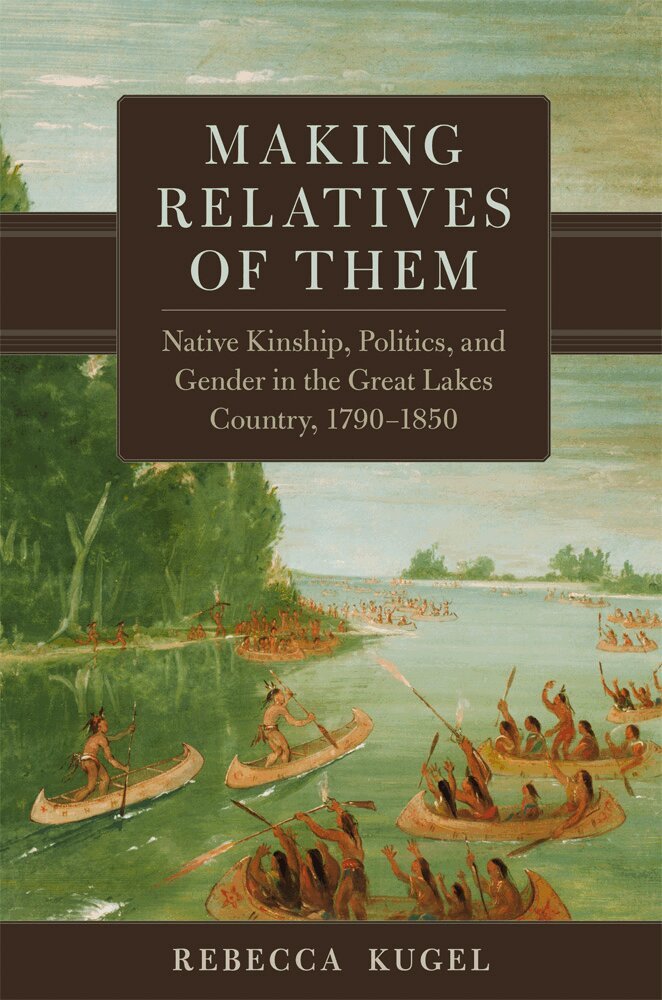
Making Relatives of Them Volume 21
Native Kinship, Politics, and Gender in the Great Lakes Country, 1790-1850
Inbunden, Engelska, 2023
405 kr
Skickas inom 10-15 vardagar
Kinship, as an organizing principle, gives structure to communities and cultures—and it can vary as widely as the social relationships organized in its name. Making Relatives of Them examines kinship among the Great Lakes Native nations in the eventful years of the late eighteenth and early nineteenth century, revealing how these Indigenous peoples’ understanding of kinship, in complex relationship with concepts of gender, defined their social, political, and diplomatic interactions with one another and with Europeans and their descendants.For these Native nations—Wyandot, Shawnee, Delaware, Miami, Ojibwe, Odawa, Potawatomi, Dakota, Menomini, and Ho-chunk—the constructs and practices of kinship, gender, and social belonging represented a daily lived reality. They also formed the metaphoric foundation for a regionally shared Native political discourse. In at least one English translation, Rebecca Kugel notes, Indigenous peoples referred to the kin-based language of politics as “the Custom of All the Nations.” Clearly defined yet endlessly elastic, the Custom of All the Nations generated a shared vocabulary of kinship that facilitated encounters among the many Indigenous political entities of the Great Lakes country, and framed their interactions with the French, the British, and later, the Americans. Both the European colonizers and Americans recognized the power-encoding symbolism of Native kinship discourse, Kugel tells us, but they completely misunderstood the significance that Native peoples accorded to gender—a misunderstanding that undermined their attempts to co-opt the Indigenous discourse of kinship and bend it to their own political objectives.A deeply researched, finely observed work by a respected historian, Making Relatives of Them offers a nuanced perspective on the social and political worlds of the Great Lakes Native peoples, and a new understanding of those worlds in relation to those of the European colonizers and their descendants.
Making Relatives of Them Volume 21
Native Kinship, Politics, and Gender in the Great Lakes Country, 1790–1850
Häftad, Engelska, 2026
305 kr
Kommande
Kinship, as an organizing principle, gives structure to communities and cultures—and it can vary as widely as the social relationships organized in its name. Making Relatives of Them examines kinship among the Great Lakes Native nations in the eventful years of the late eighteenth and early nineteenth century, revealing how these Indigenous peoples’ understanding of kinship, in complex relationship with concepts of gender, defined their social, political, and diplomatic interactions with one another and with Europeans and their descendants. For these Native nations—Wyandot, Shawnee, Delaware, Miami, Ojibwe, Odawa, Potawatomi, Dakota, Menomini, and Ho-chunk—the constructs and practices of kinship, gender, and social belonging represented a daily lived reality. They also formed the metaphoric foundation for a regionally shared Native political discourse. In at least one English translation, Rebecca Kugel notes, Indigenous peoples referred to the kin-based language of politics as “the Custom of All the Nations.” Clearly defined yet endlessly elastic, the Custom of All the Nations generated a shared vocabulary of kinship that facilitated encounters among the many Indigenous political entities of the Great Lakes country, and framed their interactions with the French, the British, and later, the Americans. Both the European colonizers and Americans recognized the power-encoding symbolism of Native kinship discourse, Kugel tells us, but they completely misunderstood the significance that Native peoples accorded to gender—a misunderstanding that undermined their attempts to co-opt the Indigenous discourse of kinship and bend it to their own political objectives. A deeply researched, finely observed work by a respected historian, Making Relatives of Them offers a nuanced perspective on the social and political worlds of the Great Lakes Native peoples, and a new understanding of those worlds in relation to those of the European colonizers and their descendants.
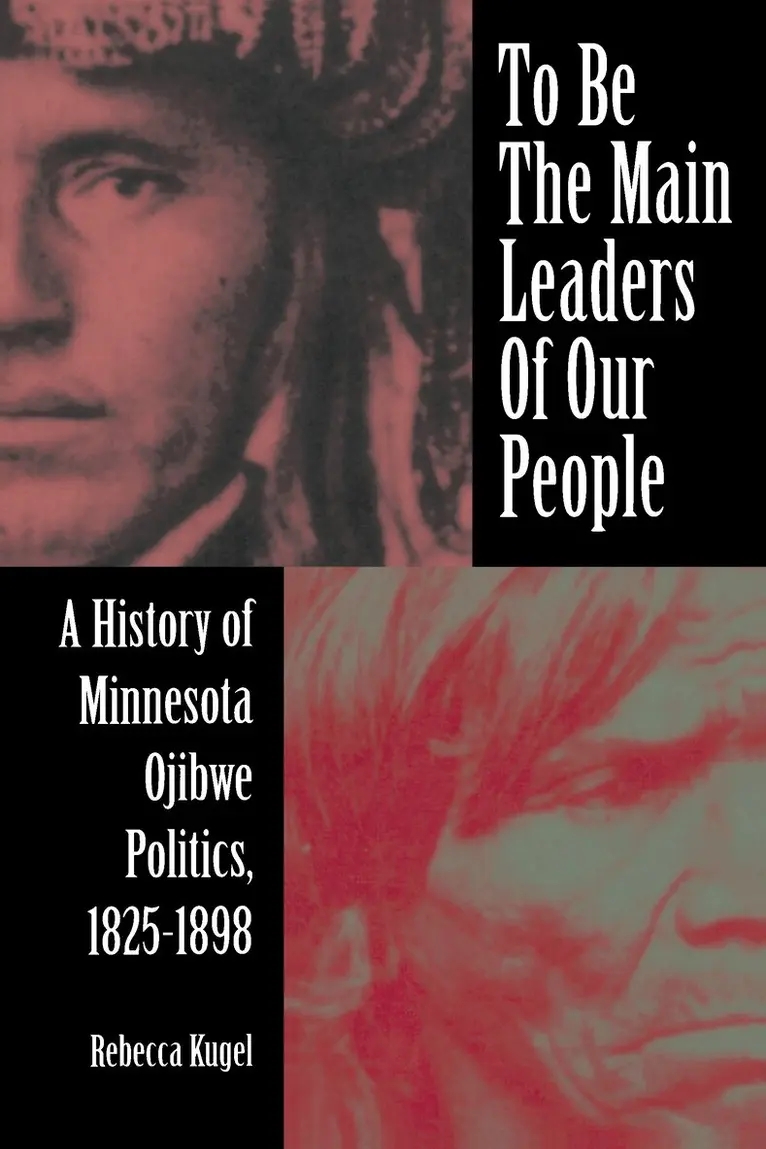
To Be the Main Leaders of Our People
A History of Minnesota Ojibwe Politics, 1825-1898
Häftad, Engelska, 1998
459 kr
Skickas inom 7-10 vardagar
In the spring of 1868, people from several Ojibwe villages located along the upper Mississippi River were relocated to a new reservation at White Earth, more than 100 miles to the west. In many public declarations that accompanied their forced migration, these people appeared to embrace the move, as well as their conversion to Christianity and the new agrarian lifestyle imposed on them. Beneath this surface piety and apparent acceptance of change, however, lay deep and bitter political divisions that were to define fundamental struggles that shaped Ojibwe society for several generations.In order to reveal the nature and extent of this struggle for legitimacy and authority, To Be The Main Leaders of Our People reconstructs the political and social history of these Minnesota Ojibwe communities between the years 1825 and 1898. Ojibwe political concerns, the thoughts and actions of Ojibwe political leaders, and the operation of the Ojibwe political system define the work's focus. Kugel examines this particular period of time because of its significance to contemporary Ojibwe history. The year 1825, for instance, marked the beginning of a formal alliance with the United States; 1898 represented not an end, but a striking point of continuity, defying the easy categorizations of Native peoples made by non-Indians, especially in the closing years of the nineteenth century.In this volume, the Ojibwe "speak for themselves," as their words were recorded by government officials, Christian missionaries, fur traders, soldiers, lumbermen, homesteaders, and journalists. While they were nearly always recorded in English translation, Ojibwe thoughts, perceptions, concerns, and even humor, clearly emerge. To Be The Main Leaders of Our People expands the parameters of how oral traditions can be used in historical writing and sheds new light on a complex, but critical, series of events in ongoing relations between Native and non-Native people.