Rebecca L. Davis - Böcker
Visar alla böcker från författaren Rebecca L. Davis. Handla med fri frakt och snabb leverans.
6 produkter
6 produkter
405 kr
Skickas inom 10-15 vardagar
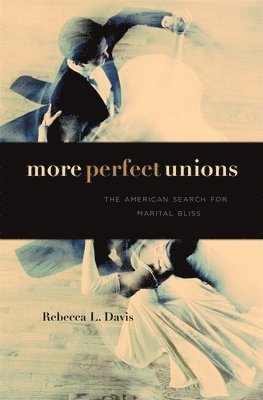
The American fixation with marriage, so prevalent in today's debates over marriage for same-sex couples, owes much of its intensity to a small group of reformers who introduced Americans to marriage counseling in the 1930s. Today, millions of couples seek help to save their marriages each year. Over the intervening decades, marriage counseling has powerfully promoted the idea that successful marriages are essential to both individuals' and the nation's well-being. Rebecca Davis reveals how couples and counselors transformed the ideal of the perfect marriage as they debated sexuality, childcare, mobility, wage earning, and autonomy, exposing both the fissures and aspirations of American society. From the economic dislocations of the Great Depression, to more recent debates over government-funded "Healthy Marriage" programs, counselors have responded to the shifting needs and goals of American couples. Tensions among personal fulfillment, career aims, religious identity, and socioeconomic status have coursed through the history of marriage and explain why the stakes in the institution are so fraught for the couples involved and for the communities to which they belong. Americans care deeply about marriages—their own and other people's—because they have made enormous investments of time, money, and emotion to improve their own relationships and because they believe that their personal decisions about whom to marry or whether to divorce extend far beyond themselves. This intriguing book tells the uniquely American story of a culture gripped with the hope that, with enough effort and the right guidance, more perfect marital unions are within our reach.
212 kr
Skickas inom 7-10 vardagar
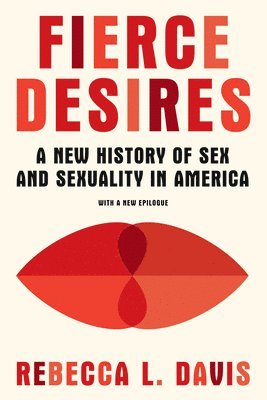
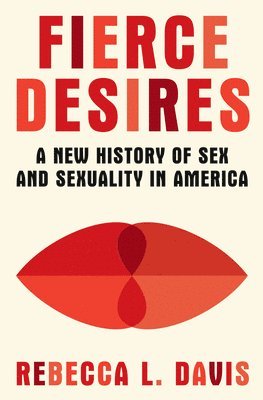
Our era is one of sexual upheaval. Roe v. Wade was overturned in the summer of 2022, school systems across the country are banning books with LGBTQ+ themes, and the notion of a “tradwife” is gaining adherents on the right while polyamory wins converts on the left. It may seem as though debates over sex are more intense than ever, but as acclaimed historian Rebecca L. Davis demonstrates in Fierce Desires, we should not be too surprised, because Americans have been arguing over which kinds of sex are “acceptable”—and which are not—since before the founding itself.From the public floggings of fornicators in early New England to passionate same-sex love affairs in the 1800s and the crackdown on abortion providers in the 1870s, and from the movements for sexual liberation to the recent restrictions on access to gender affirming care, Davis presents a sweeping, engrossing, illuminating four-hundred-year account of this nation’s sexual past. Drawing on a wealth of sources, including legal records, erotica, and eighteenth-century romance novels, she recasts important episodes—Anthony Comstock’s crusade against smut among them—and, at the same time, unearths stories of little-remembered pioneers and iconoclasts, such as an indentured servant in colonial Virginia named Thomas/Thomasine Hall, Gay Liberation Front cofounder Kiyoshi Kuromiya, and postwar female pleasure activist Betty Dodson.At the heart of the book is Davis’s argument that the concept of sexual identity is relatively novel, first appearing in the nineteenth century. Over the centuries, Americans have shifted from understanding sexual behaviors as reflections of personal preferences or values, such as those rooted in faith or culture, to defining sexuality as an essential part of what makes a person who they are. And at every step, legislators, police, activists, and bureaucrats attempted to regulate new sexual behaviors, transforming government in the process.The most comprehensive account of America’s sexual past since John D’Emilio and Estelle Freedman’s 1988 classic, Intimate Matters, Davis’s magisterial work seeks to help us understand the turmoil of the present. It demonstrates how fiercely we have always valued our desires, and how far we are willing to go to defend them.
260 kr
Skickas inom 10-15 vardagar
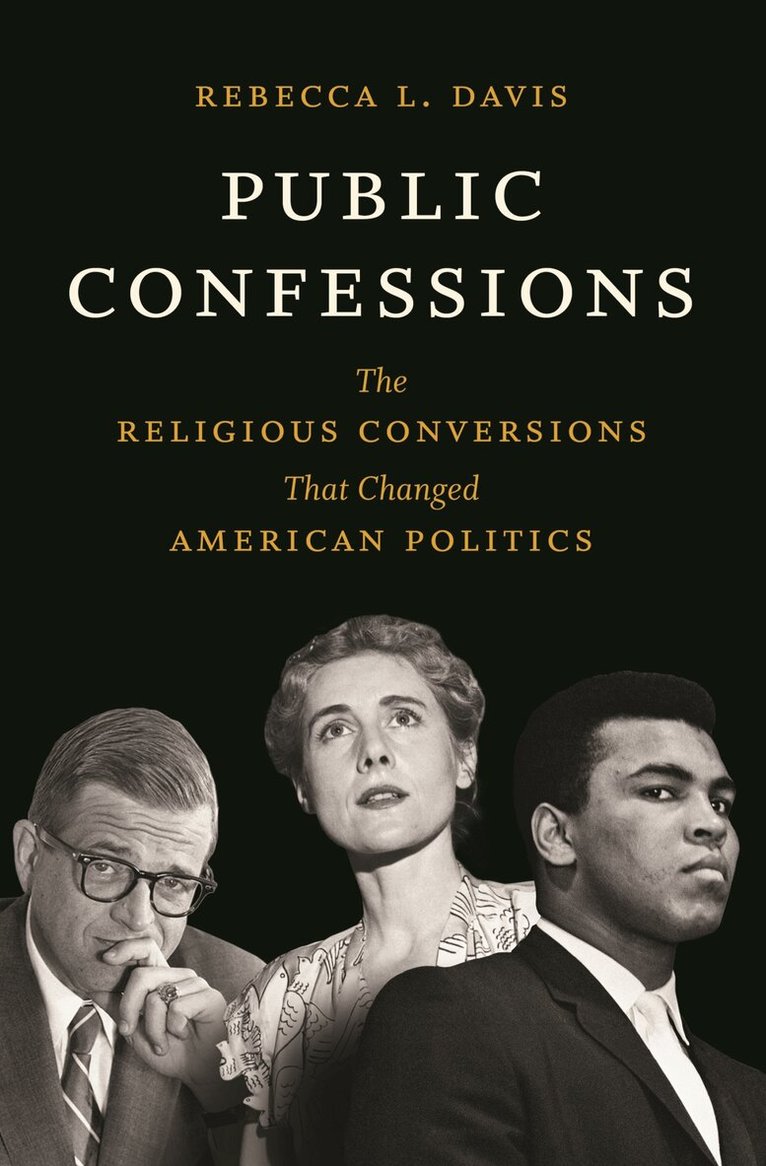
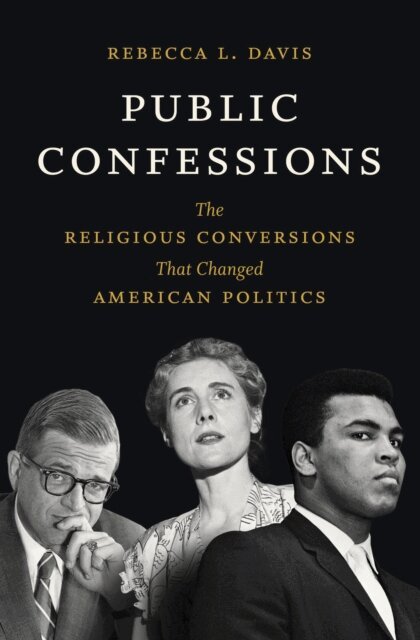
Personal reinvention is a core part of the human condition. Yet in the mid-twentieth century, certain private religious choices became lightning rods for public outrage and debate.Public Confessions reveals the controversial religious conversions that shaped modern America. Rebecca L. Davis explains why the new faiths of notable figures including Clare Boothe Luce, Whittaker Chambers, Sammy Davis Jr., Marilyn Monroe, Muhammad Ali, Chuck Colson, and others riveted the American public. Unconventional religious choices charted new ways of declaring an "authentic" identity amid escalating Cold War fears of brainwashing and coercion. Facing pressure to celebrate a specific vision of Americanism, these converts variously attracted and repelled members of the American public. Whether the act of changing religions was viewed as selfish, reckless, or even unpatriotic, it provoked controversies that ultimately transformed American politics.Public Confessions takes intimate history to its widest relevance, and in so doing, makes you see yourself in both the private and public stories it tells.
401 kr
Skickas inom 7-10 vardagar
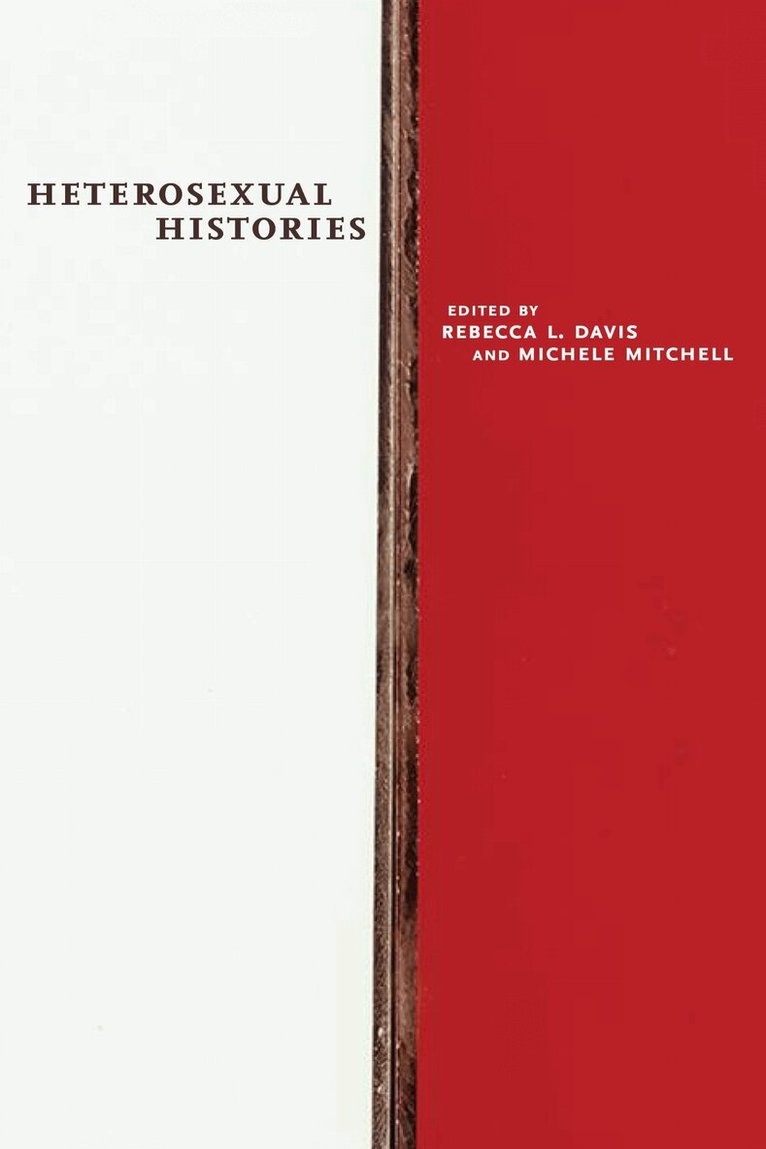
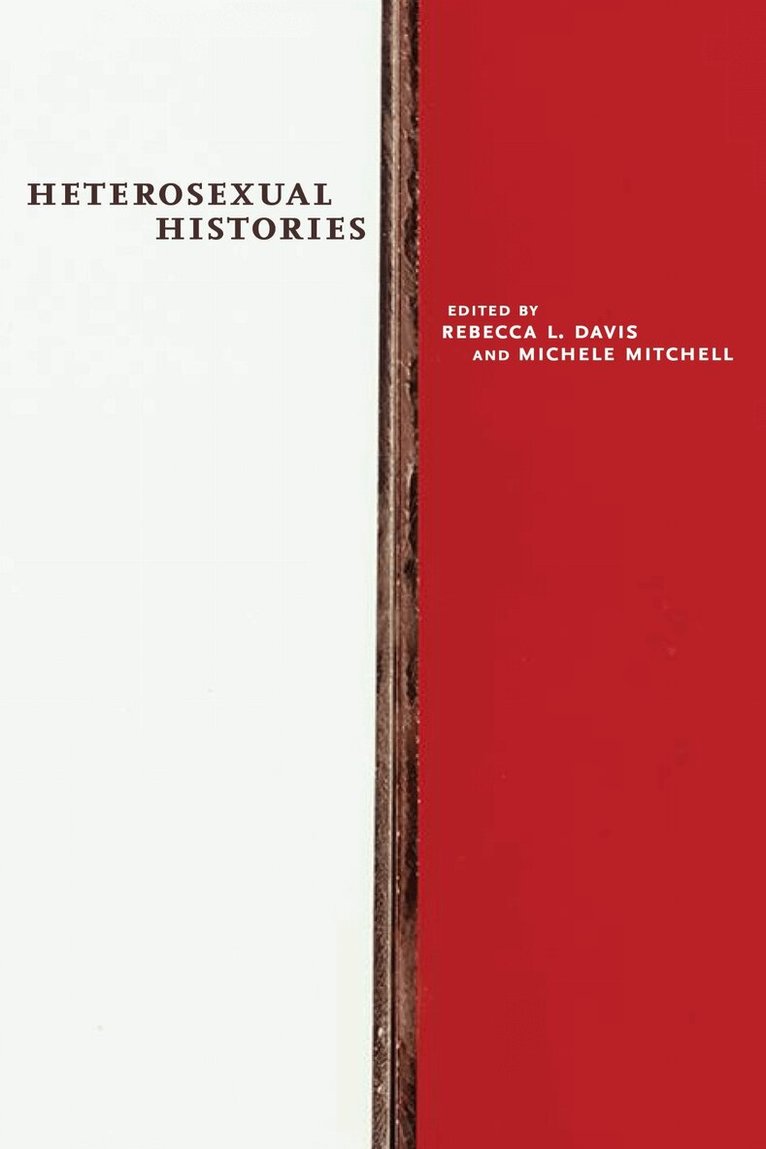
The history of heterosexuality in North America across four centuriesHeterosexuality is usually regarded as something inherently "natural"—but what is heterosexuality, and how has it taken shape across the centuries? By challenging ahistorical approaches to the heterosexual subject, Heterosexual Histories constructs a new framework for the history of heterosexuality, examining unexplored assumptions and insisting that not only sex but race, class, gender, age, and geography matter to its past. Each of the fourteen essays in this volume examines the history of heterosexuality from a different angle, seeking to study this topic in a way that recognizes plurality, divergence, and inequity.Editors Rebecca L. Davis and Michele Mitchell have formed a collection that spans four centuries, addressing the many different racial groups, geographies, and subcultures of heterosexuality in North America. The essays range across disciplines with experts from various fields examining heterosexuality from unique perspectives: a historian shows how defining heterosexuality, sex, and desire were integral to the formation of British America and the process of colonization; a legal scholar examines the connections between race, sexual citizenship, and nonmarital motherhood; a gender studies expert analyzes the Clinton-Lewinsky scandal, and explores the intersections of heterosexuality with shame and second-wave feminism. Together, these essays explain how differently earlier Americans understood the varieties of gender and different-sex sexuality, how heterosexuality emerged as a dominant way of describing gender, and how openly many people acknowledged and addressed heterosexuality's fragility.By contesting presumptions of heterosexuality's stability or consistency, Heterosexual Histories opens the historical record to interrogations of the raced, classed, and gendered varieties of heterosexuality and considers the implications of heterosexuality's multiplicities and changes. Providing both a sweeping historical survey and concentrated case studies, Heterosexual Histories is a crucial addition to the field of sexuality studies.
1 112 kr
Skickas inom 10-15 vardagar
The history of heterosexuality in North America across four centuriesHeterosexuality is usually regarded as something inherently "natural"—but what is heterosexuality, and how has it taken shape across the centuries? By challenging ahistorical approaches to the heterosexual subject, Heterosexual Histories constructs a new framework for the history of heterosexuality, examining unexplored assumptions and insisting that not only sex but race, class, gender, age, and geography matter to its past. Each of the fourteen essays in this volume examines the history of heterosexuality from a different angle, seeking to study this topic in a way that recognizes plurality, divergence, and inequity.Editors Rebecca L. Davis and Michele Mitchell have formed a collection that spans four centuries, addressing the many different racial groups, geographies, and subcultures of heterosexuality in North America. The essays range across disciplines with experts from various fields examining heterosexuality from unique perspectives: a historian shows how defining heterosexuality, sex, and desire were integral to the formation of British America and the process of colonization; a legal scholar examines the connections between race, sexual citizenship, and nonmarital motherhood; a gender studies expert analyzes the Clinton-Lewinsky scandal, and explores the intersections of heterosexuality with shame and second-wave feminism. Together, these essays explain how differently earlier Americans understood the varieties of gender and different-sex sexuality, how heterosexuality emerged as a dominant way of describing gender, and how openly many people acknowledged and addressed heterosexuality's fragility.By contesting presumptions of heterosexuality's stability or consistency, Heterosexual Histories opens the historical record to interrogations of the raced, classed, and gendered varieties of heterosexuality and considers the implications of heterosexuality's multiplicities and changes. Providing both a sweeping historical survey and concentrated case studies, Heterosexual Histories is a crucial addition to the field of sexuality studies.
389 kr
Skickas inom 3-6 vardagar
Our era is one of sexual upheaval. Roe v. Wade was overturned in the summer of 2022, school systems across the country are banning books with LGBTQ+ themes and the notion of a “tradwife” is gaining adherents on the right while polyamory wins converts on the left. It may seem as though debates over sex are more intense than ever, but as acclaimed historian Rebecca L. Davis demonstrates in Fierce Desires, we should not be too surprised, because Americans have been arguing over which kinds of sex are “acceptable”—and which are not—since before the founding itself.From the public floggings of fornicators in early New England to passionate same-sex love affairs in the 1800s and the crackdown on abortion providers in the 1870s, and from the movements for sexual liberation to the recent restrictions on access to gender affirming care, Davis presents a sweeping, engrossing, illuminating four-hundred-year account of this nation’s sexual past. Drawing on a wealth of sources, including legal records, erotica and eighteenth-century romance novels, she recasts important episodes—Anthony Comstock’s crusade against smut among them—and, at the same time, unearths stories of little-remembered pioneers and iconoclasts, such as an indentured servant in colonial Virginia named Thomas/Thomasine Hall, Gay Liberation Front cofounder Kiyoshi Kuromiya and postwar female pleasure activist Betty Dodson.At the heart of the book is Davis’s argument that the concept of sexual identity is relatively novel, first appearing in the nineteenth century. Over the centuries, Americans have shifted from understanding sexual behaviours as reflections of personal preferences or values, such as those rooted in faith or culture, to defining sexuality as an essential part of what makes a person who they are. And at every step, legislators, police, activists and bureaucrats attempted to regulate new sexual behaviours, transforming government in the process.