Rebecca Reich - Böcker
Visar alla böcker från författaren Rebecca Reich. Handla med fri frakt och snabb leverans.
5 produkter
5 produkter
309 kr
Skickas inom 5-8 vardagar
413 kr
Skickas inom 5-8 vardagar
1 745 kr
Skickas inom 10-15 vardagar
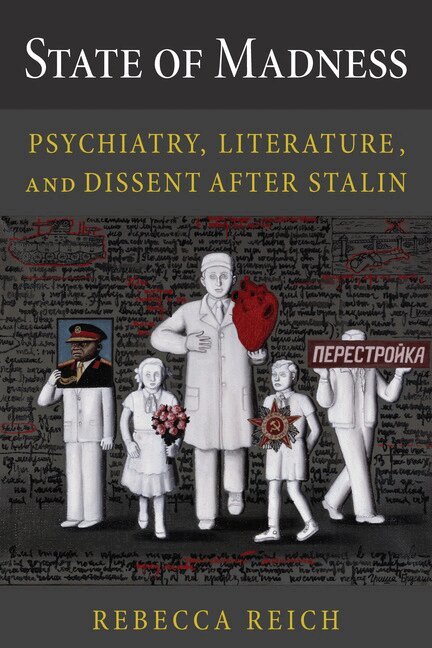
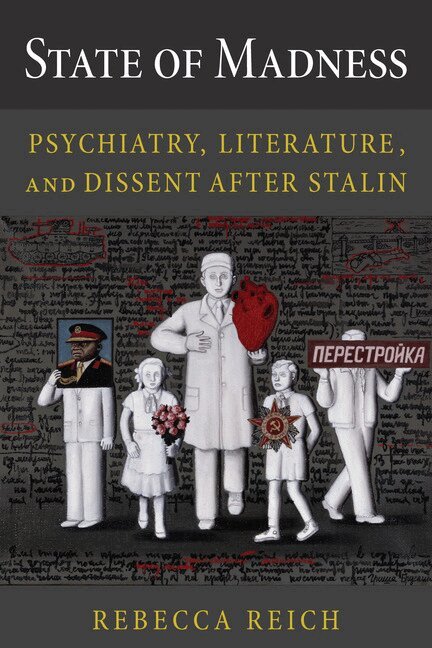
What madness meant was a fiercely contested question in Soviet society. State of Madness examines the politically fraught collision between psychiatric and literary discourses in the years after Joseph Stalin's death. State psychiatrists deployed set narratives of mental illness to pathologize dissenting politics and art. Dissidents such as Aleksandr Vol'pin, Vladimir Bukovskii, and Semen Gluzman responded by highlighting a pernicious overlap between those narratives and their life stories. The state, they suggested in their own psychiatrically themed texts, had crafted an idealized view of reality that itself resembled a pathological work of art. In their unsanctioned poetry and prose, the writers Joseph Brodsky, Andrei Siniavskii, and Venedikt Erofeev similarly engaged with psychiatric discourse to probe where creativity ended and insanity began. Together, these dissenters cast themselves as psychiatrists to a sick society. By challenging psychiatry's right to declare them or what they wrote insane, dissenters exposed as a self-serving fiction the state's renewed claims to rationality and modernity in the post-Stalin years. They were, as they observed, like the child who breaks the spell of collective delusion in Hans Christian Andersen's story "The Emperor's New Clothes." In a society where normality means insisting that the naked monarch is clothed, it is the truth-teller who is pathologized. Situating literature's encounter with psychiatry at the center of a wider struggle over authority and power, this bold interdisciplinary study will appeal to literary specialists; historians of culture, science, and medicine; and scholars and students of the Soviet Union and its legacy for Russia today.
1 878 kr
Skickas inom 7-10 vardagar
This is the essential new guide to Russian literature, combining authority and innovation in coverage ranging from medieval manuscripts to the internet and social media. With contributions from thirty-four world-leading scholars, it offers a fresh approach to literary history, not as one integral narrative but as multiple parallel histories. Each of its four strands tells a story of Russian literature according to a defined criterion: Movements, Mechanisms, Forms and Heroes. At the same time, six clusters of shorter themed essays suggest additional perspectives and criteria for further study and research. In dialogue, these histories invite a multiplicity of readings, both within and across the narrative strands. In an age of shifting perspectives on Russia, and on national literatures more widely, this open but easily navigable volume enables readers to engage with both traditional literary concerns and radical re-conceptualisations of Russian history and culture.
499 kr
Skickas inom 10-15 vardagar
What madness meant was a fiercely contested question in Soviet society. State of Madness examines the politically fraught collision between psychiatric and literary discourses in the years after Joseph Stalin's death. State psychiatrists deployed set narratives of mental illness to pathologize dissenting politics and art. Dissidents such as Aleksandr Vol'pin, Vladimir Bukovskii, and Semen Gluzman responded by highlighting a pernicious overlap between those narratives and their life stories. The state, they suggested in their own psychiatrically themed texts, had crafted an idealized view of reality that itself resembled a pathological work of art. In their unsanctioned poetry and prose, the writers Joseph Brodsky, Andrei Siniavskii, and Venedikt Erofeev similarly engaged with psychiatric discourse to probe where creativity ended and insanity began. Together, these dissenters cast themselves as psychiatrists to a sick society. By challenging psychiatry's right to declare them or what they wrote insane, dissenters exposed as a self-serving fiction the state's renewed claims to rationality and modernity in the post-Stalin years. They were, as they observed, like the child who breaks the spell of collective delusion in Hans Christian Andersen's story "The Emperor's New Clothes." In a society where normality means insisting that the naked monarch is clothed, it is the truth-teller who is pathologized. Situating literature's encounter with psychiatry at the center of a wider struggle over authority and power, this bold interdisciplinary study will appeal to literary specialists; historians of culture, science, and medicine; and scholars and students of the Soviet Union and its legacy for Russia today.