Rebecca T. Alpert - Böcker
Visar alla böcker från författaren Rebecca T. Alpert. Handla med fri frakt och snabb leverans.
5 produkter
5 produkter
407 kr
Skickas inom 5-8 vardagar
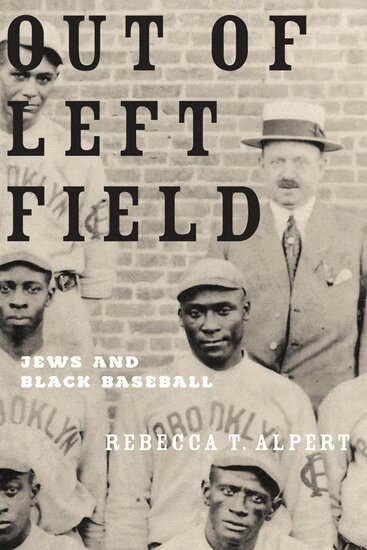
Here is an eye-opening look at one of baseball's most intriguing and little known stories: the many-faceted relationship between Jews and black baseball in Jim Crow America. In Out of Left Field, Rebecca Alpert explores how Jewish sports entrepreneurs, political radicals, and a team of black Jews from Belleville, Virginia called the Belleville Grays--the only Jewish team in the history of black baseball--made their mark on the segregated world of the Negro Leagues. Through in-depth research, Alpert tells the stories of the Jewish businessmen who owned and promoted teams as they both acted out and fell victim to pervasive stereotypes of Jews as greedy middlemen and hucksters. Some Jewish owners produced a kind of comedy baseball, akin to basketball's Harlem Globetrotters--indeed, Globetrotters owner Abe Saperstein was very active in black baseball--that reaped financial benefits for both owners and players but also played upon the worst stereotypes of African Americans and prevented these black "showmen" from being taken seriously by the major leagues. But Alpert also shows how Jewish entrepreneurs, motivated in part by the traditional Jewish commitment to social justice, helped grow the business of black baseball in the face of the oppressive Jim Crow restrictions, and how radical journalists writing for the Communist Daily Worker argued passionately for an end to baseball's segregation. In fact, the campaign to convince manager Branch Rickey to integrate the Brooklyn Dodgers was initiated by Daily Worker sports writer Bill Mardo, in an open letter in the paper. Deftly written and meticulously researched, Out of Left Field offers a unique perspective on the economic and social negotiations between blacks and Jews in the first half of the 20th century, shedding new light on the intersection of race, religion, and sports in America.
503 kr
Skickas inom 5-8 vardagar
Here is an eye-opening look at one of baseball's most intriguing and little known stories: the many-faceted relationship between Jews and black baseball in Jim Crow America. In Out of Left Field, Rebecca Alpert explores how Jewish sports entrepreneurs, political radicals, and a team of black Jews called the Belleville Grays--the only Jewish team in the history of black baseball--made their mark on the segregated world of the Negro Leagues. Through in-depth research, Alpert tells the stories of the Jewish businessmen who owned and promoted teams as they both acted out and fell victim to pervasive stereotypes of Jews as greedy middlemen and hucksters. Some Jewish owners produced a kind of comedy baseball, akin to basketball's Harlem Globetrotters--indeed, Globetrotters owner Abe Saperstein was very active in black baseball--that reaped financial benefits for both owners and players but also played upon the worst stereotypes of African Americans and prevented these black "showmen" from being taken seriously by the major leagues. But Alpert also shows how Jewish entrepreneurs, motivated in part by the traditional Jewish commitment to social justice, helped grow the business of black baseball in the face of the oppressive Jim Crow restrictions, and how radical journalists writing for the Communist Daily Worker argued passionately for an end to baseball's segregation. In fact, the campaign to convince manager Branch Rickey to integrate the Brooklyn Dodgers was initiated by Daily Worker sports writer Bill Mardo, in an open letter in the paper. Deftly written and meticulously researched, Out of Left Field offers a unique perspective on the economic and social negotiations between blacks and Jews in the first half of the 20th century, shedding new light on the intersection of race, religion, and sports in America.
950 kr
Skickas inom 7-10 vardagar
Like religion, playing and watching sports is a deeply meaningful, celebratory ritual enjoyed by millions across the world. The first scholarly work designed for use in both religion and sports courses, this collection develops and then applies a theoretically grounded approach to studying sports engagement globally and its relationship to modern-day issues of violence, difference, social protest, and belonging. Case studies explore the place of sports in mainstream faiths, such as Judaism, Islam, Buddhism, and Christianity, and lesser-known religious groups, particularly in Africa. It covers football, baseball, and basketball but also archery, soccer, bullfighting, judo, and track. Essays reflect all skill levels, from amateur to professional, and find surprising affinities among practices and cultures in locations as disparate as Germany and Japan, Spain and Saudi Arabia. Thoroughly examining a range of phenomena, this collection fully captures the unique overlap of two universal institutions and their interplay with human society, politics, and culture.
243 kr
Skickas inom 7-10 vardagar
Like religion, playing and watching sports is a deeply meaningful, celebratory ritual enjoyed by millions across the world. The first scholarly work designed for use in both religion and sports courses, this collection develops and then applies a theoretically grounded approach to studying sports engagement globally and its relationship to modern-day issues of violence, difference, social protest, and belonging. Case studies explore the place of sports in mainstream faiths, such as Judaism, Islam, Buddhism, and Christianity, and lesser-known religious groups, particularly in Africa. It covers football, baseball, and basketball but also archery, soccer, bullfighting, judo, and track. Essays reflect all skill levels, from amateur to professional, and find surprising affinities among practices and cultures in locations as disparate as Germany and Japan, Spain and Saudi Arabia. Thoroughly examining a range of phenomena, this collection fully captures the unique overlap of two universal institutions and their interplay with human society, politics, and culture.
370 kr
Skickas inom 5-8 vardagar
The office of rabbi is the most visible symbol of power and prestige in Jewish communities. Rabbis both interpret to their congregations the requirements of Jewish life and instruct congregants in how best to live this life. Lesbian Rabbis: The First Generation documents a monumental change in Jewish life as eighteen lesbian rabbis reflect on their experiences as trailblazers in Judaism's journey into an increasingly multicultural world. In frank and revealing essays, the contributors discuss their decisions to become rabbis and describe their experiences both at the seminaries and in their rabbinical positions. They also reflect on the dilemma whether to conceal or reveal their sexual identities to their congregants and superiors, or to serve specifically gay and lesbian congregations. The contributors consider the tensions between lesbian identity and Jewish identity, and inquire whether there are particularly "lesbian" readings of traditional texts. These essays also ask how the language of Jewish tradition touches the lives of lesbians and how lesbianism challenges traditional notions of the Jewish family. "'Today I am completely 'out' personally and professionally, and yet I have learned that the 'coming out' process never ends. Even today, I find myself in professional situations in which yet again I must reveal that I am a lesbian, yet again I must prove myself worthy of functioning professionally in the 'straight' world. I still encounter moments of awkwardness, some hostility, and some sense of exclusion as I negotiate the pathways of my professional life."-Rabbi Leila Gal Berner, from Lesbian Rabbis: The First Generation