Reeve Huston - Böcker
Visar alla böcker från författaren Reeve Huston. Handla med fri frakt och snabb leverans.
3 produkter
3 produkter
496 kr
Skickas inom 7-10 vardagar
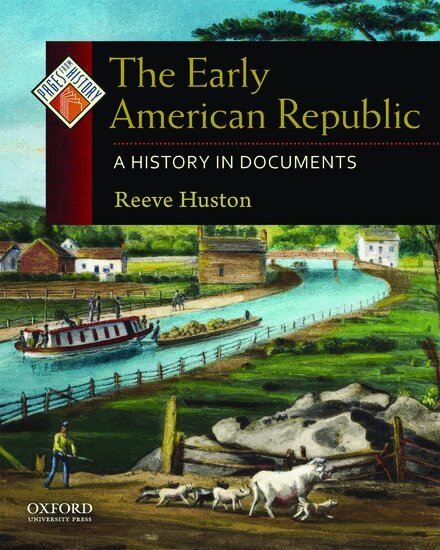
The early years of the American republic witnessed wrenching conflict and change. Northerners created an industrial order, which brought with it troubled relationships at work and within families. White southerners extended plantation slavery while the anti-slavery movement grew above the Mason-Dixon line. In the West, Native Americans battled newly arrived yeomen, entrepreneurs, and planters for control over land. Throughout the young nation numerous groups--African Americans, poor white men, women--fought for full citizenship, while others vigorously opposed their bids for equality. The Mexican-American War (1846-1848) marked the end of the period with violence that prefigured the Civil War. Using such primary sources as diaries, letters, political cartoons, photographs, speeches, engravings, newspaper debates, paintings, and the memoirs of participants, The Early American Republic: A History in Documents recreates the drama of that era. Englishwoman Rebecca Burlend recounts the hardships and victories of her life on the Illinois frontier. In a letter to an ally, Thomas Jefferson explains his Indian policy, while the Native American leader Tecumseh makes his case for Indian unity against white Americans. James Henry Hammond, a wealthy planter, instructs his overseer on how to manage slaves, and Joseph Taper writes his former master about the freedom he enjoys after escaping to Canada. A blackface minstrel tune and Frederick Douglass's account of being beaten up by white ship workers illustrate the emergence of a virulent form of racism. A list of instructions from New York Democratic leaders shows how parties drew ordinary voters into politics, and Congressional speeches reveal the fierce emotions that fueled the sectional crisis. A picture essay explores the complexities of American families in ten group portraits. By weaving these historical documents together, Reeve Huston conveys the challenges and culture of the foundational years of the nation.
Land and Freedom
Rural Society, Popular Protest, and Party Politics in Antebellum New York
Inbunden, Engelska, 2000
850 kr
Skickas inom 5-8 vardagar
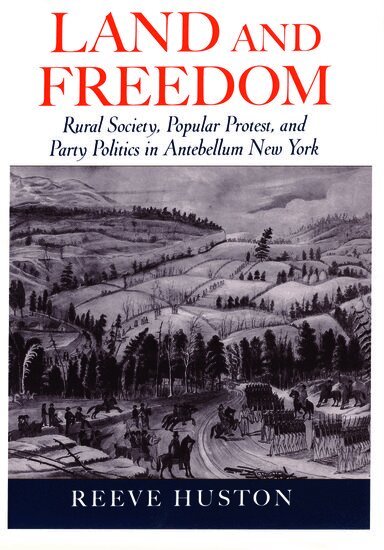
During the early nineteenth-century, two million acres of New York's farmland were controlled by a handful of great families. Along the Hudson Valley and across the Catskills lay the great estates of the Van Rensselaers, the Livingstons, and a dozen lesser landlords. Some two hundred and sixty thousand men, women, and children-a twelfth of the population of New York, the nation's most populous state-worked this land as tenants. Beginning in 1839, these tenants created a movement dedicated to destroying the estates and distributing the land to those who farmed it. The "anti-rent" movement quickly became one of the most powerful and influential movements of the antebellum era. The anti-renters raised issues that lay at the heart of America's republican experiment: the distribution of land, the nature of democracy, and the meaning of freedom. In doing so, they left an indelible mark on politics and public ideals in both New York and the nation. They influenced and bitterly divided both major political parties, and helped create the Republican party. Moreover, they shaped the ideas, policies, and careers of such national leaders as Martin Van Buren, Silas Wright, Horace Greeley, and William Seward. Deftly interweaving an engaging narrative history with broad-ranging social and political analysis, Land and Freedom brings to life the voices of antebellum northern farmers as they debated the critical social and political issues of their day. It grounds those debates in a detailed analysis of social and political change on New York's estates, and demonstrates the impact of farmers' ideas and initiatives on the broader social and political order. In doing so, it offers new insights into the social and political thought of northeastern farmers, the extent and limits of popular political power under the Jacksonian political order, and the social origins of free-labor ideology and the Republican party.
366 kr
Skickas inom 5-8 vardagar
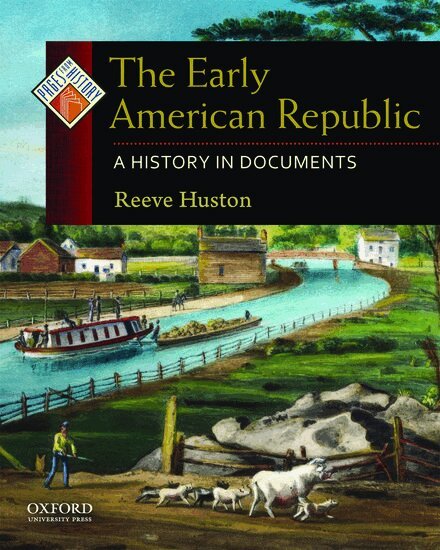
The early years of the American republic witnessed wrenching conflict and change. Northerners created an industrial order, which brought with it troubled relationships at work and within families. White southerners extended plantation slavery while the anti-slavery movement grew above the Mason-Dixon line. In the West, Native Americans battled newly arrived yeomen, entrepreneurs, and planters for control over land. Throughout the young nation numerous groups--African Americans, poor white men, women--fought for full citizenship, while others vigorously opposed their bids for equality. The Mexican-American War (1846-1848) marked the end of the period with violence that prefigured the Civil War. Using such primary sources as diaries, letters, political cartoons, photographs, speeches, engravings, newspaper debates, paintings, and the memoirs of participants, The Early American Republic: A History in Documents recreates the drama of that era. Englishwoman Rebecca Burlend recounts the hardships and victories of her life on the Illinois frontier. In a letter to an ally, Thomas Jefferson explains his Indian policy, while the Native American leader Tecumseh makes his case for Indian unity against white Americans. James Henry Hammond, a wealthy planter, instructs his overseer on how to manage slaves, and Joseph Taper writes his former master about the freedom he enjoys after escaping to Canada. A blackface minstrel tune and Frederick Douglass's account of being beaten up by white ship workers illustrate the emergence of a virulent form of racism. A list of instructions from New York Democratic leaders shows how parties drew ordinary voters into politics, and Congressional speeches reveal the fierce emotions that fueled the sectional crisis. A picture essay explores the complexities of American families in ten group portraits. By weaving these historical documents together, Reeve Huston conveys the challenges and culture of the foundational years of the nation.