Renata Keller - Böcker
Visar alla böcker från författaren Renata Keller. Handla med fri frakt och snabb leverans.
4 produkter
4 produkter
Mexico's Cold War
Cuba, the United States, and the Legacy of the Mexican Revolution
Inbunden, Engelska, 2015
1 282 kr
Skickas inom 7-10 vardagar
This book is a history of the Cold War in Mexico, and Mexico in the Cold War. Renata Keller draws on declassified Mexican and US intelligence sources and Cuban diplomatic records to challenge earlier interpretations that depicted Mexico as a peaceful haven and a weak neighbor forced to submit to US pressure. Mexico did in fact suffer from the political and social turbulence that characterized the Cold War era in general, and by maintaining relations with Cuba it played a unique, and heretofore overlooked, role in the hemispheric Cold War. The Cuban Revolution was an especially destabilizing force in Mexico because Fidel Castro's dedication to many of the same nationalist and populist causes that the Mexican revolutionaries had originally pursued in the early twentieth century called attention to the fact that the government had abandoned those promises. A dynamic combination of domestic and international pressures thus initiated Mexico's Cold War and shaped its distinct evolution and outcomes.
Mexico's Cold War
Cuba, the United States, and the Legacy of the Mexican Revolution
Häftad, Engelska, 2017
441 kr
Skickas inom 7-10 vardagar
This book is a history of the Cold War in Mexico, and Mexico in the Cold War. Renata Keller draws on declassified Mexican and US intelligence sources and Cuban diplomatic records to challenge earlier interpretations that depicted Mexico as a peaceful haven and a weak neighbor forced to submit to US pressure. Mexico did in fact suffer from the political and social turbulence that characterized the Cold War era in general, and by maintaining relations with Cuba it played a unique, and heretofore overlooked, role in the hemispheric Cold War. The Cuban Revolution was an especially destabilizing force in Mexico because Fidel Castro's dedication to many of the same nationalist and populist causes that the Mexican revolutionaries had originally pursued in the early twentieth century called attention to the fact that the government had abandoned those promises. A dynamic combination of domestic and international pressures thus initiated Mexico's Cold War and shaped its distinct evolution and outcomes.
1 090 kr
Skickas inom 10-15 vardagar
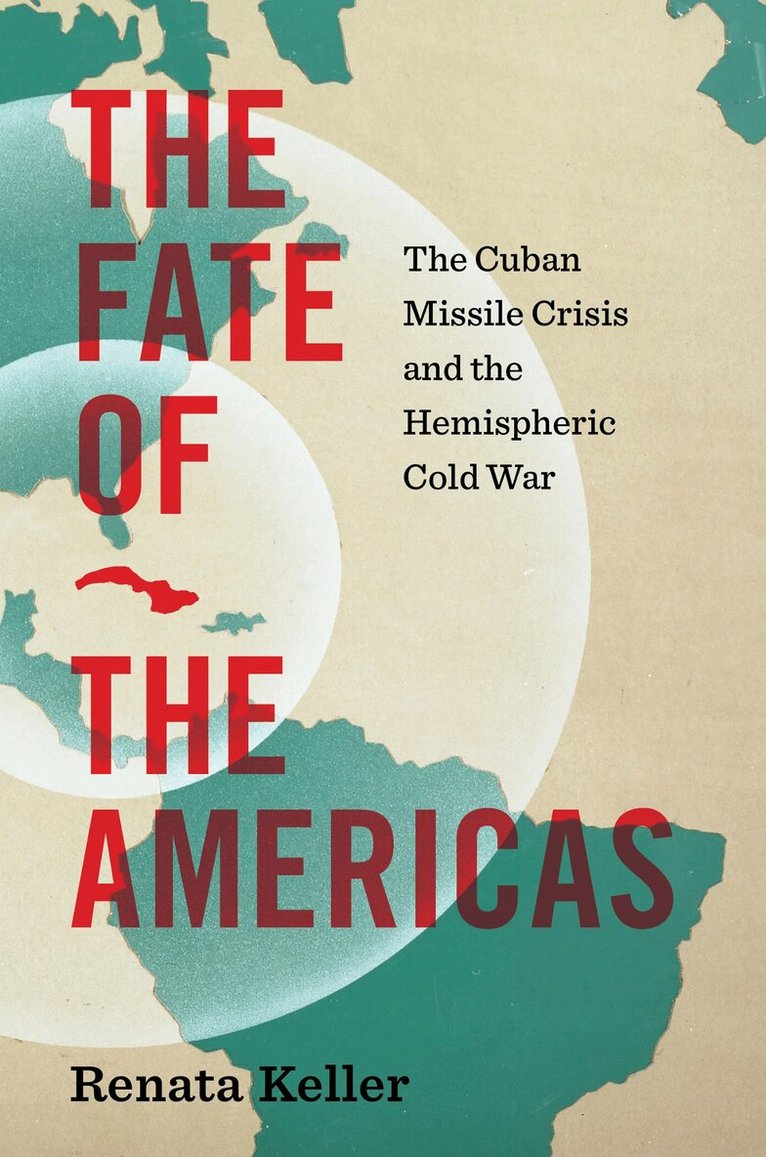
Despite twenty-first-century fears of nuclear conflagrations with North Korea, Russia, and Iran, the Cuban Missile Crisis is the closest the United States has come to nuclear war. That history has largely been a bilateral narrative of the US-USSR struggle for postwar domination, with Cuba as the central staging ground—a standard account that obscures the shock waves that reverberated throughout Latin America. This first hemispheric examination of the Cuban Missile Crisis shows how leaders and ordinary citizens throughout the region experienced it, revealing that, had the missiles been activated, millions of people across Latin America would have been at grave risk. Traversing the region from the Southern Cone to Central America, Renata Keller describes the deadly riots that shook Bolivia when news of the Cuban Missile Crisis broke, the naval quarantine that members of Argentina’s armed forces formed around Cuba, the pro-Castro demonstrations organized by Nicaraguan students, and much more. Drawing on a vast array of archival sources from around the hemisphere and world, The Fate of the Americas demonstrates that even at the brink of destruction, Latin Americans played active roles in global politics and inter-American relations.
322 kr
Skickas inom 10-15 vardagar
Despite twenty-first-century fears of nuclear conflagrations with North Korea, Russia, and Iran, the Cuban Missile Crisis is the closest the United States has come to nuclear war. That history has largely been a bilateral narrative of the US-USSR struggle for postwar domination, with Cuba as the central staging ground—a standard account that obscures the shock waves that reverberated throughout Latin America. This first hemispheric examination of the Cuban Missile Crisis shows how leaders and ordinary citizens throughout the region experienced it, revealing that, had the missiles been activated, millions of people across Latin America would have been at grave risk. Traversing the region from the Southern Cone to Central America, Renata Keller describes the deadly riots that shook Bolivia when news of the Cuban Missile Crisis broke, the naval quarantine that members of Argentina’s armed forces formed around Cuba, the pro-Castro demonstrations organized by Nicaraguan students, and much more. Drawing on a vast array of archival sources from around the hemisphere and world, The Fate of the Americas demonstrates that even at the brink of destruction, Latin Americans played active roles in global politics and inter-American relations.