Renate Bridenthal – författare
Visar alla böcker från författaren Renate Bridenthal. Handla med fri frakt och snabb leverans.
7 produkter
Seascapes
Maritime Histories, Littoral Cultures, and Transoceanic Exchanges
Av Jerry H. Bentley, Renate Bridenthal m. fl.
Häftad, 2016
310 kr
Lägg i varukorg
Historians have only recently begun to chart the experiences of maritime regions in rich detail and penetrate the historical processes at work there. Seascapes makes a major contribution to these efforts by bringing together original scholarship on historical issues arising from maritime regions …
Heimat Abroad
The Boundaries of Germanness
Av Nancy Reagin, Renate Bridenthal m. fl.
E-bok, 2010
760 kr
Lägg i varukorg
Germans have been one of the most mobile and dispersed populations on earth. Communities of German speakers, scattered around the globe, have long believed they could recreate their Heimat (homeland) wherever they moved, and that their enclaves could remain truly German. Furthermore, the history of …
Heimat Abroad
The Boundaries of Germanness
Av K. Molly O'Donnell, Renate Bridenthal m. fl.
Häftad, 2005
489 kr
Lägg i varukorg
Germans have been one of the most mobile and dispersed populations on earth. Communities of German speakers, scattered around the globe, have long believed they could recreate their Heimat (homeland) wherever they moved, and that their enclaves could remain truly German. Furthermore, the history of …
When Biology Became Destiny
Women in Weimar and Nazi Germany
Av Renate Bridenthal, Renate Bridenthal m. fl.
Häftad, 1984
289 kr
Lägg i varukorg
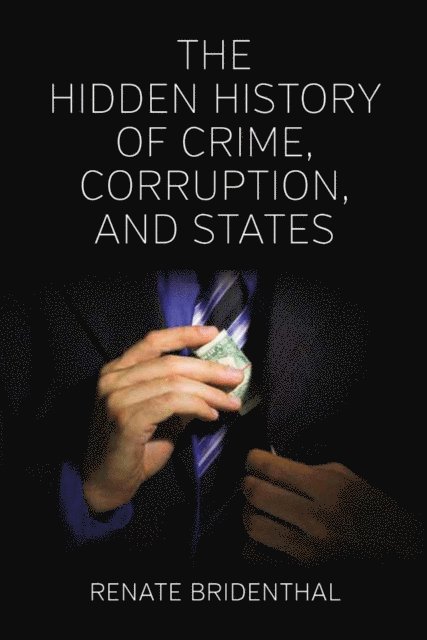
Hidden History of Crime, Corruption, and States
Inbunden, 2013
1916 kr
Lägg i varukorg
Renowned historical sociologist Charles Tilly wrote many years ago that “banditry, piracy, gangland rivalry, policing, and war-making all belong on the same continuum.” This volume pursues the idea by revealing how lawbreakers and lawmakers have related to one another on the shadowy terrains of …
Hidden History of Crime, Corruption, and States
E-bok, 2013
335 kr
Lägg i varukorg
Renowned historical sociologist Charles Tilly wrote many years ago that “banditry, piracy, gangland rivalry, policing, and war-making all belong on the same continuum.” This volume pursues the idea by revealing how lawbreakers and lawmakers have related to one another on the shadowy terrains of …
Hidden History of Crime, Corruption, and States
Häftad, 2017
527 kr
Lägg i varukorg
Renowned historical sociologist Charles Tilly wrote many years ago that “banditry, piracy, gangland rivalry, policing, and war-making all belong on the same continuum.” This volume pursues the idea by revealing how lawbreakers and lawmakers have related to one another on the shadowy terrains of …