Rene Dubos - Böcker
Visar alla böcker från författaren Rene Dubos. Handla med fri frakt och snabb leverans.
11 produkter
11 produkter
703 kr
Skickas inom 10-15 vardagar
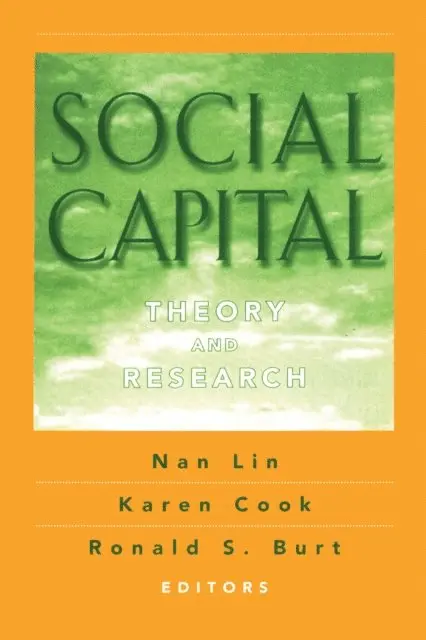
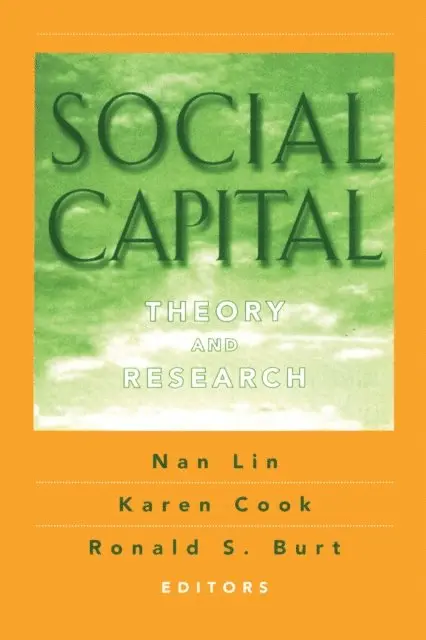
Leading scholars in the field of social networks from diverse disciplines present the first systematic and comprehensive collection of current theories and empirical research on the informal connections that individuals have for support, help, and information from other people. Expanding on concepts originally formulated by Pierre Bourdieu and James Coleman, this seminal work will find an essential place with educators and students in the fields of social networks, rational choice theory, institutions, and the socioeconomics of poverty, labor markets, social psychology, and race.The volume is divided into three parts. The first segment clarifies social capital as a concept and explores its theoretical and operational bases. Additional segments provide brief accounts that place the development of social capital in the context of the family of capital theorists, and identify some critical but controversial perspectives and statements regarding social capital in the literature. The editors then make the argument for the network perspective, why and how such a perspective can clarify controversies and advance our understanding of a whole range of instrumental and expressive outcomes.Social Capital further provides a forum for ongoing research programs initiated by social scientists working at the crossroads of formal theory and new methods. These scholars and programs share certain understandings and approaches in their analyses of social capital. They argue that social networks are the foundation of social capital. Social networks simultaneously capture individuals and social structure, thus serving as a vital conceptual link between actions and structural constraints, between micro- and macro-level analyses, and between relational and collective dynamic processes. They are further cognizant of the dual significance of the "structural" features of the social networks and the "resources" embedded in the networks as defining elements of social capital.
847 kr
Skickas inom 7-10 vardagar
The author evaluates the consequences of the application of scientific knowledge to all aspects of human affairs, particularly the sphere of social problems.
747 kr
Skickas inom 5-8 vardagar
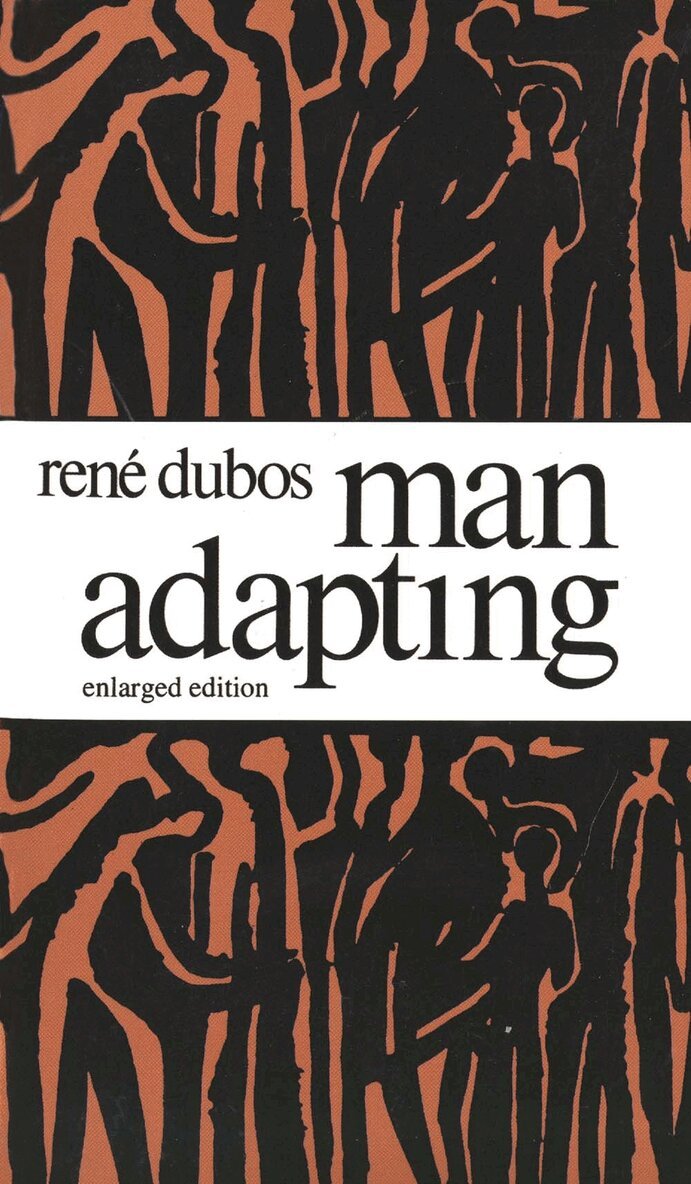
This enlarged edition of Man Adapting includes a new chapter expanding Dr. Dubos’s discussion of the role of medicine in man’s adaptive processes. In 1965 he wrote at length of the biological and social problems of human adaptation, while treating the medical aspects of this problem only in passing. He believed that the goal of medicine was to help man function successfully with the particular circumstances of his environment and heredity. But despite advancements in the prevention and treatment of disease, skepticism has developed during the last two decades concerning the usefulness of modern medicine. Dr. Dubos turns here to readdress this question.Today physicians rely on sophisticated scientific knowledge, and no longer offer the traditional doctor-patient relationship which ministered to psychological as well as physical comfort. But it is this spiritual aspect of human medicine, Dr. Dubos argues, which distinguishes it from general biology, and it will retain its unique position among the sciences only if it accepts responsibility for the human aspects of life. Dr. Dubos demonstrates the complex interrelationship between man and his biological environment. He writes, “I have attempted to focus my attention on the individual human being . . . trying as best he can to meet the emergencies of the day and to prepare for the uncertainties of the future. He is Man Adapting.”
226 kr
Skickas inom 10-15 vardagar
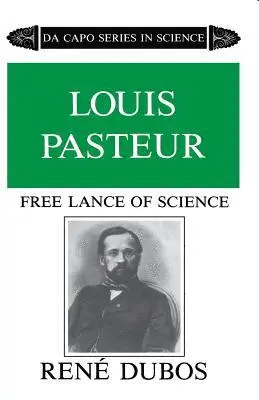
In the words of one of his English contemporaries, Louis Pasteur was "the most perfect man who ever entered the kingdom of science." His contributions to the development of microbiology and medicine were profound, both practically (Pasteurization and vaccination) and theoretically (the germ model of disease). He spoke out forcefully on issues of the day, especially when they concerned public health, and his research included studies on rabies, anaerobic life, childbirth fever, silkworms, and beer. René Dubos's outstanding biography examines Pasteur's manifold genius in the context of the era,Pasteur was an exemplary nineteenth-century bourgeois,and in light of recent environmental thought. His view of Pasteur as ecologist, the first to formulate in concrete terms a biological and chemical theory of global ecosystems, is only one of the many surprising insights into a man whose emblematic fame has obscured a complex and rich life.
252 kr
Skickas inom 5-8 vardagar
210 kr
Skickas inom 7-10 vardagar
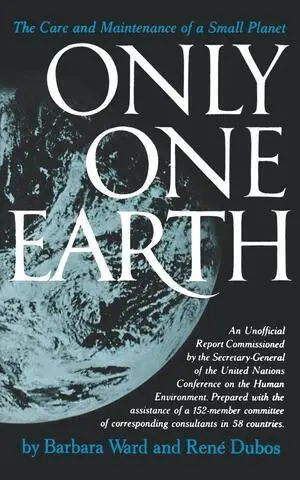
An unofficial report commissioned by the Secretary-General of the United Nations Conference on the Human Environment. Prepared with the assistance of a 152-member committee of corresponding consultants in 58 countries.“[A] profoundly ethical, value-oriented study . . . [points] to areas of concern for economists and political scientists, philosophers and theologians.” —P.J. Henriot, America
758 kr
Skickas inom 10-15 vardagar
At least until cloning becomes the order of the day, Rene Dubos contends that each human being is unique, unprecedented, unrepeatable. However, today each person faces the critical danger of losing this very humanness to his mechanized surroundings. Most people spend their days in a confusion of concrete and steel, trapped "in the midst of noise, dirt, ugliness and absurdity." So begins the essential message of the work of one of the great figures in microbiology and experimental pathology of this century.Is the human species becoming dehumanized by the condition of his environment? So Human an Animal is an attempt to address this broad concern, and explain why so little is being done to address this issue. The book sounds both an urgent warning, and offers important policy insights into how this trend towards dehumanization can be halted and finally reversed. Dubos asserts that we are as much the product of our total environment as of our genetic endowment. In fact, the environment we live in can greatly enhance, or severely Hmit, the development of human potential. Yet we are deplorably ignorant of the effects of our surroundings on human life. We create conditions which can only thwart human nature.So Human an Animal is a book with hope no less than alarm. As Joseph Wood Krutch noted at the time, Dubos shows convincingly "why science is indispensable, not omnipotent." Science'can change our suicidal course by learning to deal analytically with the living experience of human beings, by supplementing the knowledge of things and of the body machine with a science of human life. Only then can we give larger scope to human freedom by providing a rational basis for option and action. Timely, eloquent, and guided by a deep humanistic spirit, this new edition is graced by a succinct and careful outline of the life and work of the author.
2 103 kr
Skickas inom 10-15 vardagar
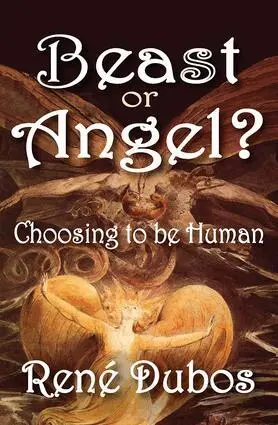
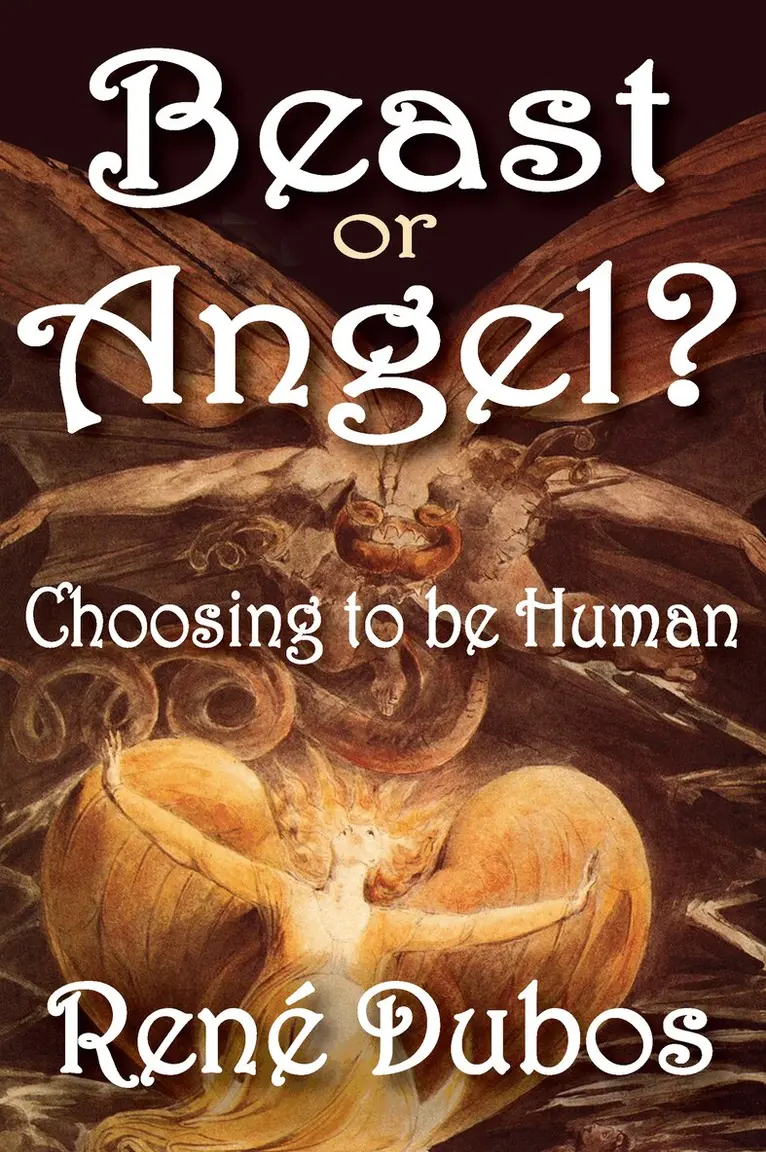
The world of things is different now from what it was half a century ago, but Rene Dubos doubts that there have been basic changes in life itself, in those attitudes and activities, needs, and yearning, that are the most important for happiness and suffering, for hope and despair the differences between humanity and animality. Sophisticated and civilized as we may be, we have retained from our distant ancestors the ability to derive profound satisfaction from the small happenings of daily life.Beast or Angel? attempts to trace the origins of needs and yearnings that have always been those of humankind everywhere and always. In this search, Dubos expresses the same concerns and uses the same words when speaking of the past, the present, or the future the reason being that the biological and psychological characteristics of humankind have remained essentially the same for at least fifty millennia.We are human to the extent that we live according to certain principles which have a human quality. This quality has emerged and continues to emerge from the choices that we make throughout our individual lives and that humankind has made from the beginning of its existence. To be human is to be able and willing to choose among the options that are offered to the human species by the natural order of things. This book examines human species, not only on the basis of the biological and psychological attributes it shares with animal species, but more by identifying its choices throughout pre-history and history.
2 373 kr
Skickas inom 10-15 vardagar
At least until cloning becomes the order of the day, Rene Dubos contends that each human being is unique, unprecedented, unrepeatable. However, today each person faces the critical danger of losing this very humanness to his mechanized surroundings. Most people spend their days in a confusion of concrete and steel, trapped "in the midst of noise, dirt, ugliness and absurdity." So begins the essential message of the work of one of the great figures in microbiology and experimental pathology of this century.Is the human species becoming dehumanized by the condition of his environment? So Human an Animal is an attempt to address this broad concern, and explain why so little is being done to address this issue. The book sounds both an urgent warning, and offers important policy insights into how this trend towards dehumanization can be halted and finally reversed. Dubos asserts that we are as much the product of our total environment as of our genetic endowment. In fact, the environment we live in can greatly enhance, or severely Hmit, the development of human potential. Yet we are deplorably ignorant of the effects of our surroundings on human life. We create conditions which can only thwart human nature.So Human an Animal is a book with hope no less than alarm. As Joseph Wood Krutch noted at the time, Dubos shows convincingly "why science is indispensable, not omnipotent." Science'can change our suicidal course by learning to deal analytically with the living experience of human beings, by supplementing the knowledge of things and of the body machine with a science of human life. Only then can we give larger scope to human freedom by providing a rational basis for option and action. Timely, eloquent, and guided by a deep humanistic spirit, this new edition is graced by a succinct and careful outline of the life and work of the author.
2 644 kr
Skickas inom 10-15 vardagar
Leading scholars in the field of social networks from diverse disciplines present the first systematic and comprehensive collection of current theories and empirical research on the informal connections that individuals have for support, help, and information from other people. Expanding on concepts originally formulated by Pierre Bourdieu and James Coleman, this seminal work will find an essential place with educators and students in the fields of social networks, rational choice theory, institutions, and the socioeconomics of poverty, labor markets, social psychology, and race.The volume is divided into three parts. The first segment clarifies social capital as a concept and explores its theoretical and operational bases. Additional segments provide brief accounts that place the development of social capital in the context of the family of capital theorists, and identify some critical but controversial perspectives and statements regarding social capital in the literature. The editors then make the argument for the network perspective, why and how such a perspective can clarify controversies and advance our understanding of a whole range of instrumental and expressive outcomes.Social Capital further provides a forum for ongoing research programs initiated by social scientists working at the crossroads of formal theory and new methods. These scholars and programs share certain understandings and approaches in their analyses of social capital. They argue that social networks are the foundation of social capital. Social networks simultaneously capture individuals and social structure, thus serving as a vital conceptual link between actions and structural constraints, between micro- and macro-level analyses, and between relational and collective dynamic processes. They are further cognizant of the dual significance of the "structural" features of the social networks and the "resources" embedded in the networks as defining elements of social capital.
676 kr
Skickas inom 10-15 vardagar
The world of things is different now from what it was half a century ago, but Rene Dubos doubts that there have been basic changes in life itself, in those attitudes and activities, needs, and yearning, that are the most important for happiness and suffering, for hope and despair—the differences between humanity and animality. Sophisticated and civilized as we may be, we have retained from our distant ancestors the ability to derive profound satisfaction from the small happenings of daily life.Beast or Angel? attempts to trace the origins of needs and yearnings that have always been those of humankind everywhere and always. In this search, Dubos expresses the same concerns and uses the same words when speaking of the past, the present, or the future—the reason being that the biological and psychological characteristics of humankind have remained essentially the same for at least fifty millennia.We are human to the extent that we live according to certain principles which have a human quality. This quality has emerged and continues to emerge from the choices that we make throughout our individual lives and that humankind has made from the beginning of its existence. To be human is to be able and willing to choose among the options that are offered to the human species by the natural order of things. This book examines human species, not only on the basis of the biological and psychological attributes it shares with animal species, but more by identifying its choices throughout pre-history and history.