Rene Lemarchand - Böcker
Visar alla böcker från författaren Rene Lemarchand. Handla med fri frakt och snabb leverans.
10 produkter
10 produkter
1 009 kr
Skickas inom 10-15 vardagar
This work examines the factors that contributed to Congolese political fragmentation encompassing the colonial administrative framework, the impact of western political and economic forces, and the transformations brought about by Christianity and western education.
2 150 kr
Skickas inom 10-15 vardagar
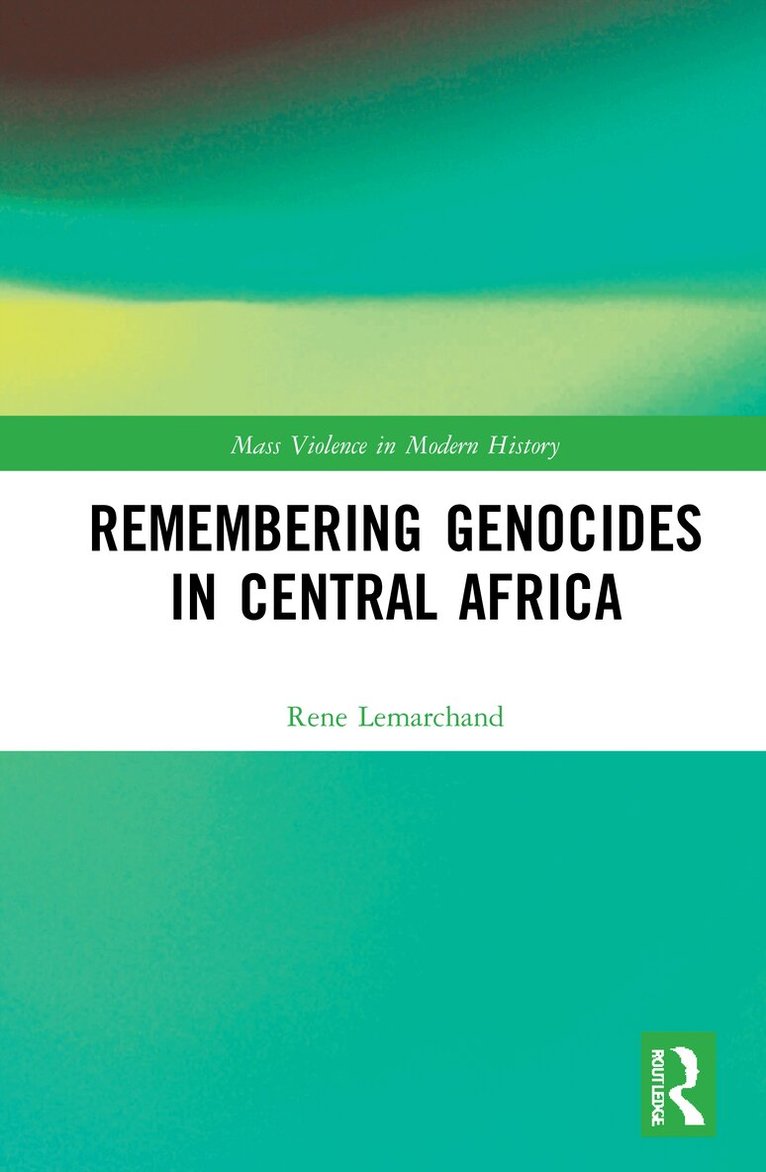
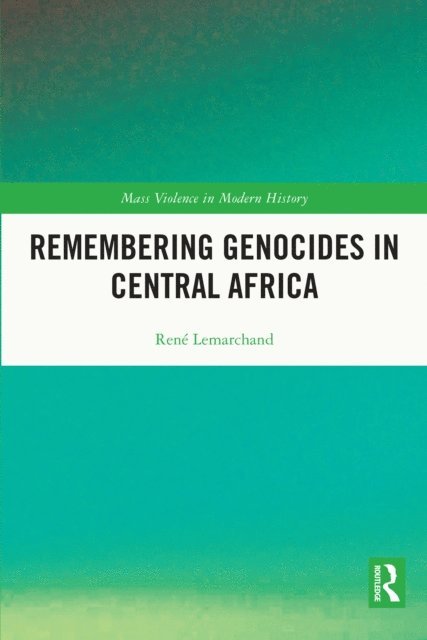
Scene of one of the biggest genocides of the last century Rwanda has become a household word, yet bitter disagreements persist as to its causes and consequences. Through a blend of personal memories and historical analysis, and informed by a lifelong experience of research in Central Africa, the author challenges conventional wisdom and suggests a new perspective for making sense of the appalling brutality that has accompanied the region’s post-independence trajectories.All four states adjacent to Rwanda are inhabited by Hutu and Tutsi and thus contained in germ the potential for ethnic conflict, but only in Burundi did this potential reach genocidal proportions when, in 1972, in response to a local insurrection, at least 200,000 Hutu civilians were killed by a predominantly Tutsi army. By widening his analytic lens the author shows the critical importance of the Burundi bloodshed to an understanding of the roots of the Rwanda genocide, and in later years the significance of the mass murder of Hutu civilians by Kagame’s Tutsi army, not just in Rwanda but in the Congo. The regional dimension of ethnic conflict, traceable to Belgian-engineered Hutu revolution in Rwanda in 1959, three years before its independence, is the principal missing piece in the genocidal puzzle of the Great Lakes region of central Africa. But this is by no means the only one. Reassembling the missing pieces within and outside Rwanda is not the least of the merits of this highly readable reassessment of a widely misunderstood human tragedy.
649 kr
Skickas inom 10-15 vardagar
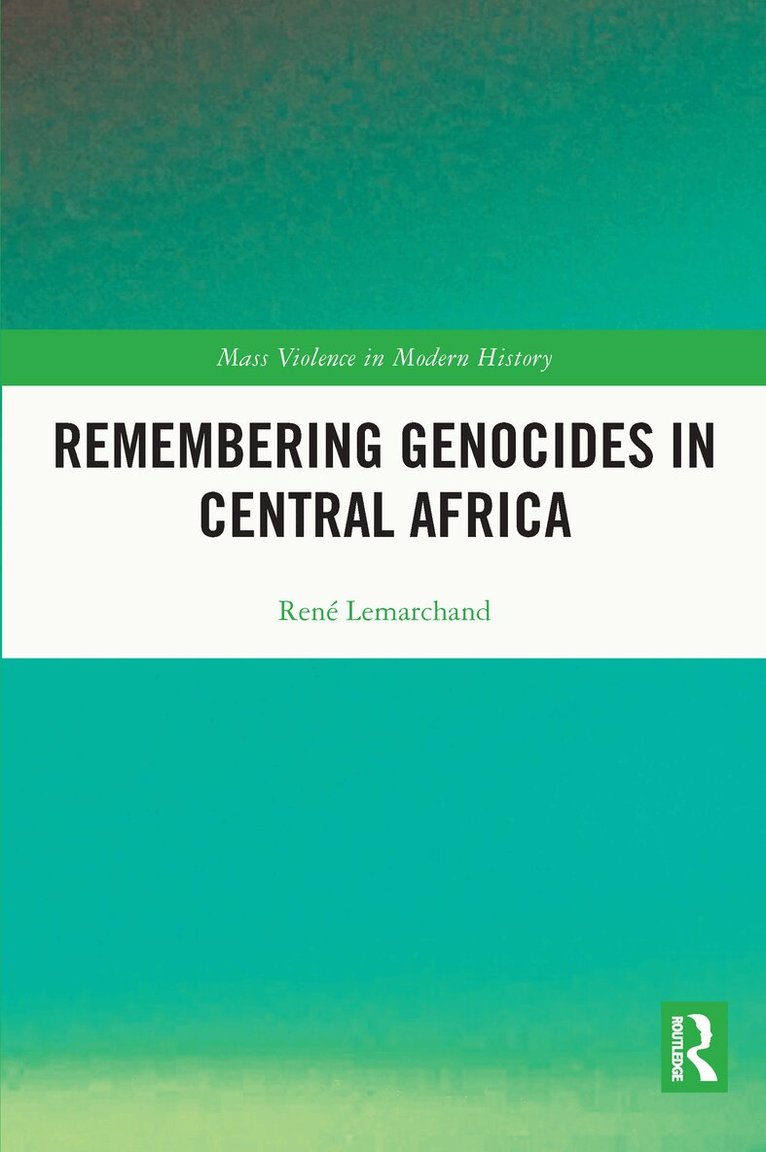
Scene of one of the biggest genocides of the last century Rwanda has become a household word, yet bitter disagreements persist as to its causes and consequences. Through a blend of personal memories and historical analysis, and informed by a lifelong experience of research in Central Africa, the author challenges conventional wisdom and suggests a new perspective for making sense of the appalling brutality that has accompanied the region’s post-independence trajectories.All four states adjacent to Rwanda are inhabited by Hutu and Tutsi and thus contained in germ the potential for ethnic conflict, but only in Burundi did this potential reach genocidal proportions when, in 1972, in response to a local insurrection, at least 200,000 Hutu civilians were killed by a predominantly Tutsi army. By widening his analytic lens the author shows the critical importance of the Burundi bloodshed to an understanding of the roots of the Rwanda genocide, and in later years the significance of the mass murder of Hutu civilians by Kagame’s Tutsi army, not just in Rwanda but in the Congo. The regional dimension of ethnic conflict, traceable to Belgian-engineered Hutu revolution in Rwanda in 1959, three years before its independence, is the principal missing piece in the genocidal puzzle of the Great Lakes region of central Africa. But this is by no means the only one. Reassembling the missing pieces within and outside Rwanda is not the least of the merits of this highly readable reassessment of a widely misunderstood human tragedy.
811 kr
Skickas inom 3-6 vardagar
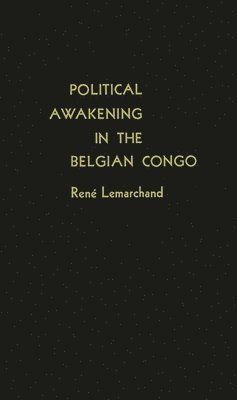
Political Awakening in the Belgian Congo offers a comprehensive exploration of the historical, social, and political forces that shaped the Congo's tumultuous transition from colonial rule to independence. The book provides critical insights into how ethnic diversity, regional particularisms, and the complexities of colonial legacies combined to hinder the creation of a cohesive national identity. By focusing on the years leading up to and immediately following the Congo's independence in 1960, the study delves into the rise of political parties as instruments of nationalist expression and examines their role in both reflecting and exacerbating the country’s fragmentation.The author meticulously analyzes the challenges of building national unity within an immense and ethnically diverse territory. Spanning 905,380 square miles and home to hundreds of ethnic groups, the Congo faced unique difficulties in fostering political integration. By intertwining historical narratives with the development of political organizations, the book illuminates how colonial policies and traditional structures influenced the character and dynamics of emerging political parties. Drawing on a wealth of sources—including archival records, African newspapers, and personal interviews—the work provides a nuanced portrayal of the social changes initiated by Western influence and their profound impact on the Congolese political landscape. This volume is essential for understanding the roots of the Congo’s post-independence crises and offers broader lessons on the challenges of nation-building in diverse, post-colonial societies.This title is part of UC Press's Voices Revived program, which commemorates University of California Press’s mission to seek out and cultivate the brightest minds and give them voice, reach, and impact. Drawing on a backlist dating to 1893, Voices Revived makes high-quality, peer-reviewed scholarship accessible once again using print-on-demand technology. This title was originally published in 1964.
1 469 kr
Skickas inom 3-6 vardagar
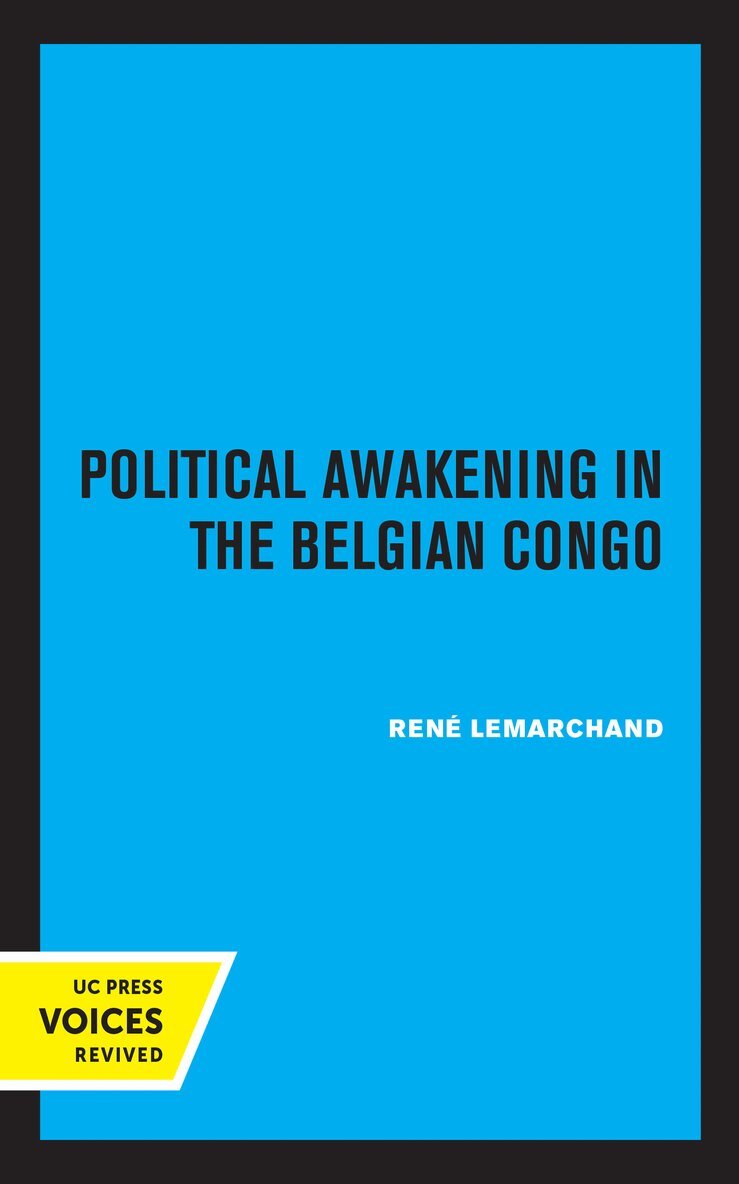
Political Awakening in the Belgian Congo offers a comprehensive exploration of the historical, social, and political forces that shaped the Congo's tumultuous transition from colonial rule to independence. The book provides critical insights into how ethnic diversity, regional particularisms, and the complexities of colonial legacies combined to hinder the creation of a cohesive national identity. By focusing on the years leading up to and immediately following the Congo's independence in 1960, the study delves into the rise of political parties as instruments of nationalist expression and examines their role in both reflecting and exacerbating the country’s fragmentation.The author meticulously analyzes the challenges of building national unity within an immense and ethnically diverse territory. Spanning 905,380 square miles and home to hundreds of ethnic groups, the Congo faced unique difficulties in fostering political integration. By intertwining historical narratives with the development of political organizations, the book illuminates how colonial policies and traditional structures influenced the character and dynamics of emerging political parties. Drawing on a wealth of sources—including archival records, African newspapers, and personal interviews—the work provides a nuanced portrayal of the social changes initiated by Western influence and their profound impact on the Congolese political landscape. This volume is essential for understanding the roots of the Congo’s post-independence crises and offers broader lessons on the challenges of nation-building in diverse, post-colonial societies.This title is part of UC Press's Voices Revived program, which commemorates University of California Press’s mission to seek out and cultivate the brightest minds and give them voice, reach, and impact. Drawing on a backlist dating to 1893, Voices Revived makes high-quality, peer-reviewed scholarship accessible once again using print-on-demand technology. This title was originally published in 1964.
319 kr
Skickas inom 7-10 vardagar
This book situates Burundi in the current global debate on ethnicity by describing and analysing the wholesale massacre of the Hutu majority by the Tutsi minority. The author refutes the government's version of these events that places blame on the former colonial government and the church. He offers documentation that identifies the source of these massacres as occurring across a socially constructed fault-line that pitted the Hutu majority's use of ethnicity as an instrument for the achievement of majority rule in parliament against the Tutsi minority's use of ethnocide to gain hegemony. By analysing the roots of ethnicity conflict, the author derives institutional and other formulae through which conflict among the primary groups in Burundi - and elsewhere - may be mitigated. Published in cooperation with the United Nations Research Institute for Social Development (UNRISD).
378 kr
Skickas inom 10-15 vardagar
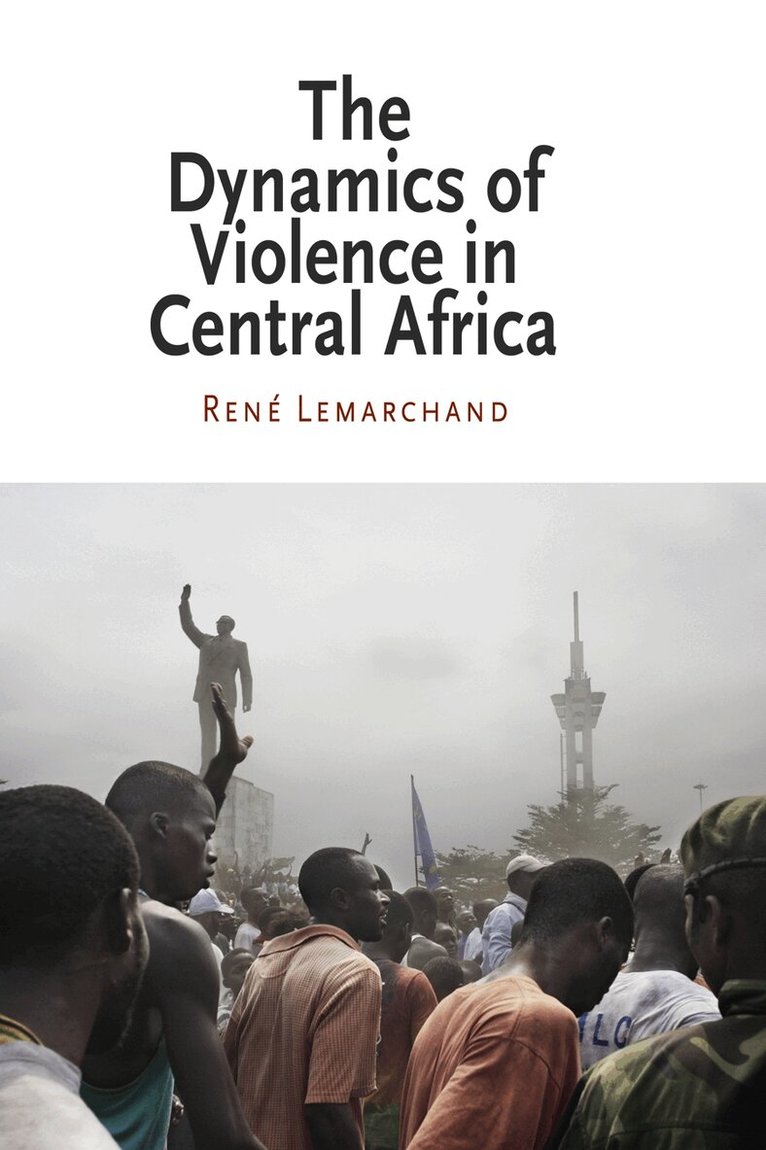
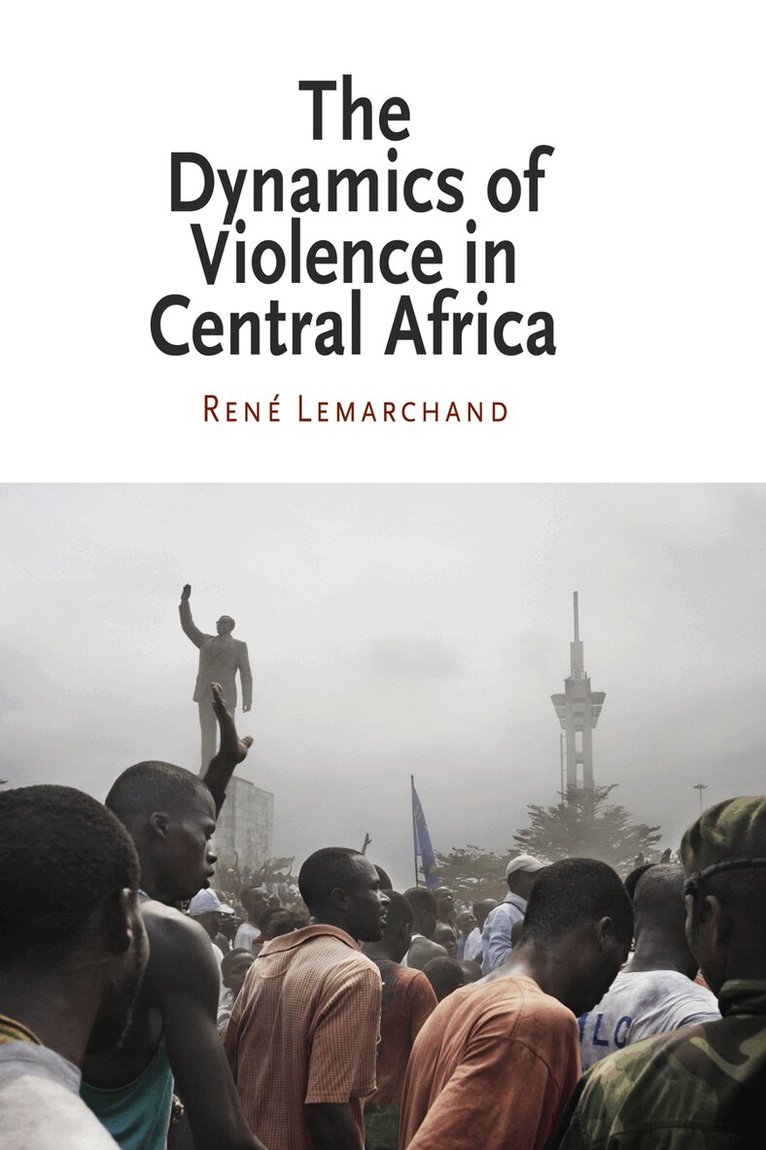
Endowed with natural resources, majestic bodies of fresh water, and a relatively mild climate, the Great Lakes region of Central Africa has also been the site of some of the world's bloodiest atrocities. In Rwanda, Burundi, and the Congo-Kinshasa, decades of colonial subjugation-most infamously under Belgium's Leopold II-were followed by decades of civil warfare that spilled into neighboring countries. When these conflicts lead to horrors such as the 1994 Rwandan genocide, ethnic difference and postcolonial legacies are commonly blamed, but, with so much at stake, such simple explanations cannot take the place of detailed, dispassionate analysis.The Dynamics of Violence in Central Africa provides a thorough exploration of the contemporary crises in the region. By focusing on the historical and social forces behind the cycles of bloodshed in Rwanda, Burundi, and the Congo-Kinshasa, RenÉ Lemarchand challenges much of the conventional wisdom about the roots of civil strife in former Belgian Africa. He offers telling insights into the appalling cycle of genocidal violence, ethnic strife, and civil war that has made the Great Lakes region of Central Africa the most violent on the continent, and he sheds new light on the dynamics of conflict in the region.Building on a full career of scholarship and fieldwork, Lemarchand's analysis breaks new ground in our understanding of the complex historical forces that continue to shape the destinies of one of Africa's most important regions.
378 kr
Skickas inom 10-15 vardagar
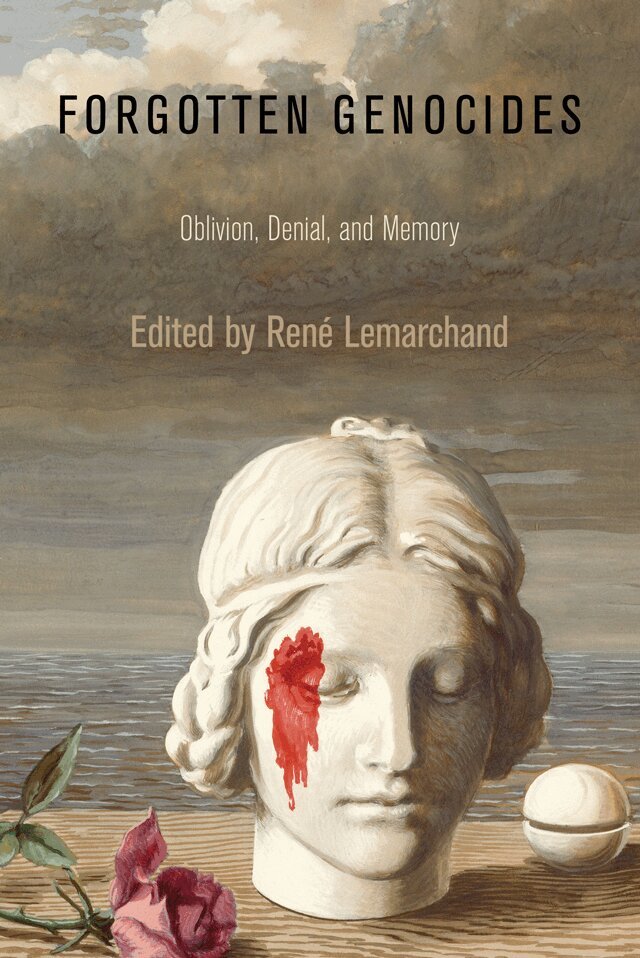
Unlike the Holocaust, Rwanda, Cambodia, or Armenia, scant attention has been paid to the human tragedies analyzed in this book. From German Southwest Africa (now Namibia), Burundi, and eastern Congo to Tasmania, Tibet, and Kurdistan, from the mass killings of the Roms by the Nazis to the extermination of the Assyrians in Ottoman Turkey, the mind reels when confronted with the inhuman acts that have been consigned to oblivion.Forgotten Genocides: Oblivion, Denial, and Memory gathers eight essays about genocidal conflicts that are unremembered and, as a consequence, understudied. The contributors, scholars in political science, anthropology, history, and other fields, seek to restore these mass killings to the place they deserve in the public consciousness. Remembrance of long forgotten crimes is not the volume's only purpose-equally significant are the rich quarry of empirical data offered in each chapter, the theoretical insights provided, and the comparative perspectives suggested for the analysis of genocidal phenomena. While each genocide is unique in its circumstances and motives, the essays in this volume explain that deliberate concealment and manipulation of the facts by the perpetrators are more often the rule than the exception, and that memory often tends to distort the past and blame the victims while exonerating the killers.Although the cases discussed here are but a sample of a litany going back to biblical times, Forgotten Genocides offers an important examination of the diversity of contexts out of which repeatedly emerge the same hideous realities.
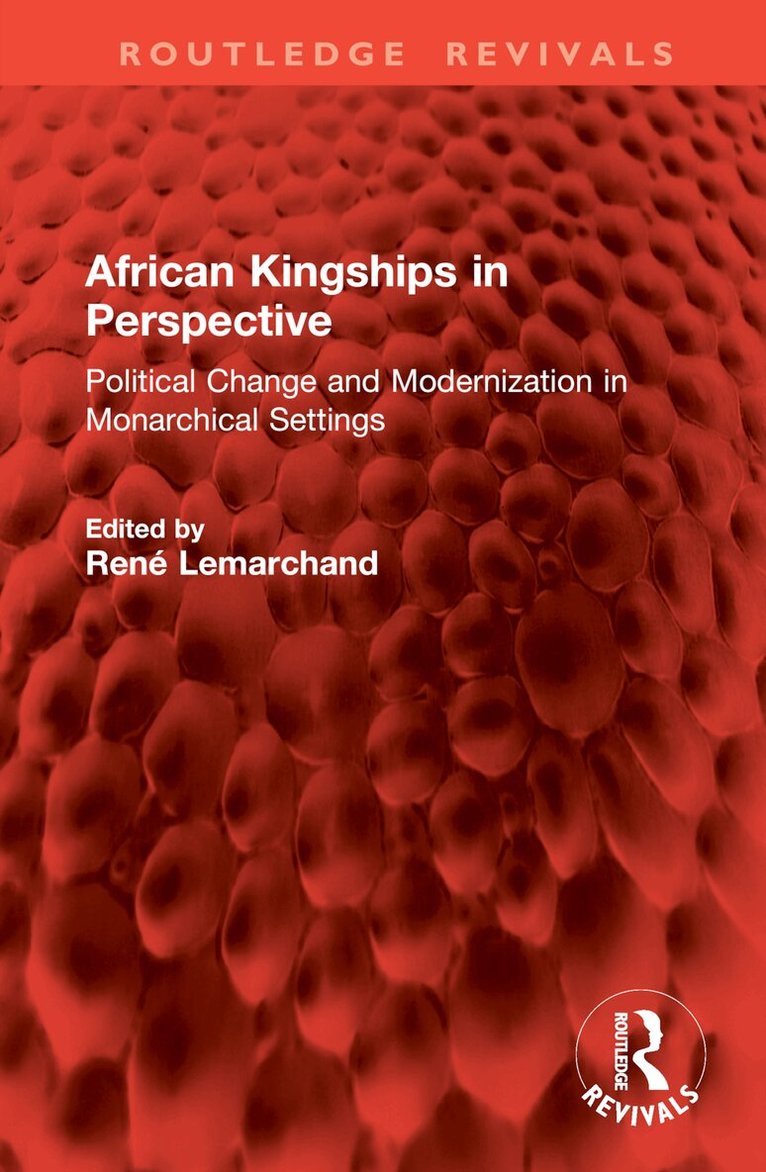
African Kingships in Perspective
Political Change and Modernization in Monarchical Settings
Inbunden, Engelska, 2024
1 551 kr
Skickas inom 10-15 vardagar
First published in 1977, African Kingships in Perspective deals comparatively and analytically with the dynamics of change in monarchical settings. It examines the variant responses of African kingships to the challenge of modernity and political centralisation, and to assess their successes and failures in the face of rapid social change. The analysis is based on eight case studies: Ethiopia, Buganda, Ankole, Rwanda, Burundi, Ijebu Ode, Swaziland and Lesotho – covering a wide range of historical experiences and social settings. By looking at the relative staying power and adaptability of these traditional polities, the editor reveals the structural regularities behind variations of culture, leadership, and historical experience.The case studies included in this book also demonstrate the vital importance of monarchical symbols, leadership patterns, and strategic maneuverings for an understanding of the durability and viability of African kingships. It further shows how the actions of individual monarchs may have contributed to the survival or demise of their respective kingdoms, taking into account the obstacles arising from structural and environmental constraints. The institution of kingship thus emerges as a significant variable in the analysis of political change in contemporary Africa. This book stands as an important contribution to the political anthropology of contemporary Black Africa.
African Kingships in Perspective
Political Change and Modernization in Monarchical Settings
Häftad, Engelska, 2026
441 kr
Skickas inom 10-15 vardagar
First published in 1977, African Kingships in Perspective deals comparatively and analytically with the dynamics of change in monarchical settings. It examines the variant responses of African kingships to the challenge of modernity and political centralisation, and to assess their successes and failures in the face of rapid social change. The analysis is based on eight case studies: Ethiopia, Buganda, Ankole, Rwanda, Burundi, Ijebu Ode, Swaziland and Lesotho – covering a wide range of historical experiences and social settings. By looking at the relative staying power and adaptability of these traditional polities, the editor reveals the structural regularities behind variations of culture, leadership, and historical experience.The case studies included in this book also demonstrate the vital importance of monarchical symbols, leadership patterns, and strategic maneuverings for an understanding of the durability and viability of African kingships. It further shows how the actions of individual monarchs may have contributed to the survival or demise of their respective kingdoms, taking into account the obstacles arising from structural and environmental constraints. The institution of kingship thus emerges as a significant variable in the analysis of political change in contemporary Africa. This book stands as an important contribution to the political anthropology of contemporary Black Africa.